

Michelin Plate · Tabelog 100 #70
Our verdict
A MICHELIN Guide-listed French table in Kamigyo Ward where the kitchen operates on a strict three-ingredient rule, using Kiyomizu-ware ceramics to frame each course as its own quiet composition. Reine des prés sits within Kyoto's small but serious French dining scene, offering a meal structured around restraint rather than accumulation. Book ahead; the format rewards guests who arrive with patience and attention.

Pearl is the En Primeur Club membership app, where members save venues, book tables and use the concierge.
The menu
What to order
- Pumpkin and Uni
- Spanish Mackerel with Seasonal Vegetables
- Wagyu Beef
The Case for Minimalism: French Dining in Kyoto's Northern Wards
Kyoto's French restaurant scene has developed along a distinctive axis. Unlike the high-density French bistro culture of Paris or the technically baroque tasting menus of Tokyo's leading rooms, the French tables that have taken root here tend to mirror something of the city's own sensibility: a preference for reduction over elaboration, for the single well-sourced ingredient over the composed plateau.
The address, Komanocho, 537-1, sits north of the central tourist corridor, away from the density of Gion and Higashiyama. Arriving here means passing through a Kyoto that most short-stay visitors never see: low-rise machiya blocks, the occasional lacquer workshop, temple rooflines visible over walls. The neighbourhood imposes its own pace before you reach the door. That environmental conditioning is not incidental to the meal that follows.
Three Ingredients, One Flame, One Point of View
The kitchen operates under a stated constraint: no plate carries more than three ingredients. This is not an aesthetic conceit imposed on the diner after the fact, it is the structural logic through which every course is conceived. The effect, course by course, is that attention sharpens. When a dish arrives with two elements rather than twelve, the diner is invited to assess rather than survey. There is no supporting cast to hide behind.
This three-ingredient ceiling places Reine des prés in a narrow but serious international cohort. Across Japan's French dining tier, the tendency is more often toward technical accumulation, emulsions, reductions, and architectural plating that deploy French classical training to impressive but occasionally obscuring effect. The approach here moves in the opposite direction, which is precisely why MICHELIN recognition for this format signals something different than an award given to a room with forty components per course. The selection confirms that restraint, executed with precision, reads as mastery rather than limitation.
The progression of the meal is designed around this logic. Each course arrives as a distinct statement rather than a chapter in a continuous narrative thread. The arc of a dinner here is less about escalation toward a climax and more about a series of focused encounters, each self-contained, each asking for a slightly different kind of attention. Sourced ingredients are matched to the most appropriate heat level for their specific character. That philosophy of flame-to-ingredient matching is one of the more discipline-intensive aspects of this kind of cooking; it requires a kitchen that resists the temptation to standardise across the menu.
Kiyomizu-Ware and the Aesthetic of Negative Space
The plating context matters here as much as the cooking method. Kiyomizu-ware, the ceramic tradition produced by the kilns of Higashiyama since the early Edo period, carries a specific visual grammar: generous empty space, visible clay texture, forms that do not compete with what sits on them. Using this ware to frame a three-ingredient French course is not a styling decision, it is a philosophical alignment. The empty space on the plate is as much a part of the course as the food itself, functioning the way ma functions in traditional Japanese composition: as the element that gives meaning to what surrounds it.
This aesthetic positioning separates Reine des prés from other French-in-Japan formats. Compare it, for instance, with Hiramatsu Kodaiji, which works within a French-Japanese fusion idiom tied closely to its Higashiyama setting, or with the more produce-forward European approach of Droit. Each represents a distinct solution to the question of what French cooking means when it is done seriously in Kyoto. The Kiyomizu-ware choice at Reine des prés is among the most literal and thoughtful answers to that question.
Where This Fits in Kyoto's ¥¥¥ French Tier
The ¥¥¥ price tier in Kyoto covers meaningful ground. Several of the city's most discussed French rooms sit one bracket higher. Within the ¥¥¥ range, the competition includes Italian-influenced European tables like la bûche and the Franco-Japanese concept behind La Biographie, alongside multi-cuisine options like anpeiji.
The Michelin recognition sharpens that position. In a city where the guide awards stars across kaiseki, Japanese, and European formats, earning a MICHELIN Guide selection in the French category at the ¥¥¥ tier signals a price-to-execution ratio that the guide finds defensible. That is practical information for anyone planning a multi-night Kyoto itinerary: this room offers MICHELIN Guide-listed French cooking at a price point below the top-tier French rooms in Osaka or Tokyo.
Reine des prés is not competing for that comparison, it is doing something smaller and more focused, and the MICHELIN Guide selection confirms the kitchen has the execution to support that ambition. The international French benchmark for this kind of rigorous simplicity sits at rooms like Hotel de Ville Crissier in Crissier, where ingredient selection and classical restraint carry the full weight of the meal.
Planning Your Visit
Reine des prés sits in Kamigyo Ward at Komanocho, 537-1, in the northern residential section of Kyoto. The ward is accessible by Kyoto City Bus from major transport hubs, and the walk from Imadegawa Station on the Karasuma subway line is manageable. This is not a neighbourhood that rewards unplanned wandering after dinner in the way that Gion does; the quietness is part of the experience, but having onward plans is sensible.
The format, a focused tasting menu built around the three-ingredient constraint, is not suited to large groups or guests seeking a flexible à la carte arrangement.
| Venue | Cuisine | Price Tier | Michelin | Format Notes |
|---|---|---|---|---|
| Reine des prés | French | ¥¥¥ | 1 Star (2024) | Three-ingredient rule, tasting progression |
| Hiramatsu Kodaiji | French-Japanese | ¥¥¥¥ | French-Japanese fusion, Higashiyama setting | |
| Droit | European | ¥¥¥ | Produce-forward, European framework | |
| La Biographie | French-Japanese | ¥¥¥ | Franco-Japanese concept | |
| la bûche | Italian-influenced European | ¥¥¥ | Italian-European, same price tier |
Frequently asked questions
What should I order at Reine des prés?
The kitchen does not operate on an à la carte basis, so the question is less about individual dishes and more about how to engage with the format. The tasting menu progresses through courses that each carry no more than three ingredients, so preparation means arriving willing to assess each plate on its own terms rather than looking for a standout course within a conventional narrative arc. The Michelin recognition in 2024 confirms that the ingredient selection and flame technique are where the kitchen invests its precision, trust the sourcing and note the ceramics, which are Kiyomizu-ware chosen to frame negative space as deliberately as the food itself. For context on what the broader Kyoto French scene offers alongside this format, the full Kyoto restaurants guide maps the category clearly.
For those building a fuller Kyoto itinerary, our Kyoto hotels guide, bars guide, wineries guide, and experiences guide cover the city's broader premium tier. Elsewhere in Japan, Harutaka in Tokyo, akordu in Nara, Goh in Fukuoka, 1000 in Yokohama, and 6 in Okinawa each represent comparable levels of editorial interest in their respective cities.
Cuisine and Credentials
| Venue | Cuisine | Price | Awards |
|---|---|---|---|
| Reine des présThis venue (the venue you are viewing) | Modern French with Japanese Sensibility | $200–300 | Michelin Plate · Tabelog 100 #70 |
| Gion Sasaki | Modern Kaiseki | $300–500 | 3 Michelin Stars · La Liste Top Restaurants |
| cenci | Innovative Italian-Japanese Fusion | $100–150 | 1 Michelin Star · World's 50 Best #76 |
| Ifuki | Sumibi Kappo Kaiseki | $200–300 | 2 Michelin Stars · La Liste Top Restaurants |
| Kyokaiseki Kichisen | Kyoto Kaiseki | $200–300 | 2 Michelin Stars · La Liste Top Restaurants |
| Kyo Seika | Modern Chinese Fine Dining | $150–200 | 1 Michelin Star · Tabelog Bronze #216 |
Recognition history
Dated appearances from independent guides and award organizations, with the underlying list record or original source where available.
Michelin Plate
Michelin
Tabelog 100 #70 · No. 70
Tabelog · Tabelog 100 - French - WEST - 2025
Continue exploring
More in Kyoto
Restaurants in Kyoto
All restaurants in Kyoto →
Bars in Kyoto
All bars in Kyoto →
Hotels in Kyoto
All hotels in Kyoto →
Wineries in Kyoto
Browse all →
Details
- Intimate
- Elegant
- Sophisticated
- Cozy
- Date Night
- Special Occasion
- Chefs Counter
- Extensive Wine List
- Local Sourcing
- Omakase
- Wine
Current opening hours
- Monday
- 11:30 AM–12 PM, 6–7 PM
- Tuesday
- 11:30 AM–12 PM, 6–7 PM
- Wednesday
- Closed
- Thursday
- Closed
- Friday
- 11:30 AM–12 PM, 6–7 PM
- Saturday
- 11:30 AM–12 PM, 6–7 PM
- Sunday
- 11:30 AM–12 PM, 6–7 PM
Hours can change for holidays and private events. Hours as of .
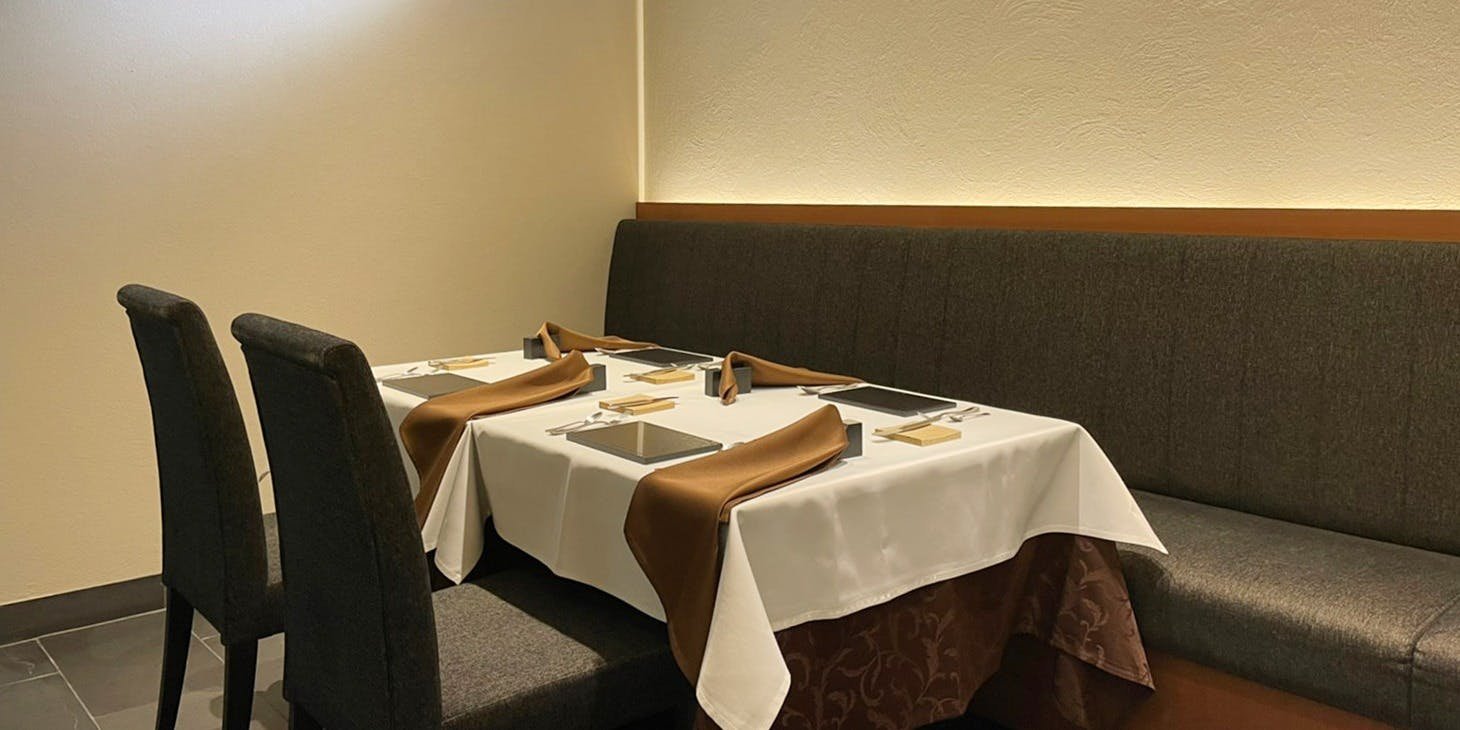
Intimate, softly lit room with refined, minimalist decor and attentively paced, personal service.