


A Michelin-starred counter in Ohara's rural mountain fringe, la bûche applies classical French technique, shaped by training at Taillevent Paris and Pierre Gagnaire Tokyo, to the wild greens, game, and foraged produce of Kyoto's northern highlands. Prix fixe menus shift daily with market availability, and food is cooked over a wood fire fed by timber from local forest thinning. The result is French cooking with a genuinely regional address.
Pearl is the En Primeur Club membership app — saves, bookings, and concierge access live there. Same editors, same standards.
- Address
- 400-3 Ohararaikoincho, Sakyo Ward, Kyoto, 601-1242, Japan
- Phone
- +81 75-600-9196
- Website
- labuche-ohara.com
- Directions
- Get directions
 Saves & bookings on Pearl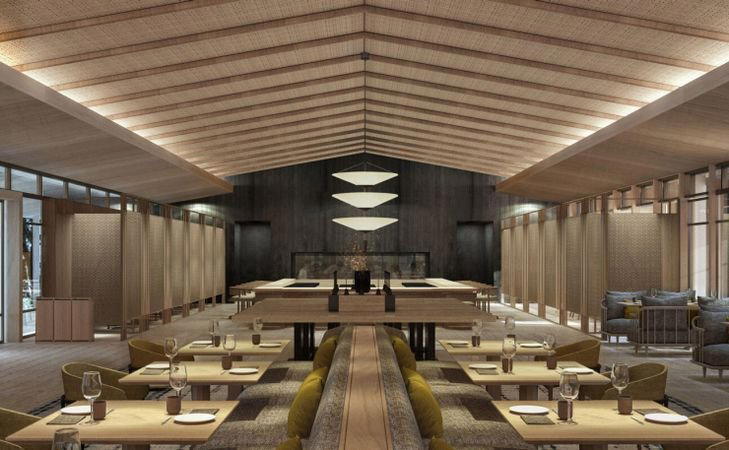
The road north from central Kyoto into Ohara takes you past the last convenience stores and the last clusters of ryokan signage, and then keeps going. By the time you reach the address on Ohararaikoincho, the city feels architecturally irrelevant. This is mountain-village Japan: cedar ridgelines, terraced plots, the kind of agricultural quiet that doesn't perform itself for visitors. A French restaurant holding a Michelin star operates here as a considered act of placement. The environment is the argument.
French Technique at a Rural Address
Japan has developed among the more sophisticated French dining cultures outside France itself. Tokyo alone carries dozens of Michelin-starred French tables, and Kyoto's own French presence, ranging from the classical register of Hiramatsu Kodaiji to the contemporary ambition of Droit, demonstrates how deeply the cuisine has been absorbed and re-inflected here. The pattern across this scene is familiar: French foundations, Japanese precision, local produce used with restraint. What distinguishes la bûche is that the local produce isn't an accent. It's the brief.
Chef Shohei Mori trained at Taillevent in Paris and Pierre Gagnaire in Tokyo, two addresses that sit at opposite poles of French culinary philosophy. Taillevent represents institutional classicism, a house that has maintained formal French service culture for decades. Pierre Gagnaire, by contrast, is intellectually restless, a kitchen built around constant formal reinvention. That combination of structural rigour and conceptual openness is worth noting, not as biographical colour, but because it explains a working method: the ability to apply classical technique to whatever the morning market provides, without being constrained by a fixed repertoire.
The prix fixe format shifts daily according to what Chef Mori finds at the market each morning, where he listens directly to farmers about what is ready. Wild mountain greens, foraged flowers, and game from Ohara's surrounding highlands move through menus that change with the season and, more granularly, with the week. This is closer to the kaiseki logic of shun, using an ingredient at its precise peak, than to conventional French menu planning. The technique is French; the calendar is Ohara's.
For a comparable marriage of imported European method and Japanese terroir sensibility, HAJIME in Osaka and Sézanne in Tokyo operate at a higher price tier but share the same fundamental question: what happens when French cooking takes its cues from Japanese agricultural specificity rather than from French ingredient conventions.
The Fire and What It Does
Cooking over a wood fire fed by lumber from local forest thinning isn't a design gesture at la bûche. Forest thinning is a land-management practice in Japan's mountain communities, removing smaller trees to allow the remaining forest to grow properly. Using that timber as fuel places the kitchen inside a local ecological cycle rather than outside it. The fire is real and functional; the heat is uneven in the way wood heat always is, which demands a different kind of attention from the cook than gas or induction allows.
Counter kitchens built around live fire have become a global shorthand for a certain kind of cooking ambition, and not all of them justify the format. Here the case is more direct: the terroir argument that runs through the menu extends to the cooking method itself. The wood that heats the food comes from the same mountains that supply the greens and game on the plate. That coherence is harder to achieve than it sounds, and at this price point, worth taking seriously.
Ohara as a Dining Destination
Ohara sits roughly an hour north of central Kyoto by bus, and it is not a neighbourhood you pass through accidentally. The area is known primarily for Sanzen-in temple and its moss gardens, attracting day-trippers who mostly leave before dark. The dining infrastructure has historically been thin: a handful of tofu restaurants, seasonal kaiseki houses open for lunch. A Michelin-starred French counter operating in this context shifts the calculus for a certain kind of visitor.
Kyoto's more densely awarded restaurant scene concentrates in Gion, Nakagyo, and Fushimi wards. The kaiseki houses that define the city's formal culinary identity, including the ¥¥¥¥-tier rooms like Gion Sasaki and Kichisen, operate in those central corridors. La bûche occupies a different geography and a different price tier (¥¥¥), positioning it as an alternative to the city's kaiseki tradition rather than a competitor within it. Visitors who have done the formal Kyoto kaiseki circuit and want to understand what French training looks like when it turns genuinely local will find a specific answer here that the city-centre options don't provide.
For a broader read of where la bûche sits within Kyoto's French and European dining set, the city also offers La Biographie and anpeiji at comparable registers.
Regional Comparisons Worth Making
The local-ingredients, European-technique model appears across Japan in several distinct forms. akordu in Nara applies Spanish cooking logic to Yamato produce. Goh in Fukuoka works Japanese ingredients through a lens shaped by French foundations. 1000 in Yokohama and 6 in Okinawa each negotiate a different regional-ingredient context through European structural frameworks.
What separates the restaurant within this peer group is degree of geographical specificity. The sourcing isn't just Japanese; it's Ohara. The vegetables aren't locally grown in a general sense; they come from farmers the chef speaks to each morning at a market serving a community of a few thousand people. At the European end of the reference set, Hotel de Ville Crissier in Switzerland demonstrates what French classical training looks like when it is applied with total commitment to a specific regional agricultural identity. The restaurant operates at a smaller scale and a lower price point, but the structural logic is comparable.
Vegetables are central to the menu, but they currently arrive predominantly in support of meat and fish courses.
For other Michelin-starred French cooking in Japan at this register, Harutaka in Tokyo and MOKO within Kyoto itself offer points of comparison.
Planning a Visit
Know Before You Go
- Address: 400-3 Ohararaikoincho, Sakyo Ward, Kyoto 601-1242
- Price tier: ¥¥¥ (prix fixe menu format; menu composition changes daily)
- Awards: Michelin 1 Star (2024) 8 based on 79 reviews
- Getting there: Ohara is served by Kyoto Bus route 17 from Kyoto Station (Karasuma Exit) and Demachiyanagi Station; journey time is approximately 50-60 minutes. A taxi or hired car from central Kyoto is the more practical option for evening bookings.
- Hours: Mon: 12–1 PM; Tue: Closed; Wed: Closed; Thu: 12–1 PM; Fri: 12–1 PM, 6:30–10 PM; Sat: 12–1 PM, 6:30–10 PM; Sun: 12–1 PM, 6:30–10 PM
- Wider Kyoto: Hotels | Bars | Wineries | Experiences
Comparable Spots, Quickly
Comparable venues nearby, for context on price, style, and recognition.
| Venue | Cuisine | Price | Awards | Notes |
|---|---|---|---|---|
| la bûcheThis venue — the venue you are viewing | Wood-Fired French with Ohara Terroir | $$$ | Michelin 1 Star | Not listed |
| MOKO | Contemporary French with Japanese Seasonal Influence | $$$ | Michelin 1 Star | Nakagyō |
| Hiramatsu Kodaiji | Contemporary French with Kyoto Seasonal Ingredients | $$$$ | Michelin 1 Star | Higashiyama |
| Nishijin Fujiyoshi | Kaiseki | $$$ | Michelin 1 Star | Kamigyō |
| Torisaki | Michelin-Starred Yakitori Omakase | $$$ | Michelin 1 Star | Nakagyō |
| Okina | Traditional Kyoto Kappo | $$$ | Michelin 1 Star | Ukyō |
Recognition history
Dated appearances from independent guides and award organizations, with the underlying list record or original source where available.
Michelin 1 Star
Michelin
Tabelog 100 #92 · No. 92
Tabelog · Tabelog 100 - French - WEST - 2025
We're Smart World 2 Radishes
We're Smart World
Michelin 1 Star
Michelin
Continue exploring
More in Kyoto
Restaurants in Kyoto
Browse all →
Bars in Kyoto
Browse all →
Hotels in Kyoto
Browse all →
Wineries in Kyoto
Browse all →
At a Glance
- Cozy
- Intimate
- Rustic
- Elegant
- Special Occasion
- Open Kitchen
- Natural Wine
- Local Sourcing
Current opening hours
- Monday
- 12–1 PM
- Tuesday
- Closed
- Wednesday
- Closed
- Thursday
- 12–1 PM
- Friday
- 12–1 PM, 6:30–10 PM
- Saturday
- 12–1 PM, 6:30–10 PM
- Sunday
- 12–1 PM, 6:30–10 PM
Hours can change for holidays and private events. Last verified .
Intimate counter seating around an open wood-fired kitchen with a warm, relaxing atmosphere focused on the chef's fire-tended preparations.