Tabelog 100 #20
Our verdict
A fourth-floor Italian restaurant in Azabujuban, Piatto Suzuki sits at a particular intersection Tokyo has quietly cultivated for decades: Japanese precision applied to Italian cooking.

Pearl is the En Primeur Club membership app, where members save venues, book tables and use the concierge.
The menu
What to order
- Tagliolini with sea urchin and shark fin
- Spaghetti with baby clams and green chili peppers
- Fresh uni risotto
Italian Cooking in Tokyo: The Azabujuban Tier
Tokyo's Italian restaurant scene is unusually stratified. At the leading end, a cluster of multi-Michelin operations Aroma Fresca and PRISMA among them, command tasting-menu prices and months-long waitlists. Below that tier sits a dense middle band of neighbourhood trattorias with serious technique, drawing repeat local clientele rather than destination diners. Piatto Suzuki, on the fourth floor of a low-rise building in Azabujuban's 1-chome, occupies that middle band with enough critical recognition to distinguish it from the casual end of the field.
Azabujuban itself is a useful frame. The neighbourhood sits between the embassy district of Minato and the denser energy of Roppongi, and it has long hosted a disproportionate share of serious European restaurants. The density of internationally minded residents, diplomatic staff, finance workers, long-term expatriates, has shaped a local dining culture that expects European cooking done with Japanese sourcing rigour. Piatto Suzuki, under chef Goro Suzuki, fits that expectation.
Daytime and Evening: Two Different Restaurants in the Same Room
In Tokyo's serious Italian category, the gap between lunch and dinner service is rarely cosmetic. It tends to reflect a structural split in how the restaurant positions itself commercially and creatively. Lunch formats across this tier often run shorter, prix-fixe menus designed to move tables efficiently while still showcasing the kitchen's range. Dinner service, by contrast, typically extends into multi-course territory where the kitchen has room to develop more technically involved dishes and the room settles into a slower rhythm.
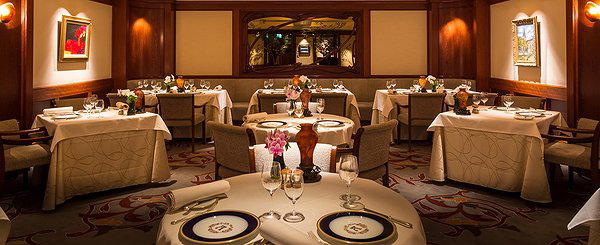
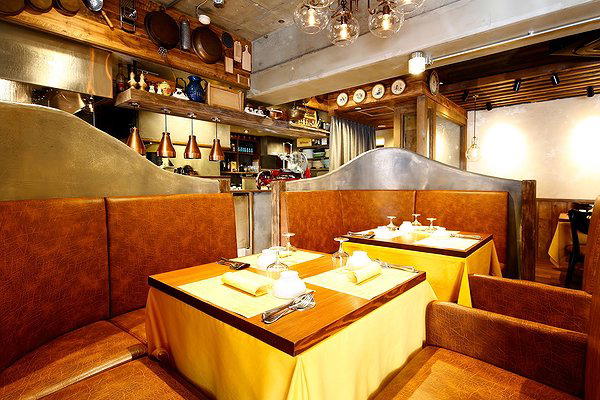
At Piatto Suzuki, this divide matters for how you should approach a visit. The fourth-floor location and relatively compact footprint suggest an intimate dining room where the experience of an evening, the pace, the quiet, the accumulated attention of a full menu, lands differently than a daytime sitting. Lunch here likely offers the cleaner value proposition for a first visit, letting the cooking speak before committing to a longer evening format. For those comparing options at this level, Principio and AlCeppo operate in a similar neighbourhood register, and the lunch-versus-dinner calculus applies equally across all three.
What Tokyo's better Italian restaurants have collectively proven over the past two decades is that daytime service need not be a reduced version of the evening. Some of the sharpest cooking in the city's Italian tier appears in lunch-only or lunch-forward formats, where chefs channel the same sourcing attention into tighter, more focused menus. Whether Piatto Suzuki leans into that tradition or treats lunch as a lighter entry point is a question leading answered by the booking you make and the service you encounter.
Chef Goro Suzuki and the Japanese-Italian Tradition
The pairing of a Japanese chef running an Italian kitchen is no longer a novelty in Tokyo, it is, at this point, an established culinary tradition with its own internal standards and peer comparisons. Chefs in this lineage typically bring Italian-trained technique (often from extended time working in Italy) back to Japan, where they apply it to domestic produce: Hokkaido dairy, Kyushu vegetables, regional fish varieties unavailable in Europe. The result is cooking that sits in Italian grammar but reads, in its ingredient choices and textural precision, as distinctly Japanese in execution.
Chef Goro Suzuki's name attaches to this restaurant in the way that matters most in this context: the cooking carries a specific identity, and the OAD recognition confirms it has reached a threshold of critical acknowledgment.
For comparison points across the broader Italian-in-Japan category, cenci in Kyoto represents how the Japanese-Italian tradition plays out in a Kansai register, with heavier emphasis on hyper-local Kyoto ingredients. In the international tier, Gucci Osteria da Massimo Bottura Tokyo occupies a different bracket entirely, with brand-driven visibility and international positioning that places it in a separate competitive set. Piatto Suzuki operates without that scaffolding, which is part of what the OAD ranking implicitly confirms: the recognition comes from the cooking rather than the concept.
Planning Your Visit
Piatto Suzuki is located at 1 Chome-7-7 Azabujuban, Minato City, Tokyo, fourth floor of the Hasebaya Building. Azabujuban Station (Namboku and Oedo lines) is the closest transit point. The neighbourhood is walkable and well-served by taxis from Roppongi and Hiroo.
| Venue | Cuisine | Neighbourhood | OAD Rank (Japan, 2025) | |
|---|---|---|---|---|
| Piatto Suzuki | Italian | Azabujuban | #559 | |
| Aroma Fresca | Italian | Ginza | Top-ranked Italian, Tokyo | |
| Principio | Italian | Tokyo | ||
| AlCeppo | Italian | Tokyo |
Given the restaurant's scale and neighbourhood positioning, advance reservations are advisable, particularly for weekend dinner service. The website and phone number are not currently listed, approaching via the building directly or through a hotel concierge familiar with the Azabujuban dining circuit is the practical route.
Tokyo and Japan: Further Reading
Piatto Suzuki represents one entry point into what Tokyo's Italian tier offers. For less-covered territory, akordu in Nara, Goh in Fukuoka, 1000 in Yokohama, and 6 in Okinawa each represent distinct regional approaches worth the detour.
For accommodation and nightlife planning around an Azabujuban dinner, Tokyo bars guide, Tokyo Tokyo experiences guide cover the surrounding options. For a regional comparison of how Italian cooking reads in a different Asian context, 8½ Otto e Mezzo Bombana in Hong Kong sits at the upper end of that conversation.
Frequently asked questions
Who runs the kitchen at Piatto Suzuki?
The chef associated with Piatto Suzuki is Goro Suzuki.
Is Piatto Suzuki focused on a specific cuisine style?
What's the signature dish at Piatto Suzuki?
The kitchen operates within the Japanese-Italian tradition that chef Goro Suzuki represents, a genre in Tokyo where seasonal Italian technique intersects with Japanese sourcing discipline. For current menu specifics, contacting the restaurant directly is the most reliable route.
What's the address for Piatto Suzuki?
Piatto Suzuki is located at Japan, 〒106-0045 Tokyo, Minato City, Azabujuban, 1 Chome−7−7 はせべやビル 4F, Tokyo.
Does Piatto Suzuki have a Michelin star or similar recognition?
Piatto Suzuki has received recognition including: Opinionated About Dining Top Restaurants in Japan Ranked #559 (2025).
Is Piatto Suzuki reservation-only?
No booking policy is formally published for Piatto Suzuki, but the restaurant's OAD ranking, #559 in Japan for 2025, places it within a tier where walk-in availability at dinner is rarely guaranteed. Securing a table in advance, particularly for evening service, is the practical approach for a restaurant of this standing in Azabujuban.
What makes Piatto Suzuki worth seeking out?
A 2025 OAD ranking among the top restaurants in Japan is a concrete signal of peer-level recognition in a country where the Italian dining tier is unusually competitive. Chef Goro Suzuki operates within an established Tokyo tradition of Japanese chefs running Italian kitchens at serious technical levels, a category that includes some of the city's most disciplined cooking. The fourth-floor Azabujuban address also places it away from the tourist circuit, in a neighbourhood that supports a local, repeat-dining clientele.
A Quick Peer Check
Comparable venues nearby, for context on price, style, and recognition.
| Venue | Cuisine | Price | Awards | Notes |
|---|---|---|---|---|
| Piatto SuzukiThis venue (the venue you are viewing) | Contemporary Italian | $200–300 | Tabelog 100 #20 | Not listed |
| リストランテ ヤギ | Modern Italian Fine Dining | Not listed | Not listed | Shibuya |
| Il Pregio | Modern Sensory Italian | $100–150 | Tabelog 100 #64 | Shibuya |
| Chanfe Tokyo | Modern Italian with Japanese Influences | $50–100 | Not listed | Taitō |
| Ristorante Hamasaki | Refined Italian | $150–200 | Tabelog 100 #21 | Shibuya |
| Bulgari Cafe II | Italian Fusion Cafe & Bar | Not listed | Not listed | Chūō |
Recognition history
Dated appearances from independent guides and award organizations, with the underlying list record or original source where available.
Opinionated About Dining Top Restaurants in Japan Recommended
Opinionated About Dining
Tabelog 100 #20 · No. 20
Tabelog · Tabelog 100 - Italian - TOKYO - 2025
Full recognition history (3 entries)
Opinionated About Dining Top Restaurants in Japan Ranked #559
Opinionated About Dining