
At ortensia, the chef’s itinerant mastery across Italy converges with a heartfelt devotion to Sicily, yielding a menu that is both polished and soul-stirring. Signature plates such as pasta crowned with delicate dried tuna roe and the rustic elegance of matalotta, whitefish and vegetables simmered to silken depth, celebrate tradition through a refined lens. The room glows in burnished orange, a subtle homage to Mezzogiorno blood oranges, inviting a cultivated clientele to linger over familiar comforts like clam sauce pasta and spaghetti peperoncino polished with controlled technique. This is casual sophistication for those who appreciate the quiet thrill of restraint, a place where authenticity whispers rather than shouts, and every detail, texture, aroma, and tone, conspires to make each visit feel like a beautifully kept secret.
Pearl is the En Primeur Club membership app — saves, bookings, and concierge access live there. Same editors, same standards.
- Address
- 274 Demizucho, Kamigyo Ward, Kyoto, 602-0862, Japan
- Phone
- +81 75-254-8776
- Website
- ortensia-kyoto.com
- Directions
- Get directions
 Saves & bookings on Pearl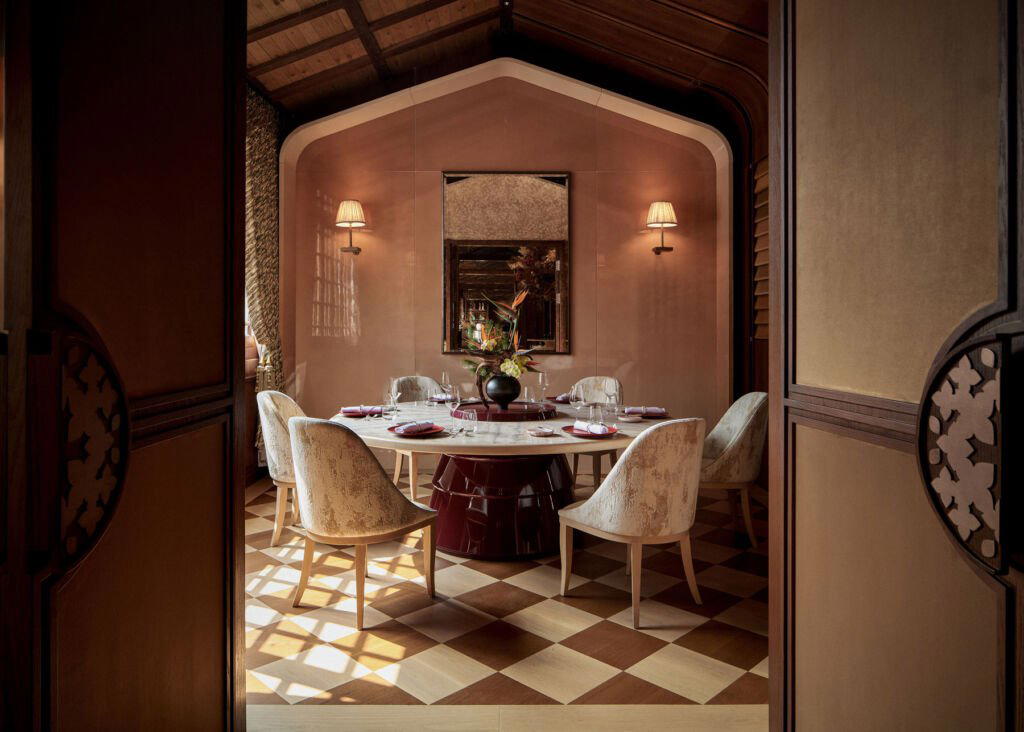
Burnt Orange in Kamigyo: A Sicilian Outpost in Kyoto's Quieter North
Kamigyo Ward sits north of the tourist corridors that funnel visitors between Gion and Nishiki Market, and the streets around Demizucho move at a pace that reflects the residential character of the neighbourhood rather than its hospitality density. Arriving at ortensia, the exterior registers immediately through colour: burnt orange, the shade of a blood orange from the Mezzogiorno, applied with enough conviction to read as a design statement rather than a painterly accident. That chromatic choice is a signal about what the kitchen intends. This is not a restaurant trying to dissolve into Kyoto's visual register of grey wood and noren curtains. It is, from the outside, a declaration of southern Italian origin.
Italy's regional dining traditions have always carried significant internal distance, the austere bread-and-legume cooking of Basilicata bears little resemblance to the fish-forward tables of Palermo. When Italian cooking travels to Japan, that regional specificity tends to compress into a generic northern-Italian shorthand: cream, truffle, risotto. Ortensia works in the opposite direction, anchoring its menu in Sicilian tradition: pasta made with dried tuna roe, 'matalotta' (a whitefish-and-vegetable stew with roots in the island's coastal fishing communities), and the kind of ingredient logic that treats the sea as a pantry. That these dishes appear in a mid-price Kyoto trattoria rather than in a tasting-menu context is one of the more specific things you can say about the city's Italian dining tier.
The Lunch and Dinner Divide
The pricing at ortensia, sitting at the ¥¥ tier, positions it well below Kyoto's Italian fine-dining bracket, which is anchored by venues like cenci (¥¥¥) and extends further up through the kaiseki rooms at Gion Sasaki and Kyokaiseki Kichisen (both ¥¥¥¥). That accessible price point, combined with the design intention to grow a clientele that drops in casually, creates an interior logic for how the venue performs differently across the day.
At lunch, the dynamic in this price range at Kyoto restaurants tends toward solo diners, working professionals from nearby offices, and visitors who have already spent their morning at Nishoji or Kitano Tenmangu and want something grounding before the afternoon. The familiar menu items, clam sauce pasta, spaghetti peperoncino, function well in this context. These are dishes that read quickly, require no explanation, and sustain a reasonable table turn. The Sicilian anchors (the tuna roe pasta, the matalotta) give a daytime visitor with even passing curiosity about regional Italian cooking a reason to order something beyond the expected.
Dinner shifts the proposition. The burnt-orange room, warm rather than stark, encourages a longer stay. The same menu items carry different weight at night: spaghetti peperoncino as an opener to a broader meal, the fish stew as the kind of central dish that invites a carafe of something from southern Italy to accompany it. The Michelin Plate recognition signals cooking that has been assessed and found to merit attention at the basic quality threshold, without implying the ceremony or formality of a starred room. That positioning is, in practical terms, ideal for evening meals that want food quality without occasion pressure.
For context, Kyoto's Italian dining scene places ortensia in an interesting competitive slot. It is meaningfully more affordable than cenci, operates in a different register from the Japanese-Italian synthesis at Bini, and shares none of the kaiseki formality of TAKAYAMA. Within its tier, it is the venue with one defined regional Italian position. Peers outside Kyoto that have made similar commitments to regional Italian specificity in a Japanese context include Vena and BOCCA del VINO, though ortensia's Sicilian emphasis remains its own lane.
Sicily as a Kitchen Logic
Understanding why ortensia's Sicilian focus matters requires a brief detour into what Sicilian cooking actually represents as a culinary tradition. The island's cuisine absorbs centuries of Arab, Norman, and Greek influence: sweet-sour agrodolce preparations, the use of dried fish roe (bottarga) as an umami-forward seasoning, and a fish culture that leans on whole preparation and broth rather than the butter-finished fillets more common in northern Europe. 'Matalotta', listed among ortensia's traditional flavour anchors, belongs to this tradition, a coastal fisherman's stew, seasoned with capers, olives, and tomato, designed to work with whatever the day's catch produced.
Bottarga, dried, cured tuna roe, has its own parallel logic in Japanese cooking, where dried and fermented fish products (karasumi, for instance, is the Japanese equivalent) occupy a similar high-umami role. The convergence of these two traditions in one menu is not coincidental, and it gives ortensia a culinary coherence that goes beyond novelty. Kyoto diners, accustomed to the layered dashi-forward flavour logic of kaiseki, are likely well-positioned to read the depth in a pasta seasoned with dried tuna roe in ways that a diner unfamiliar with fermented fish products might miss.
Where ortensia Sits in Kyoto's Broader Picture
Kyoto's restaurant map rewards specificity more than almost any other Japanese city. The kaiseki tradition is so dominant at the upper end that everything else, French, Italian, Chinese, tends to define itself in relation to it, either by absorbing its discipline and seasonality or by operating in deliberate contrast. Italian in Kyoto often falls into the former category: chef-driven, reservation-heavy, ingredient-seasonal, and priced accordingly. Ortensia's casual model, walk-in-friendly by design, mid-price, menu-driven rather than omakase, belongs to the contrasting approach.
That casual positioning is not a compromise. In Kyoto specifically, where the formal dining infrastructure is dense and where many visitors feel pressure to eat ceremonially, a competent and affordable Italian room with clear regional identity fills a genuine gap.
For broader Japan Italian comparisons, HAJIME in Osaka and Harutaka in Tokyo represent the upper register. Within the mid-tier casual Italian space in cities outside Kyoto, akordu in Nara, Goh in Fukuoka, 1000 in Yokohama, and 6 in Okinawa each occupy distinct regional positions. Internationally, 8½ Otto e Mezzo Bombana in Hong Kong and Frasca Food & Wine in Boulder show how Italian cooking with strong regional grounding travels.
Planning Your Visit
| Detail | ortensia | cenci (peer reference) | BOCCA del VINO (peer reference) |
|---|---|---|---|
| Cuisine | Sicilian-led Italian | Italian (chef-driven) | Italian |
| Price tier | ¥¥ | ¥¥¥ | N/A |
| Awards | Michelin Plate 2024, 2025 | See venue page | See venue page |
| Booking | Walk-in-friendly by design | Reservation advised | See venue page |
| Location | Kamigyo Ward, north Kyoto | Central Kyoto | Kyoto |
Ortensia sits at 274 Demizucho in Kamigyo Ward, a short distance from Nishoji and Kitano Tenmangu, in a residential part of the city that sees less passing trade than the central wards. The walk-in model suits spontaneous visits, though the modest seat count at a Michelin Plate venue means that early evening arrival is more reliable than arriving at peak dinner hours without any prior check.
A Quick Peer Check
Comparable venues nearby, for context on price, style, and recognition.
| Venue | Cuisine | Price | Awards | Notes |
|---|---|---|---|---|
| ortensiaThis venue — the venue you are viewing | Sicilian-inspired Italian with Kyoto seafood | $$$ | Michelin Plate | Not listed |
| Etto | Italian-Japanese Fusion | $$$ | Michelin Plate | Kamigyō |
| ristorante DONO | Vegetable-Focused Seasonal Italian | $$$$ | Michelin Plate | Sakyō |
| Takocho | Traditional Kyoto Oden | $$$ | Michelin Plate | Higashiyama |
| Germoglio | Piedmontese Italian with Kyoto Seasonality | $$$$ | Michelin Plate | Shimogyō |
| Kyoryori Hachisei | Traditional Kyoto Kaiseki | $$$ | Michelin Plate | Shimogyō |
Recognition history
Dated appearances from independent guides and award organizations, with the underlying list record or original source where available.
Michelin Plate
Michelin
Michelin Plate
Michelin
Michelin Plate
Michelin
Continue exploring
More in Kyoto
Restaurants in Kyoto
Browse all →
Bars in Kyoto
Browse all →
Hotels in Kyoto
Browse all →

Wineries in Kyoto
Browse all →
At a Glance
- Cozy
- Intimate
- Elegant
- Date Night
- Special Occasion
- Chefs Counter
- Sake Program
- Local Sourcing
Current opening hours
- Monday
- 12–3 PM, 6–10 PM
- Tuesday
- 12–3 PM, 6–10 PM
- Wednesday
- Closed
- Thursday
- 12–3 PM, 6–10 PM
- Friday
- 12–3 PM, 6–10 PM
- Saturday
- 12–3 PM, 6–10 PM
- Sunday
- 12–3 PM, 6–10 PM
Hours can change for holidays and private events. Last verified .
Cozy and intimate with rustic decor, soft lighting, and a warm, exotic atmosphere.