1 Michelin Star
Our verdict
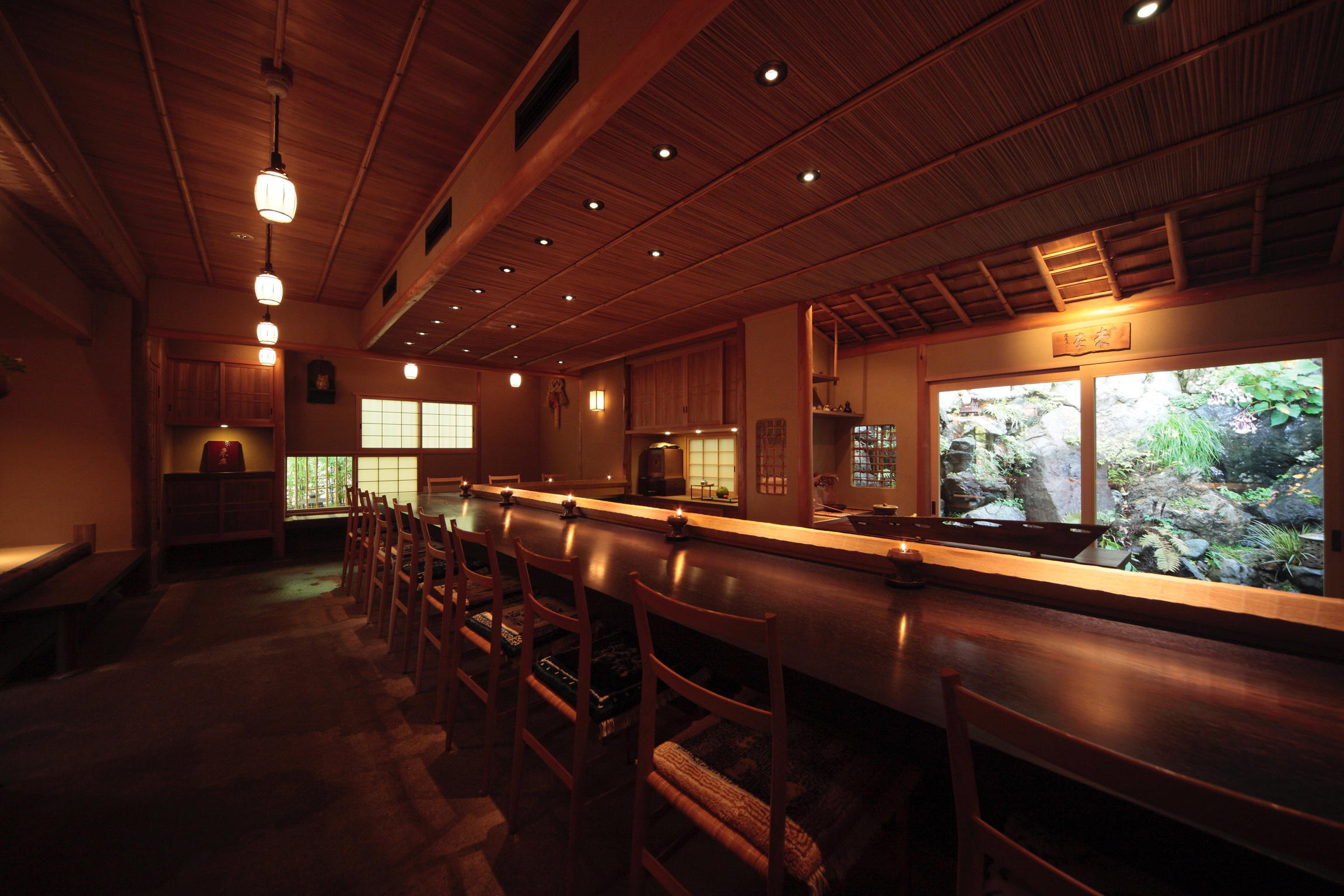
A Michelin-starred Kyoto cuisine counter in Nakagyo Ward, Nijo Minami earns its place among the city's most considered dining rooms through a philosophy of simple, honest preparation and a closing tea ceremony performed by the chef himself. The lacquered counter, handcrafted by the couple who run the restaurant, and a calligraphic sign gifted by a monk of Daitokuji Temple speak to the depth of ritual embedded in the experience. Rated 5 stars across guest reviews, it prices at ¥¥¥ — a notch below the top-tier kaiseki bracket.

Pearl is the En Primeur Club membership app — saves, bookings, and concierge access live there. Same editors, same standards.
- Address
- Japan, 〒604-0931 Kyoto, Nakagyo Ward, Enokicho, 92−12
- Phone
- +81 75-221-5025
- Hours
- Mon–Sat 5:30–10 PMSun Closed
- Directions
- Get directions
Nakagyo Ward and the Quiet Register of Kyoto Cuisine
Kyoto's dining map does not read like Tokyo's or Osaka's. The city's finest rooms tend to sit in residential pockets — behind unmarked facades, along canal-side lanes, or tucked into the low-rise blocks of wards like Nakagyo, where the grid of streets between Nijo and Oike has long supported a dense, unhurried food culture. This is not the Gion corridor where tourist foot traffic meets kaiseki ceremony. Nakagyo operates at a different register: local, deliberate, sustained by repeat guests rather than destination seekers.
Nijo Minami occupies a specific address in this context — Enokicho, in the heart of Nakagyo Ward, and the address matters. The area places the restaurant at some remove from the high-visibility dining clusters of Gion and Higashiyama, which means the room self-selects for guests who have sought it out rather than stumbled upon it. In a city where the most carefully managed counters operate on recommendation and word of mouth, that geography is a signal in itself.
The Counter as Artifact
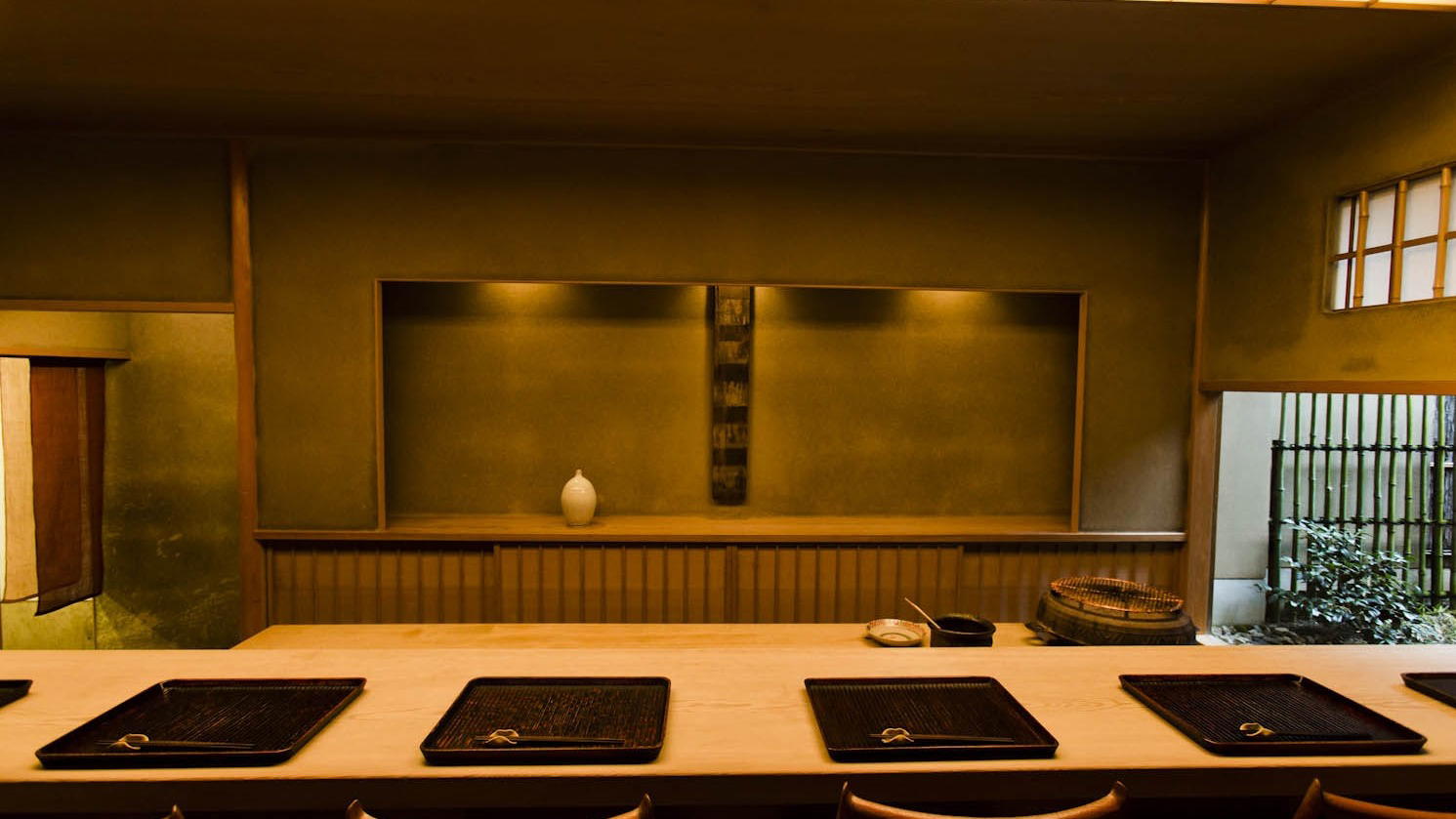
In traditional Japanese restaurant culture, the material condition of a dining room carries as much information as its menu. Counters are not neutral surfaces. At Nijo Minami, the lacquered counter was finished by the couple who run the restaurant, a gesture that positions the room inside a long-standing Japanese tradition of proprietors embedding personal labour and intention into the physical space. The result is a surface that reads as something other than furniture: it is an object with a documented origin, made with a specific wish for the restaurant's enduring prosperity.
The sign above the entrance, handwritten by the monk of Daitokuji Temple, reinforces this layering of meaning. Daitokuji, the great Zen complex in northern Kyoto, has been linked to tea ceremony practice and calligraphic tradition for centuries; its abbots and monks have long been consulted by households and establishments seeking objects of spiritual significance. The couple's regular journey to the temple to draw water for the kitchen is not decorative biography, it is evidence of the degree to which the restaurant's operation is threaded through the ritual life of the city around it. Few Michelin-starred rooms in Japan can claim a connection this specific to a named religious institution with this kind of historical weight.
The Cooking Tradition at Work
Kyoto cuisine, kyo-ryori, sits at the formal end of Japanese culinary tradition. It encompasses kaiseki, obanzai, and the highly refined vegetable and tofu preparations that emerged from centuries of proximity to court culture and Buddhist monastic cooking. The shared principle across all these forms is restraint in technique: the ingredient is not transformed so much as clarified, its essential character brought forward through precise heat, timing, and seasoning. Elaborate flourishes are treated as failures of confidence rather than marks of skill.
Nijo Minami's chef works within this tradition and its disciplines. The kitchen's stated approach, simple, honest preparation designed to impart the flavour of each ingredient, is not a marketing phrase but a description of a technical position. In a culinary culture where that position has been debated and refined across generations, it places the restaurant in a specific lineage.
For context, Kyoto's Michelin-starred dining scene spans a wide range of price points and formats. At the upper tier, rooms like Isshisoden Nakamura and Gion Matayoshi operate at ¥¥¥¥ pricing, as do Kenninji Gion Maruyama and Kikunoi Roan. Nijo Minami prices at ¥¥¥, which in Kyoto's starred dining context positions it as accessible relative to the leading bracket while still operating at a level that signals deliberate curation. It is closer in pricing to Kodaiji Jugyuan than to the multi-star kaiseki houses further up the price scale.
How the Meal Closes
The most formally significant element of the Nijo Minami experience may be its ending. The meal closes with handmade Japanese confectioneries and thin tea prepared and served by the chef himself. This is not incidental hospitality. It is a direct reference to the structure of a formal tea gathering, in which sweets precede thin tea (usucha) as a calibrated sequence designed to prepare the palate and settle the mind.
The chef is a practitioner of the Omote Senke school of tea ceremony, one of the two major hereditary schools of chado that trace their lineage directly to the great sixteenth-century tea master Sen no Rikyu. The Omote Senke school has maintained its own particular aesthetic and ritual approach for centuries, and its practitioners undergo extensive formal training. That the chef performs this closing service personally, described explicitly as a token of gratitude to guests, places the act within a framework of duty and relationship rather than theatrical performance. It is also, practically speaking, a rare offering: few restaurants at any price point close a dinner with a formally trained tea ceremony by the chef.
Kyoto in Wider Context
Kind of cooking Nijo Minami represents has direct counterparts elsewhere in Japan, though each city inflects the tradition differently. Myojaku in Tokyo and Azabu Kadowaki work within Japanese culinary formalism from a Tokyo orientation, while HAJIME in Osaka approaches Japanese ingredients through a more contemporary European lens. The precision-led, ingredient-centred approach practised in Kyoto rooms like Nijo Minami remains distinct from all of these: it is rooted in a specific geography and a specific court-and-temple history that Tokyo and Osaka cannot replicate.
Beyond Japan's main cities, the contrast sharpens further. Harutaka in Tokyo works in the sushi idiom; akordu in Nara blends Basque training with local produce; Goh in Fukuoka and 1000 in Yokohama represent regional Japanese cooking in different registers again. 6 in Okinawa operates from an entirely different culinary inheritance. What Kyoto's traditional rooms offer is not available through any of these alternatives: it is the combination of a particular historical food culture, a particular ritual framework, and a city that has organised its civic life around these things for a very long time.
For broader planning across the city, our full Kyoto restaurants guide covers the full range of formats and price tiers. Supplement with our Kyoto hotels guide, our Kyoto bars guide, our Kyoto experiences guide, and our Kyoto wineries guide for a complete visit framework.
Planning Your Visit
| Detail | Nijo Minami | Typical ¥¥¥¥ Kyoto Kaiseki | Typical ¥¥¥ Kyoto Japanese |
|---|---|---|---|
| Price tier | ¥¥¥ | ¥¥¥¥ | ¥¥¥ |
| Michelin recognition | 1 Star (2024) | 1–3 Stars | Varies |
| Cuisine format | Kyoto cuisine (kyo-ryori) | Full kaiseki sequence | Various |
| Closing ceremony | Chef-prepared thin tea | Varies by house | Rarely included |
| Location ward | Nakagyo | Gion / Higashiyama / varies | Citywide |
| Guest reviews | Varies | Varies |
Frequently asked questions
What kind of recognition has Nijo Minami received?
Nijo Minami has received recognition including: The counter was lacquered by the couple who run the restaurant as a wish for its enduring prosperity. The sign is a memento handwritten for them by the monk of Daitokuji Temple, to which the couple regularly journey to draw water. To impart….
What's the cuisine at Nijo Minami?
What do regulars order at Nijo Minami?
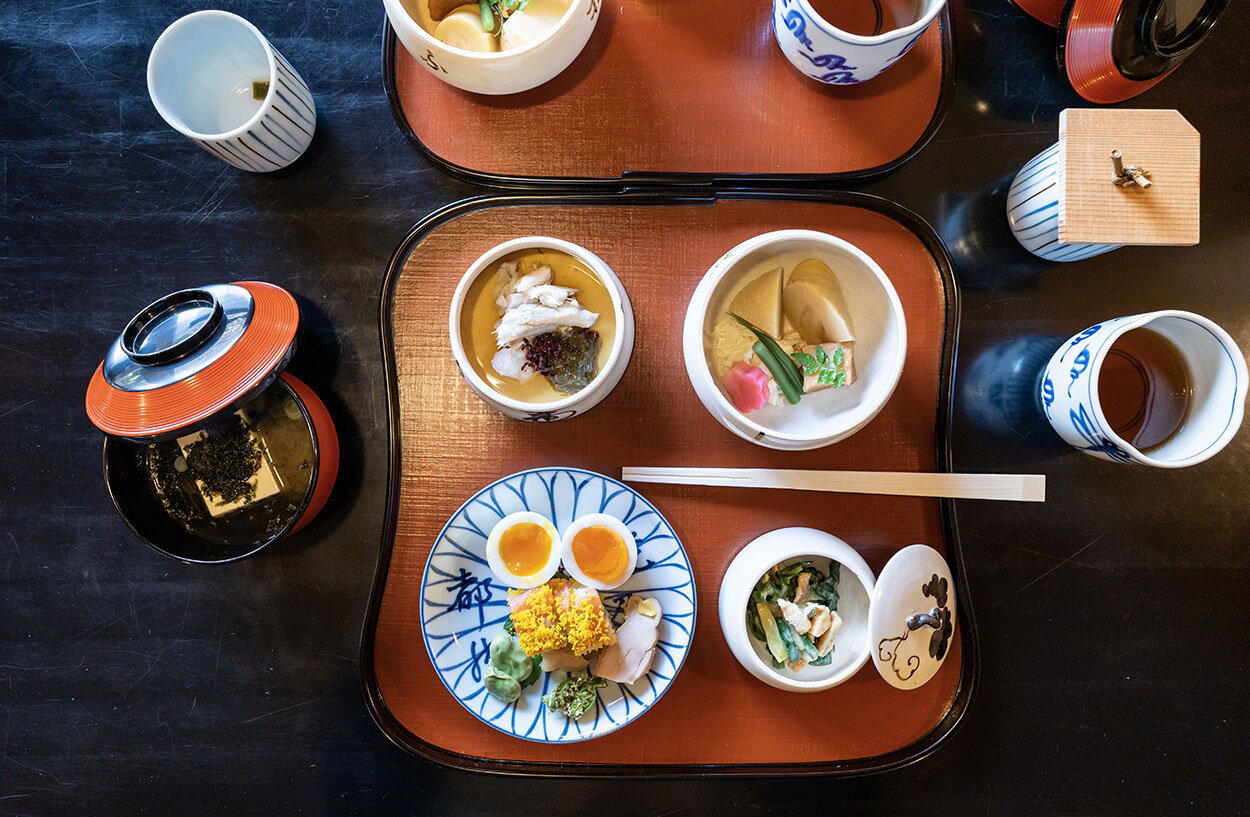
The menu is not à la carte. Nijo Minami runs a set sequence of Kyoto cuisine courses shaped by seasonal ingredients and the chef's guiding principle of simple, honest preparation — letting each ingredient speak on its own terms. The meal closes with handmade Japanese confectioneries and thin tea the chef prepares himself, following the Omote Senke school of tea ceremony. Returning guests come for that full arc, not individual dishes.
What's the price range at Nijo Minami?
Pricing at Nijo Minami is listed as ¥¥¥.
Where do I go for Nijo Minami?
Nijo Minami is located at Japan, 〒604-0931 Kyoto, Nakagyo Ward, Enokicho, 92−12, Kyoto.
What's the best way to book Nijo Minami?
No public phone number or website is listed for Nijo Minami, which is consistent with how Kyoto's Michelin-starred rooms at this tier typically operate — reservations often flow through personal introductions or specialist concierge services rather than online platforms. Hotel concierges at Kyoto's top-tier ryokan and city hotels are often the most reliable route in. Lead time of several weeks is advisable, particularly around peak foliage and cherry blossom seasons.
At-a-Glance Comparison
| Venue | Cuisine | Price | Awards | Notes |
|---|---|---|---|---|
| Nijo MinamiThis venue — the venue you are viewing | Michelin-Starred Kyoto Kaiseki | $200–300 | 1 Michelin Star | Not listed |
| Gion Sasaki | Modern Kaiseki | $300–500 | 3 Michelin Stars · La Liste Top Restaurants | Kaiseki, Japanese |
| cenci | Innovative Italian-Japanese Fusion | $100–150 | 1 Michelin Star · World's 50 Best #76 | Italian |
| Ifuki | Sumibi Kappo Kaiseki | $200–300 | 2 Michelin Stars · La Liste Top Restaurants | Kaiseki |
| Kyokaiseki Kichisen | Kyoto Kaiseki | $200–300 | 2 Michelin Stars · La Liste Top Restaurants | Japanese |
| Kyo Seika | Seasonal Chinese Fine Dining in Kyoto | Not listed | 1 Michelin Star | Chinese |
Recognition history
Dated appearances from independent guides and award organizations, with the underlying list record or original source where available.
Michelin 1 Star
Michelin
Full recognition history (2 entries)
Michelin 1 Star
Michelin