Michelin Plate · Tabelog 100 #75
Our verdict
A Michelin Plate-recognised Italian in Nishiazabu, Merachi draws on Japan's domestic pantry with deliberate restraint. Tokyo tomatoes, Chiba mozzarella, and seasonally driven pastas form the backbone of a menu that treats Italian technique as a frame for exceptional local produce. The name itself signals the kitchen's priorities: 'creation of an artisan, pouring in heart and soul.'

Pearl is the En Primeur Club membership app, where members save venues, book tables and use the concierge.
Italian Simplicity, Japanese Ingredients
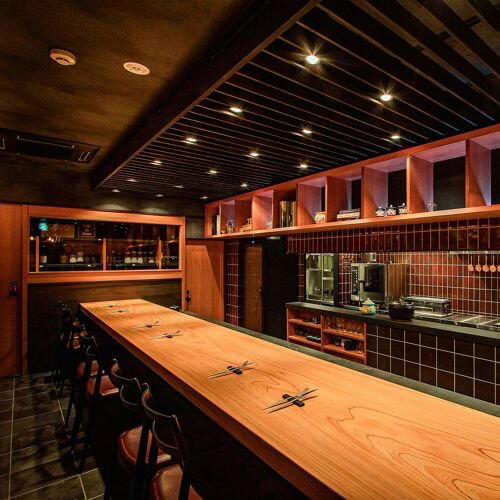
Tokyo's Italian dining scene divides cleanly into two camps. One imports prestige through European lineage, brand partnerships, and theatrical tasting menus, see the Gucci-branded spectacle of Gucci Osteria da Massimo Bottura Tokyo or the refined French-Italian synthesis at Aroma Fresca. The other camp, smaller, quieter, harder to find, grounds Italian cooking in Japanese produce, letting the ingredient do the argumentative work. Merachi, on a backstreet in Nishiazabu, belongs to the second group. Its name translates roughly as 'creation of an artisan, pouring in heart and soul,' a phrase that acknowledges the food producers first, the kitchen second. That ordering of priorities is the whole philosophy in a single sentence.
The approach is not about novelty. Italian cooking at its most disciplined has always been a cuisine of reduction: fewer components, better sourced, treated with enough technique to stay out of the ingredient's way. What Merachi does is apply that principle to Japan's domestic supply chain, which, in the context of Tokyo's hyper-specific agricultural networks, means access to produce that would be genuinely difficult to replicate anywhere in Europe. Tokyo tomatoes for sauces. Mozzarella from Chiba paired with cured ham. These are not fusion gestures, they are sourcing decisions that treat Japanese agriculture with the same seriousness that a Campanian chef might give to San Marzanos.
The Menu as Seasonal Argument
Across Tokyo's serious Italian tables, the pasta course carries the most editorial weight. At PRISMA and Principio, pasta expresses technical range and regional Italian reference. At Merachi, the argument is seasonal: pasta Genovese in summer, brown-mushroom pasta in autumn. These are not elaborate set pieces. They are course-by-course records of what the Japanese growing calendar produces at its peak, translated through an Italian grammar that has been refined over centuries precisely because it knows how to step back and let good ingredients speak.
The commitment to seasonality is worth taking seriously as an editorial position, not just a menu description. Japanese cuisine, from kaiseki to the more contemplative end of the sushi counter, has built an entire aesthetic framework around mono no aware, the appreciation of impermanence. When that sensibility crosses into Italian cooking, the result is not confusion but clarification. The season becomes the menu's structure. The ingredient becomes the argument. The kitchen's job is execution, not authorship.
This framing places Merachi in a coherent tradition of Italian restaurants in Japan that have absorbed Japanese culinary philosophy without abandoning their European roots. cenci in Kyoto operates in a comparable register, where Italian technique is the vehicle and Japanese produce and sensibility are the destination. The same logic applies, in broader strokes, to what akordu in Nara does with Spanish cooking and local ingredients. The cross-cultural form is becoming its own genre in Japan, and Merachi is a clean example of it done without flourish.
Nishiazabu and Its Context
Nishiazabu has spent two decades positioning itself as Tokyo's most quietly serious dining neighbourhood. It lacks the density and spectacle of Ginza, the fashion-forward churn of Omotesando, and the tourist footprint of Shibuya. What it has instead is a concentration of small, owner-operated restaurants that reward prior knowledge. The address, a first-floor unit in a modest building on a side street, fits the neighbourhood's low-signal, high-content character exactly.
Comparable neighbourhood-level patterns appear across Tokyo's Italian scene. AlCeppo operates in a similar register of neighbourhood-embedded Italian cooking, where the absence of a prominent street presence is itself a kind of signal. Restaurants in this mould do not recruit walk-in traffic. Their audience arrives deliberately, via recommendation or prior research.
Merachi holds a Michelin Plate for both 2024 and 2025. The Plate designation, below the star tier, marks a restaurant that Michelin's inspectors consider to offer good cooking, specifically, fresh ingredients, carefully prepared. That framing aligns precisely with what Merachi is trying to do. The kitchen is not making a case for a starred tasting menu format; it is making a case for ingredients and technique, served without the scaffolding that starred restaurants often require.
The comparison is useful: Tokyo's ¥¥¥ Italian segment is competitive and consistent. Holding a Plate across two consecutive years indicates that the kitchen's approach is deliberate and repeatable, not dependent on a single exceptional evening.
For a broader view of where Merachi sits among Tokyo's restaurant options across all cuisines and formats, our full Tokyo restaurants guide provides the comparative context. Readers with wider Japan itineraries may also find relevant reference points at HAJIME in Osaka, Gion Sasaki in Kyoto, Goh in Fukuoka, 1000 in Yokohama, and 6 in Okinawa. For Italian cooking in a comparable register elsewhere in Asia, 8 1/2 Otto e Mezzo Bombana in Hong Kong represents the starred end of the same broad commitment to Italian craft outside Italy's borders.
Know Before You Go
- Address: 1 Chome-4-23 Nishiazabu, Minato City, Tokyo 106-0031 (1F, Algo Nishiazabu Building, Unit B)
- Cuisine: Italian, with a deliberate focus on Japanese domestic produce
- Price range: ¥¥¥
- Awards: Michelin Plate 2024 and 2025
- Booking: Contact details not publicly listed; reservation method not confirmed, enquire via direct search or local concierge
- Hours: Not confirmed at time of publication, verify before visiting
- Neighbourhood: Nishiazabu, Minato City, a low-profile residential and dining district leading reached by taxi or on foot from Hiroo or Roppongi stations
Further Tokyo Guidance
Merachi is one reference point in a city where Italian cooking has developed a distinct local character over several decades. For hotels, bars, and experiences to complete a Tokyo visit, see our full Tokyo hotels guide, our full Tokyo bars guide, our full Tokyo wineries guide, and our full Tokyo experiences guide.
What Do People Recommend at Merachi?
Based on the kitchen's documented approach, the pastas draw the most attention. The seasonal structure means the menu changes across the year: pasta Genovese appears in summer, brown-mushroom pasta in autumn. The mozzarella from Chiba, paired with cured ham, functions as a recurring set piece that grounds the menu in local dairy rather than imported ingredient theatre. This is not a restaurant where a single signature dish carries all the weight. The recommendation is the approach itself: produce-led, season-anchored, executed without distraction.
Frequently asked questions
What distinctions does Merachi have?
Merachi has received recognition including: The name means ‘creation of an artisan, pouring in heart and soul’. It was chosen to express thanks to his food producers, who grow his ingredients with care and effort. Preparations are no-nonsense, respecting the sanctity of domestic food….
What should I expect cuisine-wise at Merachi?
What do people recommend at Merachi?
The pasta courses draw the most consistent attention, built around a seasonal structure: pasta Genovese appears in summer, brown-mushroom pasta in autumn. The kitchen's documented philosophy favours domestic Japanese produce, pairing Chiba mozzarella with cured ham and using Tokyo tomatoes for sauces, so dishes vary by what the producers deliver rather than a fixed menu.
Is Merachi expensive?
Pricing at Merachi is listed as ¥¥¥.
Where is Merachi located?
Merachi is located at Japan, 〒106-0031 Tokyo, Minato City, Nishiazabu, 1 Chome−4−23 アルゴ西麻布 1階B号, Tokyo.
A Credentials Check
A small set of peers for context, based on recorded venue fields.
| Venue | Cuisine | Price | Awards | Notes |
|---|---|---|---|---|
| MerachiThis venue (the venue you are viewing) | Modern Italian with Japanese Ingredients | $200–300 | Michelin Plate · Tabelog 100 #75 | Not listed |
| Harutaka | Edo-Style Omakase Sushi | $200–300 | 3 Michelin Stars · World's 50 Best #76 | Sushi |
| RyuGin | Modern Kaiseki | $500+ | 3 Michelin Stars · World's 50 Best #41 | Kaiseki, Japanese |
| L'Effervescence | Modern French with Japanese Influences | $200–300 | 3 Michelin Stars · World's 50 Best #69 | French |
| HOMMAGE | Modern French with Japanese Influences | $150–200 | 2 Michelin Stars · World's 50 Best #78 | Innovtive French, French |
| MAZ | Innovative Peruvian-Japanese Fusion | $150–200 | 2 Michelin Stars · World's 50 Best #28 | Innovative |
Recognition history
Dated appearances from independent guides and award organizations, with the underlying list record or original source where available.
Michelin Plate
Michelin
Tabelog 100 #75 · No. 75
Tabelog · Tabelog 100 - Italian - TOKYO - 2025
Full recognition history (4 entries)
Michelin Plate
Michelin
Michelin Plate
Michelin