
Michelin Plate · La Liste Top Restaurants · Tabelog 100 #74
Our verdict
On the tenth and eleventh floors of the Armani/Ginza Tower, ARMANI/RISTORANTE translates the fashion house's aesthetic discipline into an Italian menu that spans the peninsula's regional traditions while anchoring ingredients to Japanese seasonality. Holding a Michelin Plate in 2024 and 2025 and ranked 78.5 points on La Liste's 2025 global list, it occupies a distinct tier among Ginza's high-end Western dining options.

Pearl is the En Primeur Club membership app, where members save venues, book tables and use the concierge.
Pale Gold Above Ginza
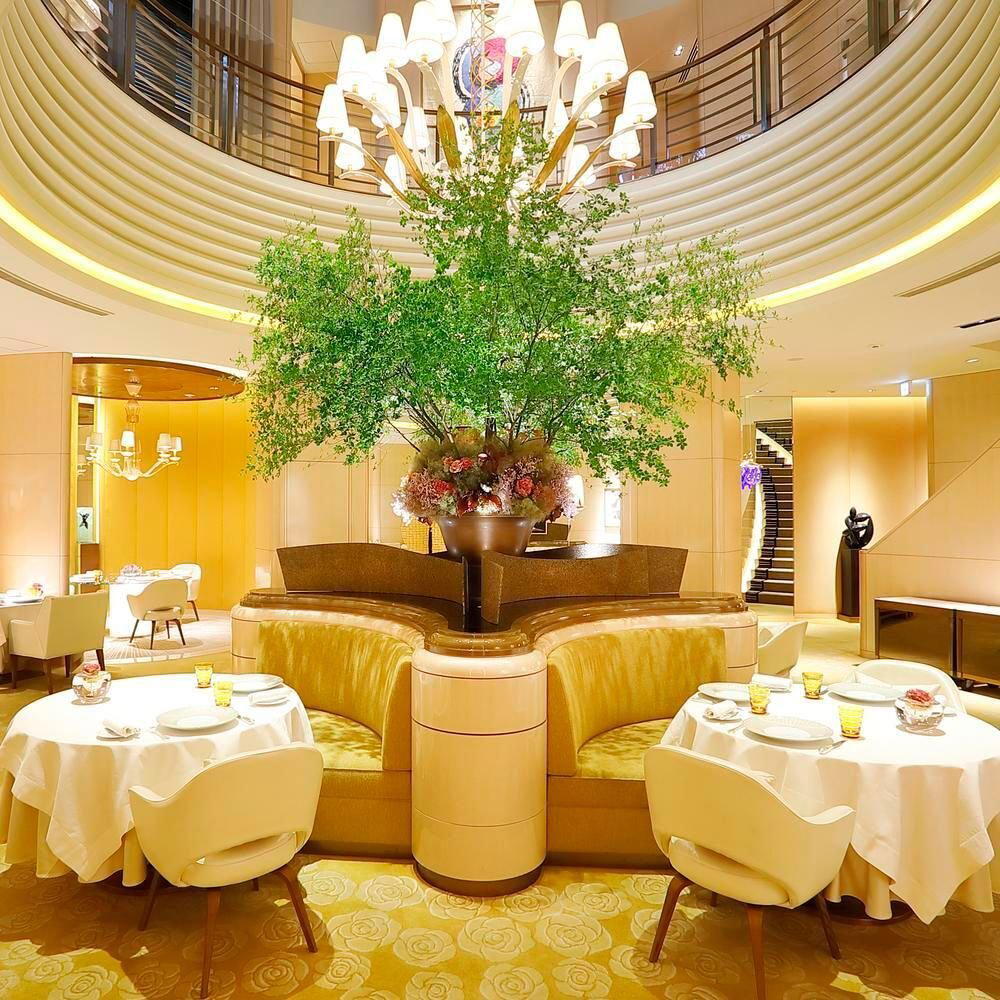
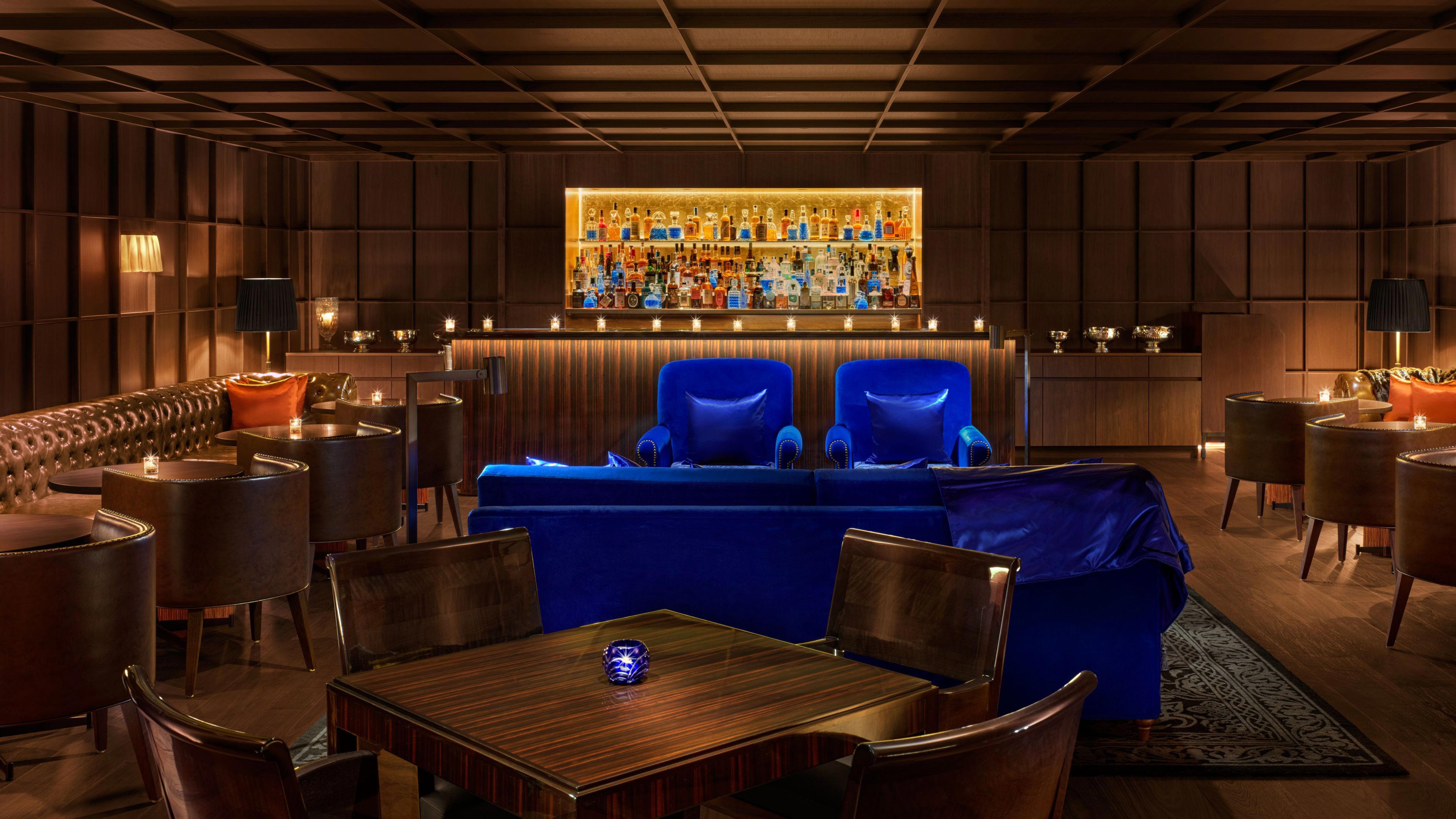
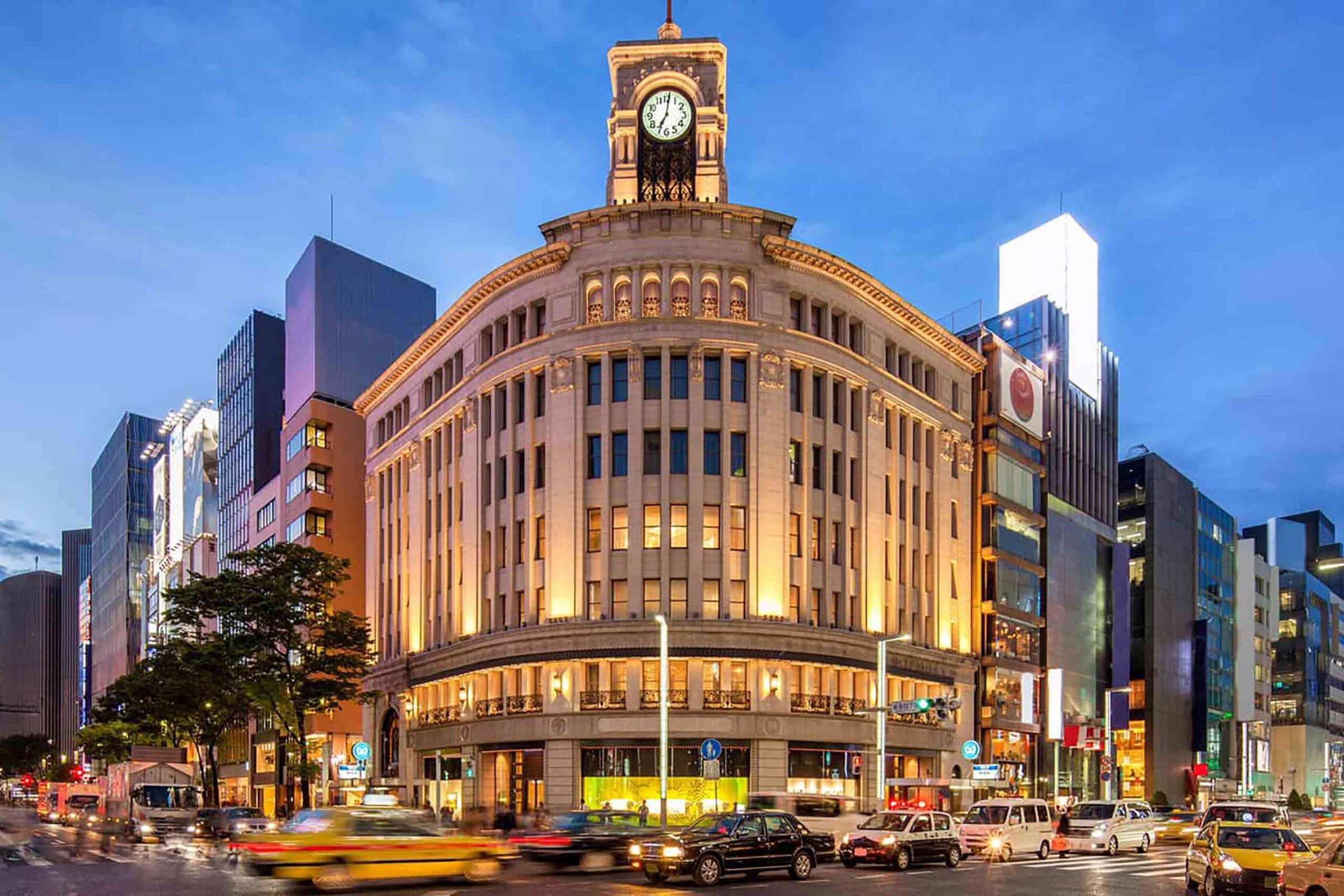
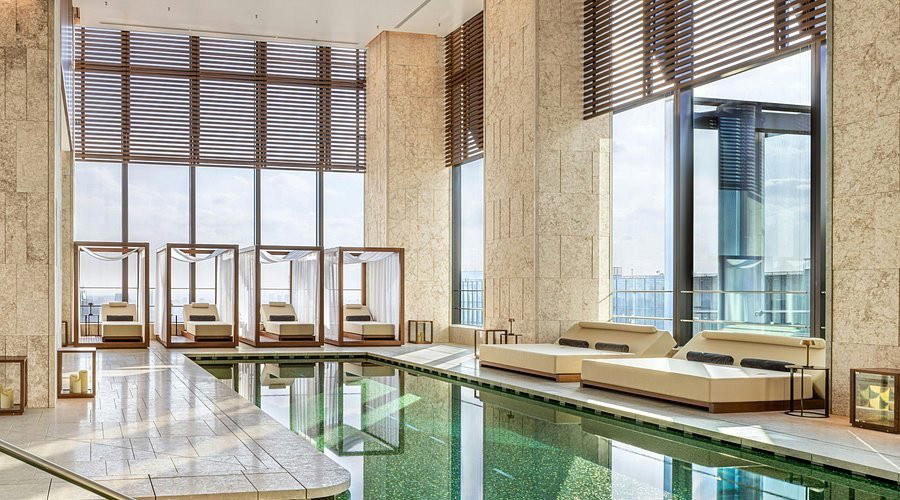
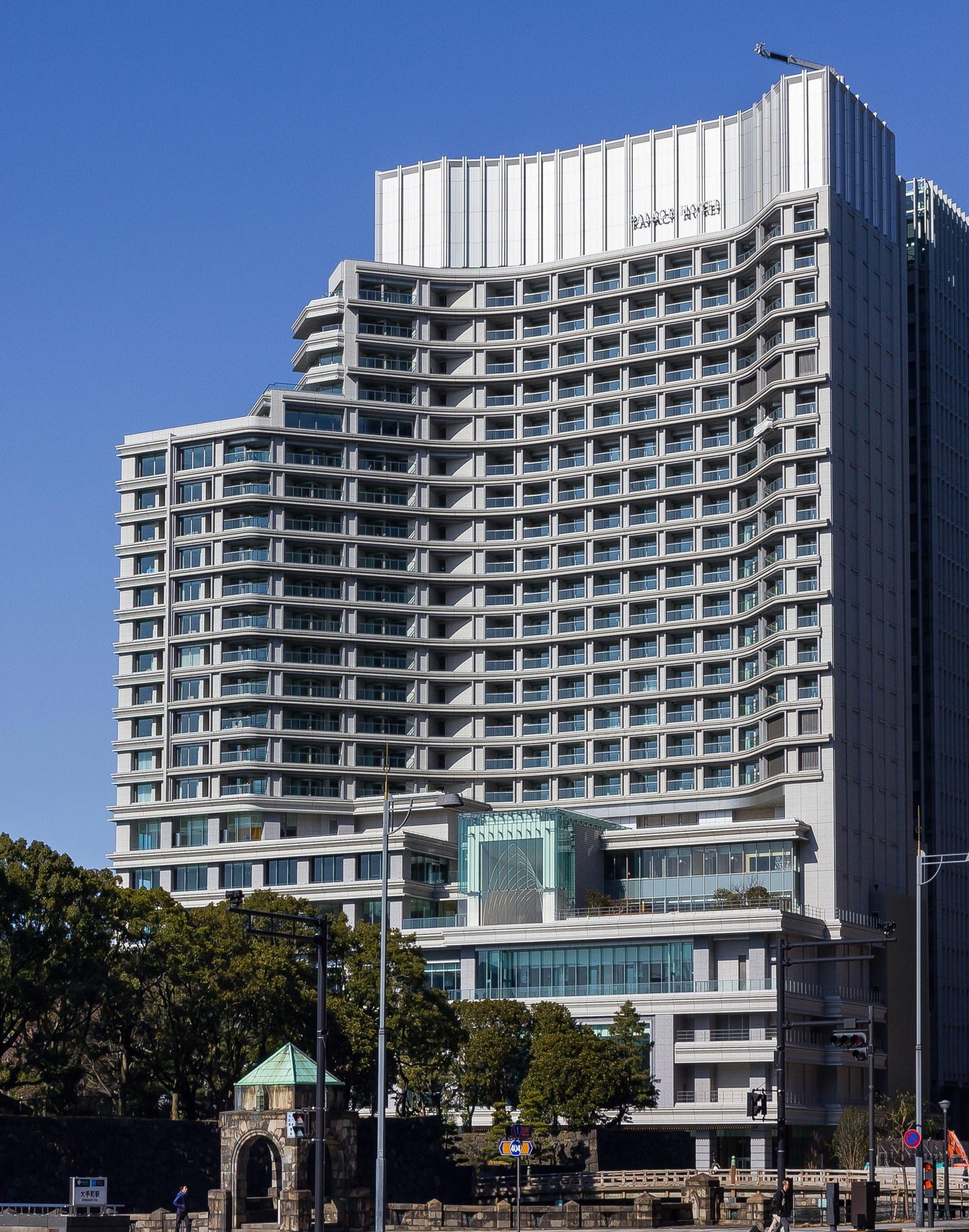
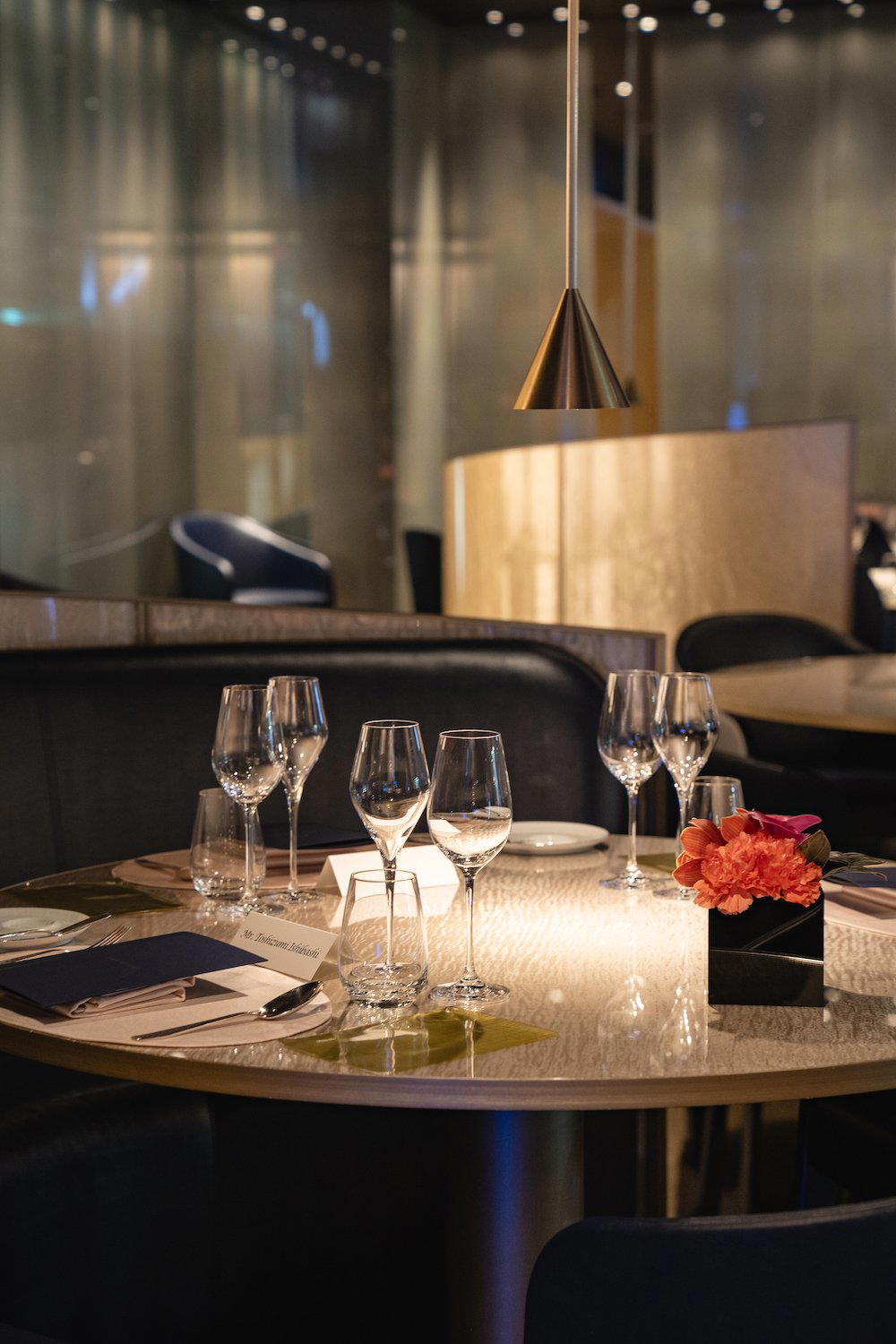
Arriving at the Armani/Ginza Tower on Chuo-dori, the ground floor retail space sets an immediate register: neutral palettes, clean sightlines, materials chosen with deliberate restraint. The elevator ride to floors ten and eleven carries that register upward, and the dining room itself delivers the logical conclusion. Pale gold tones dominate, the light is calibrated rather than atmospheric, and the cutlery and tableware carry the same design logic as the clothes sold below. In Ginza, where Western fine dining has long operated in hotel ballrooms or anonymous tower floors, ARMANI/RISTORANTE offers something more coherent: a room where the aesthetic argument is settled before the menu arrives.
That coherence matters as context. Ginza's premium Italian scene sits in a competitive bracket that includes venues like Aroma Fresca and Principio, both of which carry Michelin recognition and draw on deep Italian technique. For our full Tokyo restaurants guide, this venue reads as a case study in how brand architecture can function as genuine hospitality design when executed with sufficient discipline.
A Menu Built Across the Peninsula
Italian cuisine in Tokyo has generally evolved in one of two directions: the rigorous single-region specialist, or the broader interpretive kitchen that treats the peninsula as a source library. ARMANI/RISTORANTE belongs to the second category, with a menu that moves between the seafood preparations of southern Italy and the cutlets and stuffed pasta traditions of the north. That range is not a compromise. It reflects the geographic reality of Italian cooking, where Liguria, Sicily, Emilia-Romagna, and Lombardy represent genuinely different culinary grammars, and assembling them coherently under one roof requires kitchen range rather than a narrowed focus.
The anchor principle running through this regional breadth is Japanese seasonality. Ingredients sourced in Japan are used to express the seasons of the country, which means the menu shifts with what the domestic market makes available across the calendar year. This approach is common among Tokyo's serious Western kitchens: French houses like PRISMA and innovative operators across the city have long integrated Japanese produce as a structural element rather than a garnish. At ARMANI/RISTORANTE, it means southern Italian olive oil preparations carry Japanese seafood, and northern Italian pasta formats are filled according to what is available locally. The result is a menu with European structure and Japanese material, which is a more interesting synthesis than it might first appear.
Chef Daniele Castellano leads the kitchen. His role here is less about personal narrative and more about execution: translating a broad Italian framework across regions and seasons, in a room where the design already carries significant weight. That is a specific kind of discipline, and the consistent Michelin Plate recognition in both 2024 and 2025 suggests the kitchen is meeting its brief reliably. Among peer venues at the ¥¥¥ price tier, which includes well-regarded operators like Den in the innovative Japanese category, consistency at this level is not assumed.
The Wine List as Structural Argument
An Italian menu spanning multiple regions creates a wine pairing challenge that, when handled well, becomes a programme of genuine breadth. Southern Italian seafood in olive oil calls for a different cellar response than stuffed pasta from Emilia-Romagna or a Milanese cutlet. A wine list designed to cover this range needs to move between the white-wine traditions of Campania, Friuli, and Sicily, through the Sangiovese-driven central Italian reds, and into the Nebbiolo and Barbera expressions of Piedmont and Lombardy.5 points in 2025 positions the restaurant among internationally recognised addresses where cellar depth is expected rather than optional.
For comparison, Italian wine programmes at high-end Tokyo restaurants have historically leaned toward Tuscany and Piedmont as safe commercial anchors, with southern Italian and island wines representing a smaller proportion of the list. The more sophisticated approach mirrors what the menu itself attempts: drawing across the full peninsula. Venues like Gucci Osteria da Massimo Bottura Tokyo and AlCeppo represent different points on the same spectrum of Tokyo Italian dining, each with their own cellar logic. At a fashion-house address in Ginza, the expectation is that the sommelier programme matches the room's visual authority.
Beyond Italy, the wine service at this tier in Tokyo typically extends to French fine wine and occasionally to Japanese wine, which has developed a credible premium tier over the past decade. Given the menu's explicit commitment to Japanese ingredients and seasonality, a list that includes domestic producers would be consistent with the kitchen's philosophy. Readers interested in broader Japanese wine context can find it in our full Tokyo wineries guide.
Ginza's Western Fine Dining Tier
Ginza has long been Tokyo's reference address for high-end Western dining, partly by proximity to flagship international retail and partly because the neighbourhood's commercial rents and clientele create a particular kind of restaurant economics. The comparison set here is not primarily the Michelin three-star Japanese counters of the city, venues like Harutaka at ¥¥¥¥ or RyuGin at the same tier, but the category of upscale Western dining that serves a mixed domestic and international audience with an expectation of recognisable European formats handled at Japanese precision standards.
ARMANI/RISTORANTE sits at ¥¥¥, which places it below the upper bracket occupied by some of Tokyo's most decorated Western tables, but within a tier that is competitive and increasingly well-curated. Across Japan, the Italian tradition has produced serious practitioners in cities beyond Tokyo: cenci in Kyoto represents the kind of Italian-Japanese synthesis that has developed regional identity outside the capital, while internationally, 8 1/2 Otto e Mezzo Bombana in Hong Kong demonstrates what the upper ceiling of the Asia-Pacific Italian fine dining tier looks like with three Michelin stars. ARMANI/RISTORANTE occupies a position that is defined less by competitive culinary ambition and more by the coherence of its total proposition.
For visitors planning around this area, our full Tokyo bars guide covers the Ginza drinking scene, and our full Tokyo hotels guide maps the nearby accommodation options. Those travelling beyond the capital will find relevant context in HAJIME in Osaka, Gion Sasaki in Kyoto, akordu in Nara, Goh in Fukuoka, 1000 in Yokohama, and 6 in Okinawa for a wider picture of Japan's serious dining circuit.
Planning a Visit
The restaurant occupies floors ten and eleven of the Armani/Ginza Tower at 5-5-4 Ginza, Chuo City, accessible from Ginza Station on the Ginza, Hibiya, and Marunouchi lines. At the ¥¥¥ price tier, expect a spend comparable to other Michelin-recognised Italian addresses in the neighbourhood. Booking in advance is advisable for dinner, particularly for groups, as the room's design-led format tends toward a considered capacity rather than high-turnover covers. The Tokyo experiences guide provides wider context for structuring a Ginza itinerary around the dining visit.
What Should I Order at ARMANI/RISTORANTE?
The menu spans Italian regional traditions from north to south, so the ordering logic follows that geography. Seafood preparations using olive oil reflect the southern Italian kitchen and are anchored to Japanese seasonal ingredients, making them the clearest expression of the restaurant's synthesis approach. Stuffed pasta and cutlet dishes represent the northern Italian tradition and offer a different register within the same meal. Because the kitchen explicitly rotates ingredients according to Japanese seasonality, the most coherent approach is to let the current menu guide the selection rather than arriving with fixed dish expectations. The sommelier programme, at a La Liste-ranked address at this price point, should be engaged for pairing guidance across the regional range.
Frequently asked questions
Is ARMANI / RISTORANTE expensive?
Pricing at ARMANI / RISTORANTE is listed as ¥¥¥.
Where do I go for ARMANI / RISTORANTE?
ARMANI / RISTORANTE is located at Japan, 〒104-0061 Tokyo, Chuo City, Ginza, 5 Chome−5−4 Armani / Ginza Tower, 10-11F, Tokyo.
Does ARMANI / RISTORANTE have a Michelin star or similar recognition?
ARMANI / RISTORANTE has received recognition including: Pale gold creates a bright and showy dining room. The aesthetic of fashion designer Giorgio Armani is on display throughout, from the décor to the cutlery. The menu is influenced by every region of Italy. Seafood is prepared using olive oil….
What should I order at ARMANI / RISTORANTE?
The menu is organised around Italian regional traditions, so the divide between north and south is a practical guide. Seafood dishes prepared with olive oil follow southern Italian technique, while stuffed pasta and cutlets represent the northern kitchen. Chef Daniele Castellano also draws on Japanese seasonal ingredients throughout, so dishes that pair Italian method with local produce tend to reflect the kitchen's clearest point of difference. La Liste ranked the restaurant at 78.5 points in 2025, which places it in the upper tier of Tokyo's Western fine dining addresses.
What's the cuisine at ARMANI / RISTORANTE?
| Venue | Cuisine | Price | Awards | Notes |
|---|---|---|---|---|
| ARMANI / RISTORANTEThis venue (the venue you are viewing) | Modern Italian with Japanese Influences | $200–300 | Michelin Plate · La Liste Top Restaurants | Not listed |
| Harutaka | Edo-Style Omakase Sushi | $200–300 | 3 Michelin Stars · World's 50 Best #76 | Sushi |
| RyuGin | Modern Kaiseki | $500+ | 3 Michelin Stars · World's 50 Best #41 | Kaiseki, Japanese |
| L'Effervescence | Modern French with Japanese Influences | $200–300 | 3 Michelin Stars · World's 50 Best #69 | French |
| HOMMAGE | Modern French with Japanese Influences | $150–200 | 2 Michelin Stars · World's 50 Best #78 | Innovtive French, French |
| MAZ | Innovative Peruvian-Japanese Fusion | $150–200 | 2 Michelin Stars · World's 50 Best #28 | Innovative |
Recognition history
Dated appearances from independent guides and award organizations, with the underlying list record or original source where available.
Michelin Plate
Michelin
La Liste Top Restaurants
La Liste
Tabelog 100 #74 · No. 74
Tabelog · Tabelog 100 - Italian - TOKYO - 2025
Full recognition history (5 entries)
Michelin Plate
Michelin
Michelin Plate
Michelin