
Michelin Plate
Our verdict
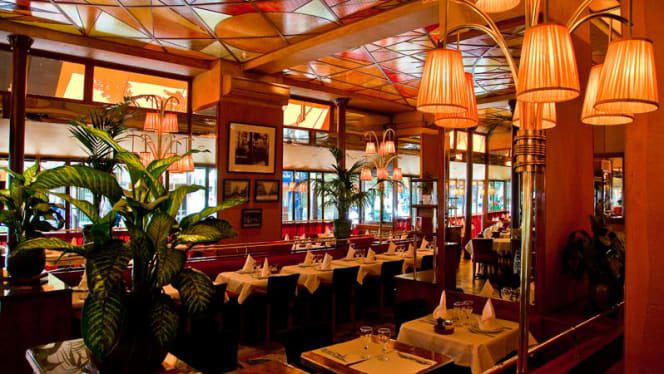
A Michelin Plate-recognised French restaurant in Kyoto's Kamigyo Ward, le 14e applies a Parisian bistro logic to Japanese beef with unusual directness: lean wagyu and beef from calved cows, seasoned with salt and pepper only, pan-fried in abundant oil. Organic red wine, food producers' signs on the walls, and a mid-range price point make this one of Kyoto's more considered takes on French meat cookery.

Pearl is the En Primeur Club membership app, where members save venues, book tables and use the concierge.
The menu
What to order
- Wagyu steak
- Matured beef
A Parisian Reference Point, Transplanted
French restaurants in Kyoto occupy a wider spectrum than the city's kaiseki reputation tends to suggest. At one end sit formal multi-course temples like Hiramatsu Kodaiji and Droit, where classical technique and tasting menus position them firmly in the ¥¥¥ and above tier. At the other end, a smaller cluster of addresses pursues something closer to the French bistro spirit: focused on a single product category, priced accessibly, and uninterested in ceremony for its own sake.
The name is a direct reference: Paris' 14th arrondissement is home to a restaurant the chef cites as a formative influence, specifically for its beef, which he describes as having impressed him enough to take a position there. That biographical thread is less interesting as personal narrative than as a signal about the restaurant's logic. What le 14e is doing in Kyoto is not translating French technique onto local ingredients in the way that defines much Franco-Japanese cooking at the formal end. It is transplanting a specific Parisian meat-restaurant sensibility, built around simplicity and product quality, into a Japanese context where those values happen to find excellent raw material.
The Meat Question in Kyoto's French Scene
France's meat-focused bistro tradition has always operated on a different axis from its haute cuisine counterpart. Where tasting menus foreground technique, the bistro format foregrounds the product: the quality of the cut, the sourcing, the minimal intervention that lets the ingredient carry the room. That format has been relatively underrepresented in Kyoto's French dining scene, which has tended to skew either toward full kaiseki-influenced tasting menus or toward casual café-bistro formats without serious culinary ambition. Le 14e sits in the gap.
The sourcing framework reflects the philosophy. The restaurant works with lean, flavoursome wagyu and beef from cows that have calved, a category that differs from the heavily marbled, younger wagyu that defines most premium Japanese beef consumption. Meat from calved cows tends toward deeper, more complex flavour and lower fat content than the A5-grade marbling most visitors associate with wagyu. The seasoning is confined to salt and pepper. The cooking method, pan-frying in large quantities of oil to approximate a deep-fry effect, is designed to lock in flavour and develop crust without the prolonged heat that might compromise texture. Food producers' signs on the walls make the supply chain visible rather than abstract, a curatorial decision that reads as a statement of values rather than decoration.
For comparison within the Kyoto French scene, La Biographie and la bûche represent different French registers, while anpeiji operates in a different cuisine category altogether. The broader Kansai region's approach to European cooking ranges from HAJIME in Osaka, which brings three-Michelin-star ambition to the format, to addresses like akordu in Nara, which pursues European technique with a different geographic sensibility. Le 14e's positioning at ¥¥ makes it one of the more accessible serious French options in the region.
The Evolution: From Reference to Identity
French restaurants grounded in a single foreign reference point carry a specific risk: the reference can function as a ceiling rather than a foundation. A restaurant built around admiration for a Parisian model either grows into its own identity over time or remains permanently derivative. The Michelin Plate, awarded to restaurants with good cooking that do not yet reach star level, signals that the guide's inspectors found the food technically sound and worth recommending. At the ¥¥ price point, that recognition carries more practical weight than it might at a restaurant where the price already signals ambition.
What the restaurant appears to have developed is a coherent position rather than a concept: a meat-focused French address that uses the Parisian bistro logic as structural scaffolding while operating entirely within Japanese ingredient sourcing and Japanese restaurant culture. The organic red wine pairing is consistent with the overall restraint; the list is not described as extensive, which at a meat-focused bistro of this scale is appropriate rather than limiting.
For those tracking French cooking at a broader level, the comparison set extends well beyond Kyoto. Sézanne in Tokyo represents the formal end of Franco-Japanese dining, while Hotel de Ville Crissier in Switzerland anchors the tradition le 14e draws from at its most classical. Within Japan more broadly, Harutaka in Tokyo, Goh in Fukuoka, 1000 in Yokohama, and 6 in Okinawa illustrate how diverse Japan's premium dining landscape has become across cuisine categories.
Kamigyo Ward and the Address
The Kamigyo Ward location places le 14e north of Kyoto's central tourist concentration. The ward is primarily residential, with a different character from the densely visited Gion and Higashiyama districts. This is relevant for planning: the address at 393-3 Iseyacho is not walking distance from the major temple clusters that anchor most Kyoto itineraries, so a visit requires deliberate routing rather than a spontaneous detour. That removes the casual drop-in visitor from the likely customer profile and concentrates the audience around those who have specifically sought it out. For the broader Kyoto dining picture, our full Kyoto restaurants guide maps the spread across neighbourhoods and price tiers.
Know Before You Go
- Address: 393-3 Iseyacho, Kamigyo Ward, Kyoto, 602-0873, Japan
- Cuisine: French, meat-focused
- Price range: ¥¥ (mid-range)
- Recognition:
- Drink pairing: Organic red wine
- Booking: Contact details not available publicly; check current booking channels before visiting
- Hours: Not confirmed publicly; verify before travel
- Further reading: Kyoto hotels guide | Kyoto bars guide | Kyoto wineries guide | Kyoto experiences guide
Frequently asked questions
Can I bring kids to le 14e?
At the ¥¥ price point in a Kyoto bistro format, it is neither ruled out nor obviously designed for families; call ahead to confirm the setup before bringing young children.
What is the overall feel of le 14e?
If you arrive expecting the formal ceremony of Kyoto's kaiseki tradition, recalibrate: the format here is closer to a focused Parisian bistro, mid-priced, product-driven, and spare in its presentation. The Michelin Plate recognition confirms the cooking is taken seriously, but the ¥¥ pricing and the bistro logic of the room signal deliberate informality rather than fine-dining register.
What should I order at le 14e?
The menu centres on beef, specifically lean wagyu and beef from calved cows, which the kitchen seasons only with salt and pepper and cooks in abundant oil for crust and retained flavour. The Michelin Plate citation and the French reference point both frame this as the core of what the restaurant does; the organic red wine is the natural pairing and appears to be the house recommendation alongside the meat.
Comparable Options
A compact comparison to help you place this venue among nearby peers.
| Venue | Cuisine | Price | Awards | Notes |
|---|---|---|---|---|
| le 14eThis venue (the venue you are viewing) | French Steak Bistro | $50–100 | Michelin Plate | Not listed |
| Gion Sasaki | Modern Kaiseki | $300–500 | 3 Michelin Stars · La Liste Top Restaurants | Kaiseki, Japanese |
| cenci | Innovative Italian-Japanese Fusion | $100–150 | 1 Michelin Star · World's 50 Best #76 | Italian |
| Ifuki | Sumibi Kappo Kaiseki | $200–300 | 2 Michelin Stars · La Liste Top Restaurants | Kaiseki |
| Kyokaiseki Kichisen | Kyoto Kaiseki | $200–300 | 2 Michelin Stars · La Liste Top Restaurants | Japanese |
| Kyo Seika | Modern Chinese Fine Dining | $150–200 | 1 Michelin Star · Tabelog Bronze #216 | Chinese |
Recognition history
Dated appearances from independent guides and award organizations, with the underlying list record or original source where available.
Michelin Plate
Michelin
Full recognition history (3 entries)
Michelin Plate
Michelin
Michelin Plate
Michelin
Continue exploring
More in Kyoto
Restaurants in Kyoto
All restaurants in Kyoto →
Bars in Kyoto
All bars in Kyoto →
Hotels in Kyoto
All hotels in Kyoto →
Wineries in Kyoto
Browse all →
Details
- Intimate
- Elegant
- Cozy
- Sophisticated
- Date Night
- Special Occasion
- Natural Wine
- Local Sourcing
- A La Carte
- Natural Wine
Current opening hours
- Monday
- 6–10 PM
- Tuesday
- 6–10 PM
- Wednesday
- Closed
- Thursday
- 6–10 PM
- Friday
- 6–10 PM
- Saturday
- 5–10 PM
- Sunday
- Closed
Hours can change for holidays and private events. Hours as of .
Serene and elegant with traditional decor, stylish space, and authentic French bistro atmosphere.