.png)
A Michelin Plate-recognised French kitchen in Shibuya's Uehara neighbourhood, La façon Koga builds its identity around sauce work that bridges classical French technique with Japanese ingredients such as yuzu and salted koji. The name translates as 'Koga style', a deliberate signal that this is personal cooking rooted in lineage. Google reviewers rate it 4.4 across 126 reviews at a mid-premium price point.
 Discover on Pearl
Pearl is the En Primeur Club membership app — saves, bookings, and concierge access live there. Same editors, same standards.
- Address
- Japan, 〒151-0064 Tokyo, Shibuya, Uehara, 1 Chome−32−5 Royal Terrace, 1F
- Phone
- +81 3-5452-8033
- Website
- la-f-koga.com
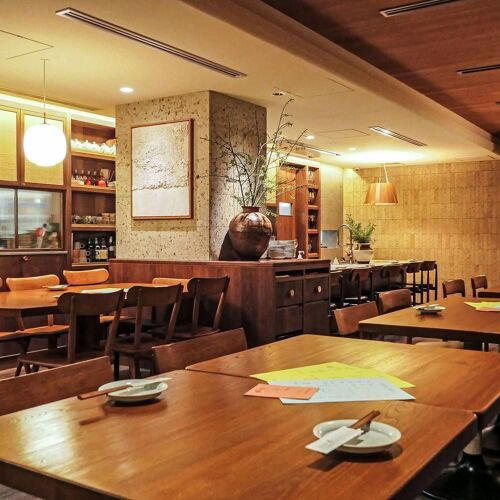
French sauce tradition in Uehara, Tokyo
Tokyo's French restaurant scene has always occupied an unusual position in global gastronomy. Nowhere outside France has the tradition been adopted with such systematic discipline, and yet nowhere else has it been so consistently reinterpreted through local palate and local ingredient. The city now runs a full spectrum, from the three-Michelin-star formality of L'Effervescence and the Robuchon institution at Château Restaurant Joël Robuchon down through a quieter tier of neighbourhood kitchens where the cooking can be just as precise but the register is deliberately lower. La façon Koga, in the residential pocket of Uehara in Shibuya, is a French-Japanese Fusion Fine Dining restaurant, and it wears that position as a considered choice rather than a consolation.
The name is a statement of intent. La façon Koga translates as 'Koga style', an acknowledgment that what arrives at the table is the product of accumulated knowledge filtered through a single sensibility. That framing places it in a tradition of Japanese chef-proprietors who train in the classical French canon, absorb it deeply, and then bend it slightly toward something personal. The Michelin Plate recognition the restaurant has held in both 2024 and 2025 confirms that the cooking meets a documented standard of quality, even if it operates below the starred tier that commands most attention. Among a Google reviewer base of 126, the average rating sits at 4.4 across 134 reviews, a number that points to consistent execution rather than occasional brilliance.
The architecture of the plate: sauce as the argument
In classical French cuisine, a sauce is not a condiment. It is the technical demonstration, the proof of concept that separates trained hands from instinctive ones. The kitchen is unusually specific on this point: the bouillon base is drawn with meticulous care, aiming to capture umami at each stage, and the sauces are positioned as multipliers of flavour rather than additions to it. This is a meaningful distinction. A reduction that merely adds richness is competent. One that compounds and amplifies the base ingredient is something more demanding.
Within that classical framework, the kitchen introduces selective Japanese inflections. Yuzu, with its particular citrus brightness that sits somewhere between grapefruit and mandarin, appears as an occasional accent. Salted koji, a fermentation agent that softens protein and adds a layered savouriness, is deployed with similar restraint. Neither is deployed as novelty. Both are absorbed into the sauce logic in a way that extends the French vocabulary rather than interrupting it. This approach places La façon Koga in a specific sub-category of Tokyo French cooking: not fusion, not strictly classical, but a kitchen that treats Japanese ingredients as legitimate contributors to technique rather than as decoration.
For reference points at a higher price bracket, Sézanne and ESqUISSE represent the tier where French cooking in Tokyo commands international attention and two or three Michelin stars. Florilège occupies a two-star position with a more contemporary, produce-driven angle. La façon Koga at ¥¥¥ and about $100 per person sits below that starred cluster in both price and profile, which makes it a different kind of decision for the diner: less occasion, more frequency.
The sensory register of Uehara
Uehara is not a dining neighbourhood in the conventional sense. It lacks the concentration of high-end restaurants that characterises Ginza, Minami-Aoyama, or the streets around Roppongi Hills. What it has instead is the atmosphere of a lived-in residential quarter, where the few serious restaurants that do exist operate with a local rather than destination clientele as their gravitational centre. A ground-floor space in Royal Terrace, a low-rise building on a quiet street in 1 Chome, is an address that rewards those who come deliberately rather than those who stumble across it.
That setting shapes the sensory experience before a single plate arrives. The ambient register of Uehara is quieter than central Tokyo's dining corridors. There is no hum of a busy hotel lobby, no proximity to a train concourse. The result is a dining environment where the cooking itself carries the full sensory load, sauce aromas travel without competition, and the sounds of the kitchen reach the table without being drowned by background music or neighbouring conversations. For French cooking predicated on bouillon clarity and sauce precision, that quiet is not incidental. It is part of what allows the dish to communicate.
Lineage, learning, and the Tokyo French kitchen
The restaurant's framing around mentorship and accumulated knowledge connects it to a broader pattern in Tokyo's French scene. Many of the city's most closely watched French kitchens are run by chefs who trained under established figures before opening under their own name. The progression from apprentice to named proprietor is both a professional milestone and a marketing signal: it tells the diner something about the technical foundation and the culinary lineage. La façon Koga makes this lineage explicit in its name. The cooking is described as heir to the spirit of the chef's mentor while expressing knowledge that is 'distinctly his own', a balance that Japanese culinary culture has long understood as the proper outcome of serious training.
That same pattern of French technique absorbed through Japanese rigour appears at different price levels across the country. HAJIME in Osaka represents one pole of that tradition, as does Gion Sasaki in Kyoto in kaiseki terms. At the more experimental end, akordu in Nara and Goh in Fukuoka show what happens when European discipline meets regional Japanese ingredient culture. La façon Koga is a Tokyo-specific expression of that same conversation, anchored in the French sauce tradition rather than in any push toward fusion. For French cooking in a comparable framework outside Japan, Hotel de Ville Crissier in Switzerland and Les Amis in Singapore share the same commitment to classical foundations.
Planning your visit
La façon Koga is located at 1 Chome-32-5 Royal Terrace 1F, Uehara, Shibuya, Tokyo 151-0064. The ¥¥¥ price positioning places it in a mid-premium bracket for Tokyo French dining, below the tasting-menu prices of the city's starred French kitchens but above casual neighbourhood bistro level. Given the small footprint implied by a ground-floor unit in a residential building and the 4.4 rating across a meaningful review sample, advance reservation is advisable. No booking method is listed in the public record, so direct contact through the address or third-party reservation platforms is the practical approach. Uehara is accessible from Yoyogi-Uehara Station on the Odakyu and Tokyo Metro Chiyoda lines, making it direct from Shinjuku or Omotesando without requiring a taxi. For a fuller picture of Tokyo's dining options across price tiers and cuisine types, see our full Tokyo restaurants guide. Visitors planning a broader trip can also consult our Tokyo hotels guide, our Tokyo bars guide, our Tokyo wineries guide, and our Tokyo experiences guide. For dining further afield in the Kanto region, 1000 in Yokohama and 6 in Okinawa are worth noting.
Price Lens
Comparable venues nearby, for context on price, style, and recognition.
| Venue | Cuisine | Price | Awards | Notes |
|---|---|---|---|---|
| La façon KogaThis venue — the venue you are viewing | French | $$$ | Michelin Plate | |
| UNE IMMERSION | Shibuya, Modern French | $$$ | Michelin Plate | |
| Le temps moelleux | Minato, Modern French Prix Fixe | $$$ | Michelin Plate | |
| Nebuka | Minato, Modern French Vegetable Omakase | $$$ | Michelin Plate | |
| Chez Olivier | Chiyoda, Modern French Bistro | $$$ | Michelin Plate | |
| Pont d'Or Inno | $$$ | Michelin Plate | Chūō, Classic French with Japanese Elements |







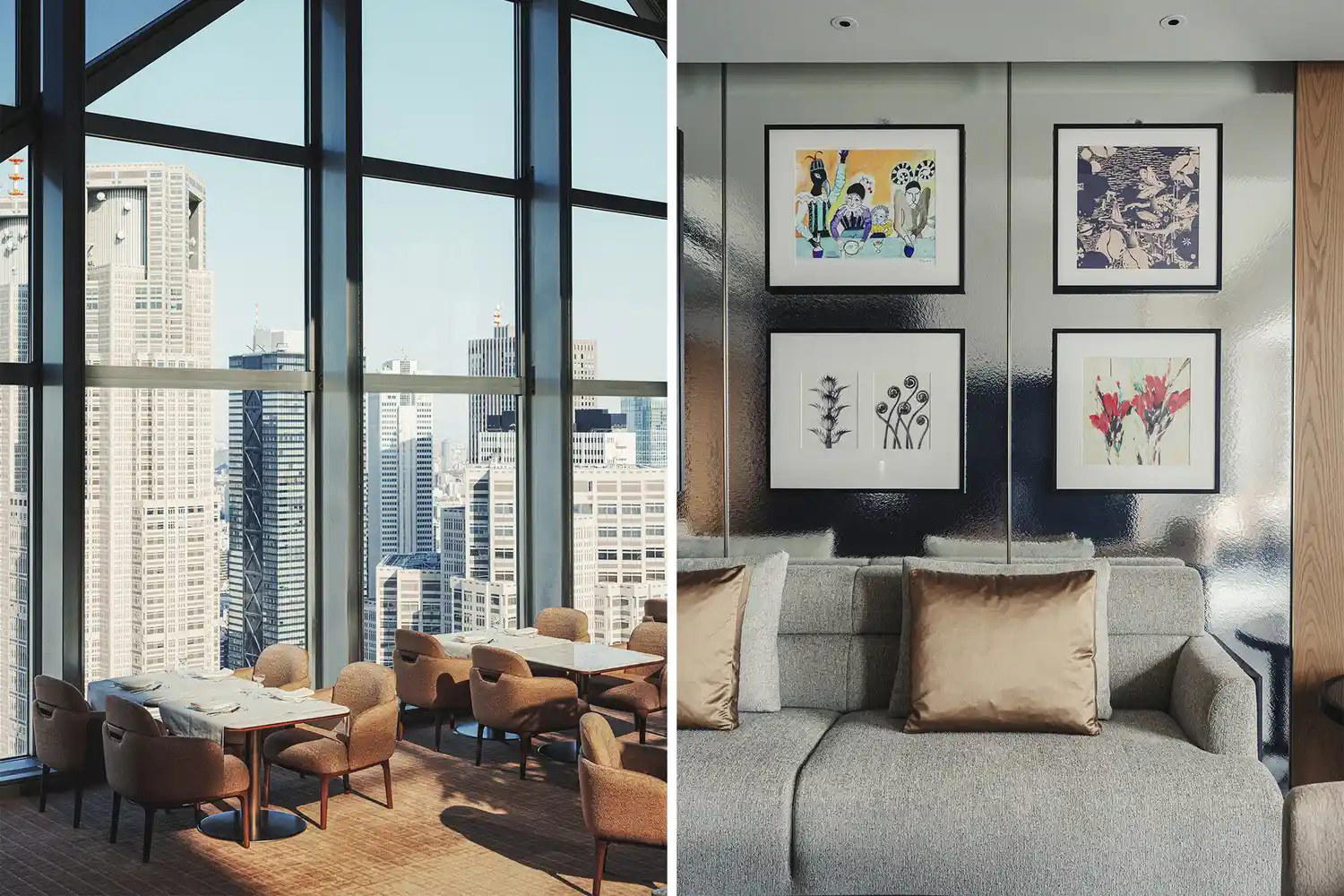




At a Glance
- Elegant
- Sophisticated
- Intimate
- Cozy
- Date Night
- Special Occasion
- Extensive Wine List
- Sake Program
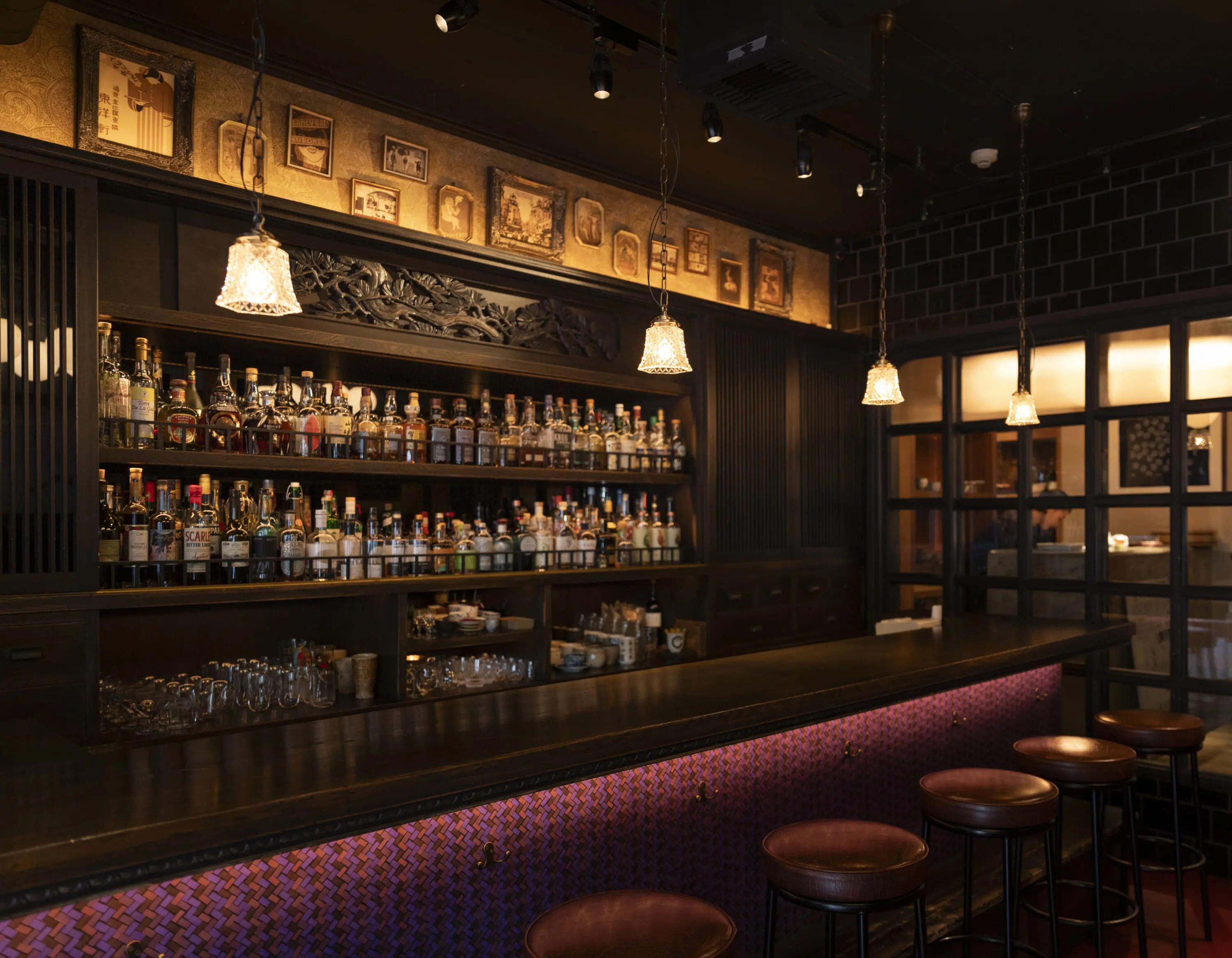
Serene and refined atmosphere with polished, elegant setting.