
Michelin Plate
Our verdict
A Michelin Plate-recognised Franco-Japanese table in Nihombashi, Pont d'Or Inno occupies the mid-tier of Tokyo's French dining circuit at the ¥¥¥ price point, accessible relative to the city's starred French rooms. Chef Ken Yuhara works classical French technique with Japanese ingredients, while manager Toru Ozaki's floor service has drawn specific notice in Michelin commentary for two consecutive years.

Pearl is the En Primeur Club membership app, where members save venues, book tables and use the concierge.
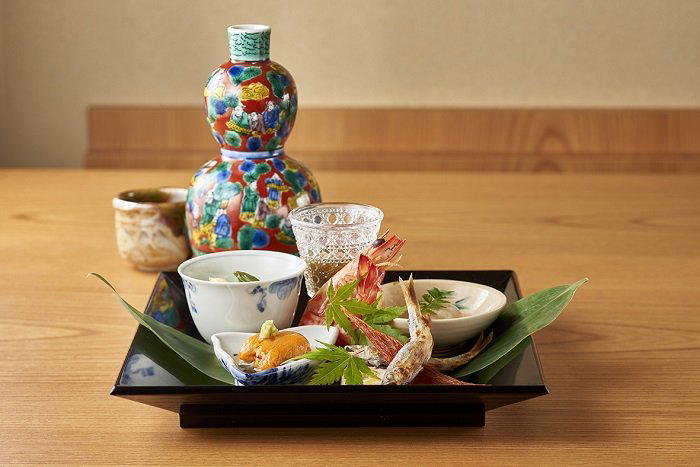
The menu
What to order
- Maria Callas (lamb en croûte)
- Duck with notable carving service
- Oyster Frit
- Onion Soup
Nihombashi and the French Table: A District with European Aspirations
Nihombashi has carried commercial prestige since the Edo period, when it served as the zero-kilometre marker for Japan's national road network. The district's contemporary dining character reflects that layered history: old-money restraint, an instinct for craftsmanship, and a preference for rooms that reward repeat visits over first impressions. French cuisine has taken root here not as novelty but as a natural extension of the neighbourhood's formality. Where Roppongi and Ginza tend toward the theatrical end of the Franco-Japanese dining spectrum, Nihombashi leans quieter, more deliberate, more interior. Pont d'Or Inno sits within that temperament.
The name is a declaration of intent. Pont d'Or, Golden Bridge, frames the restaurant as a connector: between French classical tradition and the district's own identity, between technique brought from a formal apprenticeship lineage and ingredients rooted in Japanese seasonality. That framing is less marketing than structural logic. The kitchen operates at a ¥¥¥ price point, placing it a tier below the city's starred French rooms, which almost uniformly sit at ¥¥¥¥. That gap matters: it opens access without abandoning seriousness.
What the Room Tells You Before the First Course
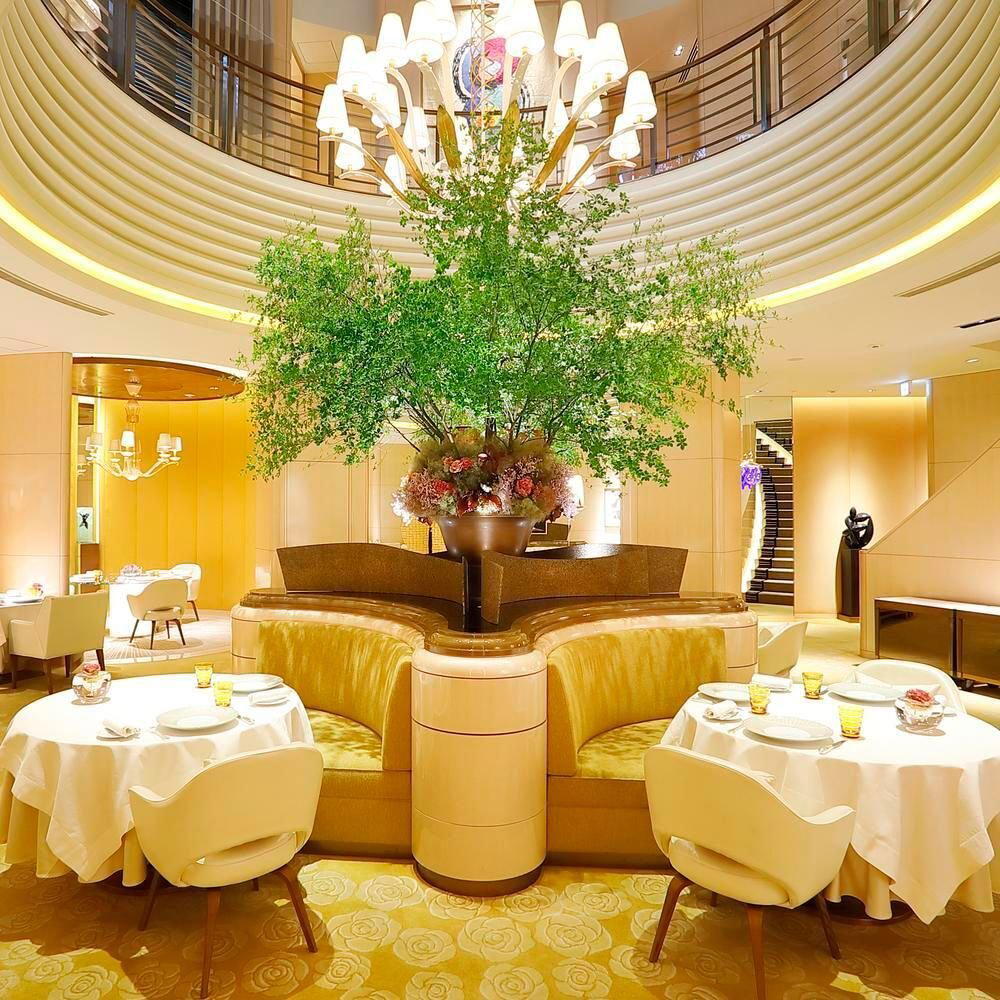
Tokyo's French restaurants occupy a wide atmospheric range, from the baroque formality of Château Restaurant Joël Robuchon to the stripped modernism of Florilège. Pont d'Or Inno lands in a different register entirely: the décor is described in Michelin's own commentary as reminiscent of a European house, a domestic warmth rather than the studied coolness that defines many contemporary fine dining rooms. The effect is one of arrival rather than performance, a room that has been lived in, considered, appointed with a degree of taste that doesn't announce itself.
That atmospheric positioning is deliberate. In a city where high-end French dining can tip toward spectacle, the architectural plating, the tableside theatrics, the progressive tasting menus structured like arguments, Pont d'Or Inno operates through a quieter vocabulary. The sensory experience here is cumulative: the warmth of the space, the attentiveness of service, the gradual accumulation of courses rather than a single wow moment. Michelin's plate designation, awarded in both 2024 and 2025, recognises cooking that merits attention without reaching for the demonstrative gestures that often accompany starred ambitions at peer restaurants like L'Effervescence or Sézanne.
The Franco-Japanese Kitchen: Lineage and Approach
French cooking in Tokyo sits across a spectrum from strict classical orthodoxy to aggressive hybridisation. Chef Ken Yuhara, trained under Noboru Inoue, operates closer to the classical end of that spectrum while incorporating Japanese elements where they serve the dish rather than the concept. Inoue's influence, grounded in the formal French tradition, runs through the kitchen's structure and discipline. The incorporation of Japanese ingredients and seasonal thinking is integrative rather than decorative, reflecting how Tokyo's most considered Franco-Japanese tables approach the synthesis.
This lineage places Pont d'Or Inno in a distinct sub-category of Tokyo's French dining scene: classically rooted kitchens that earn their cross-cultural credibility through technical rigour rather than concept. Compare this to the more explicitly innovatory approach at ESqUISSE, where the Franco-Japanese dialogue is more formally structured around menu architecture. Pont d'Or Inno's version is quieter, more embedded in day-to-day execution. French cooking in Japan has had decades to settle, the country holds more Michelin-starred French restaurants than any nation outside France itself, and this restaurant represents a mature, assured point on that continuum.
For context on how similar Franco-Japanese integrations play out in other Japanese cities, the Osaka table HAJIME and Kyoto's Gion Sasaki offer instructive comparisons, each working the same cultural dialogue through a different regional lens. Beyond Japan, French restaurants operating in culturally distinct contexts, such as Les Amis in Singapore and Hotel de Ville Crissier in Switzerland, demonstrate how far the French tradition travels when practitioners treat local context as a resource rather than an obstacle.
Service as a Structural Component
Floor service in Tokyo's French dining rooms can tend toward the ceremonial, precise but distanced. What Michelin's commentary on Pont d'Or Inno makes explicit is that manager Toru Ozaki's work at the front of house is a genuine part of the experience, not a supporting function. The analogy used in the Michelin record, service adding to the meal like a floral bouquet, is an unusual framing for a guide that typically reduces floor notes to a line. Two consecutive Michelin Plate recognitions, with service specifically cited, suggest that the floor programme here has been consistent enough to register as a distinguishing feature.
In practical terms, this means the explanations accompanying each dish are substantive rather than recitative. Guests who arrive with some knowledge of French classical cooking and an interest in how Japanese elements are being worked in will find the conversation at the table genuinely useful. This is a different experience from the more self-contained tasting counter format common at the ¥¥¥¥ tier, where the narrative comes primarily through the food itself.
Planning Your Visit: Pont d'Or Inno in Context
Pont d'Or Inno is located at 2 Chome-4-3 Nihonbashimuromachi, Chuo City, a central Nihombashi address, walkable from Mitsukoshimae Station on the Ginza and Hanzomon lines. The ¥¥¥ price positioning makes it one of the more accessible serious French tables in central Tokyo, sitting below the ¥¥¥¥ bracket occupied by most of the city's starred French rooms.
| Venue | Price Tier | Cuisine Focus | Michelin Status (2025) | District |
|---|---|---|---|---|
| Pont d'Or Inno | ¥¥¥ | French / Franco-Japanese | Plate | Nihombashi |
| L'Effervescence | ¥¥¥¥ | French | Multiple stars | Nishi-Azabu |
| ESqUISSE | ¥¥¥¥ | French | Starred | Ginza |
| Florilège | ¥¥¥¥ | French | Starred | Minami-Aoyama |
For broader planning across the city, EP Club's full Tokyo restaurants guide covers the range from counter omakase to multi-course Western formats. If you're building an itinerary around dining and accommodation, the Tokyo hotels guide and Tokyo bars guide offer the same editorial framework. Diners interested in exploring beyond the capital can also look at akordu in Nara, Goh in Fukuoka, 1000 in Yokohama, and 6 in Okinawa for how serious cooking operates outside Tokyo's dining concentration. The Tokyo wineries guide and Tokyo experiences guide round out the broader itinerary picture.
Frequently asked questions
Is Pont d'Or Inno a family-friendly restaurant?
Pont d'Or Inno is a Michelin Plate French restaurant in Nihombashi with a formal, European-house atmosphere that suits adults and older teenagers comfortable at a considered dinner table. The attentive floor service led by Manager Toru Ozaki, who narrates each dish, rewards guests who engage with the meal rather than those looking for a casual or child-focused evening. Families with young children would likely find the format better suited to special occasions.
How would you describe the vibe at Pont d'Or Inno?
The room draws on the décor language of a European townhouse, which positions it closer to the intimate end of Tokyo's French dining spectrum rather than the grand-hotel formality of places like Château Restaurant Joël Robuchon. Michelin's own notes call out Manager Toru Ozaki's dish-by-dish narration as a defining feature, giving the service a convivial, educational quality that makes the room feel warmer than a strict classical French dining room might.
What's Pont d'Or Inno known for in terms of accolades?
Pont d'Or Inno has received recognition including: The name ‘Pont d’Or’, literally ‘Golden Bridge’, is a wish that French cuisine and the district of Nihombashi will both prosper. Tasteful décor, reminiscent of a European house, oozes panache. Chef Ken Yuhara incorporates Japanese elements ….
What do regulars order at Pont d'Or Inno?
Pont d'Or Inno's kitchen is rooted in classical French technique as passed down through Chef Ken Yuhara's training under Noboru Inoue, with Japanese elements woven into the menu. The ¥¥¥ price positioning suggests a structured course format rather than à la carte grazing. Specific dishes are best confirmed directly with the restaurant, as the menu will reflect seasonal availability and the kitchen's current direction.
Budget Reality Check
| Venue | Cuisine | Price | Awards | Notes |
|---|---|---|---|---|
| Pont d'Or InnoThis venue (the venue you are viewing) | Classic French with Japanese Elements | $150–200 | Michelin Plate | Not listed |
| Harutaka | Edo-Style Omakase Sushi | $200–300 | 3 Michelin Stars · World's 50 Best #76 | Sushi |
| RyuGin | Modern Kaiseki | $500+ | 3 Michelin Stars · World's 50 Best #41 | Kaiseki, Japanese |
| L'Effervescence | Modern French with Japanese Influences | $200–300 | 3 Michelin Stars · World's 50 Best #69 | French |
| HOMMAGE | Modern French with Japanese Influences | $150–200 | 2 Michelin Stars · World's 50 Best #78 | Innovtive French, French |
| MAZ | Innovative Peruvian-Japanese Fusion | $150–200 | 2 Michelin Stars · World's 50 Best #28 | Innovative |
Recognition history
Dated appearances from independent guides and award organizations, with the underlying list record or original source where available.
Michelin Plate
Michelin
Full recognition history (3 entries)
Michelin Plate
Michelin
Michelin Plate
Michelin
Continue exploring
More in Tokyo
Restaurants in Tokyo
All restaurants in Tokyo →

Bars in Tokyo
All bars in Tokyo →





Pont d'Or Inno
The wine
- Wine program
- Deep wine list
- Extensive wine list
- Sommelier-led
Details
- Elegant
- Classic
- Sophisticated
- Intimate
- Celebration
- Date Night
- Business Dinner
- Special Occasion
- Open Kitchen
- Private Dining
- Chefs Counter
- Extensive Wine List
- Sommelier Led
- Local Sourcing
- Prix Fixe
- Tasting Menu
- Counter Dining
- Wine Pairings
- Non Alcoholic Pairings
Current opening hours
- Monday
- 11:30 AM–3 PM, 6–10 PM
- Tuesday
- 11:30 AM–3 PM, 6–10 PM
- Wednesday
- Closed
- Thursday
- 11:30 AM–3 PM, 6–10 PM
- Friday
- 11:30 AM–3 PM, 6–10 PM
- Saturday
- 11:30 AM–3 PM, 6–10 PM
- Sunday
- Closed
Hours can change for holidays and private events. Hours as of .
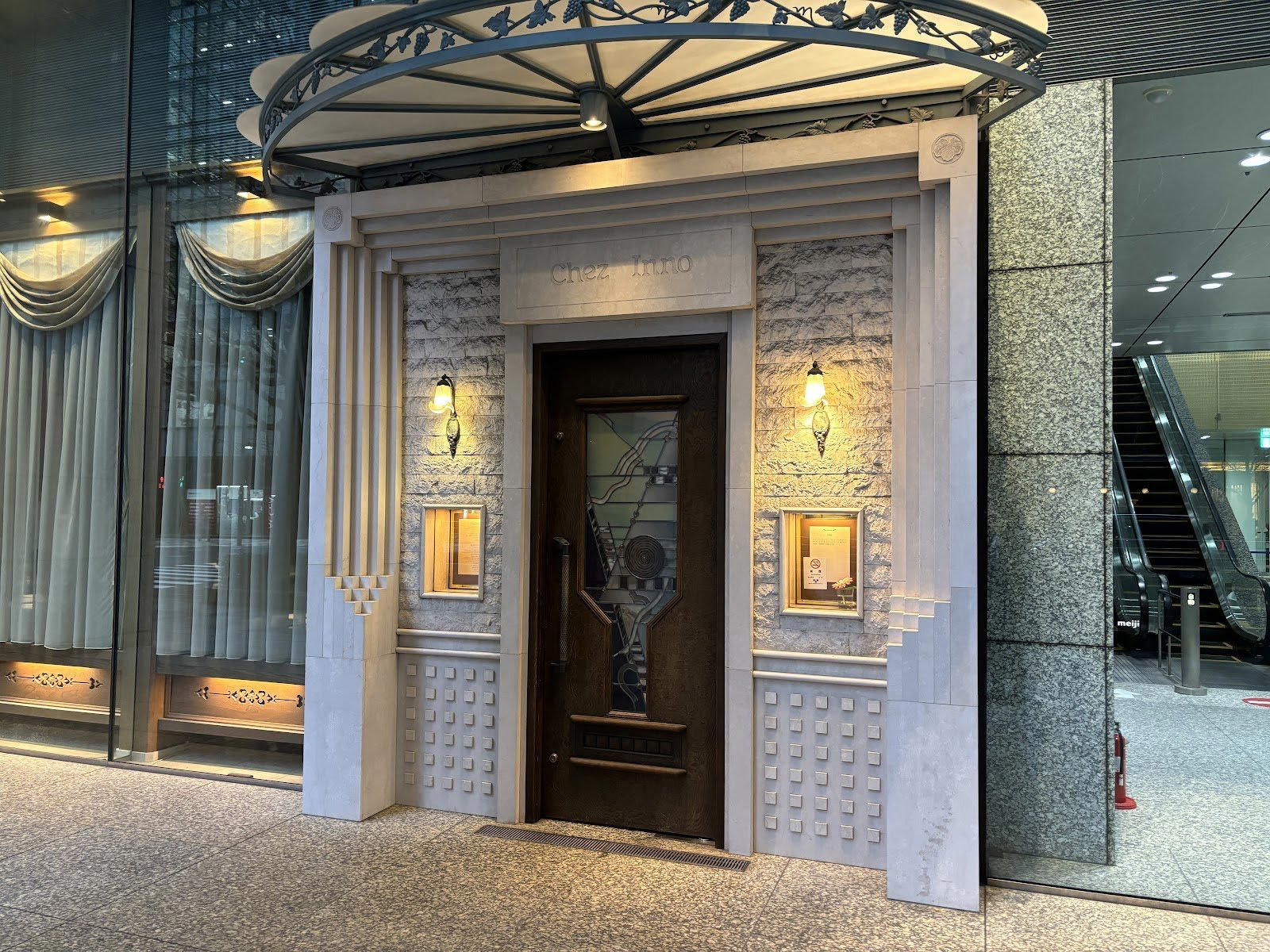
Tasteful, classical European décor with high ceilings and well-spaced seating creates an open, refined atmosphere that feels both sophisticated and welcoming.