Michelin Plate · Tabelog 100 #81
Our verdict
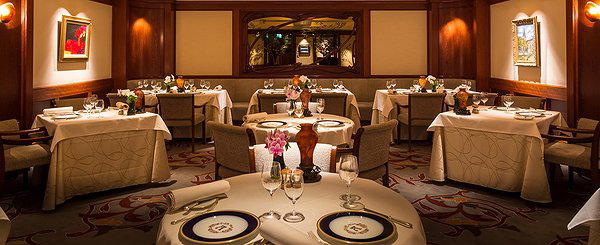
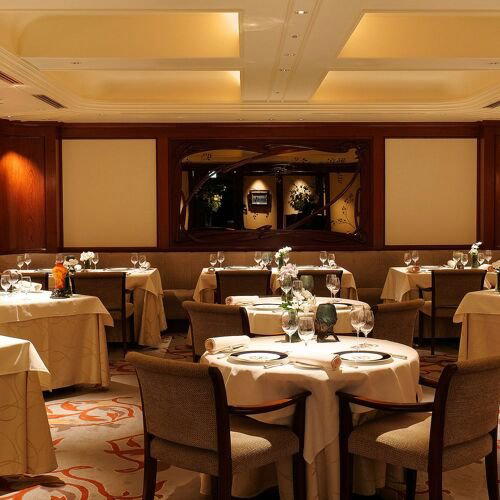
A Michelin Plate-recognised French restaurant in Akasaka, Le temps moelleux runs monthly-changing prix fixe menus that cross French technique with a distinctly personal sensibility. Handmade decorative plates by the chef's mother and menus illustrated with playful drawings make the all-white dining room feel less like a formal French address and more like an annotated notebook brought to life.

Pearl is the En Primeur Club membership app, where members save venues, book tables and use the concierge.
French Cuisine in Tokyo's Akasaka: A Different Kind of Address
Tokyo's French restaurant scene divides along fairly clear lines. At one end sit the grands formats: multi-course temples with deep wine lists, formal service hierarchies, and price points that match Château Restaurant Joël Robuchon or the starred rooms of Azabu-Juban. At the other, a smaller tier of independently run kitchens where a single chef-owner shapes the food through a more specific, often personal lens. L'Effervescence and Sézanne occupy a prestigious middle ground with Michelin stars and considerable critical attention. Le temps moelleux, holding a Michelin Plate in both 2024 and 2025, sits below that starred bracket but within the same broad tradition: serious French cooking delivered with an identifiable point of view.
The address is a basement unit on Akasaka's 8-chome strip, a neighbourhood that mixes corporate Tokyo with quieter residential pockets and has long supported a density of mid-to-high-range French and Japanese restaurants. That basement location matters for what follows inside: the room's all-white décor reads not as clinical but as deliberately emptied, a space that asks the food and the objects in it to carry all the meaning.
The Monthly Menu and the Logic Behind It
The argument for ingredient-led French cooking in Tokyo is well-established. Chefs at rooms like Florilège and ESqUISSE have built reputations on the tension between French classical training and access to some of the most precisely farmed produce in the world. The monthly prix fixe format at Le temps moelleux works within that same logic: a new theme each month forces the kitchen to re-examine its ingredient relationships from scratch rather than settle into a fixed seasonal rotation.
That approach keeps sourcing decisions active rather than automatic. A monthly-changing menu means the kitchen cannot simply wait for a known supplier's peak window; it has to make deliberate choices about which French ingredients to import and when, which Japanese produce to incorporate, and how the two interact under a given theme. The result, in theory, is a menu that reflects the specific availability of the moment more accurately than an annually revised card could.
French cuisine's entry into Japan carried with it the logic of the terroir-driven kitchen: that the leading cooking is inseparable from where its ingredients come from and how they were grown or raised. That tradition translates interestingly in Tokyo, where the infrastructure for sourcing, from Tsukiji-lineage wholesale networks to direct farm relationships in Hokkaido or Kyushu, gives French-trained chefs access to ingredients that their counterparts in Lyon or Paris would not recognise. Le temps moelleux sits within that broader Tokyo-French conversation, the one that asks what French cuisine means when the surrounding food culture is Japanese.
The Room and Its Objects
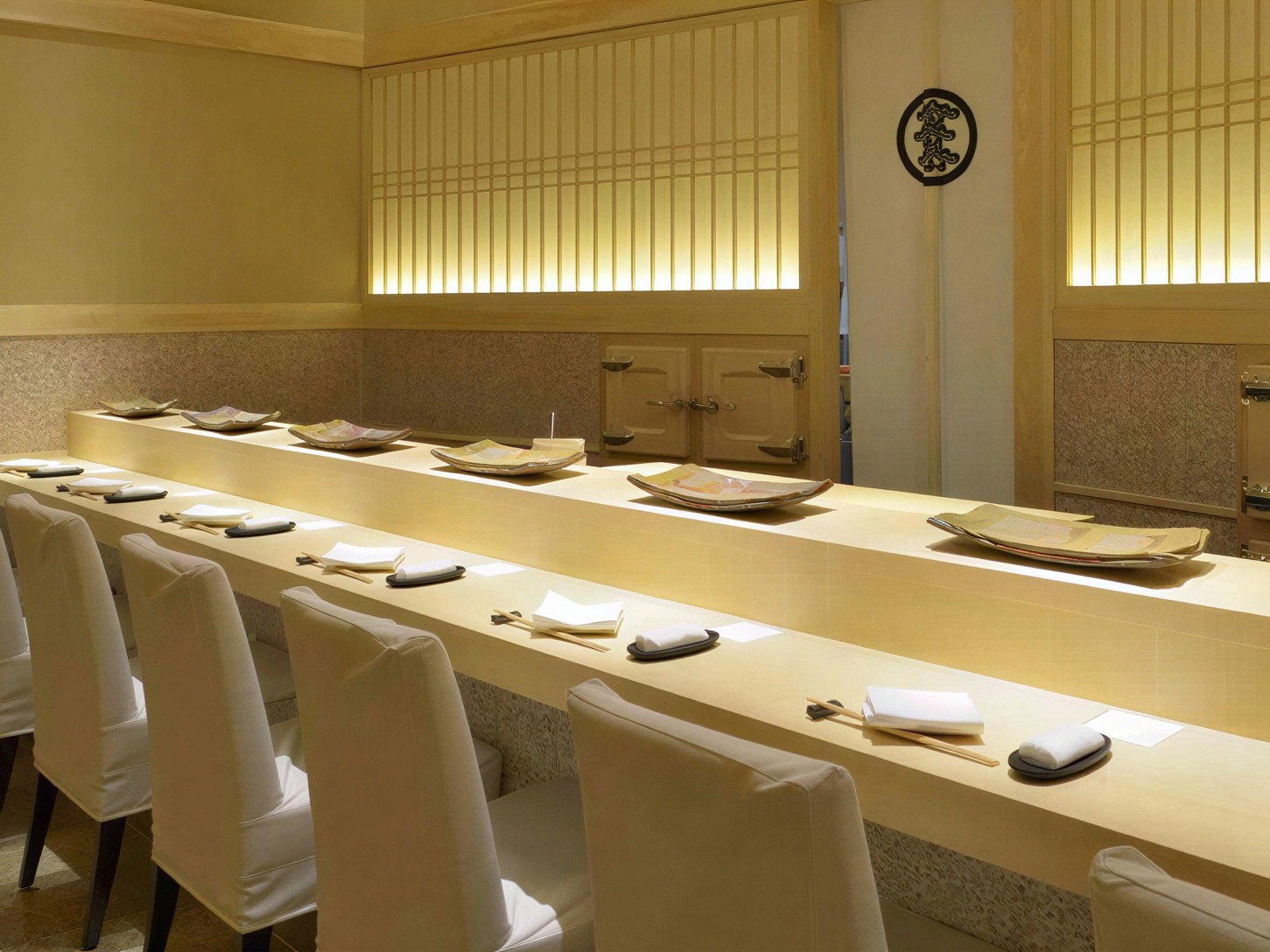
The décor choice of a single unbroken white is not accidental in a room this small. White in Japanese aesthetic traditions can signal clarity, openness, and a refusal to crowd the eye, and in a basement space that choice amplifies rather than limits the objects placed within it. Here, those objects are the decorative plates made by the chef's mother, carrying motifs drawn from a shared love of food and the poetry of Kenji Miyazawa, the early 20th-century writer whose work moves between the natural world and something more oblique and dreamlike.
That connection is not decorative detail for its own sake. Miyazawa's writing is deeply concerned with the relationship between humans, food, and the natural world; his most read prose piece is, in fact, a meditation on eating and the life contained in what we consume. Plates referencing that lineage in a French restaurant in Tokyo create a frame for the food that is neither purely French nor purely Japanese, which seems to be the point.
The illustrated menus extend that logic. Monthly themes arrive with drawings that, according to available descriptions, tend toward the playful rather than the formal. In a city where French restaurant presentation often errs toward severity, menus that make a guest smile before the first course arrive represent a deliberate tonal choice about what kind of evening this is meant to be.
Where This Fits in Tokyo's French Scene
The Michelin Plate, awarded in consecutive years, signals a kitchen producing food worth seeking out without placing it in the starred tier where booking lead times extend to months and price points reach ¥¥¥¥ territory. Le temps moelleux's ¥¥¥ positioning puts it in a comparable bracket to independently run French rooms across Tokyo that offer serious cooking without the full apparatus of a grand restaurant. For visitors calibrating a Tokyo itinerary across multiple meals, that positioning is useful: it leaves room in the budget for a starred experience elsewhere, whether at one of the Azabu-Juban addresses or at a room like L'Effervescence, while delivering a French meal with its own coherent identity.
Across Japan, the French restaurant tradition has produced a range of approaches to the question of what French food means in a Japanese context. HAJIME in Osaka pursues a highly conceptual answer; Gion Sasaki in Kyoto works from a kaiseki foundation outward; akordu in Nara brings a different set of European reference points entirely. Le temps moelleux's answer is quieter and more intimate: a basement room, a monthly theme, illustrated menus, and plates that carry a specific cultural memory. That is a narrower answer than some of those other rooms offer, but in the context of Tokyo's density of options, narrower often means more precisely itself.
For a broader map of where this kind of independent French cooking sits within the city's dining options, see our full Tokyo restaurants guide. Visitors planning around a stay in the area may also find relevant context in our full Tokyo hotels guide, our full Tokyo bars guide, our full Tokyo experiences guide, and our full Tokyo wineries guide. Those planning a wider Japan itinerary might consider pairing this with visits to Goh in Fukuoka, 1000 in Yokohama, or 6 in Okinawa. For context on how this style of French cooking developed outside Japan, Hotel de Ville Crissier in Crissier and Les Amis in Singapore offer instructive points of comparison.
Planning Your Visit
Le temps moelleux is located at B109, 8 Chome-13-19 Akasaka, Minato City, Tokyo 107-0052, a short walk from Akasaka or Akasaka-mitsuke stations. The ¥¥¥ price tier and Michelin Plate recognition position this as a mid-to-upper range booking: formal enough to warrant some attention to timing and reservation planning, but without the weeks-long lead times typical of the starred rooms. Because the menu changes each month around a new theme, the timing of a visit shapes the meal in a way that is less predictable than a fixed seasonal card, which is part of the proposition. Specific hours, booking channels, and current availability are best confirmed directly with the venue.
Frequently asked questions
Where do I go for Le temps moelleux?
Le temps moelleux is located at B109, 8 Chome-13-19 Akasaka, Minato City, Tokyo 107-0052, Japan, Tokyo.
What price level is Le temps moelleux?
Pricing at Le temps moelleux is listed as ¥¥¥.
Has Le temps moelleux won any awards?
Le temps moelleux has received recognition including: Just one colour, a bracing white, defines the décor. Decorative plates were crafted by the chef’s mother, featuring motifs that reflect the mother and daughter’s love for both food and poems by the Kenji Miyazawa. The seeds of Izumi Tanaka’….
What should I eat at Le temps moelleux?
Le temps moelleux runs a prix fixe menu that rotates entirely each month around a new theme conceived by chef Izumi Tanaka, whose training in France shapes the kitchen's approach. There is no à la carte option, so the menu in front of you on the night of your visit is the one you eat, which makes the timing of your reservation part of the experience. The kitchen's reference point is French cuisine, drawing on the vigorous character of French ingredients rather than Tokyo-inflected fusion. Expect the menu to arrive with illustrative artwork that signals the month's theme before a single dish does.
A Quick Peer Check
A compact comparison to help you place this venue among nearby peers.
| Venue | Cuisine | Price | Awards | Notes |
|---|---|---|---|---|
| Le temps moelleuxThis venue (the venue you are viewing) | Modern French Prix Fixe | Not listed | Michelin Plate · Tabelog 100 #81 | Not listed |
| Harutaka | Edo-Style Omakase Sushi | $200–300 | 3 Michelin Stars · World's 50 Best #76 | Sushi |
| RyuGin | Modern Kaiseki | $500+ | 3 Michelin Stars · World's 50 Best #41 | Kaiseki, Japanese |
| L'Effervescence | Modern French with Japanese Influences | $200–300 | 3 Michelin Stars · World's 50 Best #69 | French |
| HOMMAGE | Modern French with Japanese Influences | $150–200 | 2 Michelin Stars · World's 50 Best #78 | Innovtive French, French |
| MAZ | Innovative Peruvian-Japanese Fusion | $150–200 | 2 Michelin Stars · World's 50 Best #28 | Innovative |
Recognition history
Dated appearances from independent guides and award organizations, with the underlying list record or original source where available.
Michelin Plate
Michelin
Tabelog 100 #81 · No. 81
Tabelog · Tabelog 100 - French - TOKYO - 2025
Full recognition history (4 entries)
Michelin Plate
Michelin
Michelin Plate
Michelin