
Our verdict
La Bombance in Nishiazabu represents one of Tokyo's more considered approaches to the kaiseki-French intersection, placing seasonal Japanese ingredients inside a structure that draws from both culinary traditions. Chef Masaru Seki has built a following documented by consecutive Opinionated About Dining recognition from 2023 through 2025. The restaurant operates Tuesday through Sunday with both lunch and dinner service.

Pearl is the En Primeur Club membership app, where members save venues, book tables and use the concierge.
The menu
What to order
- Foie gras chawanmushi
- Kamadaki rice with sanma
- Seasonal clay pot rice
Where Two Culinary Traditions Meet the Seasons
The kaiseki-French crossover has been a live experiment in Tokyo dining for several decades, but the venues that execute it with discipline rather than novelty occupy a narrow tier. La Bombance in Nishiazabu has been refining that proposition long enough to have earned consecutive recognition from Opinionated About Dining, Recommended in 2023, ranked #403 in 2024, and climbing to #493 in 2025, a trajectory that places it firmly within the considered segment of Tokyo's cross-cultural fine dining circuit. The restaurant sits on a block in Minato City that has quietly accumulated serious restaurants over the years, away from the denser Roppongi corridor but close enough that it benefits from the area's appetite for ambitious cooking without the tourist traffic that heavier foot-flow brings.
The conceptual wager at the heart of kaiseki-French cooking is that the architectural discipline of French cuisine and the ingredient-reverence of kaiseki are not merely compatible but mutually reinforcing. Kaiseki's logic is fundamentally seasonal and sourcing-driven: the meal is organised around what the land and sea are producing at a particular moment, with technique subordinated to the quality of the primary ingredient. French haute cuisine, in its classical form, applies a different pressure, structure, sauce logic, and progression, but shares an insistence on sourcing quality as the floor beneath everything else. Restaurants that understand both traditions as ingredient-forward, rather than technique-forward, tend to produce more coherent menus than those that treat the pairing as an opportunity for stylistic contrast.
The Sourcing Logic Behind the Menu
In the kaiseki tradition, what arrives on the table is inseparable from where it came from and when. The seasonal calendar drives the entire menu architecture: spring brings mountain vegetables and young fish; autumn shifts toward root vegetables, mushrooms, and fatty seafood. A kitchen operating in this tradition does not substitute or approximate when an ingredient is out of season, the menu changes because the source changes. At La Bombance, Chef Masaru Seki operates within this framework while applying French culinary grammar to the sequencing and preparation, which means the sourcing discipline of kaiseki is not decorative; it is structural.
This matters in the context of Tokyo's wider kaiseki-French field. Venues like L'Effervescence approach the same territory from the French side, with Michelin three-star recognition and a format that prioritises French technique applied to Japanese ingredients. RyuGin operates at the kaiseki end, also with three Michelin stars, where classical Japanese progression is intact and modernity enters through the details. La Bombance occupies a middle position with its own logic: the sourcing philosophy is Japanese, the structural vocabulary draws from both, and the result is less a fusion statement than a working synthesis developed over time. That it has moved up the Opinionated About Dining rankings rather than plateauing suggests the kitchen is still sharpening rather than repeating itself.
For diners who track provenance, the sourcing intelligence embedded in a kaiseki-structured menu is one of its most legible features. Unlike à la carte formats where a single dish can be evaluated in isolation, kaiseki and kaiseki-adjacent menus reveal their sourcing logic progressively, the relationship between courses reflects a coherent view of what is available and what is worth showcasing. Restaurants across Japan follow this logic with varying rigour. Comparable operations in other cities include Gion Sasaki in Kyoto, where the kaiseki tradition is applied at high intensity, and HAJIME in Osaka, which pursues its own cross-disciplinary approach with three Michelin stars.
Nishiazabu and the Address
Nishiazabu is not a dining district in the promotional sense. It does not have a single street that concentrates its restaurants or a neighbourhood identity built around food tourism. What it has is a concentration of serious, low-profile venues that rely on reputation rather than visibility. The address at 2 Chome-26-21 Nishiazabu places La Bombance in this quieter segment, where the absence of foot traffic is a feature rather than a problem. Diners arrive because they have sought the restaurant out, which self-selects for the kind of attention the menu is asking for.
For context on the broader Tokyo dining environment, our full Tokyo restaurants guide maps the city's major culinary zones and the venues within them. For those planning a longer stay, our Tokyo hotels guide covers accommodation across the city's key districts, and our Tokyo bars guide addresses the evening programme that often follows a long dinner. If wine is part of the itinerary, our Tokyo wineries guide and our Tokyo experiences guide offer additional context.
The Opinionated About Dining ranking places La Bombance within a credible reference frame for Japan's fine dining circuit. For comparison, venues that sit in the top 100 of the same list tend to operate at the ¥¥¥¥ tier with long advance booking windows.
Within Tokyo specifically, the kaiseki-French niche has a number of well-documented reference points. Sézanne operates at the Michelin two-star level with a French-led approach shaped by Japanese ingredient thinking. LA BONNE TABLE represents another corner of this territory. Internationally, the challenge of building a coherent cross-cultural menu at high level is also visible in venues like Atomix in New York City, where Korean culinary structure meets fine dining ambition, or Le Bernardin in New York City, where French classical precision is applied to seafood with unwavering focus. The common thread across these references is that the most durable cross-cultural formats are the ones where the sourcing logic and the structural logic are aligned, not merely placed side by side.
Beyond Tokyo, the regional fine dining circuit offers related reference points for those travelling further. akordu in Nara applies European technique to local ingredients in a quieter city context. Goh in Fukuoka works within a kaiseki-adjacent frame with strong local sourcing. 1000 in Yokohama and 6 in Okinawa represent different ends of the Japanese fine dining range, with the latter drawing on Okinawa's distinctive ingredient pool. Harutaka in Tokyo, with three Michelin stars for its sushi counter, sits in a different category but shares the same sourcing-first philosophy that defines the upper end of Japanese restaurant culture.
Planning a Visit
La Bombance operates a standard fine dining schedule: lunch runs 11:30am to 2:30pm and dinner from 6pm to 11:30pm, Tuesday through Saturday. The restaurant is closed on Sundays. Both services are available across the full working week, which gives flexibility for those whose Tokyo schedule is built around fixed evening commitments. Given the restaurant's growing OAD profile and the density of competing bookings in Nishiazabu and the surrounding Minato district, advance reservation is advisable, particularly for dinner on Thursday or Friday evenings when the neighbourhood's dining pressure is highest.
Frequently asked questions
Is La Bombance open every day?
Hours at La Bombance: Hours: Monday 11:30 am–2:30 pm, 6–11:30 pm Tuesday 11:30 am–2:30 pm, 6–11:30 pm Wednesday 11:30 am–2:30 pm, 6–11:30 pm Thursday 11:30 am–2:30 pm, 6–11:30 pm Friday 11:30 am–2:30 pm, 6–11:30 pm Saturday 11:30 am–2:30 pm, 6–11:30 pm Sunday Closed.
What awards or recognition does La Bombance have?
La Bombance has received recognition including: Opinionated About Dining Top Restaurants in Japan Ranked #493 (2025); Opinionated About Dining Top Restaurants in Japan Ranked #403 (2024); Opinionated About Dining Top Restaurants in Japan Recommended (2023).
Cuisine and Awards Snapshot
| Venue | Cuisine | Price | Awards | Notes |
|---|---|---|---|---|
| La BombanceThis venue (the venue you are viewing) | Modern Creative Japanese Kaiseki | $150–200 | Not listed | Not listed |
| Harutaka | Edo-Style Omakase Sushi | $200–300 | 3 Michelin Stars · World's 50 Best #76 | Sushi |
| RyuGin | Modern Kaiseki | $500+ | 3 Michelin Stars · World's 50 Best #41 | Kaiseki, Japanese |
| L'Effervescence | Modern French with Japanese Influences | $200–300 | 3 Michelin Stars · World's 50 Best #69 | French |
| HOMMAGE | Modern French with Japanese Influences | $150–200 | 2 Michelin Stars · World's 50 Best #78 | Innovtive French, French |
| MAZ | Innovative Peruvian-Japanese Fusion | $150–200 | 2 Michelin Stars · World's 50 Best #28 | Innovative |
Recognition history
Dated appearances from independent guides and award organizations, with the underlying list record or original source where available.
Opinionated About Dining Top Restaurants in Japan Recommended
Opinionated About Dining
Full recognition history (4 entries)
Opinionated About Dining Top Restaurants in Japan Ranked #493
Opinionated About Dining
Opinionated About Dining Top Restaurants in Japan Ranked #403
Opinionated About Dining
Opinionated About Dining Top Restaurants in Japan Recommended
Opinionated About Dining
Continue exploring
More in Tokyo
Restaurants in Tokyo
All restaurants in Tokyo →


Bars in Tokyo
All bars in Tokyo →





Details
- Sophisticated
- Elegant
- Intimate
- Special Occasion
- Celebration
- Business Dinner
- Date Night
- Chefs Counter
- Open Kitchen
- Private Dining
- Design Destination
- Sake Program
- Extensive Wine List
- Sommelier Led
- Local Sourcing
- Prix Fixe
- Tasting Menu
- Counter Dining
- Sake
- Wine
- Shochu
- Vegetarian Friendly
- Vegan Options
- Allergy Accommodating
Current opening hours
- Monday
- 11:30 AM–2:30 PM, 6–11:30 PM
- Tuesday
- 11:30 AM–2:30 PM, 6–11:30 PM
- Wednesday
- 11:30 AM–2:30 PM, 6–11:30 PM
- Thursday
- 11:30 AM–2:30 PM, 6–11:30 PM
- Friday
- 11:30 AM–2:30 PM, 6–11:30 PM
- Saturday
- 11:30 AM–2:30 PM, 6–11:30 PM
- Sunday
- Closed
Hours can change for holidays and private events. Last verified .
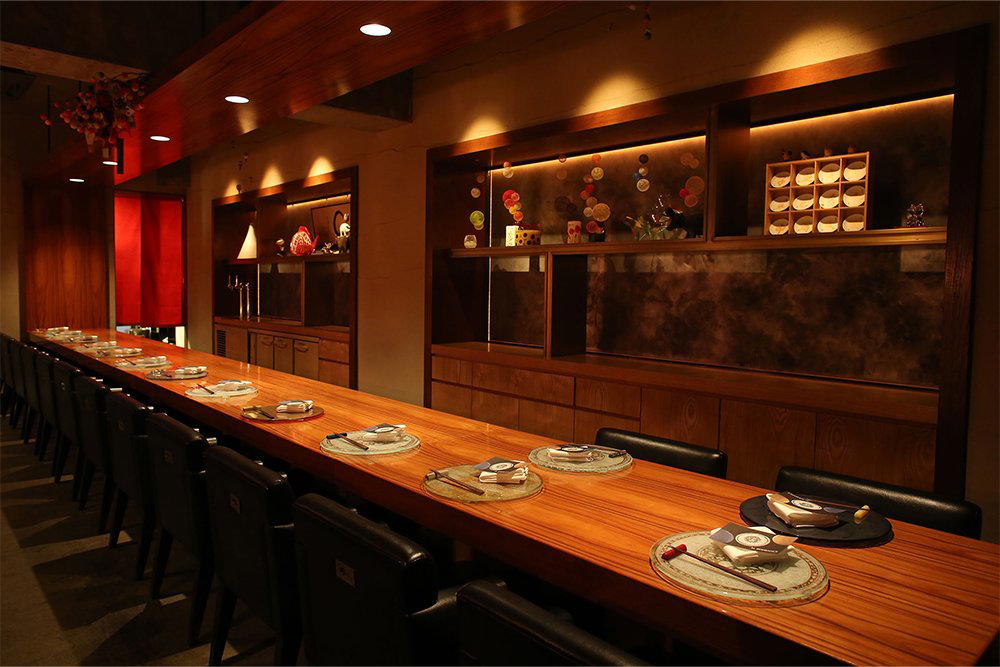
Bright and lively underground space with refined, modern décor featuring art pieces created by owner Chef Okamoto; intimate counter and table seating in a cozy, sophisticated setting.