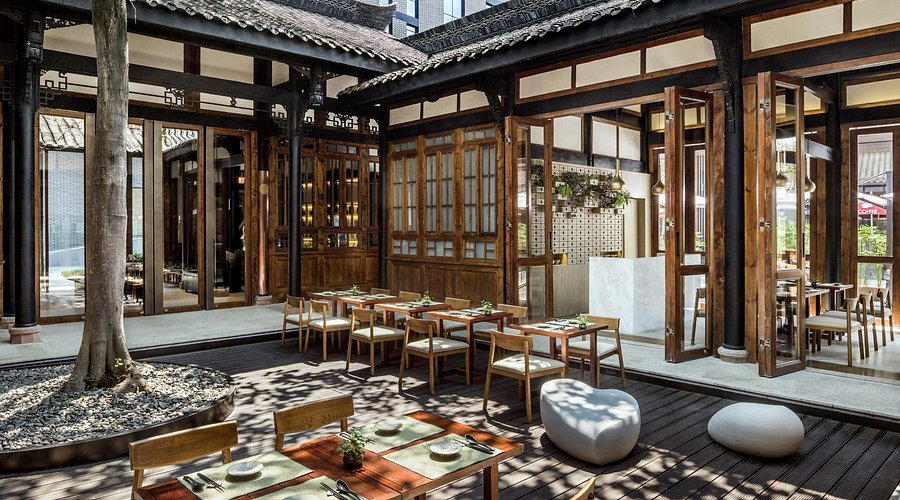
Kuanzuo sits within the Kuanxiangzi historic lane complex in Chengdu's Qingyang District, where the physical fabric of old Sichuan, courtyard architecture, stone-paved alleys, preserved qing dynasty facades, forms the backdrop to the dining scene. For visitors mapping Chengdu's food culture across price tiers and traditions, the address places it squarely in the city's most concentrated stretch of heritage dining. Cross-reference it against peer venues before booking.
Pearl is the En Primeur Club membership app — saves, bookings, and concierge access live there. Same editors, same standards.
- Address
- 4 Kuanxiangzi, 宽窄巷子特色商业街 Qingyang District, Chengdu, Sichuan, China, 610015
- Phone
- +86 28 8626 9777
- Directions
- Get directions
 Saves & bookings on Pearl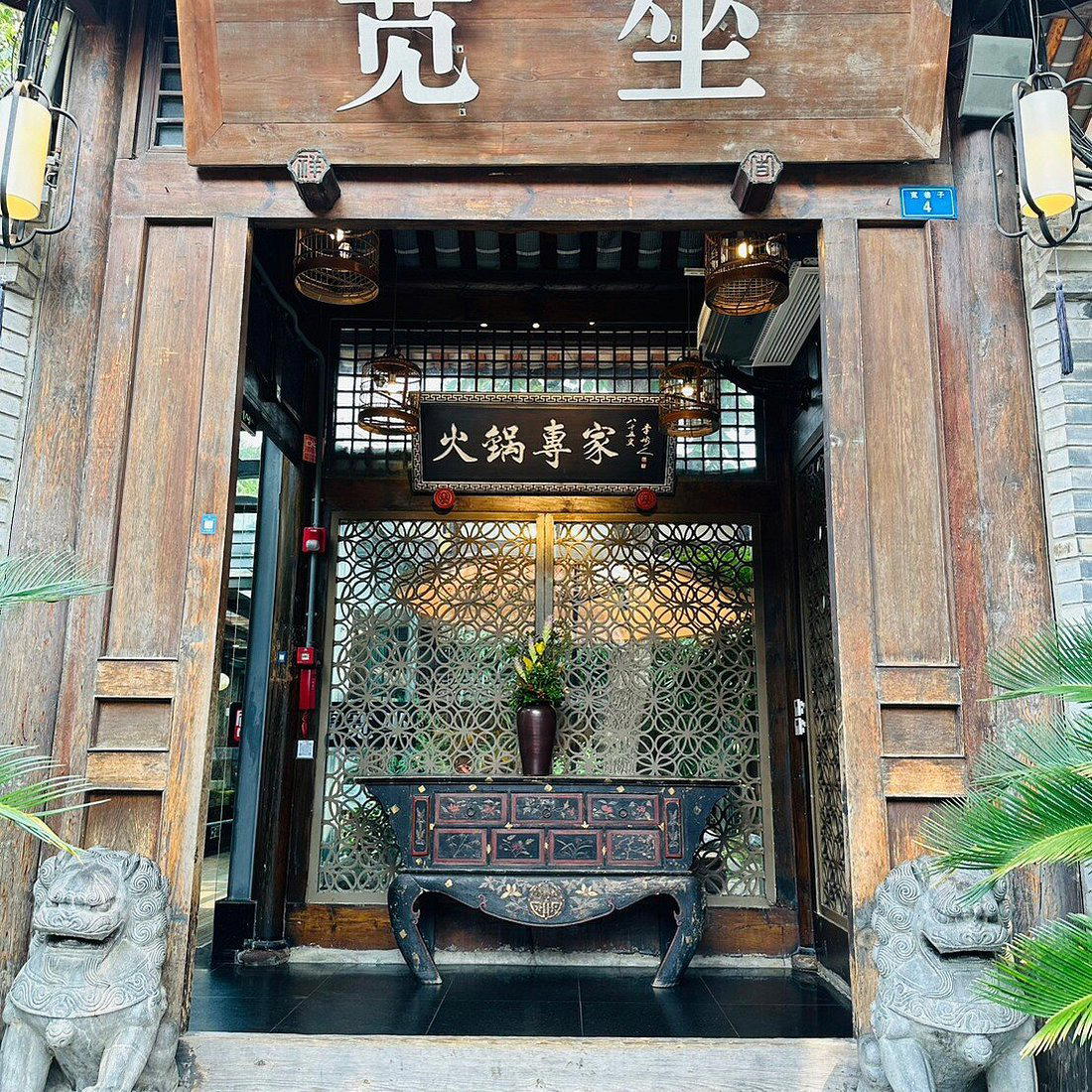
Kuanxiangzi: The Street Before the Meal
Arriving at Kuanxiangzi on foot is the easiest way to approach it. The historic lane complex in Chengdu's Qingyang District runs as two parallel corridors, Kuan Alley (Wide Alley) and Zhai Alley (Narrow Alley), connected by Well Alley, and the stone-paved approach shapes the first impression. Qing dynasty courtyard architecture lines both sides: grey brick, heavy timber eaves, the kind of streetscape that took decades of municipal effort to preserve and that now functions as one of the city's primary heritage tourism anchors. Kuanzuo sits at 4 Kuanxiangzi within this complex, meaning the physical context does some of the editorial work before you even sit down.
That context matters in Chengdu more than in most Chinese cities. The city's food culture operates across a wide range of formality and price, from ¥-tier Sichuan staples at places like Chen Mapo Tofu on Qinghua Road to ¥¥¥¥-tier tasting experiences such as Yu Zhi Lan and Xin Rong Ji. The Kuanxiangzi complex sits at an intersection of heritage setting and mid-to-upper visitor spend, drawing both domestic tourists tracing Chengdu's culinary identity and international travellers. The lane's density of dining options means individual venue choices carry more weight than usual: the setting nudges expectations upward, and menus in this stretch tend to position themselves accordingly.
Sichuan Ingredients and Why They Travel Badly
Any serious engagement with Sichuan cuisine eventually returns to the same question of sourcing. The region's flavour profile, the interplay of doubanjiang fermented broad bean paste, Sichuan peppercorn, dried chilies, and aged vinegars, depends on ingredients that are not easily substituted and that lose meaningful character when sourced outside the basin. Pixian doubanjiang, the fermented paste aged for months or years in clay pots in Pixian County, anchors the sauce architecture of dozens of canonical dishes; its substitution with inferior versions is among the more legible markers separating serious Sichuan kitchens from approximations. Similarly, the specific numbing-heat profile of Hanyuan Sichuan peppercorn, grown in a county roughly four hours southwest of Chengdu, differs measurably from peppercorns grown elsewhere in the province.
This sourcing specificity is one reason that Chengdu-based restaurants, when operating with genuine fidelity to the tradition, hold an inherent advantage over Sichuan venues in other cities. Proximity to producers in Pixian, Hanyuan, and the Chengdu Plain means that fermented pastes, cured meats, and fresh aromatics like garlic shoots and young ginger can move from source to kitchen in compressed timescales. For travellers comparing Sichuan dining experiences across Chinese cities, having visited Fu He Hui in Shanghai or assessed Sichuan-influenced dishes at Xin Rong Ji in Beijing, eating within Sichuan province itself closes the sourcing loop in ways that matter on the plate.
The Heritage Dining Format in Chengdu
The Kuanxiangzi complex represents a specific format within Chengdu's dining structure: heritage-setting restaurants that draw on the visual and architectural vocabulary of old Chengdu to frame their food offer. This format exists elsewhere in China, Suzhou has a parallel version at Pingjiangsong, Hangzhou at Ru Yuan, but Chengdu's version is anchored by the basin's particularly strong sense of culinary identity. Sichuan cuisine is one of China's eight recognized great culinary traditions, with sub-styles (home-style, banquet, street, temple vegetarian) that each carry distinct sourcing and preparation logic.
Restaurants operating in heritage lane settings tend to position toward the mid-to-upper price tier within their city's range, relying on the physical environment as part of the offer. The competitive question for any visitor is whether the setting amplifies a kitchen that would hold its own independently, or whether the location is doing the heavier lifting. That calculus applies across the broader Chengdu dining scene: Fang Xiang Jing and Fu Rong Huang represent different answers to the same question, as does the more regionally cross-referential approach taken by Hokkien Cuisine within the city.
For context on how Chinese regional cuisine operates at the formal end of the market beyond Sichuan, Imperial Treasure Fine Chinese Cuisine in Guangzhou, Dai Yuet Heen in Nanjing, and Chef Tam's Seasons in Macau illustrate how different regional traditions handle banquet-format dining and ingredient sourcing at premium price points. The comparison is useful for travellers building a cross-China dining itinerary: Sichuan at the source differs from Sichuan interpreted for a Guangdong palate or a Macau hotel context.
Planning a Visit to Kuanxiangzi
The Kuanxiangzi lane complex is one of Chengdu's most visited heritage sites, which means timing matters. Weekday mornings and early afternoons see the lowest foot traffic through the lanes; weekend evenings during peak domestic tourism seasons, particularly Golden Week in October and the spring festival window, generate significant congestion across all venues in the complex. Booking ahead is advisable for dinner at any seated restaurant within the complex during those windows.
The Qingyang District address places Kuanxiangzi within reasonable reach of the city centre by metro (line 4 connects to Kuanzhai Alley station) and taxi. For travellers moving between Chengdu's dining scene and other Chinese cities, the broader EP Club Chinese restaurant coverage spans venues from Fleurs Et Festin in Xiamen to Shang Palace in Yangzhou and Wenru No.9 in Fuzhou, providing a reference frame for how regional culinary traditions operate at different price tiers across the country.
- pork broth hotpot
- mala hotpot
- lily buds scented with rosebuds
- thinly sliced beef shank with chili oil
- tea tree mushrooms
- cold prawns
Comparable Spots, Quickly
Comparable venues nearby, for context on price, style, and recognition.
| Venue | Cuisine | Price | Notes |
|---|---|---|---|
| KuanzuoThis venue — the venue you are viewing | Traditional Sichuan Hotpot | $$ | Not listed |
| Longsenyuan | Authentic Chengdu Hotpot | $$ | Chengdushi |
| 武侯首席 | Traditional Sichuan Cuisine | $$ | 武侯区 |
| Zengniurou | Sichuan Beef Specialties | $$ | Chengdushi |
| YouYun•LuHuiTianFu | Sichuan Cuisine | $$$ | Tianfu 1911 |
| Chen's Mapo Doufu (陈麻婆豆腐) | Authentic Sichuan Mapo Tofu | $ | Qingyang |
Continue exploring
More in Chengdu
Restaurants in Chengdu
Browse all →
At a Glance
- Lively
- Rustic
- Classic
- Group Dining
- Casual Hangout
- Historic Building
Current opening hours
- Monday
- 10 AM–10 PM
- Tuesday
- 10 AM–10 PM
- Wednesday
- 10 AM–10 PM
- Thursday
- 10 AM–10 PM
- Friday
- 10 AM–10 PM
- Saturday
- 10 AM–10 PM
- Sunday
- 10 AM–10 PM
Hours can change for holidays and private events. Last verified .
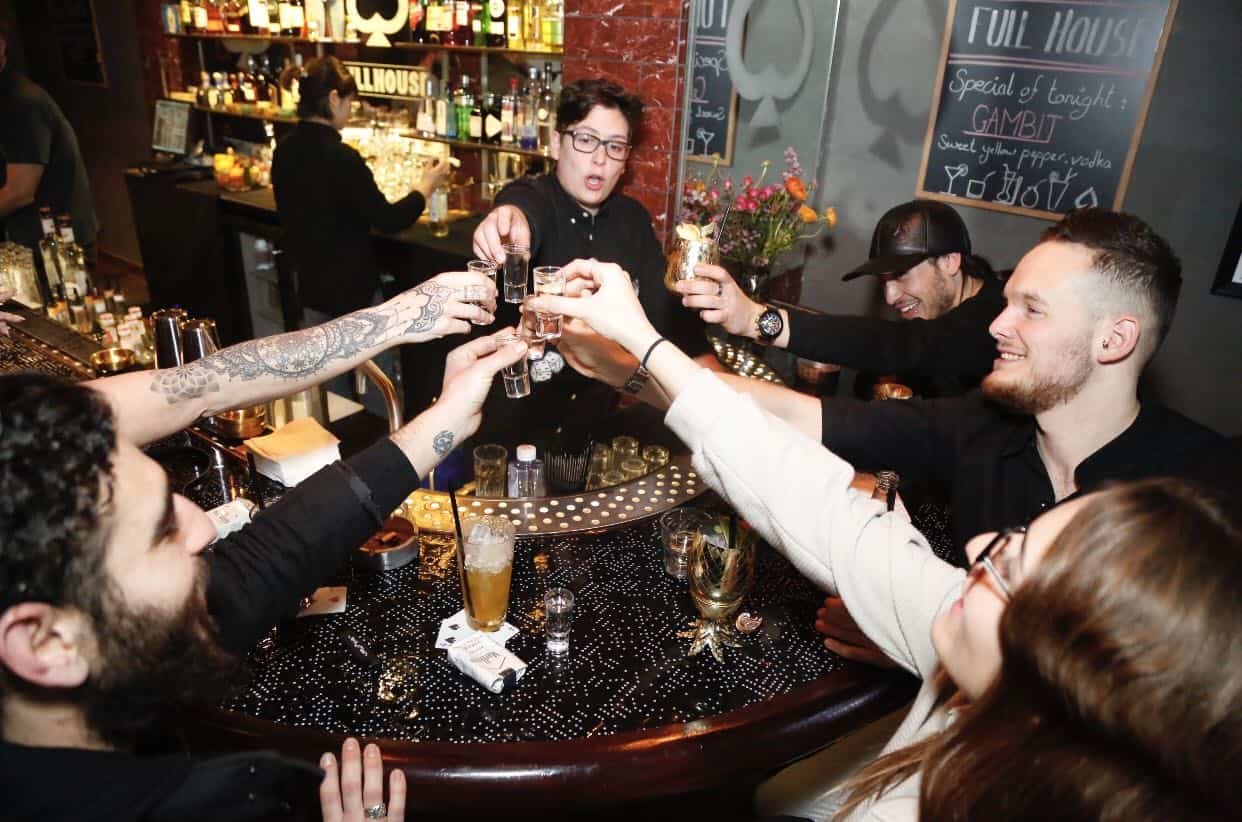
Busy and noisy local atmosphere with a lively, casual dining environment centered around communal hotpot dining.