Dorsett Chengdu is useful to read through Chengdu’s urban hotel culture rather than through resort language: a city hotel in a metropolis where design, access, and neighborhood rhythm matter more than spectacle. With public details on rates, awards, room categories, dining, and booking channels unavailable in the record, the sensible assessment is contextual: compare it carefully against Chengdu’s larger luxury, business, and retreat-style hotels before deciding.

Pearl is the En Primeur Club membership app, where members save venues, book tables and use the concierge.
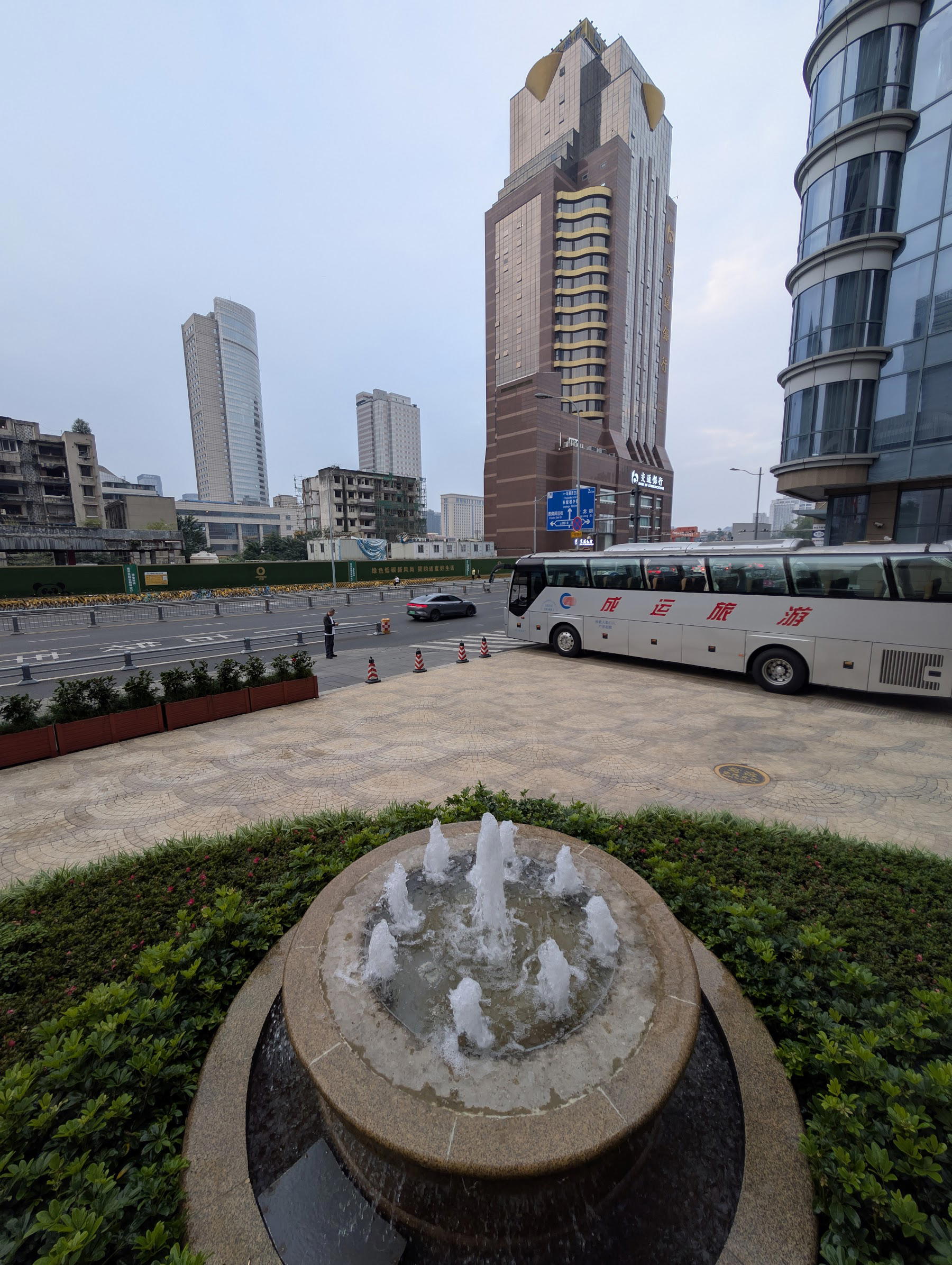
Chengdu hotel design begins at street level
Approaching a city hotel in Chengdu is rarely about a grand reveal. The first impression is more often a negotiation with density: broad roads, retail frontages, office traffic, food streets that wake up after dark, and the layered tempo of a capital that has grown into one of western China’s major commercial centers. Dorsett Chengdu belongs to that urban reading of the city. With no verified address, star rating, room count, price band, architectural credit, or awards in the available record, the useful way to judge it is not through unsupported claims about luxury, but through the role such a hotel plays in Chengdu’s accommodation map: a city base whose value depends on access, design restraint, and how well it fits a traveler’s actual schedule.
Chengdu rewards hotels that understand transitions. The city asks visitors to move between old teahouse culture, contemporary retail districts, Sichuan dining rooms, business zones, temple streets, museums, and the airport or rail network. In that setting, architecture is not only façade and lobby volume. It is circulation, lobby pacing, lift access, room quietness, natural light, breakfast flow, and the ability to leave without turning every journey into a production. The strongest city hotels in Chengdu are not necessarily those with the loudest interiors; they are the ones that make the city legible.
Chengdu has several distinct hotel categories. International business hotels cluster around conference, retail, and transport logic. Design-led properties trade on atmosphere and smaller-scale identity. Resort-adjacent addresses use landscape, hot springs, or mountain access as their defining argument. on Dorsett Chengdu’s category markers, the editorial position is cautious: treat it as a Chengdu city hotel to be compared on location, rate transparency, room type, transport time, and service consistency rather than assumed prestige.
Where Dorsett Chengdu fits in the city's hotel hierarchy
Chengdu’s hotel scene has become more stratified as the city has matured. A visitor can stay in a central commercial address, a convention-oriented property, a suburban leisure hotel, or a retreat closer to the Qingcheng Mountain orbit. Each choice changes the trip. A hotel near business and retail infrastructure suits short stays, meetings, and dining-focused itineraries. A resort-leaning property suits slower travel, wellness programming, and a stronger sense of separation from the city. The error is treating all Chengdu hotels as interchangeable because the city’s restaurant and teahouse culture appears relaxed on the surface.
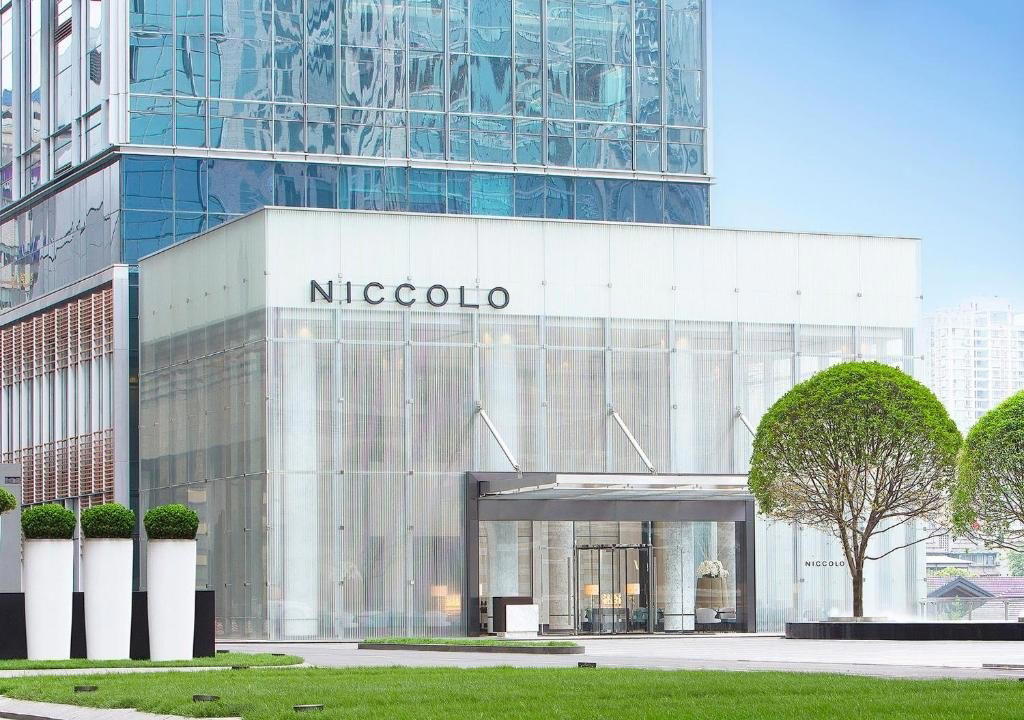
For comparison, Niccolo Chengdu sits in the polished urban-luxury conversation, where high-floor city presence and retail proximity tend to shape the guest experience. InterContinental Century City Chengdu and InterContinental Chengdu Global Center point toward Chengdu’s business and large-development hotel model, where scale, meetings, and infrastructure carry weight. Hotel Chengdu belongs to the established international full-service category. Dorsett Chengdu needs to be read against those kinds of choices: not by assuming equal ambition, but by asking whether its rate, location, and room product make sense for the purpose of the trip.
The city’s leisure end tells a different story. Six Senses Qing Cheng Mountain shifts the conversation toward wellness, landscape, and time outside the central city. Chengdu Expo Waterfall - MGallery and Ocean Spring Chengdu - MGallery indicate how branded design and leisure positioning can pull a guest toward a more destination-led stay. Guanyin Yiyuntai Hotel adds another point of comparison for travelers looking beyond standard international-chain formats. Against that field, Dorsett Chengdu’s appeal depends on whether the traveler wants a city-facing base rather than a hotel that supplies the narrative of the whole trip.
Architecture and design: what can be assessed responsibly
That absence matters. Design writing without those facts often turns into unsupported atmosphere: vague language about materials, lighting, or local inspiration that may not be verifiable. A serious hotel assessment should resist that. What can be said is that Chengdu’s stronger urban hotels now operate under pressure from a sophisticated domestic travel market. Guests know the difference between a lobby built for photographs and a lobby built for arrival, waiting, work, and quick movement through the building.
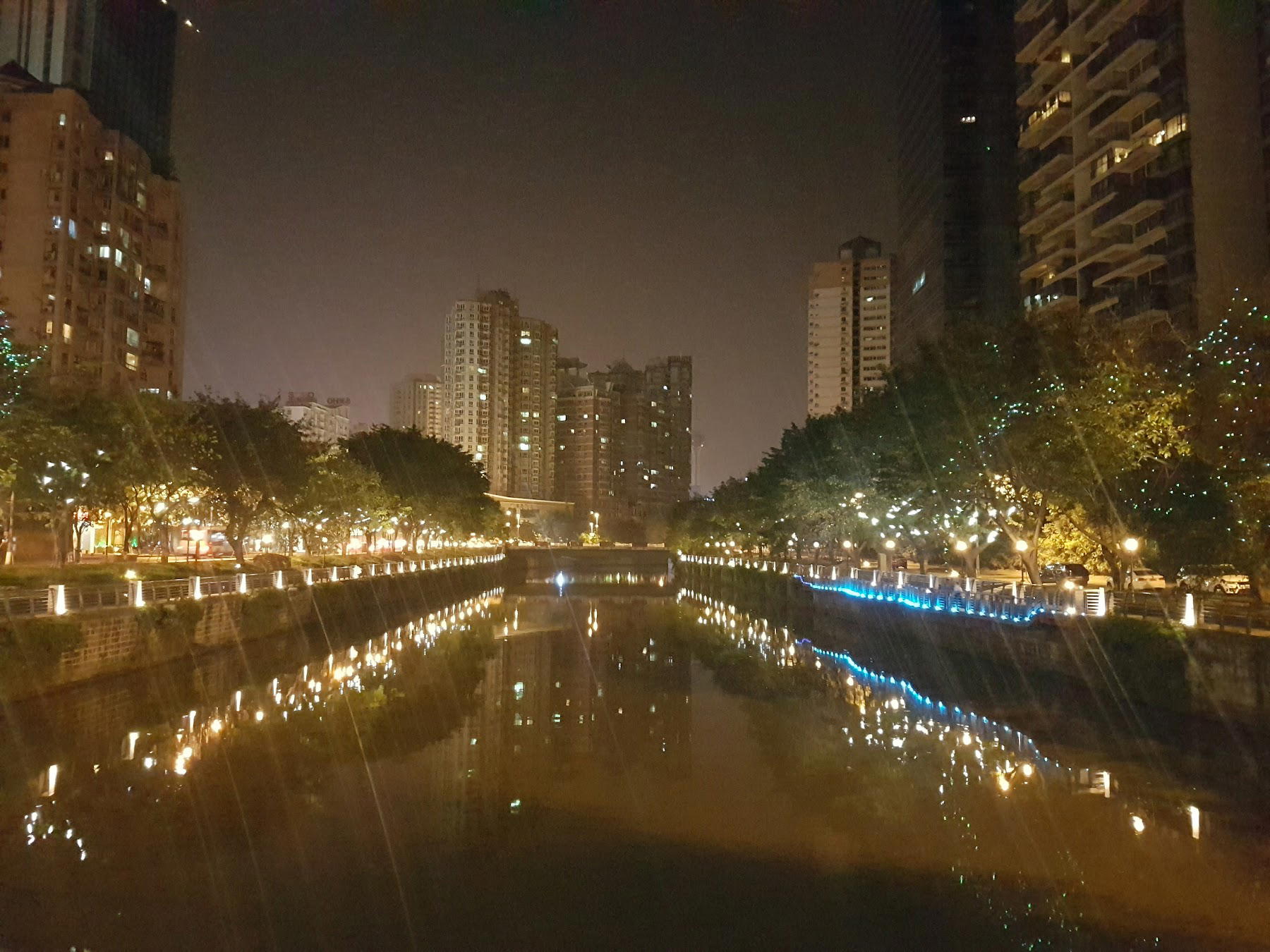
Chengdu itself gives hotel design a particular challenge. The city is known for social public life, from teahouses and parks to late meals and casual evening wandering. A hotel that feels sealed off from that rhythm can be comfortable but inert. A hotel that lets the city’s tempo filter into the arrival experience, without sacrificing rest upstairs, generally makes a better base. Dorsett Chengdu’s physical design cannot be described in detail from the present record, but the right questions are clear: how does the entrance handle traffic, how legible is the lobby, how calm are the corridors, how much work can the room do beyond sleep, and how easily can a guest connect to Chengdu’s food and cultural districts?
This is where comparison helps more than adjectives. In Beijing, Mandarin Oriental Qianmen in Beijing belongs to a heritage-and-neighborhood design conversation. In Shanghai, JW Marriott Hotel Shanghai at Tomorrow Square in Shanghai reflects a vertical big-city model. In Guangzhou, LN Hotel Five in Guangzhou points to a more localized urban-hotel reading. Chengdu’s design question sits somewhere else: how to create ease in a city where the strongest travel memories may happen outside the hotel, over tea, hotpot, museum visits, or a slow afternoon in a neighborhood street.
The Chengdu traveler has to choose pace before property
Chengdu looks relaxed, but planning still matters. The city’s food culture encourages long meals, and its cultural sites can spread a day across several districts. Travelers coming for restaurants should think less about hotel theatrics and more about evening mobility. The city’s dining identity is not confined to luxury rooms; it ranges from serious Sichuan kitchens to casual noodle counters and hotpot houses. A hotel that reduces friction between meals, bars, and daytime plans can be more useful than a more elaborate property in the wrong area.
For dining context, Our full Chengdu restaurants guide is the natural companion to any hotel decision, because Sichuan cuisine is often the reason the city appears on a serious traveler’s China itinerary. For overnight comparisons, Our full Chengdu hotels guide places Dorsett Chengdu beside other local options. Travelers building a fuller itinerary can also cross-check Our full Chengdu bars guide, Our full Chengdu wineries guide, and Our full Chengdu experiences guide, since the strongest Chengdu trips usually combine food, public life, and a few carefully chosen cultural stops rather than a hotel-only schedule.
The practical intelligence is simple: decide first whether the stay is about meetings, dining, shopping, transit, or retreat time. Then judge Dorsett Chengdu against that purpose.
No price range, star rating, guest score, award history, or total awards figure is available in the record for Dorsett Chengdu. That does not make the hotel weak; it means the case for staying there has to be built from live rate comparison and practical fit. In Chengdu, rate gaps can be meaningful. A traveler may find large international hotels priced for business demand, design-led properties priced for atmosphere, and retreat properties priced for space or setting. A city hotel with fewer verified prestige signals can make sense if its rate undercuts larger competitors while preserving the access and comfort needed for the trip.
Awards would change the analysis if they were present. Here, those signals are not supplied. The responsible move is to treat Dorsett Chengdu as an evidence-light listing and compare it against better-documented alternatives when the trip carries high stakes: an anniversary, a first Chengdu visit, a client stay, or a tight business schedule. For a pragmatic city stay, evidence-light does not automatically disqualify a hotel, but it raises the importance of recent photos, verified guest reviews, room dimensions, and transport mapping.
Across China, the broader hotel comparison is instructive. Star Tower at Studio City Macau in Macau operates in a gaming-and-entertainment environment, while Conrad Urumqi in Urumqi and Conrad Xiamen in Xiamen belong to different regional hotel contexts. InterContinental Chongqing Raffles City in Chongqing is tied to a major mixed-use development, while The Hanyu Garden Reserve Suzhou in Suzhou suggests a slower garden-city register. Dorsett Chengdu sits within Chengdu’s own urban equation, where the right hotel is the one that shortens the distance between daily plans and rest.
Who should consider it
Dorsett Chengdu is most sensible for travelers who prioritize a Chengdu city base and are willing to verify current details before arrival. That includes business travelers comparing rates across central hotels, food-focused visitors who will spend much of the day outside, and returning travelers who already understand the city’s rhythm. It is less suitable for travelers who need a fully documented luxury proposition before booking, since the present record lacks award, price, design, room, and facilities data.
Travelers seeking a hotel as the emotional center of the trip may prefer a property with a clearer design or resort identity. That could mean the mountain-facing calm associated with Qingcheng-area stays, the large-scale predictability of major international brands, or a more visibly design-led address. Travelers who treat the hotel as infrastructure, however, can evaluate Dorsett Chengdu on harder questions: what is the nightly rate against comparable Chengdu hotels, how current are the room photos, what is included, and how well does the location align with restaurants and transport?
The comparison also extends beyond China. The Fifth Avenue Hotel in New York City, Hôtel de Paris Monte-Carlo in Monte Carlo, and Badrutt's Palace Hotel in St. Moritz all show how deeply a hotel can define a destination stay when history, service theater, and address converge. Chengdu does not always require that model. Often, the city itself supplies the drama, and the hotel’s job is to keep the day moving cleanly.
Planning notes for a Dorsett Chengdu stay
Confirm the exact location before arranging airport or rail transfers. Check current room types and whether breakfast is included. Compare the final rate, including taxes and service charges, against nearby Chengdu hotels in the same date range. If the trip is built around Sichuan dining, map evening restaurant locations before choosing a room, since a cheaper hotel can become inefficient if every meal requires a long cross-city ride.
For travelers arriving from another Chinese city, Chengdu works well as part of a broader route rather than a single-stop luxury break. A rural inn such as Tian Ranju Inn in Tian Tou Zhai represents an entirely different travel rhythm, where place and setting are inseparable from the stay. Chengdu’s urban hotels ask for a more tactical decision. Dorsett Chengdu should be judged by how efficiently it supports the city outside its doors.
In Context
Comparable venues nearby, for context on price, style, and recognition.
| Venue | Price | Awards | Notes |
|---|---|---|---|
| Dorsett ChengduThis venue (the venue you are viewing) | $1–100 | Not listed | Not listed |
| InterContinental Chengdu Global Center | $100–200 | Michelin Selected · World Luxury Hotel Awards WLHA Country Winner | Chengdushi, Contemporary luxury resort within mega-structure |
| Kempinski Hotel Chengdu-City Center | $1–100 | Not listed | Wuhou District, Large international luxury city hotel catering to both corporate and leisure guests with extensive meeting space and full resort‑style facilities. |
| Ocean Spring Chengdu - MGallery | Not listed | Michelin Selected | Chengdushi, contemporary water village resort integrated with natural hot springs |
| Rhombus Park Aura Chengdu Hotel | $1–100 | Not listed | Chengdushi, Urban all‑suite luxury hotel combining understated elegance with contemporary comforts in the heart of Chengdu’s main shopping and business district. |
| Wanda Reign Chengdu | $200–300 | Star Wine List | Chengdushi, Luxury skyscraper with sky lobby on 41st floor |
Continue exploring
More in Chengdu
Hotels in Chengdu
All hotels in Chengdu →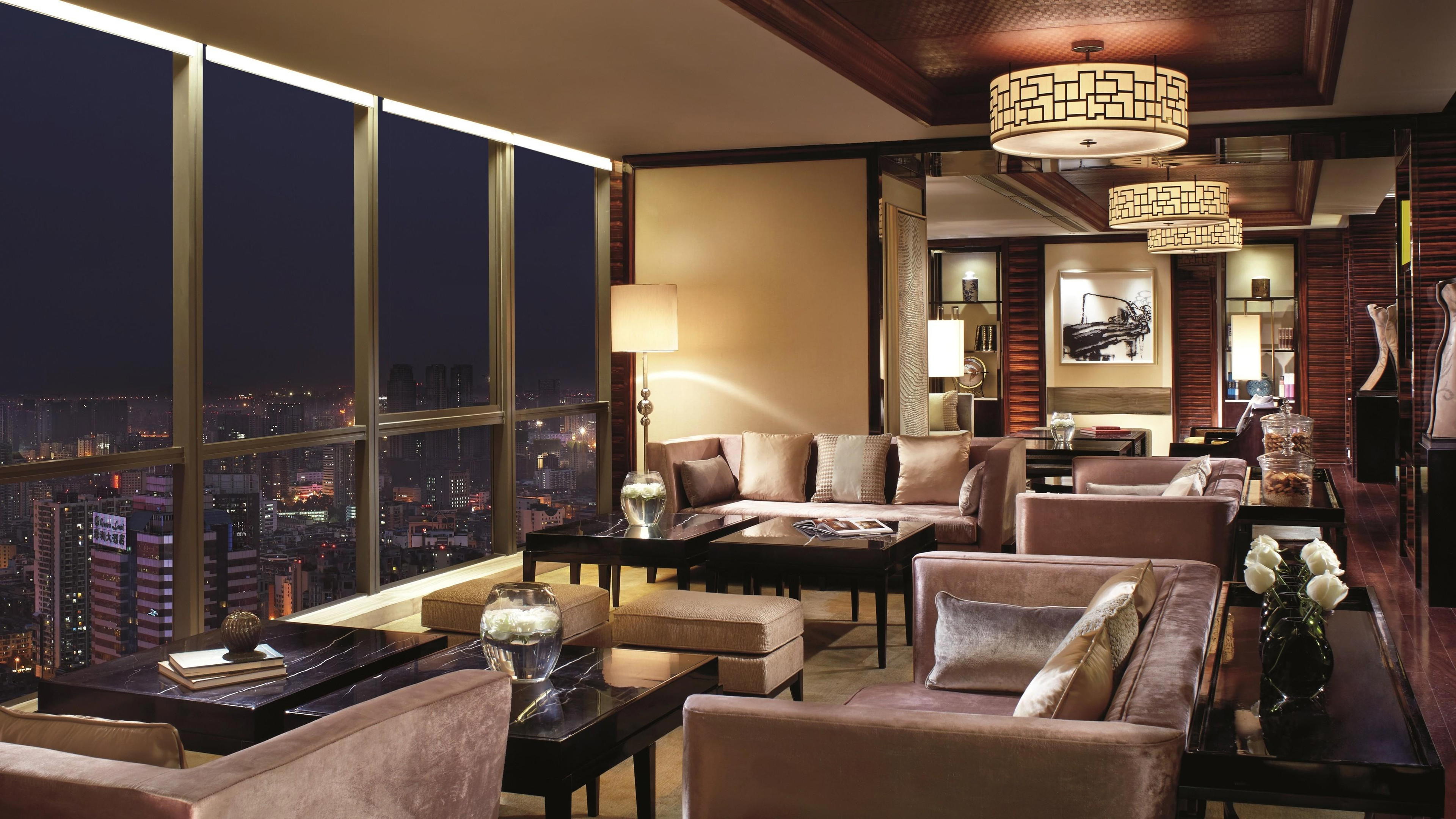
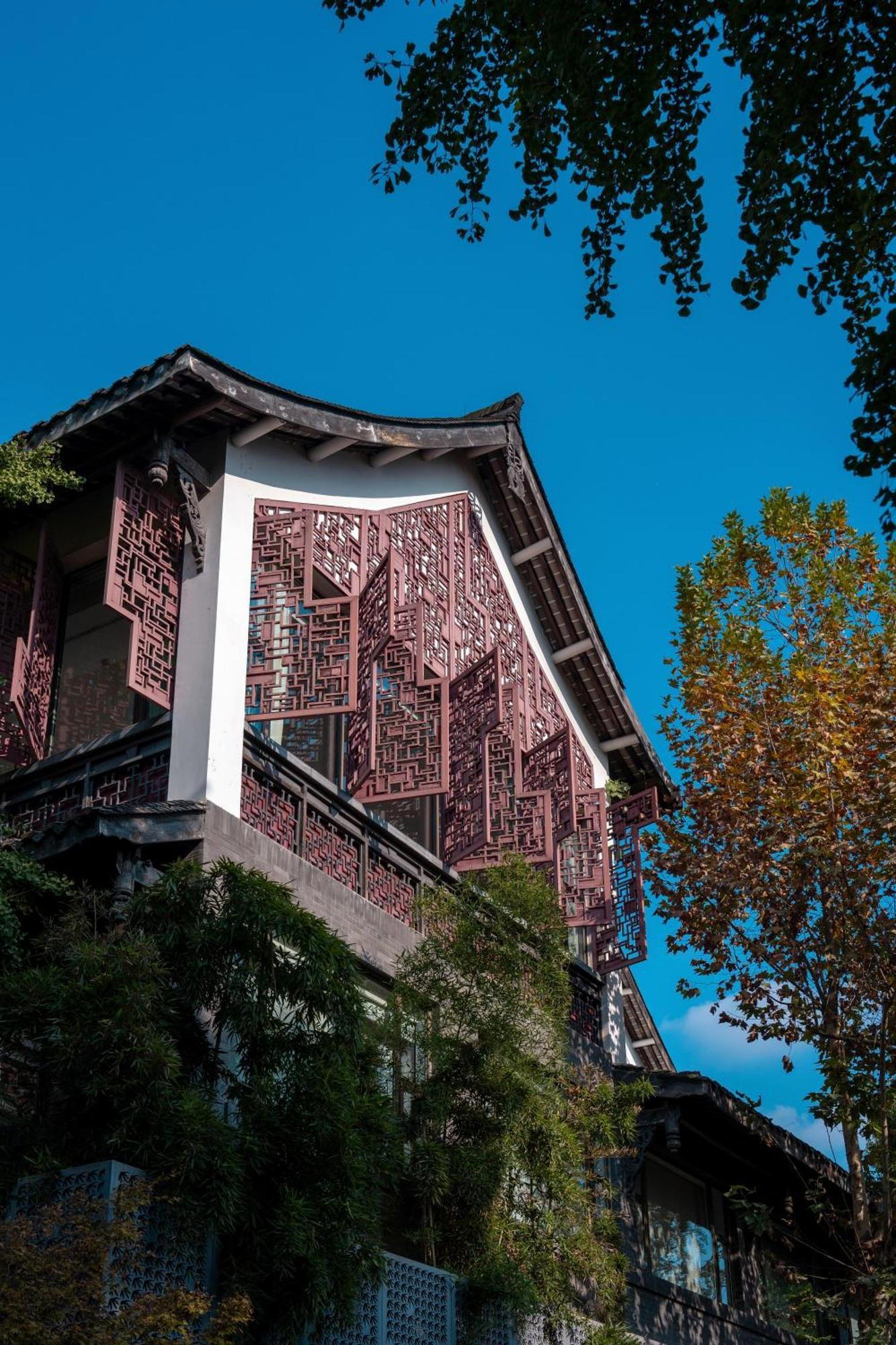
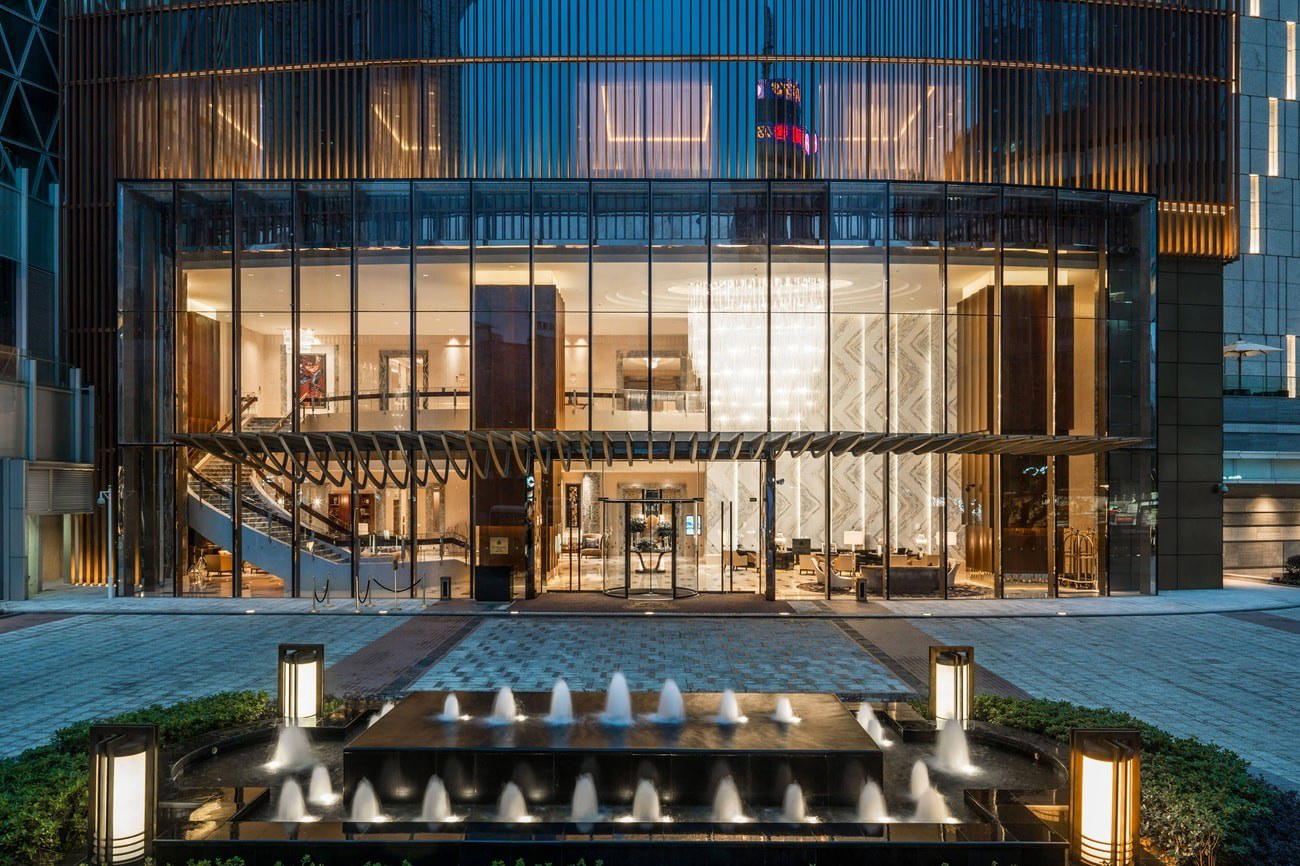
Bars in Chengdu
All bars in Chengdu →
Details
- Modern
- Elegant
- Sophisticated
- Lively
- Business Trip
- Family Vacation
- Weekend Escape
- Group Retreat
- Celebration
- Panoramic View
- Historic Building
- Terrace
- Wi Fi
- Fitness Center
- Room Service
- Business Center
- Concierge
- Skyline
- Street Scene
- Wheelchair Accessible
- Elevator
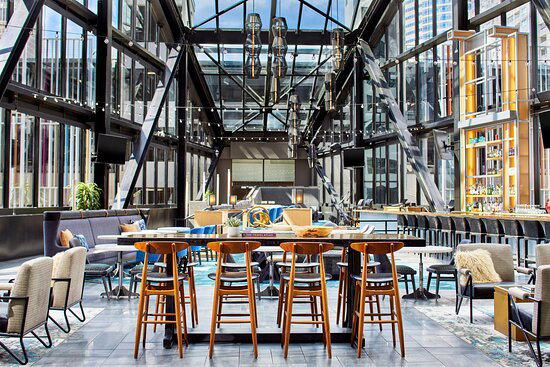
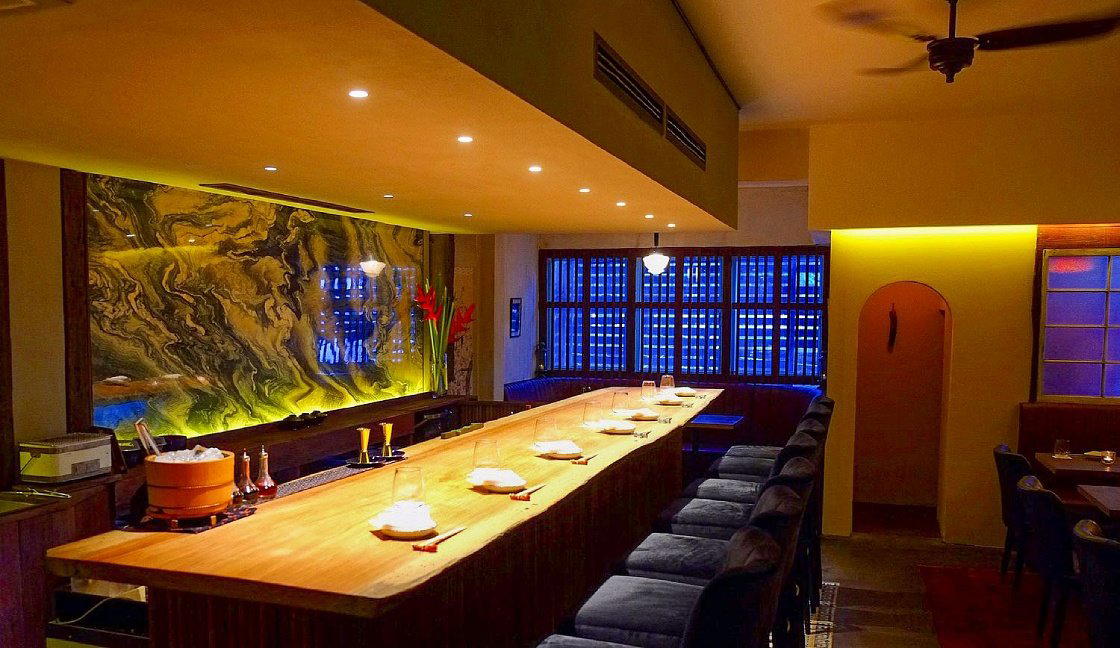
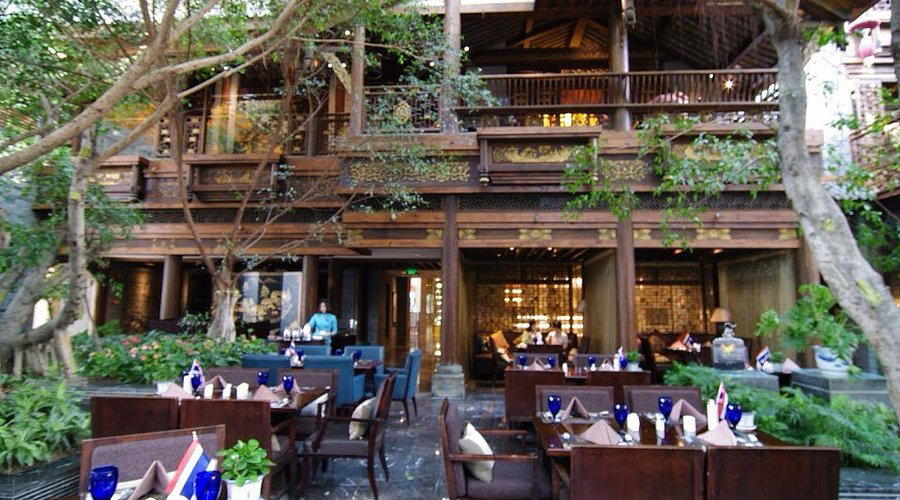
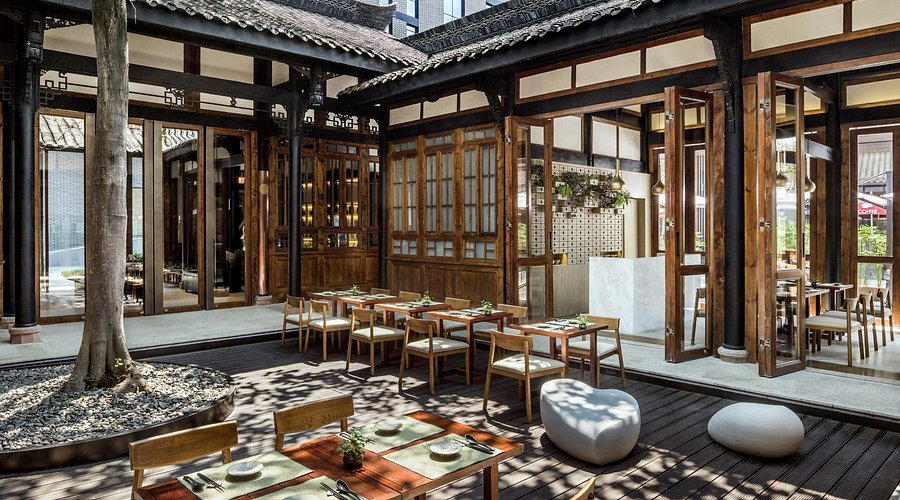
A contemporary high-rise city hotel with Asian-influenced décor, bright and airy rooms with bay windows and city views, and a businesslike yet welcoming atmosphere that balances upscale comfort with lively urban energy.