1 Michelin Star
Our verdict
Mi Xun Teahouse holds a Michelin star (2024) and occupies a courtyard house beside Daci Temple in Chengdu's Qingyang District, serving refined vegetarian cooking built around hand-picked Sichuan produce. A set menu sources ingredients from farms near panda habitats, including Mianyang porcini and Ya'an radish. At ¥¥ pricing, it sits well below the city's top-tier Michelin tables while matching them in recognition.

Pearl is the En Primeur Club membership app, where members save venues, book tables and use the concierge.
The menu
What to order
- Truffle dumplings
- Mapo tofu
- Dan dan noodles
A Courtyard Beside the Temple
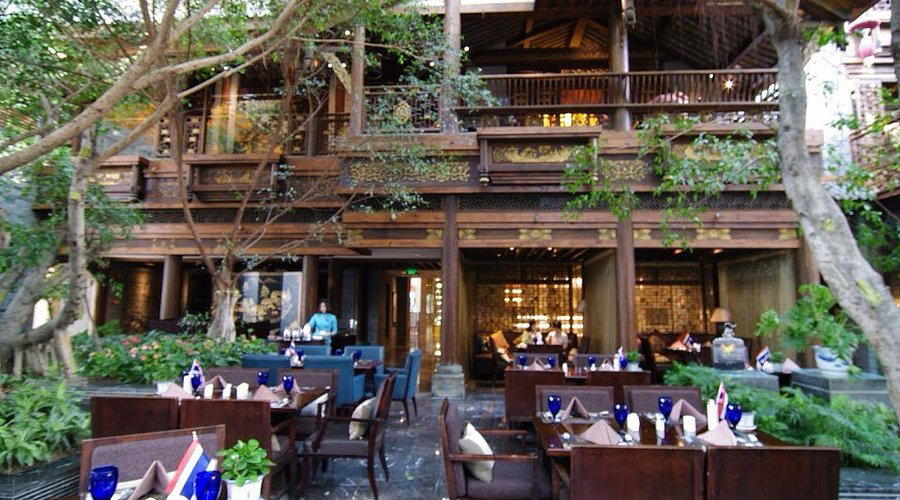
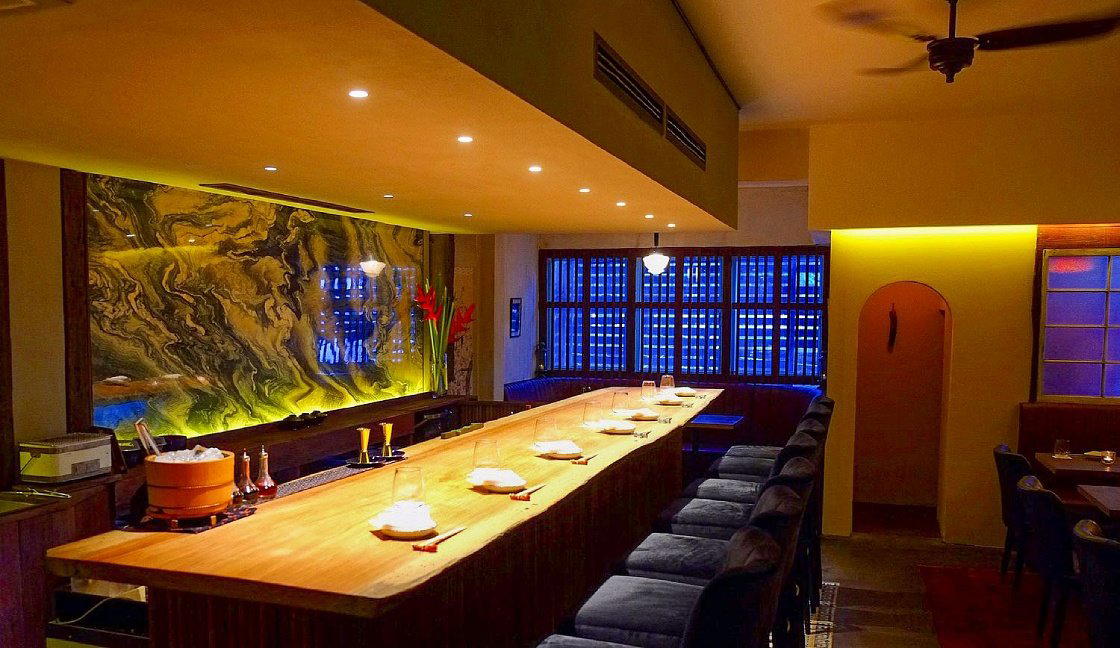
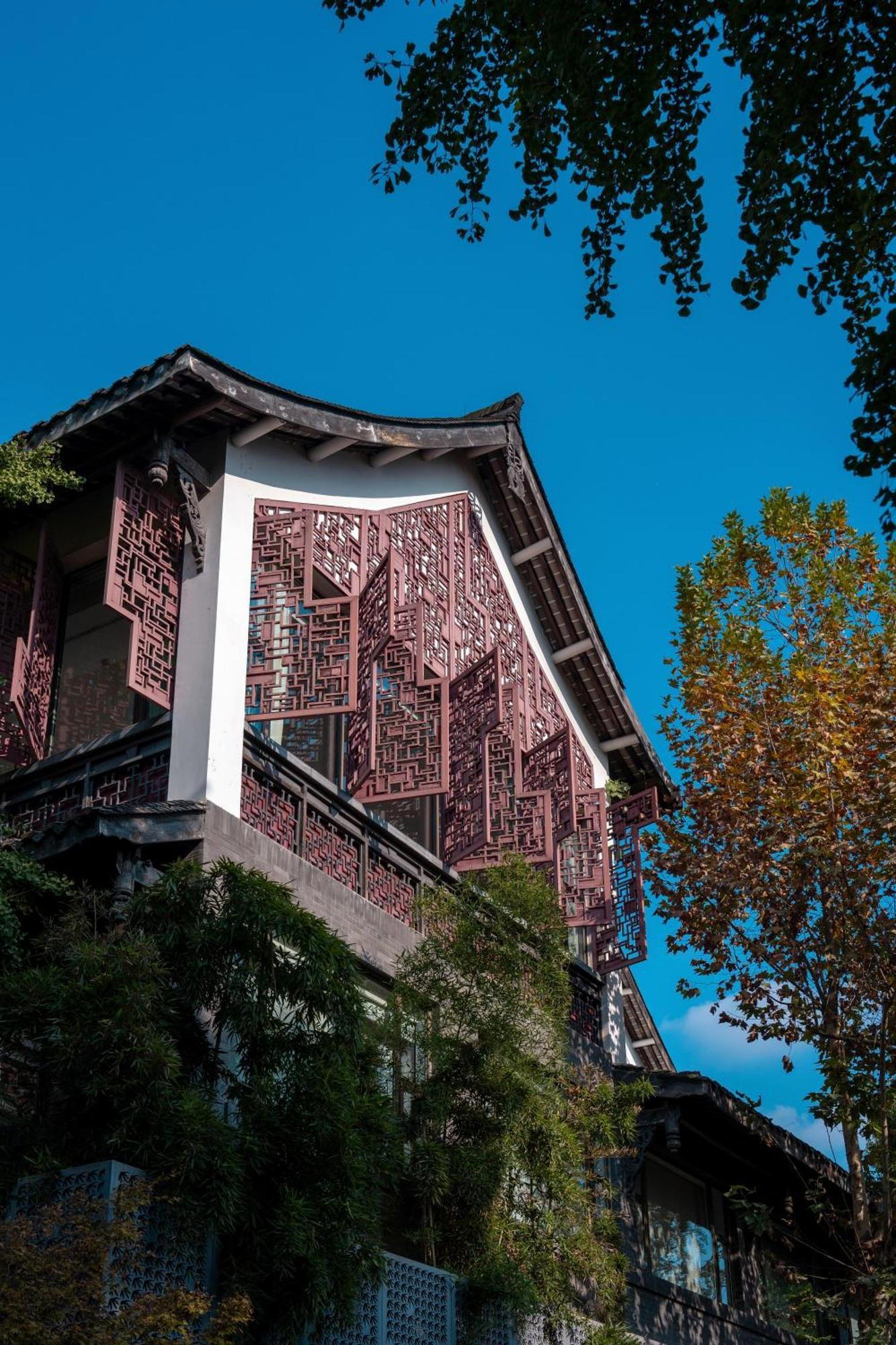
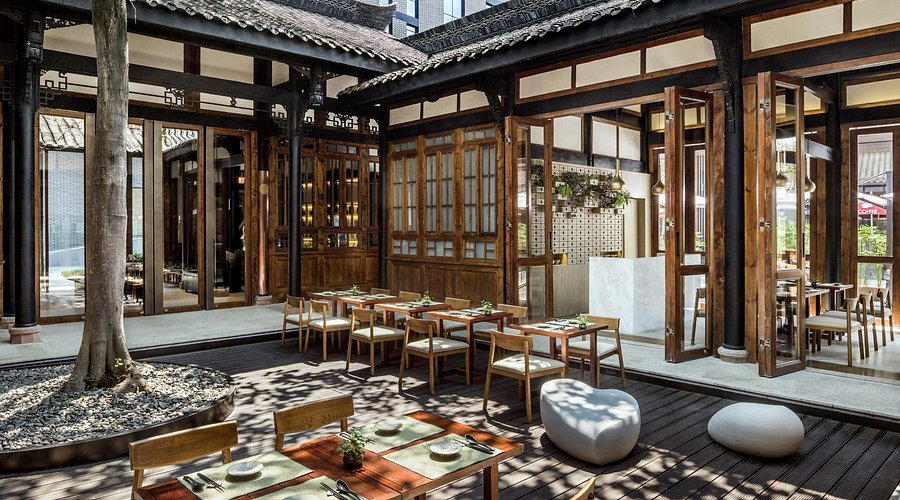
The approach to Mi Xun Teahouse along Citang Street sets the register before you reach the door. Daci Temple rises nearby, its old-city quiet a deliberate counterpoint to the traffic and commerce of central Qingyang. The restaurant occupies a courtyard house whose proportions belong to an earlier Chengdu, and an open kitchen runs along one side, keeping the interior airy rather than enclosed. This is a city where tea culture and Buddhist vegetarian traditions have coexisted for centuries, and the setting makes that lineage legible without announcing it. Sitting within People's Park's orbit, the teahouse draws on a neighbourhood that has resisted the full renovation treatment applied elsewhere in central Chengdu, which gives the space a calm that purpose-built restaurants rarely achieve.
The Protein Question in Sichuan Cooking
Sichuan cuisine is not obvious territory for vegetarian fine dining. The regional canon is built on pork fat, beef tallow, and the kind of slow-braised richness that takes hours to develop. Achieving satiety and structural complexity without those foundations is one of the more demanding briefs in Chinese cooking, and it is where Mi Xun Teahouse makes its sharpest argument. The kitchen's approach centres on texture layering and fermentation depth rather than protein substitution, treating the absence of meat as a compositional constraint rather than a deficit to disguise.
The vegan mapo tofu with chanterelles is the clearest illustration of this method. Mapo tofu is one of Sichuan's most recognisable dishes, and its standard version derives much of its body from ground pork and the fat it releases into the sauce. Replacing that with chanterelles requires a different logic: the mushrooms bring umami and a slight chew, but their fat content is low, so the kitchen has to find richness elsewhere, presumably through the oil base, the doubanjiang fermentation, and the way the tofu itself is handled. The result is a dish that reads as mapo tofu without imitating meat, which is a more honest approach than most plant-based fine dining manages.
Beyond individual dishes, the set menu that sources from farms near panda habitats addresses the richness question at a structural level. Mianyang porcini and Ya'an radish are not ingredients chosen for symbolic value. Porcini carries glutamates and body; Ya'an radish, grown in the cooler elevation of the Yaan basin, tends toward a denser texture than plains-grown varieties. Using both in a menu designed around plant-based satiety shows a sourcing logic that starts with flavour and texture outcomes rather than provenance storytelling.
Where It Sits in Chengdu's Dining Structure
Chengdu now holds a significant cluster of Michelin-recognised restaurants, and the 2024 Guide placed Mi Xun Teahouse among them at one star. At ¥¥ pricing, it occupies a different band from the city's ¥¥¥¥ tables. Yu Zhi Lan (Sichuan) and Xin Rong Ji (Taizhou) operate at the leading price tier, where the expectation is extended tasting formats and imported luxury product. Fang Xiang Jing (Sichuan) sits in the broader Sichuan fine-dining set. Mi Xun Teahouse's position is distinct: Michelin recognition at a price point accessible to a wider audience, and a specialist focus that places it outside the mainstream Sichuan canon altogether.
Within China's vegetarian fine-dining tier, it belongs to a small group of Michelin-recognised addresses. Fu He Hui, Vegetarian in Shanghai is the most discussed peer nationally, operating at a higher price point with a longer track record. Lamdre, Vegetarian in Beijing occupies a different cultural register, drawing on Tibetan and Himalayan influence. Mi Xun Teahouse's Sichuan grounding makes it categorically different from both: the spice logic, the fermented bean base, and the regional produce sourcing give it a local specificity that neither of those Beijing or Shanghai addresses replicates. Among Chengdu's own vegetarian-leaning addresses, Chanyue Vegetarian and Huadao Art Of Life · Yu Shan Ge offer comparative points, but neither carries a current Michelin star.
Ru Yuan in Hangzhou, 102 House in Shanghai, Chef Tam's Seasons in Macau, Imperial Treasure Fine Chinese Cuisine in Guangzhou, Dai Yuet Heen in Nanjing, and Xin Rong Ji (Xinyuan South Road) in Beijing collectively define where Chinese fine dining is moving, mostly toward hyper-regional sourcing and technique-forward menus. Mi Xun Teahouse fits that direction while operating in a specialist category that most of those addresses do not touch.
The Set Menu and Its Sourcing Logic
The farm-linked set menu is worth addressing as a structural feature rather than a marketing note. Supporting small farms near panda habitats in Sichuan's western ranges is not a charitable gesture operating alongside the cooking; it is a sourcing constraint that shapes what the kitchen can work with. Mianyang sits to the north of Chengdu, at elevations where porcini grow in mixed conifer and oak forest. Ya'an is further southwest, in a wetter, cooler corridor that runs toward the Tibetan plateau. Both areas produce ingredients with a different density and intensity than the lowland Chengdu basin, and using them in a refined menu adds an altitude variable to the flavour profile that local, flat-terrain sourcing would not provide.
This matters for the protein question specifically because mountain-grown fungi and root vegetables carry more concentrated flavour than their commercial equivalents. Richness in a plant-based menu depends on concentration and layering: the more intense each component, the less volume the kitchen needs to achieve satiety. A menu built on produce from these growing regions has a structural advantage in that regard.
Planning a Visit
Mi Xun Teahouse is located on Citang Street in the Qingyang District, adjacent to Daci Temple and within the People's Park area, at postal code 610015. Given the Michelin star awarded in 2024 and the relatively contained scale of a courtyard-format restaurant, table availability is likely tighter than the ¥¥ price point might suggest. Visiting on a weekday rather than a weekend, and booking as far in advance as your travel dates allow, is the practical approach. The neighbourhood around Daci Temple and People's Park rewards time on foot before or after a meal, and Chengdu's tea house culture means the immediate area has options for extending the afternoon or evening at a different pace. For broader orientation across the city's dining, drinking, and stay options, see our full Chengdu restaurants guide, our full Chengdu hotels guide, our full Chengdu bars guide, our full Chengdu wineries guide, and our full Chengdu experiences guide.
Frequently asked questions
Is Mi Xun Teahouse a family-friendly restaurant?
The courtyard-house setting on Citang Street, with its open kitchen and airy feel, is calm rather than formal, which suits families comfortable with a quieter dining pace. The vegetarian-only menu is worth flagging ahead of time for children with narrow palates. No children's menu is documented in available venue data.
Is Mi Xun Teahouse better for a quiet night or a lively one?
Mi Xun Teahouse skews firmly toward the quiet end. The location beside Daci Temple in Qingyang District draws on old-city calm, and the courtyard-house format reinforces that register. This is a venue suited to considered conversation, not a celebratory crowd night out.
What's Mi Xun Teahouse known for in terms of accolades?
Mi Xun Teahouse has received recognition including: Nestled in a quiet hotel next to Daci Temple, this restaurant is an oasis of calm. The courtyard house exudes historical charm, with the open kitchen lending an airy feel. Hand-picked local produce is used to create light, refined and inspi….
What's the best thing to order at Mi Xun Teahouse?
The vegan mapo tofu with chanterelles is the most documented dish, a reinterpretation of one of Sichuan's most pork-dependent classics, made without meat or dairy. The farm-linked set menu is the stronger structural choice if you want to track the sourcing logic, featuring produce such as Mianyang porcini and Ya'an radish from farms near panda habitats.
What cuisine category does Mi Xun Teahouse fall under?
What should I budget for a meal at Mi Xun Teahouse?
Pricing at Mi Xun Teahouse is listed as ¥¥.
Cuisine and Recognition
A short peer table to compare basics side-by-side.
| Venue | Cuisine | Price | Awards | Notes |
|---|---|---|---|---|
| Mi Xun TeahouseThis venue (the venue you are viewing) | Modern Vegetarian Sichuan Chinese | $30–50 | 1 Michelin Star | Not listed |
| Xin Rong Ji | Taizhou | Not listed | Michelin 2 Star | Not listed |
| Yu Zhi Lan | Modern Sichuan Fine Dining | $200–300 | 2 Michelin Stars · La Liste Top Restaurants | Sichuan |
| Chen Mapo Tofu (Qinghua Road) | Authentic Sichuan Mapo Tofu | $10–20 | Michelin Bib Gourmand | Sichuan |
| Co- | Modern French Tasting Menu | $150–200 | 1 Michelin Star · World's 50 Best #69 | Innovative |
| Dumpling & Drinks (Lanchao Road) | Traditional Sichuan Dumplings | $1–10 | Michelin Bib Gourmand | Dumplings |
Recognition history
Dated appearances from independent guides and award organizations, with the underlying list record or original source where available.
Michelin 1 Star
Michelin
Full recognition history (2 entries)
Michelin 1 Star
Michelin