
A Michelin Plate-recognised kaiseki counter in Chiyoda, Koshita operates where classical Japanese technique meets deliberate creative rupture. The chef draws on a rigorous apprenticeship lineage while pulling non-native ingredients into the repertoire with uncommon confidence. The counter itself, hewn from ancient buried cedar passed down from a revered mentor, sets the material tone before a single dish arrives.
Pearl is the En Primeur Club membership app — saves, bookings, and concierge access live there. Same editors, same standards.
- Address
- Japan, 〒102-0073 Tokyo, Chiyoda City, Kudankita, 4 Chome−3−20 九段 フラワーホーム 103
- Phone
- +81 50-1724-6003
- Website
- koshita2025.jp
- Directions
- Get directions
 Saves & bookings on Pearl
Where Chiyoda's Kaiseki Scene Makes Room for Dissent
Tokyo's kaiseki tier has long been governed by fidelity, to seasonal rhythm, to regional ingredient hierarchies, to the visible weight of lineage. The city's most decorated counters, from three-Michelin-star rooms like Kagurazaka Ishikawa to the kaiseki-adjacent formalism of Azabu Kadowaki, have largely built their reputations on depth within a defined canon. But a quieter current has been moving through the mid-tier in the last decade: counters that absorb classical training and then apply pressure to its conventions, not as provocation but as an honest extension of what technique permits. Koshita, a Michelin Plate-recognised counter in Kudankita, Chiyoda, belongs to that second tendency. It is a Japanese fine dining restaurant in Tokyo's Chiyoda City.
Kudankita is not Ginza or Minami-Aoyama. The district sits between the institutional gravity of the Imperial Palace grounds and the residential density of Iidabashi, and its dining scene reflects that in-between quality: serious without being self-congratulatory, local in clientele in a way that Ginza counters rarely are. Arriving at the ground-floor address in a low residential building on 4-chome, there is no theatrical entry sequence. The work happens at the counter.
The Counter as Inheritance
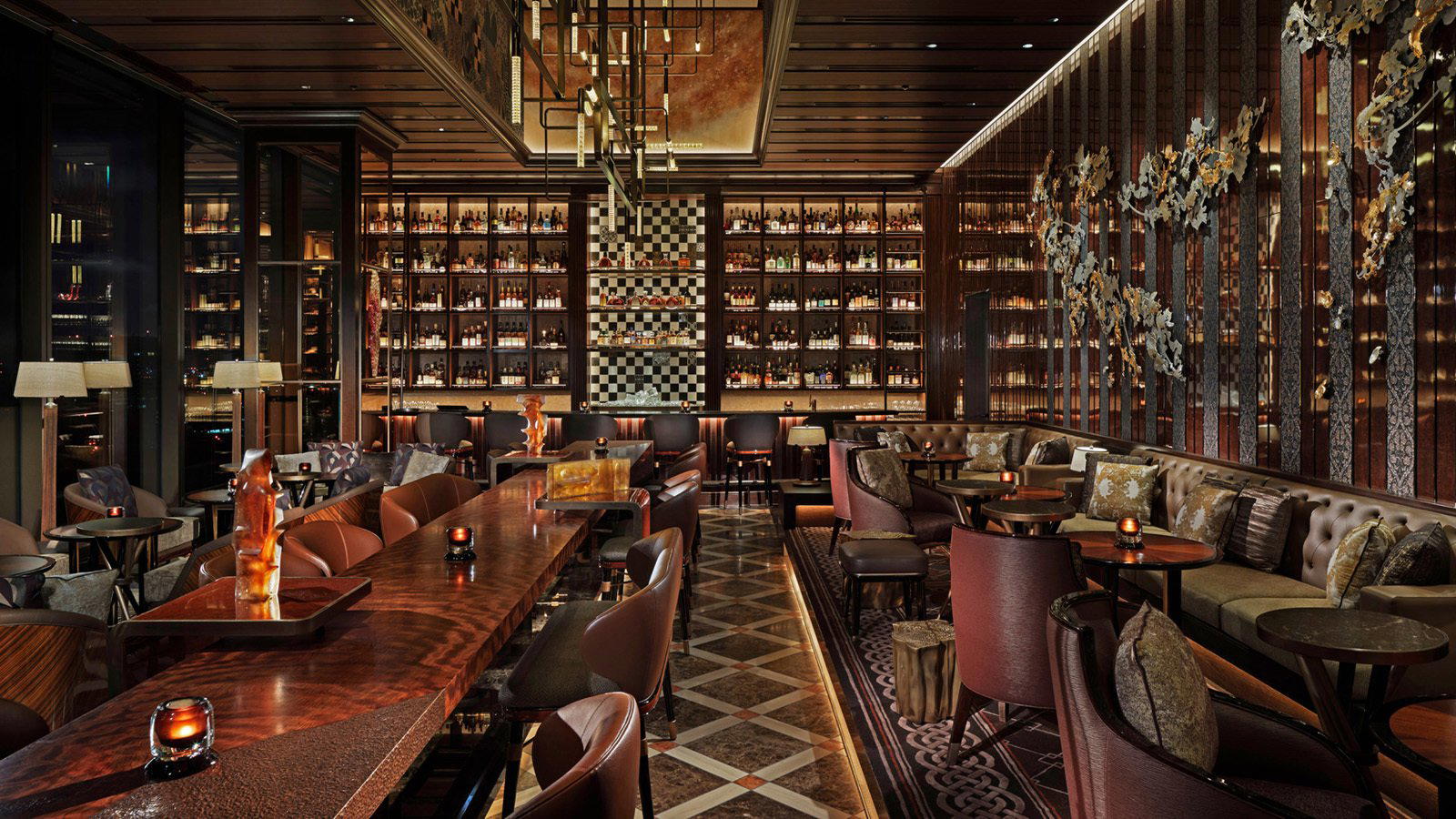
In kaiseki culture, the physical counter carries meaning beyond function. The counter at Koshita is made from ancient buried cedar, an heirloom passed directly from the chef's mentor. That transmission is not decorative backstory. In Japanese culinary tradition, material inheritance of this kind signals acknowledged succession, the mentor's endorsement made physical. It places the chef within a specific lineage while simultaneously handing him the responsibility of adding to it.
The broader kaiseki tradition has handled inheritance in different ways across generations. Some practitioners have responded to their training by narrowing, refining a single technique or regional style toward something close to absolute. Others, working in the same period, have responded by widening the frame. Koshita clearly belongs to the latter group. The chef's apprenticeship provides structural fluency, and that fluency is the platform from which departures become legible rather than arbitrary.
The Evolution of the Menu: Technique Held, Convention Tested
The editorial angle on Koshita's current direction is most clearly expressed in two documented aspects of the menu. First, the broth: for the wanmono course, the foundational soup that in kaiseki functions as a kind of technical proof of the kitchen's depth, the chef draws from two types of makombu seaweed. This is not a radical break from tradition, kombu dashi is definitional to Japanese cuisine, but pulling two distinct makombu varieties to multiply and layer the flavour profile reflects an additive rather than subtractive approach to classical forms. Where some kaiseki kitchens achieve refinement by removing variables, this kitchen adds them and asks the technique to hold.
Second, and more distinctively, the chef has built non-native ingredients into the repertoire as a standing practice rather than an occasional flourish. This is where the evolutionary narrative becomes clearest. A decade ago, ingredients unfamiliar to Japanese cuisine appearing on a kaiseki menu at this price tier would have read as either fusion novelty or chef-ego statement. The cultural context has shifted. Tokyo's mid-tier innovative Japanese counters, including the two-Michelin-star Myojaku and the cross-influence work visible at counters like Jingumae Higuchi, have collectively normalised ingredient borrowing as an act of craft rather than compromise. Koshita operates in that changed atmosphere, and the move reads differently for it.
The flame-broiled courses, paired with pureed vegetable soup, extend this logic into texture and temperature contrast. The combination is direct, char alongside smoothness, and suggests a kitchen more interested in sensory argument than in seasonal pageantry for its own sake.
Where Koshita Sits in Tokyo's Wider Tier Structure
A Michelin Plate signals that inspectors found the cooking worth noting without awarding a star. In Tokyo's extraordinarily dense restaurant field, that distinction places Koshita in a large and genuinely competitive cohort: counters with credible technique and a clear point of view, operating below the ¥¥¥¥ price ceiling of starred rooms like RyuGin or the French-influenced innovation of Crony. At ¥¥¥, Koshita's price tier overlaps with Den, the two-Michelin-star innovative Japanese counter that has become a reference point for how genre-blending can be received at the highest levels. Den's trajectory, from mid-tier novel to internationally recognised, is instructive for understanding what the Plate designation can precede.
For readers building an itinerary across Japan's kaiseki spectrum, Gion Sasaki in Kyoto and Isshisoden Nakamura in Kyoto represent the tradition's more formally conservative pole. Kashiwaya Osaka Senriyama in Osaka and HAJIME in Osaka operate in that city's distinct register. Koshita belongs to a Tokyo-specific mode: lineage-aware but not lineage-bound, and located in a neighbourhood that does not require its restaurants to perform for tourists.
The chef's black shirt and bowtie, documented in the venue's Michelin recognition, is a small but readable signal. The kaiseki world has clear dress conventions for chefs, and departing from them at counter level is a statement of intent, one that aligns with the wider freedom expressed in the menu. It is the kind of detail that guests who have eaten at more formally traditional counters like Ginza Fukuju will register without needing to be told what it means.
Planning Your Visit
Koshita is located at 4 Chome-3-20 Kudankita, Chiyoda City, Tokyo, on the ground floor of Kudan Flower Home. The nearest access is via Kudanshita Station on the Hanzomon, Shinjuku, and Toei Shinjuku lines. At ¥¥¥, the price positioning is accessible relative to Tokyo's starred kaiseki tier, though a multi-course counter format at this level should be expected to run to a meaningful per-head spend. The venue holds a 2025 Michelin Plate.8 from 10 ratings. For kaiseki experiences beyond Tokyo, akordu in Nara, Goh in Fukuoka, 1000 in Yokohama, and 6 in Okinawa offer points of regional comparison.
Quick reference: Koshita, 4 Chome-3-20 Kudankita, Chiyoda, Tokyo. Price tier: ¥¥¥. Michelin Plate 2025. Nearest station: Kudanshita.
What to Order at Koshita
The documented standout is the wanmono course, where the dual-makombu broth demonstrates the kitchen's foundational technique most directly. In kaiseki, the soup course is where a chef's understanding of dashi is on plainest display, and the decision to work with two makombu varieties rather than one is the clearest signal of what this kitchen is doing differently from its more conventionally minded peers. The flame-broiled courses, paired with pureed vegetable soup, represent the textural argument that runs through the menu's second half. Neither element relies on ingredient rarity to justify itself; the interest is in what the technique produces. Dishes incorporating non-native ingredients are worth attention as markers of where the menu's evolution is currently headed, though specific items shift and should not be assumed from one visit to the next.
A Lean Comparison
Comparable venues nearby, for context on price, style, and recognition.
| Venue | Cuisine | Price | Notes |
|---|---|---|---|
| KoshitaThis venue — the venue you are viewing | Chiyoda, Japanese Fine Dining | $$$ | Not listed |
| Tempura Aratamikawa | Minato, Edomae Tempura Omakase | $$$ | Not listed |
| Kyoryori Aun | Not listed | $$$ | Shibuya, Kyoto-style Kaiseki with Dashi Focus |
| Daikanyama Issai Kassai | Shibuya, Modern Japanese Izakaya | $$$ | Not listed |
| Eigetsu | Bunkyō, Traditional Kaiseki | $$$$ | Not listed |
| Vesta | Not listed | $$$$ | Chūō, Luxury Japanese Kobe Beef Steakhouse |
Recognition history
Dated appearances from independent guides and award organizations, with the underlying list record or original source where available.
Michelin Plate
Michelin
Michelin Plate
Michelin










At a Glance
- Cozy
- Intimate
- Elegant
- Special Occasion
Current opening hours
- Monday
- 6:30–10 PM
- Tuesday
- 6:30–10 PM
- Wednesday
- 6:30–10 PM
- Thursday
- 6:30–10 PM
- Friday
- 6:30–10 PM
- Saturday
- 6:30–10 PM
- Sunday
- Closed
Hours can change for holidays and private events. Last verified .
Serene and refined atmosphere suitable for informed diners.