

Tabelog Bronze #58
Our verdict
Akasaka Eigetsu is a ten-seat kaiseki counter in Tokyo's Akasaka district, holding a Tabelog score of 4.08 and consecutive Bronze Awards from 2019 through 2026, plus three selections for the Tabelog Japanese Cuisine Tokyo 100. Under chef Hidenori Iwasaki, dinner runs JPY 20,000–29,999, with a noted emphasis on sake pairing and a room that Tabelog users classify as a hideout.

Pearl is the En Primeur Club membership app, where members save venues, book tables and use the concierge.
The menu
What to order
- Crab meat in claw
- Ozaki Wagyu
- Dashi-based dishes
A Room Designed for Occasions That Matter
There is a particular register of Tokyo dining room that announces itself by what it withholds: no street-level signage, no casual walk-in trade, no ambient noise borrowed from a busier venue next door. The kaiseki rooms in Akasaka have long occupied this quieter frequency. The district sits between the political weight of Nagatacho and the commercial intensity of Roppongi, giving it a distinct character, the kind of neighbourhood where long-standing relationships between host and guest tend to outlast trends. Eigetsu, on the fourth floor of the Social Akasaka building, operates squarely within that tradition. Ten seats, three configurations (a four-seat counter, one table for four, one table for two), and evenings that close by 23:00 on weekdays and 22:00 on Saturdays. The Sunday closure is not incidental, it reflects a working rhythm calibrated around the people who use Akasaka's dining rooms for the occasions that carry weight.
What the Awards Actually Measure
Consecutive Tabelog Bronze Awards from 2019 through 2026, with a Silver in 2018, represent something specific in the Tokyo Japanese cuisine tier. The Tabelog award system is driven by sustained reviewer consensus rather than a single annual inspection cycle, which means a run of eight straight Bronze recognitions signals consistent delivery over time, not a single exceptional season. Eigetsu also holds a current Tabelog score of 4.08 and has been selected for the Tabelog Japanese Cuisine Tokyo 100 in 2021, 2023, and 2025. The 100 list is a peer-reviewed selection of the leading hundred Japanese cuisine restaurants in Tokyo by reviewer volume and score, appearing on it three times across five years positions Eigetsu as a reference point within the kaiseki category rather than a peripheral entry.
For further context, Opinionated About Dining, an international ranking system that aggregates critic and expert assessments, placed Eigetsu at #438 among Japan's leading restaurants in 2025, after ranking it #376 in 2024 and Recommended in 2023. The trajectory is one of consolidating rather than ascending recognition, which, for a ten-seat room run by a single chef, is the more realistic and arguably more honest signal. Places like Kikunoi Tokyo operate at larger scale with institutional backing; Eigetsu's awards carry a different implication, they confirm that the room performs reliably at a price point of JPY 20,000–29,999 per person at dinner.
Kaiseki at the Akasaka Register
Kaiseki as a format comes in several distinct registers in Tokyo. The most formal tier, represented by venues like RyuGin in Roppongi Hills, deploys kaiseki as a framework for technical demonstration, with multi-Michelin recognition and pricing that reflects it. At the other end, neighbourhood Japanese cuisine restaurants apply some kaiseki sequencing without the full commitment to seasonal sourcing and course architecture. Eigetsu sits in a middle band that Tokyo's serious dining community tends to favour: structured kaiseki execution at a price that allows regular return rather than once-a-year pilgrimage, in a room small enough that the chef's attention isn't distributed across fifty covers.
The Akasaka setting reinforces this positioning. The area's Japanese cuisine rooms have historically served a clientele of government officials, corporate hosts, and long-term residents who value discretion alongside quality, an audience that has little tolerance for inconsistency. Akasaka Ogino occupies comparable territory in the same neighbourhood. Both sit in a cohort where the occasion itself is often the organising principle: the business dinner that needs to signal care without ostentation, the anniversary meal that requires a room quiet enough for conversation.
For kaiseki outside Tokyo, the tradition runs through Kyoto more deeply. Ifuki in Kyoto and Ankyu in Kyoto represent the Kyoto-style end of the spectrum, where kaiseki's historical roots produce a different rhythm and sourcing logic. Gion Sasaki in Kyoto operates at a higher tier still. Tokyo kaiseki, by contrast, absorbs Edo-period influences, a slightly sharper flavour profile, greater emphasis on seafood, and rooms that tend to read less ceremonial and more intimate. Eigetsu's counter format is a clear expression of that Tokyo idiom.
The Occasion Case for a Ten-Seat Room
Tokyo has hundreds of kaiseki options, but the occasion-dining argument for a room this small is particular. The ten-seat capacity means that a table for four constitutes forty percent of the evening's covers. Private use of the full room is listed as available, which, at this price point and with a decade of consistent awards behind it, makes it a credible option for a hosted dinner where the guest needs to feel that the choice was considered rather than convenient.
The sake programme is worth noting in this context. In a kaiseki setting where the beverage pairing carries as much weight as the food sequence, a sake selection functions as an extension of the meal's architecture, the kind of detail that matters on occasions when the full experience needs to cohere from start to finish. The comparable kaiseki counters in Tokyo that invest at this level in their sake lists include Hirosaku and Ajihiro.
One practical note that shapes the occasion planning: Eigetsu does not accept credit cards, electronic money, or QR code payments. Cash-only kaiseki at this price point is not unusual in Tokyo, but it requires preparation. A dinner for two at the top of the stated range, JPY 29,999 per person, means arriving with approximately JPY 60,000 in cash. For guests staying in central Tokyo, the Akasaka Mitsuke ATMs (five minutes' walk from the restaurant) handle this without difficulty, but it is worth building into the pre-dinner itinerary rather than discovering at the end of the evening.
Getting to Akasaka
The Social Akasaka building is accessible from two Metro lines. The Tokyo Metro Ginza Line and Marunouchi Line both serve Akasaka Mitsuke Station, approximately five minutes on foot. The Chiyoda Line's Akasaka Station is a comparable walk. There is no parking on site. For occasions that call for a car, the nearest hotel drop-off points in the Akasaka-Mitsuke corridor are a short distance away, the area's density of mid-to-upper-tier hotels makes this a practical dinner destination for guests not staying locally.
Eigetsu sits within a broader network of considered dining options in the city. For those building a Tokyo visit around a specific occasion, Aoyama Jin offers a different Japanese cuisine register in a nearby neighbourhood. The full picture of Tokyo's serious dining rooms is mapped in our full Tokyo restaurants guide. For context on what else the city offers beyond the table, our full Tokyo hotels guide, our full Tokyo bars guide, and our full Tokyo experiences guide cover the broader visit. Japan's kaiseki tradition extends well beyond the capital: HAJIME in Osaka, Goh in Fukuoka, akordu in Nara, 1000 in Yokohama, and 6 in Okinawa each represent a different regional expression of high-attention Japanese dining. For those interested in the wine dimension of Tokyo dining, our full Tokyo wineries guide provides additional context.
Know Before You Go
- Address: 赤坂3-11-7 ソシアル赤坂ビル 4F, Minato, Tokyo
- Phone: 03-6277-6293
- Hours: Monday–Friday 18:00–23:00 | Saturday 18:00–22:00 | Sunday and public holidays closed
- Price: JPY 20,000–29,999 per person at dinner
- Capacity: 10 seats (4-seat counter, 1 table for 4, 1 table for 2)
- Payment: Cash only, credit cards, electronic money, and QR code payments not accepted
- Reservations: Available; contact by phone
- Private use: Full-room private hire available
- Transport: 5-minute walk from Akasaka Mitsuke Station (Ginza/Marunouchi lines) or Akasaka Station (Chiyoda line)
- Smoking: Non-smoking throughout
Frequently asked questions
at Eigetsu?
Eigetsu serves a kaiseki format, meaning the menu is set and sequential rather than à la carte, guests do not select individual dishes. The kitchen under chef Hidenori Iwasaki drives the progression, and the sake pairing is specifically noted as a programme the restaurant invests in carefully, selecting nihonshu with the same attention given to the food sequence. Given the ten-seat scale and the Tabelog scores sustained across eight consecutive award years (scoring 4.08 in 2026), the reasonable expectation is that the full kaiseki progression, paired with sake chosen from a list, represents the complete version of what Eigetsu offers. Arriving with the intention of engaging the full menu and drink pairing, rather than abbreviated participation, is the approach that reflects how the room is designed to function.
Cuisine-First Comparison
Comparable venues nearby, for context on price, style, and recognition.
| Venue | Cuisine | Price | Awards | Notes |
|---|---|---|---|---|
| EigetsuThis venue (the venue you are viewing) | Traditional Kaiseki | $200–300 | Tabelog Bronze #58 | Not listed |
| Kioicho Mitani | Modern Sushi Omakase with Wine Pairing | $300–500 | Tabelog Bronze #179 | Chiyoda |
| Ajihiro | Traditional Japanese Kaiseki | $200–300 | Tabelog Bronze #9 | Chūō |
| Motoazabu Kushima | Modern Japanese Kappo Omakase with Wagyu | $150–200 | Michelin Plate | Minato |
| TEMPURA & WINE SHINO | Modern Tempura and Wine | $150–200 | Michelin Plate | Minato |
| Jumbo Hanare | Premium Yakiniku | $100–150 | Tabelog Bronze #144 | Bunkyō |
Recognition history
Dated appearances from independent guides and award organizations, with the underlying list record or original source where available.
Opinionated About Dining Top Restaurants in Japan Recommended
Opinionated About Dining
Tabelog Bronze #58
Tabelog
Full recognition history (7 entries)
Opinionated About Dining Top Restaurants in Japan Ranked #438
Opinionated About Dining
Tabelog 100 #23 · No. 23
Tabelog · Tabelog 100 - Japanese cuisine - TOKYO - 2025
Tabelog Bronze
Tabelog
Opinionated About Dining Top Restaurants in Japan Ranked #376
Opinionated About Dining
Opinionated About Dining Top Restaurants in Japan Recommended
Opinionated About Dining
Continue exploring
More in Tokyo
Restaurants in Tokyo
All restaurants in Tokyo →







Details
- Cozy
- Intimate
- Elegant
- Sophisticated
- Classic
- Date Night
- Special Occasion
- Business Dinner
- Chefs Counter
- Sake Program
- Local Sourcing
- Omakase
- Tasting Menu
- Sake
- Allergy Accommodating
Current opening hours
- Monday
- 11:30 a.m.–3 p.m., 5–11 p.m.
- Tuesday
- 11:30 a.m.–3 p.m., 5–11 p.m.
- Wednesday
- 11:30 a.m.–3 p.m., 5–11 p.m.
- Thursday
- 11:30 a.m.–3 p.m., 5–11 p.m.
- Friday
- 11:30 a.m.–3 p.m., 5–11 p.m.
- Saturday
- 11:30 a.m.–3 p.m., 5–11 p.m.
- Sunday
- 11:30 a.m.–3 p.m., 5–11 p.m.
Hours can change for holidays and private events. Last verified .
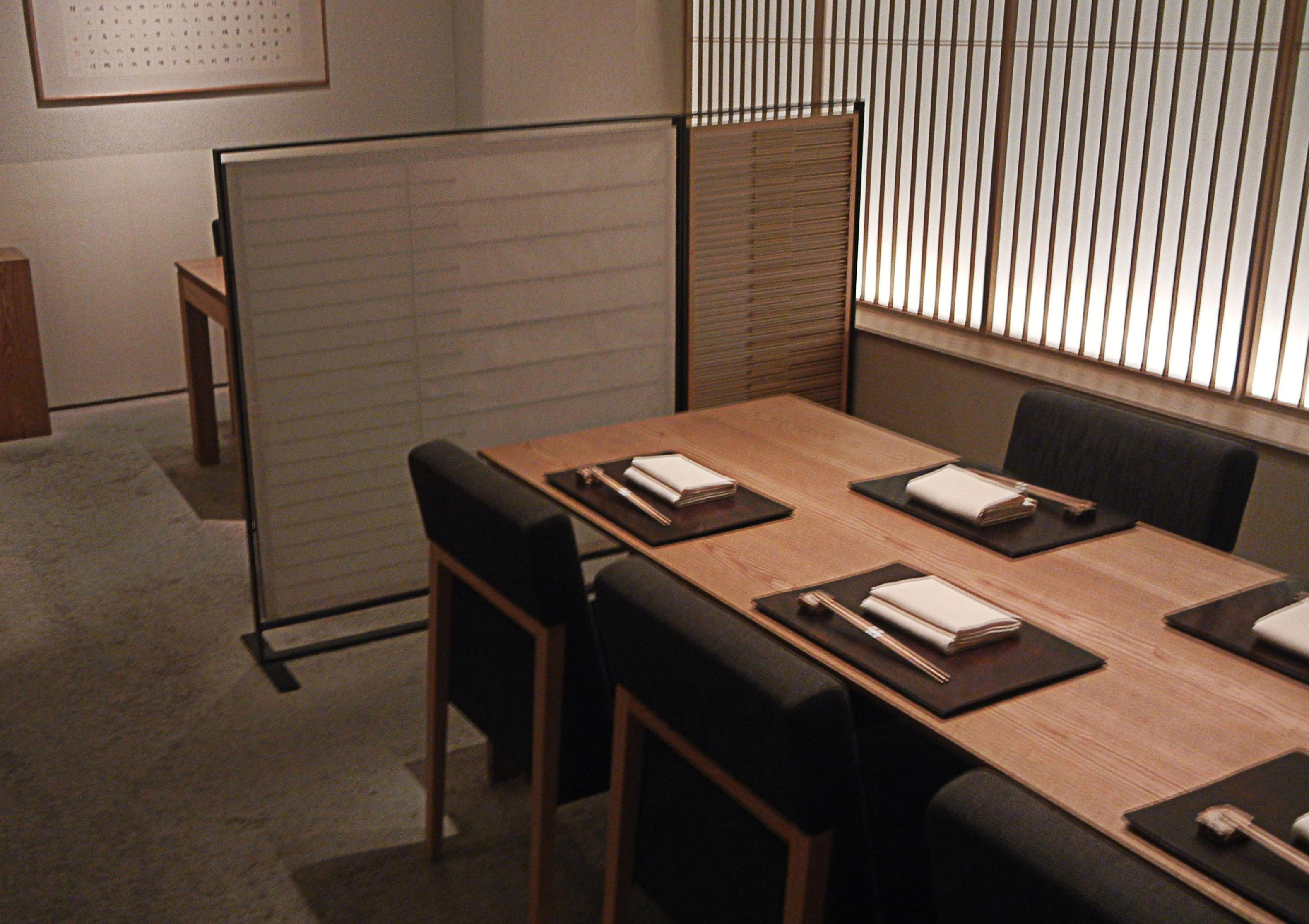
Serene, cozy atmosphere resembling a traditional farmhouse or private home, with minimalist wooden counters, paper sliding doors, warm lighting, and relaxing tranquility praised in reviews.