Mouriya Lin sits within Kobe's Kitanagasa-dori district, a neighbourhood defined by the city's long relationship with foreign trade and premium beef. Part of the Mouriya group, one of Kobe's most established teppanyaki operators, this second-floor room in the Queens Court Building brings the city's signature cattle tradition to a quieter, more residential pocket of Chuo Ward.
Pearl is the En Primeur Club membership app — saves, bookings, and concierge access live there. Same editors, same standards.
- Address
- Japan, 〒650-0012 Hyogo, Kobe, Chuo Ward, Kitanagasadori, 1 Chome−9−8 クイーンズコーストビル 2F
- Website
- mouriya.co.jp
- Directions
- Get directions
 Saves & bookings on Pearl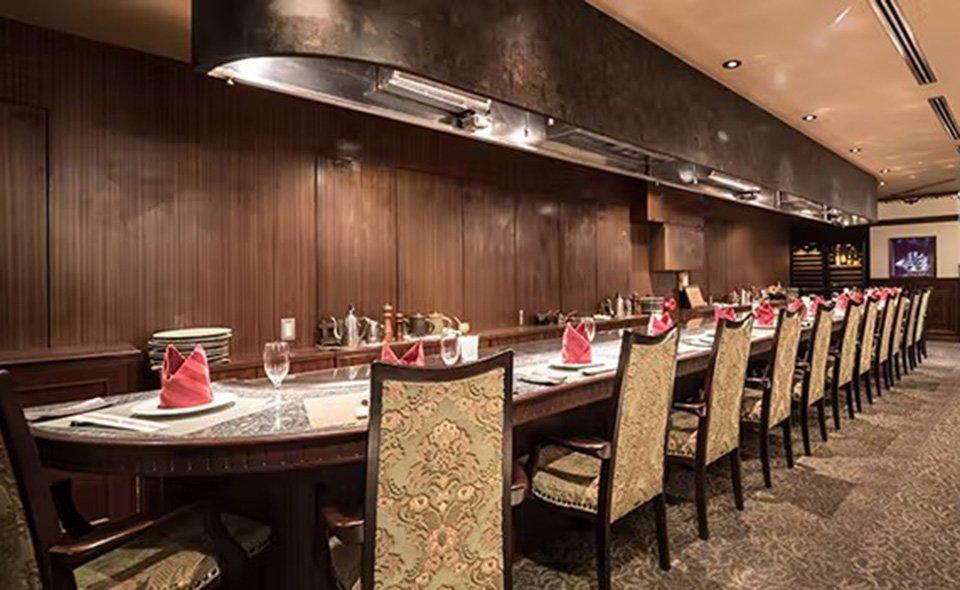
Kobe Beef in Context: What the City's Teppanyaki Scene Actually Looks Like
Kobe occupies a specific position in Japan's premium beef geography. The city's name became internationally associated with Tajima-strain Wagyu through a combination of historical cattle isolation, feed discipline, and the port access that first exposed foreign residents, and then foreign markets, to the product. That reputation has since spawned a spectrum of operators ranging from high-volume tourist counters near Kitano-cho to quieter, neighbourhood-rooted rooms that serve a more local clientele. Mouriya Lin is a teppanyaki Kobe beef steakhouse in Kobe, priced at about $150 per person, located on the second floor of the Queens Court Building along Kitanagasa-dori in Chuo Ward, and sits closer to the latter end of that range.
The Mouriya name carries weight in Kobe's beef establishment. The group traces its operation across multiple decades and several locations in the city, making it one of the more durable institutional presences in a category where many operators cycle in and out with tourist demand. The Lin outpost, on a stretch of Kitanagasa-dori that runs through a quieter section of the ward, draws a different foot traffic pattern than the group's more centrally positioned rooms.
The Environment: A Second-Floor Room on a Quiet Stretch
Kitanagasa-dori has a particular character. The street runs through a part of Chuo Ward that retains more of Kobe's pre-tourist-boom grain, less retail spectacle, more operational city. A second-floor teppanyaki room on this stretch positions itself differently from the ground-floor visibility that most visitor-oriented beef restaurants in the Sannomiya and Kitano-cho corridors favour. Arriving at Queens Court Building and taking the stairs or lift to the second floor creates a mild separation from the street that shapes the register of the meal before it starts.
Teppanyaki as a format carries its own spatial logic. The iron griddle counter is simultaneously kitchen and dining table, collapsing the distance between cooking and eating in a way that is uncommon in kaiseki or sushi formats. In Kobe's beef-specialist rooms, this means the sourcing and handling of the cattle become visible rather than inferred, the marbling pattern of a cut, the rate at which fat renders, the temperature management across the griddle surface are all readable by anyone seated at the counter. That transparency is worth noting for a reader thinking about sustainability and traceability: teppanyaki is structurally one of the more legible cooking formats in Japanese fine dining.
Kobe Beef Traceability and What It Means in Practice
The sustainability question around Kobe beef is complicated and worth addressing directly. Certified Kobe beef, the genuine article under the Kobe Beef Marketing and Distribution Promotion Association's designation, operates within a traceable system. Each animal carries certification documentation that travels with the meat from farm through slaughter to retail and restaurant. The Tajima cattle eligible for Kobe designation are raised in Hyogo Prefecture under registered conditions, and the yield rate for animals that meet the full grading threshold (A4 or A5, with a BMS of 6 or above, among other criteria) is relatively low as a proportion of total Tajima slaughter. That scarcity is structural, not marketing.
What this means at the restaurant level is that an operator serving genuine certified Kobe beef is, by definition, operating within a traceable supply chain. The certification system functions as a form of provenance documentation that most Western fine-dining restaurants have only recently begun to approximate with their own sourcing narratives. Restaurants in the Mouriya group have operated within this ecosystem across their history in Kobe. For a diner thinking about ethical sourcing in the context of high-end animal protein, the Kobe designation system, whatever one thinks of the broader question of beef consumption, at least provides a verifiable chain of custody that is largely absent from comparable premium beef categories in other countries.
For a broader picture of how Kobe's dining scene handles provenance and tradition across categories, Kobe's restaurants map the city's key rooms across cuisine types. Kobe's beef specialists compete in a specific tier alongside restaurants like Ash Restaurant and the long-established Aragawa, which has operated as one of Japan's most discussed beef counters for decades. Within the broader Kansai region, the pursuit of ingredient traceability and seasonal discipline extends to HAJIME in Osaka and Gion Sasaki in Kyoto, both of which foreground sourcing in different ways.
How Mouriya Lin Compares Within Its comparable set
Kobe's beef-specialist rooms split broadly between two modes: the theatre-forward teppanyaki counter aimed at visitors who want the full performance alongside the product, and the quieter rooms where the beef itself carries more of the weight. Comparison venues in the city's current beef category include Fushin and fuxing, each of which positions differently in terms of format and audience. Outside the beef category, Ca Sento represents the Spanish-influenced end of Kobe's fine dining, a reminder that the city's port history has always produced culinary cross-pollination alongside its beef identity.
Beyond Kansai, Japan's premium dining geography extends to rooms like Harutaka in Tokyo, akordu in Nara, and Goh in Fukuoka, each anchored to local ingredient traditions in the way that Kobe's beef rooms are anchored to Tajima cattle. Further north, rooms like 古代山乃井 in Sapporo and 一本松 石川制 in Nanao demonstrate how regional Japanese dining has developed distinct provenance identities across the archipelago. Internationally, the transparency expected of high-end teppanyaki in Japan contrasts with the sourcing opacity more common at premium beef-oriented restaurants like Le Bernardin in New York City or concept-driven rooms such as Atomix, where protein provenance is often secondary to the broader tasting menu narrative.
Planning Your Visit
Mouriya Lin's address at 1-chome-9-8 Kitanagasa-dori, Chuo Ward, Kobe, places it within walking distance of Sannomiya Station, the main rail hub for central Kobe. The Queens Court Building's second-floor location means the room isn't immediately visible from street level. For a group operating across multiple Kobe sites, the Lin location represents a specific neighbourhood positioning rather than the group's flagship volume. Reservations for any Kobe beef specialist at the certified end of the market are advisable, particularly on weekends and during autumn and spring travel peaks when visitor numbers in the Kansai region rise considerably. Pricing is in the upper tier for Kobe dining, reflecting the grading threshold and low yield rates of eligible Tajima cattle.
A Minimal comparable set
Comparable venues nearby, for context on price, style, and recognition.
| Venue | Cuisine | Price |
|---|---|---|
| Kobe Steak Restaurant Mouriya LinThis venue — the venue you are viewing | Chūō, Teppanyaki Kobe Beef Steakhouse | $$$$ |
| Aburi Niku Kobo Wakkoqu Kitano Sakamoto Ten | Chūō, Kobe beef teppanyaki steakhouse | $$$$ |
| KOBE BEEF EiKiChi | Chūō, Kobe Beef Teppanyaki | $$$$ |
| すし うえだ | Chūō, Traditional Omakase Sushi | $$$$ |
| Setsugekka | Chūō, Kobe Beef Teppanyaki | $$$$ |
| Tsuki Usagi | Chūō, Halal Kobe Beef Japanese | $$$$ |
Continue exploring
More in Kobe
Restaurants in Kobe
Browse all →
Bars in Kobe
Browse all →



Hotels in Kobe
Browse all →


At a Glance
- Elegant
- Sophisticated
- Intimate
- Classic
- Date Night
- Special Occasion
- Business Dinner
- Celebration
- Chefs Counter
- Open Kitchen
- Sake Program
- Local Sourcing
Current opening hours
- Monday
- 11 AM–3 PM, 5–10 PM
- Tuesday
- 11 AM–3 PM, 5–10 PM
- Wednesday
- 11 AM–3 PM, 5–10 PM
- Thursday
- 11 AM–3 PM, 5–10 PM
- Friday
- 11 AM–3 PM, 5–10 PM
- Saturday
- 11 AM–3 PM, 5–10 PM
- Sunday
- 11 AM–3 PM, 5–10 PM
Hours can change for holidays and private events. Last verified .
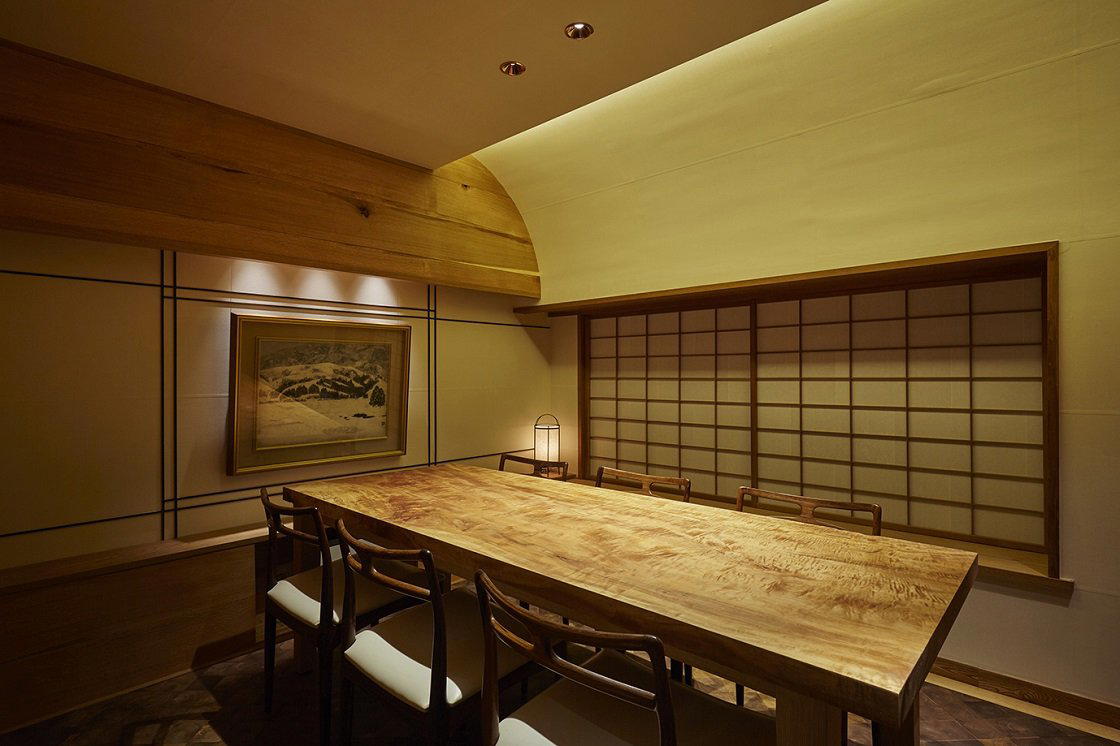
Calm, refined atmosphere with modern Japanese interior design and traditional Japanese hospitality.