Kitchen Nankai sits in the dense, book-lined quarter of Jimbocho, where it has served the neighbourhood's students, secondhand booksellers, and office workers for decades. Compared to Tokyo's high-format yoshoku houses, it occupies a more utilitarian register: counter seating, set lunches priced for working budgets, and a kitchen that reads as a living record of postwar Western-style cooking in Japan.
Pearl is the En Primeur Club membership app — saves, bookings, and concierge access live there. Same editors, same standards.
- Address
- 神田神保町1-39-8 (ハウス神保町 1F), 千代田区, 東京都, 101-0051
 Saves & bookings on Pearl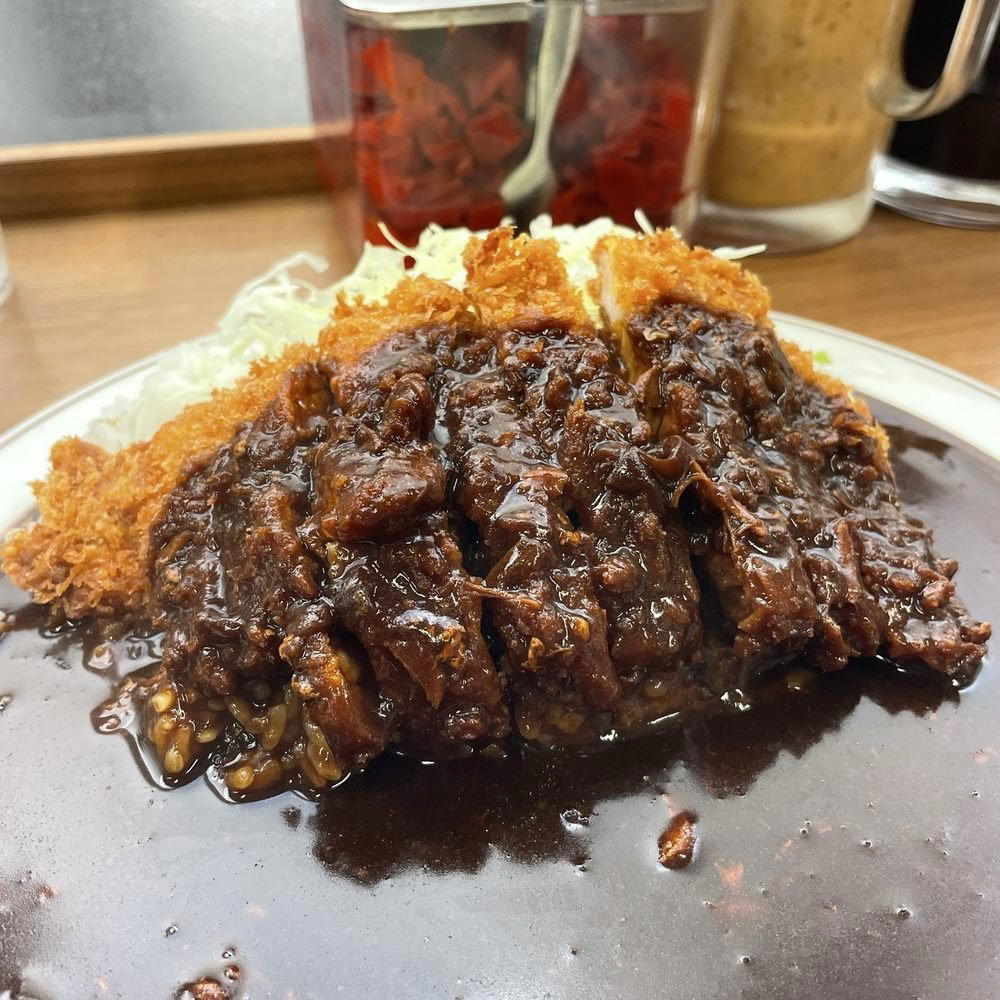
Jimbocho and the Yoshoku Tradition
Tokyo's Jimbocho district is one of those neighbourhoods that resists the city's appetite for reinvention. The block around Jinbocho Station remains dense with secondhand bookshops, old-school coffee houses, and lunch counters that have been running the same kitchen formats since the 1960s and 1970s. In that context, Kitchen Nankai is less an anomaly than a data point: it belongs to a category of postwar yoshoku, Western-style cooking filtered through Japanese technique and ingredient sourcing, that still anchors this part of Chiyoda-ku while higher-format restaurants compete for attention elsewhere in the city. It is a casual, walk-in-friendly restaurant in Tokyo serving Classic Yoshoku Katsu Curry at a budget-friendly price point.
Yoshoku itself is a category worth understanding before arriving. It is not Western food and it is not traditional Japanese food. It is a third thing: a domestication of European cooking vocabulary, the breaded cutlet, the demi-glace, the ketchup-braised rice, that became embedded in Japanese daily life from the Meiji era onward. By the postwar decades, it had a settled grammar: thick sauces, generous portions, counter service, prices set against the salaries of office workers rather than the budgets of expense accounts. That grammar is what Kitchen Nankai executes, and what makes it worth reading against the rest of Tokyo's dining options.
For context on how this category sits relative to the city's broader dining hierarchy: RyuGin and Sézanne represent the high-formal end of Tokyo's Western-influenced cooking, multi-course tasting menus, extensive wine programs, and prices that reflect decades of accumulated Michelin recognition. L'Effervescence and Crony occupy a similar tier. Kitchen Nankai operates in an entirely different register: no reservations at the door, no seasonal tasting format, no sommelier. What it shares with those addresses is a city in which cooking technique and consistent execution are taken seriously across every price tier.
The Counter, the Kitchen, and How They Work Together
In smaller yoshoku counters like this one, the coordination between kitchen and service collapses the distance that exists in more formal settings. There is no front-of-house team in the conventional sense, no sommelier curating a pairing, no captain running a floor. The person at the counter is the person who can tell you what is ready, what is selling out, and what to order if you are eating alone versus with a group. That compression of roles is itself a form of team dynamic, one where information passes faster and the transaction between kitchen and guest is more direct than anything a formal room affords.
This matters because it changes the rhythm of the meal. At a counter with this format, there is no extended ceremony around a menu presentation. The decision-making happens quickly, often guided by what the kitchen is running well that day, and the relationship between what you see prepared and what arrives in front of you is visible and unmediated. The Jimbocho lunch hour runs on exactly this model: efficient without being rushed, repeatable without being mechanical.
Compare this to how collaboration manifests at something like Harutaka, where an eight-seat sushi counter creates its own compressed team dynamic but within a format that costs multiples more and requires reservations months in advance. Both formats use physical proximity to tighten the feedback loop between kitchen and guest. The variables that differ are price tier, formality of service language, and the expectations the guest brings through the door.
Postwar Cooking in a Neighbourhood That Preserved It
Jimbocho's preservation of this kind of restaurant is not accidental. The neighbourhood's density of academic institutions, publishing houses, and secondhand book trade created a steady lunchtime population that valued reliability and price consistency over novelty. Restaurants serving that population did not need to refresh their menus seasonally or follow ingredient trends; they needed to be open, accurate, and affordable when the bookshop owner or the graduate student needed to eat between 11:30 and 13:00. That constraint produced a category of Tokyo dining that is now, by simple attrition, becoming rarer in the parts of the city where rents have risen fastest.
The wider Japanese dining scene has places that carry analogous weight: Gion Sasaki in Kyoto and HAJIME in Osaka represent high-formal preservation of culinary traditions, but the preservation happening in Jimbocho operates on a different axis, institutional memory maintained not through awards recognition but through daily use. Neighbourhood regulars, not critics, are what keep a counter like this alive across decades.
That pattern repeats in smaller Japanese cities, where long-running counters often outlast the restaurant categories that surround them. Goh in Fukuoka and akordu in Nara each demonstrate how strongly local eating culture can anchor a restaurant's identity. In Tokyo, the same principle applies at a fraction of the price point.
Where Kitchen Nankai Sits Against the Tokyo Dining Map
Anyone approaching Tokyo's dining options through a framework of tiers and categories will find Kitchen Nankai occupying a cell that rarely appears in international coverage. It is not omakase. It is not a kaiseki counter. It is not a modern European restaurant with a Japanese chef trained in Paris. It is a yoshoku lunch counter in a neighbourhood that has been eating at yoshoku lunch counters since before much of the city's current culinary infrastructure existed. That is a different kind of credential, durability rather than recognition, and it belongs in a complete account of how Tokyo actually feeds itself.
For the reader building a Tokyo itinerary around higher-format addresses, the contrast is instructive. A meal at Sézanne or an evening at L'Effervescence will cost considerably more and require planning weeks or months ahead. Kitchen Nankai runs on a different logic entirely. The version of Tokyo that produced it is still present in Jimbocho in ways it has ceased to be in Ginza or Minami-Aoyama. Kitchen Nankai is one of the reasons that range matters.
Further afield, the same question of culinary tradition vs. innovation plays out across Japan: at 一本木 石川製麺 in Nanao, 夕月荘之湯 in Sapporo, 湖畔荘庵 in Takashima, and 鳥羽屋 in Nishikawa Machi. Internationally, the gap between neighborhood institution and high-formal dining is equally pronounced at Le Bernardin in New York City and Atomix in New York City, two addresses that have their own version of accumulated credential separate from anything a casual counter can claim. Birdland in Sakai and Bistro Ange in Toyohashi round out regional parallels worth tracking.
Planning a Visit
Kitchen Nankai is located at 神田神保町1-39-8, ハウス神保町 1F, Chiyoda-ku, Tokyo (postal code 101-0051), a short walk from Jimbocho Station on the Toei Shinjuku, Toei Mita, and Tokyo Metro Hanzomon lines. Format: Counter-style yoshoku lunch counter. Price tier: Budget-accessible; this category runs well below ¥2,000 per person at lunch across comparable Jimbocho counters. Reservations: This format typically operates on a walk-in basis; peak lunch hours (noon to 13:00) on weekdays draw the heaviest queues. Timing: Arriving before 11:45 or after 13:15 will generally mean shorter waits.
Compact Comparison
Comparable venues nearby, for context on price, style, and recognition.
| Venue | Cuisine | Price | Notes |
|---|---|---|---|
| Kitchen Nankai (キッチン南海)This venue — the venue you are viewing | Jimbocho, Classic Yoshoku Katsu Curry | $ | |
| Tsuki to Kame | Kōtō, Japanese Curry | $ | |
| Kadoya | $ | Adachi, Japanese traditional sweets (wagashi) shop | |
| Sanuki Udon Iwai | Kita, Sanuki udon noodle shop | $ | |
| Jun Teuchi Daruma | $ | Suginami, Handmade Noodle Ramen (Light Shoyu) | |
| Maihama | Minato, Japanese Izakaya | $ |







At a Glance
- Classic
- Cozy
- Solo
- Casual Hangout
Casual old-school atmosphere with counter seating along the window and kitchen, popular for lunch crowds.