

Michelin Plate · We're Smart World 4 Radishes
Our verdict
A Michelin Plate French restaurant in Shibuya's Shoto neighbourhood, Keichitsu takes its name from a Japanese micro-season marking the first stirrings of spring. Chef Yuki Matsumoto, trained at La Grenouillère in northern France, builds tasting menus around a small number of seasonal ingredients prepared multiple ways on a single plate, with a fully plant-based menu available on request. Priced at ¥¥¥, it occupies a quieter tier than Tokyo's top-rated French houses.

Pearl is the En Primeur Club membership app, where members save venues, book tables and use the concierge.
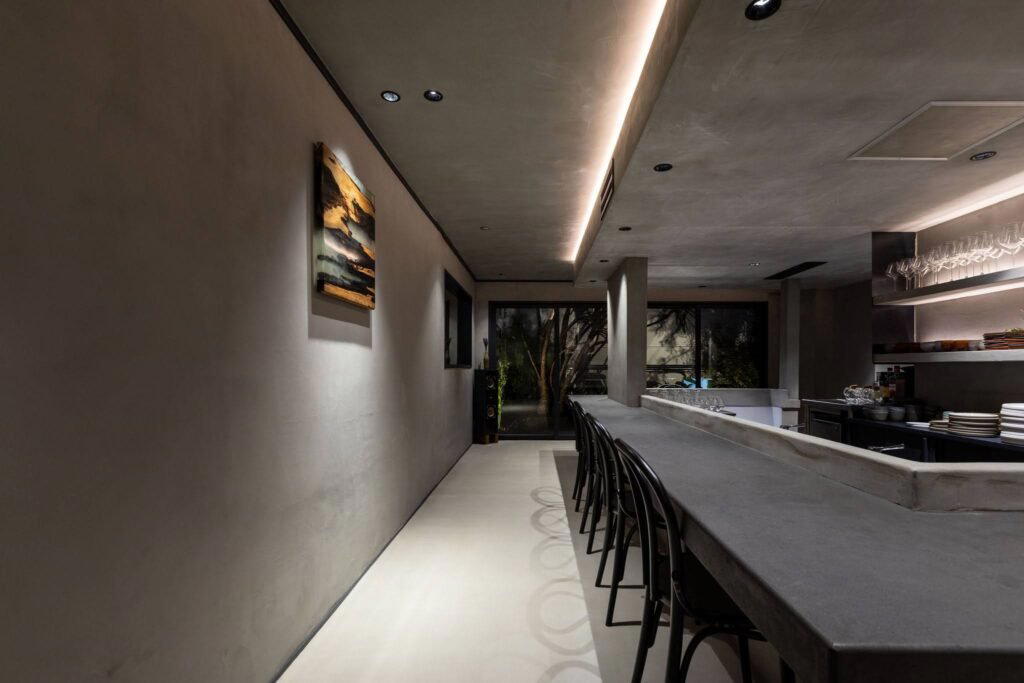
A Quiet Street in Shoto, and What It Signals
Shoto is one of Tokyo's more residential pockets within Shibuya, low-rise, tree-lined, the kind of address where restaurants tend to be serious rather than fashionable. Arriving at 2 Chome-13-12, there is no marquee, no queue management rope. The absence of theatre is part of the point. French dining in Tokyo has long occupied two registers: the grand, formally appointed rooms that play the European inheritance straight, and a smaller, quieter tier of chef-driven spaces where the cooking does the speaking. Keichitsu sits firmly in the second category.
The Name as Menu Philosophy
Keichitsu is a Japanese solar term, one of the 24 micro-seasons that divide the traditional agricultural year. It falls in early March, the moment when insects emerge from winter shelter and the soil begins to move again. Naming a restaurant after that interval is an editorial decision: it tells you that what happens on the plate is tied to what is happening outside, and that the kitchen is calibrated to a finer seasonal clock than most European-trained chefs bother to set. The approach here centres on a small number of main ingredients, each prepared in multiple registers, roasted, pureed, reduced to sauce, and presented together on a single plate. Yuzu citrus and Japanese pepper appear as aromatic counterpoints. The logic is compression rather than proliferation: fewer ingredients, deeper treatment.
Where It Sits in Tokyo's French Dining Tier
Tokyo has more Michelin-starred French restaurants than Paris, a fact that has been repeated often enough to lose its shock value but remains structurally important. At the top of that tier sit rooms like L'Effervescence, Sézanne, ESqUISSE, and Florilège, carrying starred status and priced accordingly at ¥¥¥¥. Château Restaurant Joël Robuchon occupies the grand-statement end of that spectrum. Keichitsu operates at ¥¥¥ and holds a Michelin Plate in both 2024 and 2025, recognition that signals kitchen quality without placing it in direct price competition with Tokyo's leading French houses. That positioning is not a limitation; it reflects a genuinely different proposition. The cooking is precise and personal, the room is small, and the format is tasting-menu rather than à la carte. For a milestone meal where the goal is focused attention rather than spectacle, that distinction matters considerably.
The La Grenouillère Connection
French fine dining has been reshaped over the past two decades by a generation of chefs who trained outside the classical Parisian orbit. La Grenouillère, in northern France's Pas-de-Calais, is among the more influential of those alternative lineages: chef Alexandre Gauthier's kitchen has been recognised by We're Smart with a 5-Radishes rating, placing it among the most vegetable-forward fine-dining operations in Europe. The principles developed there, vegetables as primary subjects, fermentation as technique, the coexistence of raw and highly processed forms on the same plate, travel clearly through Chef Yuki Matsumoto's menu at Keichitsu. That training history is relevant not as biography but as category signal: this is not a kitchen applying French classical technique to Japanese ingredients, which is the dominant mode among Tokyo's French addresses. It is something more specific, closer to the northern European vegetable-led tradition adapted to Japanese seasonal logic.
Occasion Dining: What Keichitsu Offers That Louder Rooms Do Not
Tokyo's occasion-dining market is crowded at the leading. Three-Michelin-star rooms require booking windows of three months or more and carry price tags that make them events in themselves. For celebrations where the meal is the occasion rather than the setting, a ¥¥¥-tier restaurant with a distinct culinary identity and a focused format often delivers more than a larger, more decorated room. The option to request a fully plant-based menu without advance negotiation, something the kitchen treats as a standard offering rather than a special request, widens the table considerably for mixed groups marking a birthday, anniversary, or significant dinner. At restaurants where dietary accommodation requires a week's notice and a separate tasting fee, this flexibility is material.
The Broader Vegetable-Forward Movement in Fine Dining
Keichitsu is not operating in isolation. Across Japan, a number of serious kitchens have moved away from protein-centred tasting structures. HAJIME in Osaka has long positioned vegetables as the philosophical core of its menus. akordu in Nara applies a European lens to local produce. Gion Sasaki in Kyoto works within the kaiseki tradition where seasonal vegetables have always held structural importance. Keichitsu's French framework puts it in a distinct corner of that movement, the only clear point of comparison for the La Grenouillère-influenced approach in Tokyo. For readers building a Japan itinerary that tracks the plant-forward direction across cities, Goh in Fukuoka, 1000 in Yokohama, and 6 in Okinawa each represent a different regional inflection of similar thinking. For French-tradition comparisons further afield, Hotel de Ville Crissier in Crissier and Les Amis in Singapore show how the French fine-dining template operates outside France at the top of its respective local markets.
Planning a Visit
Shoto sits within Shibuya ward, accessible from Shibuya Station. The ¥¥¥ price tier places Keichitsu below the ¥¥¥¥ bracket that defines Tokyo's most decorated French rooms, but still in the premium range for a special-occasion booking. Given the small apparent capacity and Michelin Plate recognition, advance booking is advisable; early-March visits, aligned with the actual keichitsu micro-season, carry a particular resonance if the timing can be arranged. For planning the rest of a Tokyo trip around a meal here, see our full Tokyo restaurants guide, our full Tokyo hotels guide, our full Tokyo bars guide, our full Tokyo wineries guide, and our full Tokyo experiences guide.
Quick reference: Keichitsu, 2 Chome-13-12 Shoto, Shibuya, Tokyo. Price range: ¥¥¥.
Frequently asked questions
Has Keichitsu won any awards?
Keichitsu has received recognition including: ‘Keichitsu’ is the traditional name for the ‘solar term’ micro-season in early March when insects emerge from winter hiding – an evocation of spring, when animals awake from hibernation. The chef applies his passion to the green shoots of t….
Where exactly is Keichitsu?
Keichitsu is located at 2 Chome-13-12 Shoto, Shibuya, Tokyo 150-0046, Japan, Tokyo.
What's the signature dish at Keichitsu?
The kitchen doesn't anchor itself to a single dish. Chef Yuki Matsumoto's approach is to take a small number of ingredients, vegetables in particular, and present them across multiple preparations on a single plate: roasted, pureed, fermented, or as a sauce. The menu follows the traditional Japanese solar-term calendar, so what appears in early spring looks nothing like what arrives in autumn. A dedicated plant menu is available on request.
What's the pricing like at Keichitsu?
Pricing at Keichitsu is listed as ¥¥¥.
Should I book Keichitsu in advance?
Yes, and with meaningful lead time. Keichitsu holds a Michelin Plate (2024 and 2025) and sits at the ¥¥¥ tier in Shoto, a Shibuya address where small tasting-menu rooms fill ahead of schedule. Comparable Tokyo French counters at this recognition level commonly fill two to four weeks out; arriving without a reservation is a credible way to miss the meal entirely.
Price and Recognition
A quick peer list to put this venue’s basics in context.
| Venue | Cuisine | Price | Awards | Notes |
|---|---|---|---|---|
| KeichitsuThis venue (the venue you are viewing) | Modern French with Japanese Influences | $100–150 | Michelin Plate · We're Smart World 4 Radishes | Not listed |
| Harutaka | Edo-Style Omakase Sushi | $200–300 | 3 Michelin Stars · World's 50 Best #76 | Sushi |
| RyuGin | Modern Kaiseki | $500+ | 3 Michelin Stars · World's 50 Best #41 | Kaiseki, Japanese |
| L'Effervescence | Modern French with Japanese Influences | $200–300 | 3 Michelin Stars · World's 50 Best #69 | French |
| HOMMAGE | Modern French with Japanese Influences | $150–200 | 2 Michelin Stars · World's 50 Best #78 | Innovtive French, French |
| MAZ | Innovative Peruvian-Japanese Fusion | $150–200 | 2 Michelin Stars · World's 50 Best #28 | Innovative |
Recognition history
Dated appearances from independent guides and award organizations, with the underlying list record or original source where available.
Michelin Plate
Michelin
We're Smart World 4 Radishes
We're Smart World
Full recognition history (4 entries)
Michelin Plate
Michelin
Michelin Plate
Michelin
Continue exploring
More in Tokyo
Restaurants in Tokyo
All restaurants in Tokyo →


Bars in Tokyo
All bars in Tokyo →





Details
- Intimate
- Elegant
- Serene
- Modern
- Date Night
- Special Occasion
- Open Kitchen
- Sake Program
- Craft Cocktails
- Sommelier Led
- Tasting Menu
- Counter Dining
- Vegetarian Friendly
Current opening hours
- Monday
- 12–2 PM, 6–10 PM
- Tuesday
- Closed
- Wednesday
- Closed
- Thursday
- 6–10 PM
- Friday
- 12–2 PM, 6–10 PM
- Saturday
- 12–2 PM, 6–10 PM
- Sunday
- 12–2 PM, 6–10 PM
Hours can change for holidays and private events. Hours as of .
Serene and intimate ambiance in a cozy, relaxing space with counter seating, evoking tranquility in a residential area.