
A Michelin Plate-recognised Japanese restaurant in Kyoto's Nishiki neighbourhood, Kan sits at the playful, personal end of the city's dining spectrum. Named for the chef's single-character surname meaning 'interval', it offers wagyu served two ways, house-style potato salad dressed with fried fat, and a fruit-and-tofu opener that signals both technique and wit from the first bite.
Pearl is the En Primeur Club membership app — saves, bookings, and concierge access live there. Same editors, same standards.
- Address
- Japan, 〒604-8125 Kyoto, Nakagyo Ward, Nakauoyacho, 509-2 ファーストコート京都 錦2F
- Phone
- +81 75-741-8959
- Website
- c-united.co.jp
- Directions
- Get directions
 Saves & bookings on Pearl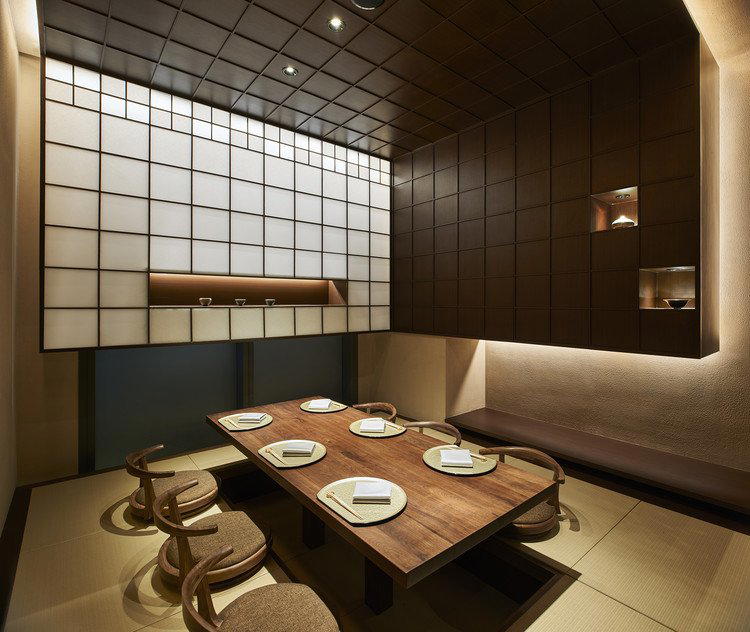
Where Kyoto's Discipline Meets Its Appetite for Play
Kyoto's restaurant culture is often read through the lens of kaiseki: the long, seasonally dictated tasting format that dominates the upper tier and sets the city's culinary tone. Places like Isshisoden Nakamura and Kikunoi Roan represent that established tradition, while three-star houses such as Gion Matayoshi push it to its most exacting expression. But beneath that formal register, the city has always sustained a quieter tradition: the chef-driven izakaya, where personality surfaces through cooking rather than ceremony. Kan is a restaurant in Kyoto's Nakagyo Ward serving Yoshoku Set Meals from a second-floor location off Nishiki.
The name is a single kanji character, read as the chef's surname, and it carries a secondary meaning: 'interval', or the space between things. That concept frames the kitchen's stated ambition, to act as intermediary between cuisine and guest rather than to impose a rigid sequence on the meal. In practice, it produces a menu that moves between precision and irreverence in ways that sit closer to a well-run izakaya than to Kyoto's more ceremonial dining rooms.
The Social Logic of the Izakaya Counter
Japan's izakaya tradition works differently from Western casual dining. The format is communal and accumulative: dishes arrive when ready, conversation dictates pace, and the menu rewards curiosity over efficiency. The leading examples carry a distinct culinary voice while retaining the informal charge that makes the experience feel like an evening rather than a service. Kan operates within that logic.
The menu opens with a fruit salad dressed in mashed tofu, a combination that uses tartness to prepare the palate rather than to demonstrate restraint. It is a considered move: izakaya meals in Japan often begin with something that sharpens appetite rather than something that impresses. The choice signals intent early. From there, wagyu appears in two forms: chargrilled red meat and a deep-fried crumbed fillet. Running both preparations on the same menu is a way of acknowledging that wagyu's richness can be handled through different thermal logics, each producing distinct results. The kitchen is not choosing between methods; it is exploring the material.
The potato salad, labelled 'Kanfu' on the menu, is dressed with fried fat. The name is a deliberate play on 'kung fu', implying that even a familiar dish has been subjected to a disciplined and personal technique. It is the kind of gesture that reads as playful but depends on precise execution. Potato salad is ubiquitous in Japanese izakaya culture; elevating it through fat management and naming it after the house style is a statement about what this kitchen finds worth attending to. For comparable exercises in chef-driven wit at the ¥¥¥ tier, Kenninji Gion Maruyama and Kodaiji Jugyuan operate in a related register, though through different culinary frameworks.
Placing Kan in Kyoto's Mid-Tier Field
Michelin Plate awarded to Kan in 2025 marks a level of recognition that sits below starred status but above the anonymous mid-market. In Kyoto's terms, that bracket is competitive: the city's Michelin cohort skews heavily toward kaiseki and high-formality formats, and a Plate recognition for a Japanese restaurant operating with izakaya sensibilities positions Kan against a different comparable set than, say, the two-star kaiseki rooms or the single-star Italian at Kikunoi Roan's sister venues. The price range places it in affordable territory at about $15 per person.
Google's 4.8 rating across 1,010 reviews points to strong consistency. At a restaurant this size and format, that kind of sustained rating typically reflects repeat visitors, which in the izakaya model signals something more meaningful than a one-time impression: guests are returning for the same dishes, which means the kitchen is not leaning on novelty to hold attention.
For those building a broader picture of chef-driven Japanese cooking across the country, Harutaka in Tokyo and Myojaku show how different cities handle the same instinct toward personal culinary voice. HAJIME in Osaka takes that impulse to its most architectural extreme. Closer in spirit, Goh in Fukuoka demonstrates how Kyushu kitchens handle wagyu with comparable directness. akordu in Nara, 1000 in Yokohama, and 6 in Okinawa each illustrate how Japanese kitchens absorb outside influence without losing local grounding. Azabu Kadowaki in Tokyo represents the more formal pole of the same chef-led Japanese tradition.
The Nishiki Setting
The address places Kan in Nakagyo Ward, near Nishiki Market, the covered arcade that has supplied Kyoto's restaurants and households for centuries. The area is among the city's more navigable for eating and drinking, with a density of options that makes it a practical base for an evening that moves across formats. The second-floor position, reached via a building rather than a street-level entrance, is characteristic of Kyoto's mid-tier dining rooms, which tend to occupy upper floors of commercial buildings in ways that give them a degree of separation from the market foot traffic below. The setting reinforces the izakaya logic: the room is somewhere you arrive at, not somewhere you happen past.
What Dish Is Kan Famous For?
Kan is most closely associated with its house potato salad, labelled 'Kanfu' on the menu, dressed with fried fat and presented as a signature expression of the kitchen's approach to familiar izakaya staples. The wagyu preparations, available chargrilled or as a deep-fried crumbed fillet, draw comparable attention. The fruit salad with mashed tofu dressing that opens the meal is cited in the restaurant's Michelin Plate recognition as evidence of the kitchen's technique and playfulness working in combination.
The Quick Read
Comparable venues nearby, for context on price, style, and recognition.
| Venue | Cuisine | Price | Notes |
|---|---|---|---|
| KanThis venue — the venue you are viewing | Nakagyō, Yoshoku Set Meals | $$ | Not listed |
| Menya Inoichi | Shimogyō, Modern Seafood Dashi Ramen | $$ | Not listed |
| Jikiba Ono | Not listed | $$$ | Higashiyama, Seasonal Japanese Counter Dining |
| COPPIE | Not listed | $$$ | Shimogyō, Modern Japanese Izakaya with Italian Fusion |
| Shogetsu | Sakyō, Traditional Kyoto Kaiseki | $$ | Not listed |
| Taketoko | Nakagyō, Traditional Kyoto Kappo | $$ | Not listed |
Recognition history
Dated appearances from independent guides and award organizations, with the underlying list record or original source where available.
Michelin Plate
Michelin
Michelin Plate
Michelin
Michelin Plate
Michelin
Continue exploring
More in Kyoto
Restaurants in Kyoto
Browse all →
Bars in Kyoto
Browse all →
Hotels in Kyoto
Browse all →
Wineries in Kyoto
Browse all →
At a Glance
- Cozy
- Casual Hangout
- Family
- Local Sourcing
Current opening hours
- Monday
- 7:30 AM–9:30 PM
- Tuesday
- 7:30 AM–9:30 PM
- Wednesday
- 7:30 AM–9:30 PM
- Thursday
- 7:30 AM–9:30 PM
- Friday
- 7:30 AM–9:30 PM
- Saturday
- 7:30 AM–9:30 PM
- Sunday
- 7:30 AM–9:30 PM
Hours can change for holidays and private events. Last verified .
Relaxing space with a casual, inviting atmosphere popular among students.