


Michelin Plate · Tabelog Silver #37
Our verdict
Hirosawa places Kyoto’s compact Chinese dining scene in a more rarefied register: counter-led, reservation-only, and priced in the ¥30,000–¥39,999 range for lunch and dinner. Its Tabelog Award Silver recognition in 2025 and 2026, 2024 Bronze award, 2026 Tabelog Chinese WEST 100 selection, OAD Japan Recommended listing, and 2025 Michelin Plate put it firmly in the city’s serious Chinese conversation.

Pearl is the En Primeur Club membership app, where members save venues, book tables and use the concierge.
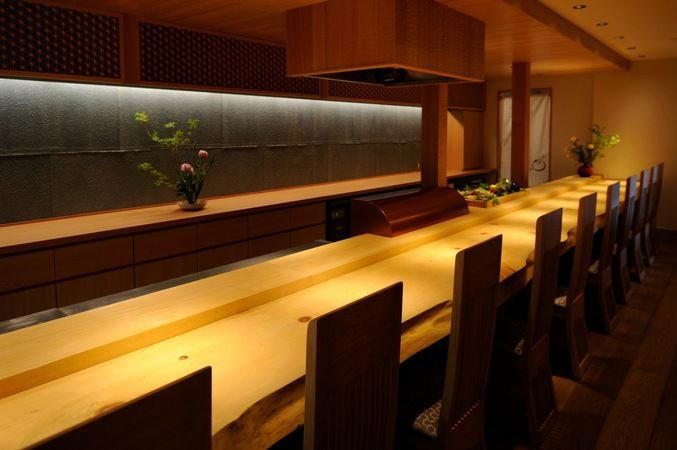
Kyoto’s Chinese restaurants are often read through a Kansai filter: smaller rooms, quieter service, and precision over theatrical abundance. In Nakagyo Ward, the townhouse format matters: a 10-seat counter shifts the genre from banquet-style Chinese dining toward Kyoto counter traditions, where pacing, proximity, and kitchen sequencing matter as much as regional vocabulary.
Chinese dining in Japan is not one category. Cantonese kitchens privilege clarity, seafood, and controlled heat; Sichuan and Hunan push fragrance, chilli, and fermentation; Shanghainese cooking leans into sweetness, braising, and texture. Kyoto’s higher-end Chinese rooms increasingly borrow kaiseki discipline while keeping regional Chinese references clear. Hirosawa sits there: Chinese in category, Kyoto in scale, and priced for diners comparing it with serious counters rather than casual chuka.
A counter-led reading of regional Chinese cooking in Kyoto
This is not a conventional Chinese restaurant with a luxury overlay. It belongs to Kyoto’s small-format dining, where the counter compresses preparation and service. That suits modern regional Chinese cooking, giving heat, sequence, and texture the attention Kyoto diners expect from sushi, tempura, or kappo counters.
Public signals point to modern Chinese cooking, with fish and wine flagged as priorities. Cantonese dining has long treated seafood as a test of restraint, while wine pairings are a newer marker of premium Chinese dining in Japan. The result is not a banquet model, but a course-by-course argument for how Chinese technique can sit inside Kyoto’s composure and seasonality without becoming Japanese cooking in disguise.
Recognition came quickly. Opened on 1 March 2023, the restaurant reached a serious awards tier fast: The Tabelog Award Bronze in 2024, Silver in 2025 and 2026, selection for Tabelog Chinese WEST 100 in 2024 and 2026, a 2026 Tabelog score listed at 4.39 in the Silver award context, an Opinionated About Dining Japan Recommended listing for 2026, and a Michelin Plate in 2025. In Japan, Tabelog’s user-weighted authority and Michelin’s editorial lens reward different consensus; when both align, the signal is stronger than one badge.
Kyoto has several Chinese restaurants in adjacent territory, but distinctions matter. Canton Shunsai Ikki and Hachiraku sit in a lower price bracket, useful for studying Kyoto’s Chinese range rather than the same spend tier. hakubi and VELROSIER sit closer to the premium conversation, while Kyochuka Makisada shows the city’s appetite for Kyoto-inflected Chinese cooking. The common thread is how Kyoto turns Chinese dining into a tighter, more edited format than the large-room model common in many Asian capitals.
Why the room changes the stakes
A 10-seat counter imposes discipline: it limits volume, raises the importance of pacing, and makes inconsistency harder to hide. This is not for a sprawling family-style table of shared plates. It is reservation-only, structured around sequence and concentration. Private rooms for two and four are listed from July 2025, broadening use for business dining or discreet meals, but the core identity remains counter-led.
The ¥30,000–¥39,999 lunch and dinner band puts Hirosawa above everyday Chinese dining and into Kyoto’s special-occasion register. At that level, diners ask whether the cooking has enough technical distinction, pacing, and product quality to stand beside Kyoto’s other premium formats. The awards history suggests local diners have made that comparison seriously.
Hours shape the practical read. Weekday dinner runs in evening sessions, Saturday adds lunch and dinner, and Sunday and public holidays are closed. The first and second evening sessions are tied to the beginning and end of the month, while Saturday has two sittings. This suits a small restaurant, but timing becomes part of the decision. A traveler building a Kyoto counter-dining itinerary should treat it as a fixed point, not a fallback.
Location adds appeal. Nakagyo Ward, with Karasuma and Shijo within walking range, is central without feeling like a hotel-dining district. Business, retail, and residential Kyoto overlap here, suiting a restaurant aimed at locals and informed visitors rather than passersby. Parking is unavailable; credit cards are accepted, but electronic money and QR code payments are not. These details matter at the end of a long Kyoto evening, when logistics decide whether dinner feels smooth or strained.
How to place it within a Kyoto itinerary
For visitors mapping a Kyoto dining schedule, this is the Chinese counter to consider when the trip already includes Japanese formats and needs contrast without becoming casual. It pairs conceptually with sushi, tempura, or kappo because it offers another technical grammar: wok heat, Chinese saucing, regional reference points, and wine rather than sake as the expected beverage conversation. It does not replace Kyoto’s traditional meals; it shows how far the city’s premium dining culture extends beyond them.
Readers comparing within the city can use Akihana, Canton Shunsai Ikki, Hachiraku, and hakubi to triangulate price, formality, and regional emphasis across Kyoto’s Chinese scene. For the wider city edit, use Our full Kyoto restaurants guide, then build the rest of the trip through Our full Kyoto hotels guide, Our full Kyoto bars guide, Our full Kyoto wineries guide, and Our full Kyoto experiences guide.
For context outside Kyoto, Japan’s dining map is broad enough that comparisons can be thematic rather than local. Beef-focused meals such as -Grilled beef Sukiyaki- KAMAKURA TANUKIAN 鎌倉 たぬき庵 in Kamakura, seafood-and-charcoal formats such as. 鮪と炭火焼き うお炭 秋葉原店 in Tokyo, casual urban stops such as.cafe in Osaka and.know in Kumamoto, Vietnamese cooking at (Shoku) Vietnam in Kawasaki, curry at [Curry Senmon Ten] Maruyama Kyoju. in Sapporo, and Tokyo’s Chinese range through 4000 Chinese Restauranat, Chinese in Tokyo and 4000 Chinese Restaurant, Chinese in Tokyo underline the same point: Japan’s serious dining culture is category-fluid, but the strongest meals know exactly which format they are using.
Hirosawa is for diners who want Chinese cooking treated with Kyoto’s small-room intensity: controlled capacity, a high price band, fish and wine as stated priorities, and enough third-party recognition to justify planning around it. The question is not whether it substitutes for a classic Kyoto dinner, but whether a Kyoto trip feels complete without seeing how the city now interprets regional Chinese technique at counter scale.
Frequently asked questions
When can I go to Hirosawa?
Hours at Hirosawa: Mon: 5–10:30 PM; Tue: 5–10:30 PM; Wed: 5–10:30 PM; Thu: 5–10:30 PM; Fri: 5–10:30 PM; Sat: 12–8 PM; Sun: Closed.
What does dinner at Hirosawa typically cost?
Pricing at Hirosawa is listed as ¥¥¥.
How would you describe the cuisine at Hirosawa?
Hirosawa serves Chinese cuisine.
What part of town is Hirosawa in?
Hirosawa is located in Kyoto.
What's the standout thing about Hirosawa?
The defining feature is the 10-seat counter in Kyoto, which keeps the room tightly focused and makes the Tabelog Silver 2026 recognition feel earned rather than decorative. It is also listed at ¥30,000–¥39,999 and marked reservation only, so the format is as deliberate as the pricing.
What It’s Closest To
Nearby venues at a similar price tier for orientation.
| Venue | Cuisine | Price | Awards | Notes |
|---|---|---|---|---|
| HirosawaThis venue (the venue you are viewing) | Modern Chinese | $200–300 | Michelin Plate · Tabelog Silver #37 | Not listed |
| Nakamura | Traditional Kyoto Kaiseki Omakase | $300–500 | La Liste Top Restaurants · Tabelog Silver #85 | Higashiyama |
| Chiso Aida | Traditional Kyoto Kaiseki | Not listed | Michelin Plate | Nakagyō |
| Kappo Harada | Traditional Kyoto Kappo | Not listed | Michelin Plate | Nakagyō |
| Fuyacho 103 | Traditional Oden with Dashi Mastery | $50–100 | Michelin Bib Gourmand | Nakagyō |
| Takezaki | Traditional Kappo Kaiseki | $100–150 | Michelin Plate | Nakagyō |
Recognition history
Dated appearances from independent guides and award organizations, with the underlying list record or original source where available.
Michelin Plate
Michelin
Opinionated About Dining Top Restaurants in Japan Recommended
Opinionated About Dining
Tabelog Silver #37
Tabelog
Full recognition history (7 entries)
Tabelog 100 #51 · No. 51
Tabelog · Tabelog 100 - Chinese cuisine - WEST - 2026
Michelin Plate
Michelin
Tabelog Silver
Tabelog
Michelin Plate
Michelin
Continue exploring
More in Kyoto
Restaurants in Kyoto
All restaurants in Kyoto →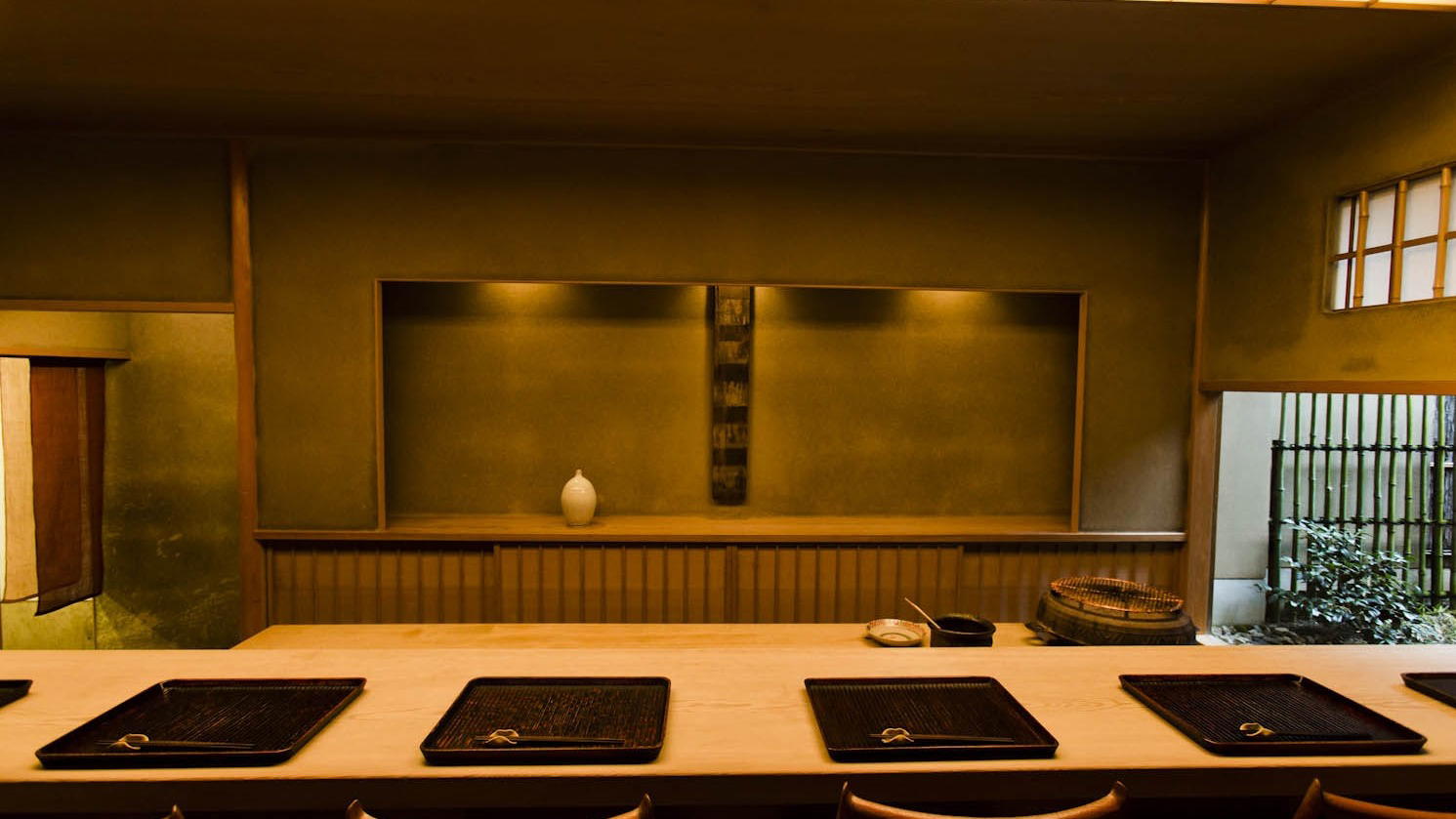
Bars in Kyoto
All bars in Kyoto →
Hotels in Kyoto
All hotels in Kyoto →
Wineries in Kyoto
Browse all →
Details
- Intimate
- Elegant
- Cozy
- Sophisticated
- Special Occasion
- Date Night
- Chefs Counter
- Garden
- Historic Building
- Sake Program
- Extensive Wine List
- Garden
- Tasting Menu
- Counter Dining
- Wine
- Sake
Current opening hours
- Monday
- 5–10:30 PM
- Tuesday
- 5–10:30 PM
- Wednesday
- 5–10:30 PM
- Thursday
- 5–10:30 PM
- Friday
- 5–10:30 PM
- Saturday
- 12–8 PM
- Sunday
- Closed
Hours can change for holidays and private events. Hours as of .
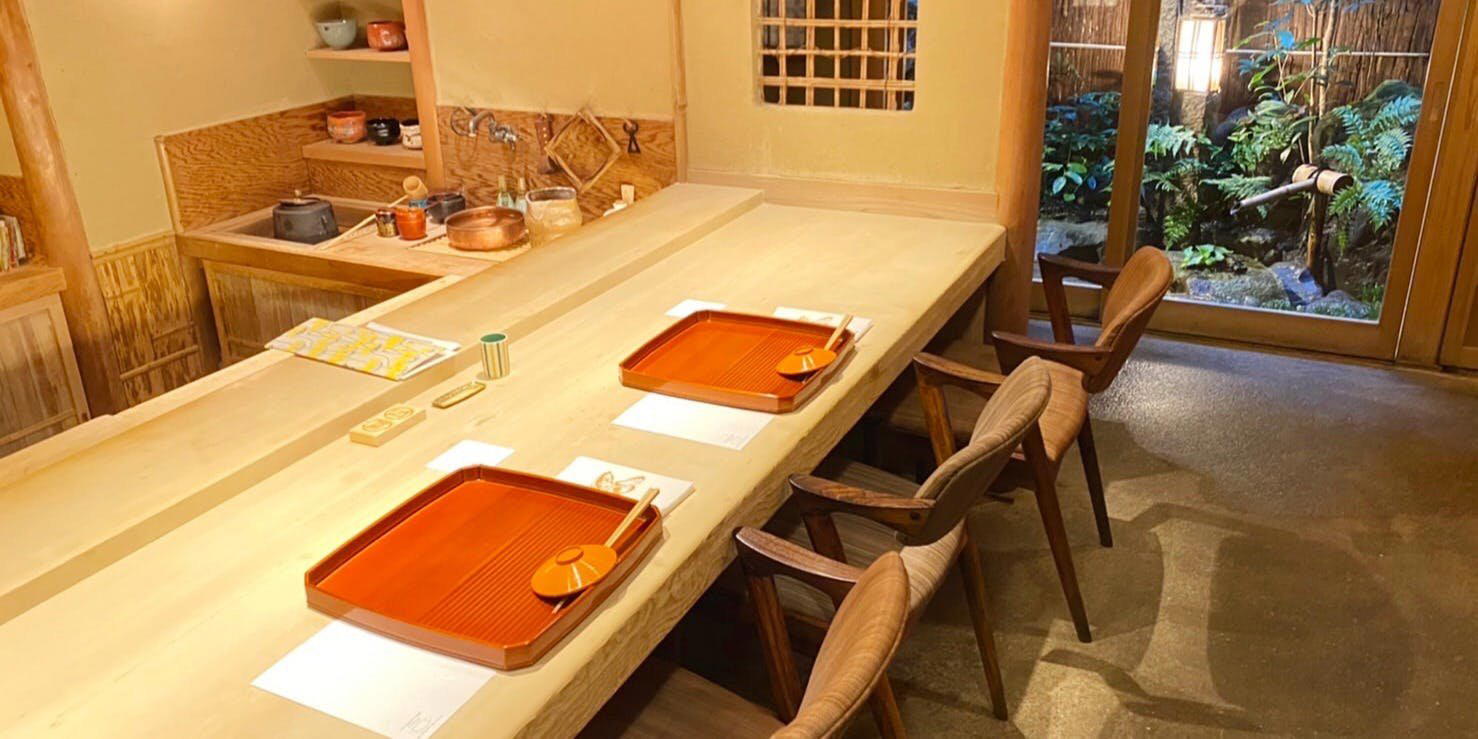
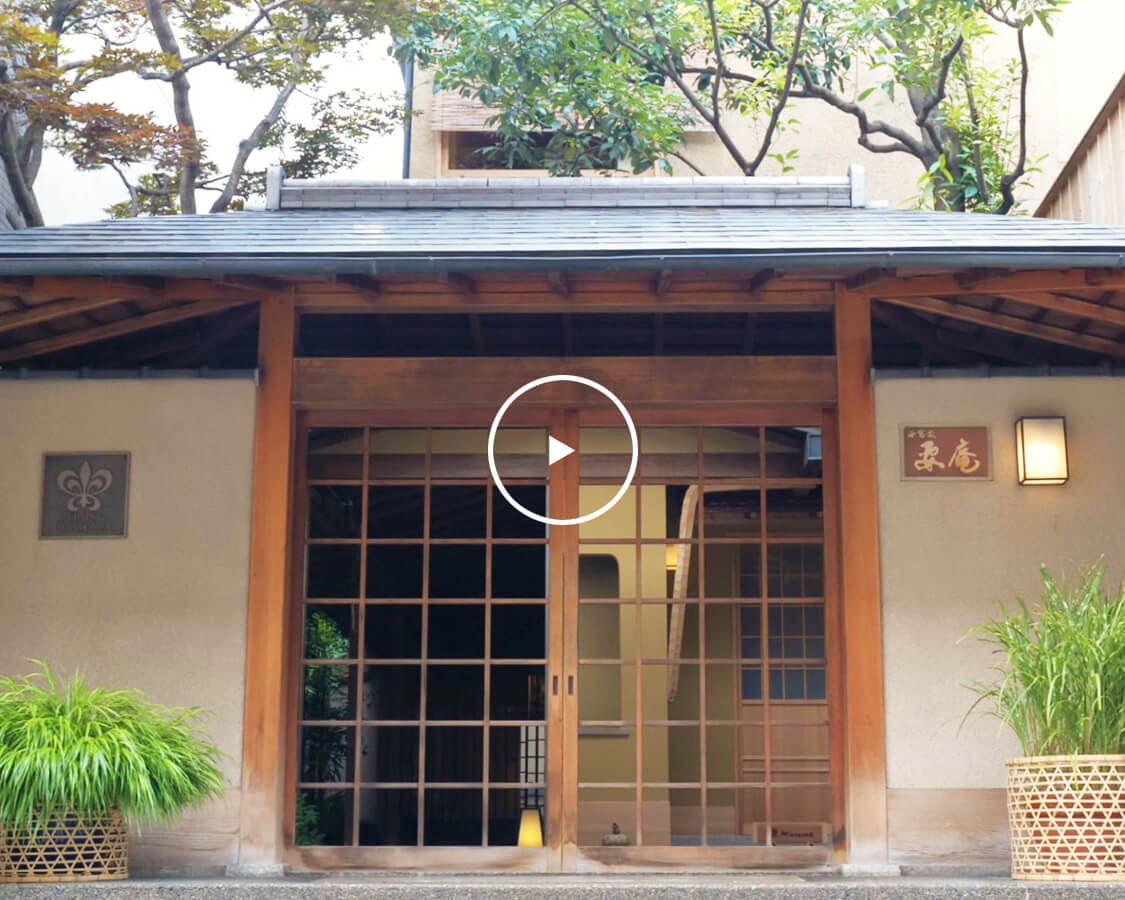
Warm and relaxing atmosphere in a renovated traditional wooden townhouse featuring an elegant Japanese garden view from the intimate counter.