Google: 4.5 · 546 reviews

Gelateria Acquolina occupies a quiet address in Meguro's Gohongi neighbourhood, where Tokyo's small-format dessert culture operates at a remove from the tourist circuits of Shibuya and Ginza. The shop represents the city's ongoing appetite for imported craft traditions executed with local precision. For those tracing Tokyo's artisan food scene beyond the obvious omakase tier, it sits in an instructive part of the map.
 Discover on Pearl
Pearl is the En Primeur Club membership app — saves, bookings, and concierge access live there. Same editors, same standards.
Gohongi, Meguro: Where Tokyo's Neighbourhood Food Culture Does Its Quieter Work
Tokyo's most discussed dining addresses tend to cluster in Ginza, Minami-Aoyama, and Nishi-Azabu. The conversation around tasting menus, Michelin stars, and omakase counters — venues like Harutaka, L'Effervescence, and RyuGin — dominates the premium editorial tier. But Tokyo's food geography extends considerably further than that circuit. Meguro, and specifically the sub-neighbourhood of Gohongi, represents a quieter register of the city's culinary map: residential in character, walkable in scale, and home to small-format specialist shops that serve a local clientele rather than a hotel concierge list.
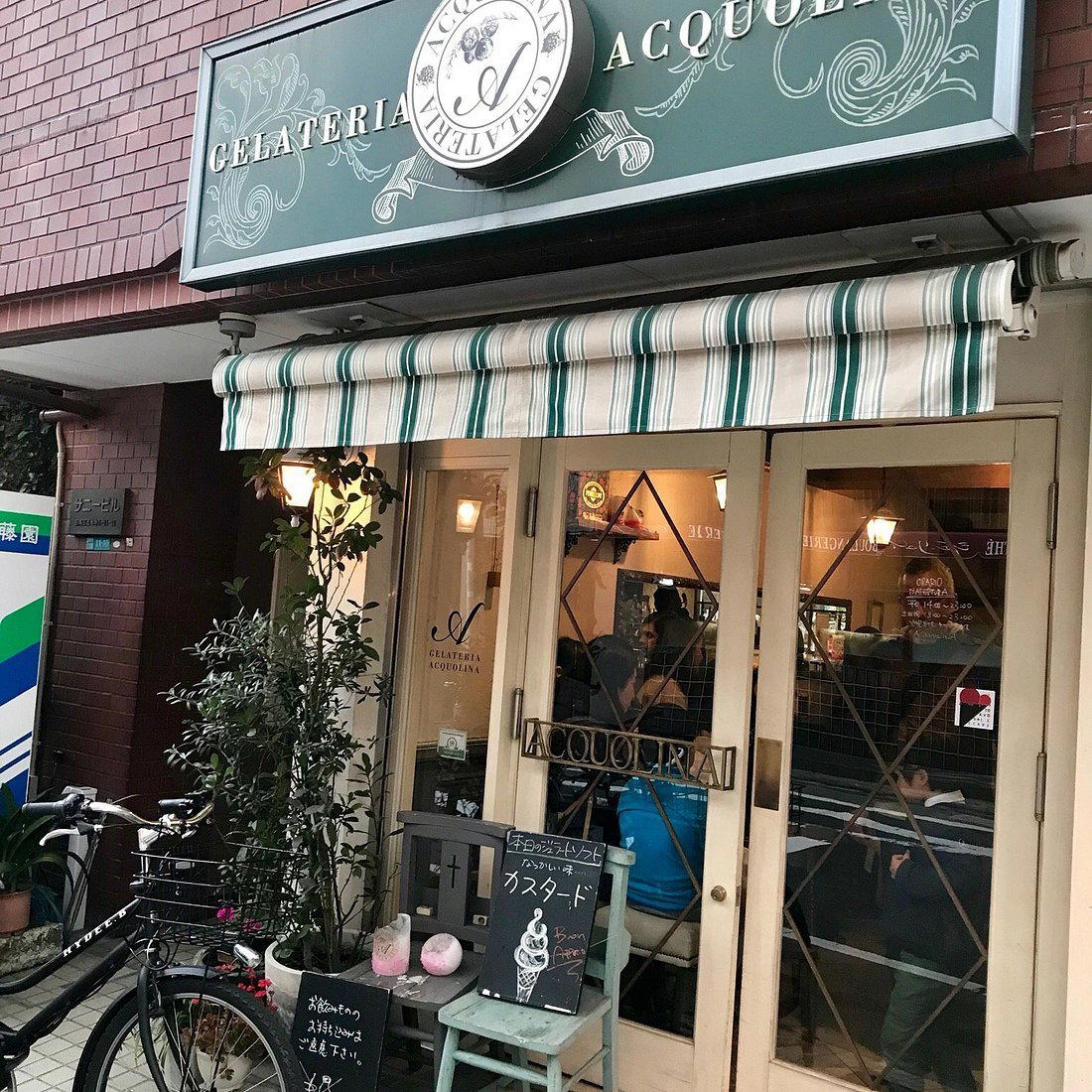
Gelateria Acquolina sits at 1 Chome-11-10 Gohongi in this context. The address itself signals something about positioning. This is not a venue angled at international visitors working through a city checklist. It operates in the zone where Tokyo's residents, rather than its tourists, make repeat decisions about where to spend small, specific amounts of money on craft food products.
The Physical Space and What It Communicates
In Italian gelato culture, the physical container of a gelateria carries significant meaning. Counter design, display cabinet depth, the arrangement of flavours, and the proportions of the room all transmit information about the product philosophy before a single scoop is served. The traditional pozzetti cabinet , a covered steel cylinder format that keeps gelato at a warmer serving temperature and away from light , signals a different commitment than an open-leading display counter piled high with dramatic peaks of brightly coloured product.
The spatial logic of a serious gelateria is one of restraint. Fewer flavours, rotated with the season. A counter that functions as a point of conversation rather than a spectacle. The room tends to be compact, the transaction unhurried. This format has been adopted selectively in Tokyo, a city that has historically been attentive to Italian craft food traditions , from the concentration of Italian restaurants in Minami-Aoyama to the specialist pasta and cheese importers operating across Shibuya-ku and Minato-ku.
In the Gohongi address, that spatial restraint is expressed in a neighbourhood scale that differs from the flagship gelateria formats that have appeared in higher-footfall Tokyo districts. The shop's location within a residential pocket of Meguro means the physical experience of approaching and entering it carries a different charge than a Ginza or Omotesando equivalent: less visual competition from surrounding retail, a pace set by the neighbourhood rather than by passing tourist density.
Gelato in Tokyo: A Craft Category With Serious Local Infrastructure
Japan's relationship with Italian gelato has matured substantially over the past two decades. What began as a novelty import category has developed into a specialist tier with its own competitive logic. Japanese gelato producers have, in a pattern consistent with the country's broader approach to imported culinary traditions, applied local discipline to technique: ingredient sourcing, temperature control, and seasonal rotation are taken seriously in a way that often diverges from the volume-production model common to European tourist gelaterias.
The result is a small but credible cohort of Japanese gelaterias whose output can be assessed against international peers. Tokyo, given its infrastructure for food import and its concentration of trained culinary professionals, has a higher density of this tier than other Japanese cities. Gelateria Acquolina operates within this established framework, in a city where the category has already been stress-tested by a demanding and knowledgeable local consumer base.
For context, the same dynamic plays out in other specialist craft categories across Japan's food cities. In Osaka, HAJIME represents the technical extreme of imported European culinary logic applied through a Japanese sensibility. In Nara, akordu works a comparable tension between Basque tradition and Japanese material. The gelato category is smaller in scale but operates on an analogous logic of craft import and local reinterpretation.
Situating Acquolina in Tokyo's Wider Specialist Food Scene
Any assessment of a Meguro neighbourhood gelateria has to account for where it sits in Tokyo's broader dessert and artisan food geography. The premium tasting menu tier , Sézanne, Crony , operates at a different price point and booking complexity. But the small-format artisan shop category occupies its own competitive logic: the relevant peer set is not a three-Michelin-star counter but other specialist producers in the city's residential neighbourhoods.
Gohongi's position within Meguro makes it a reasonable draw for residents of the broader south-west Tokyo arc (Nakameguro, Yutenji, Jiyugaoka), a corridor that has developed a concentration of independent food and drink operators over the past decade. This is a different visitor pattern from the Ginza or Roppongi dining circuits and requires a different kind of planning decision from an out-of-neighbourhood visitor.
For those building a broader picture of Japan's serious food destinations beyond Tokyo, the reference points extend outward: Gion Sasaki in Kyoto, Goh in Fukuoka, aki nagao in Sapporo, and affetto akita in Akita all map the way specialist craft food operations have distributed across the country's secondary and tertiary cities. The full depth of the Japan food map is covered in our Tokyo restaurants guide, alongside regional anchors like Abon in Ashiya, Aji Arai in Oita, Ajidocoro in Yubari District, and Akakichi in Imabari.
For international comparison, the craft-forward small-format model at Acquolina echoes (at a different category and price point) the ethos visible in destination dining at Le Bernardin in New York City or Lazy Bear in San Francisco: a commitment to a defined product philosophy executed in a space scaled to that philosophy rather than to volume throughput.
Planning a Visit
| Factor | Gelateria Acquolina (Meguro) | Typical Ginza Dessert Counter | Typical Omotesando Patisserie |
|---|---|---|---|
| Neighbourhood character | Residential, low foot traffic | High-retail, tourist-facing | Fashion-retail corridor |
| Advance booking required | No reservation format typical for category | Often required for seated formats | Often walk-in |
| Price tier | Artisan single-product pricing (data not confirmed) | ¥¥¥-¥¥¥¥ range | ¥¥-¥¥¥ range |
| Leading approach | Combine with Nakameguro or Jiyugaoka itinerary | Stand-alone or post-dinner | Daytime shopping circuit |
Booking and Cost Snapshot
A short peer table to compare basics side-by-side.
| Venue | Price | Awards | Notes |
|---|---|---|---|
| Gelateria Acquolina | This venue | ||
| Harutaka | ¥¥¥¥ | Michelin 3 Star | Sushi, ¥¥¥¥ |
| L'Effervescence | ¥¥¥¥ | Michelin 3 Star | French, ¥¥¥¥ |
| RyuGin | ¥¥¥¥ | Michelin 3 Star | Kaiseki, Japanese, ¥¥¥¥ |
| Crony | ¥¥¥¥ | Michelin 2 Star | Innovative, French, ¥¥¥¥ |
| Den | ¥¥¥ | Michelin 2 Star | Innovative, Japanese, ¥¥¥ |






At a Glance
- Cozy
- Trendy
- Hidden Gem
- Casual Hangout
- Solo
Cozy intimate space with just 8 seats, quiet atmosphere focused on gelato enjoyment.