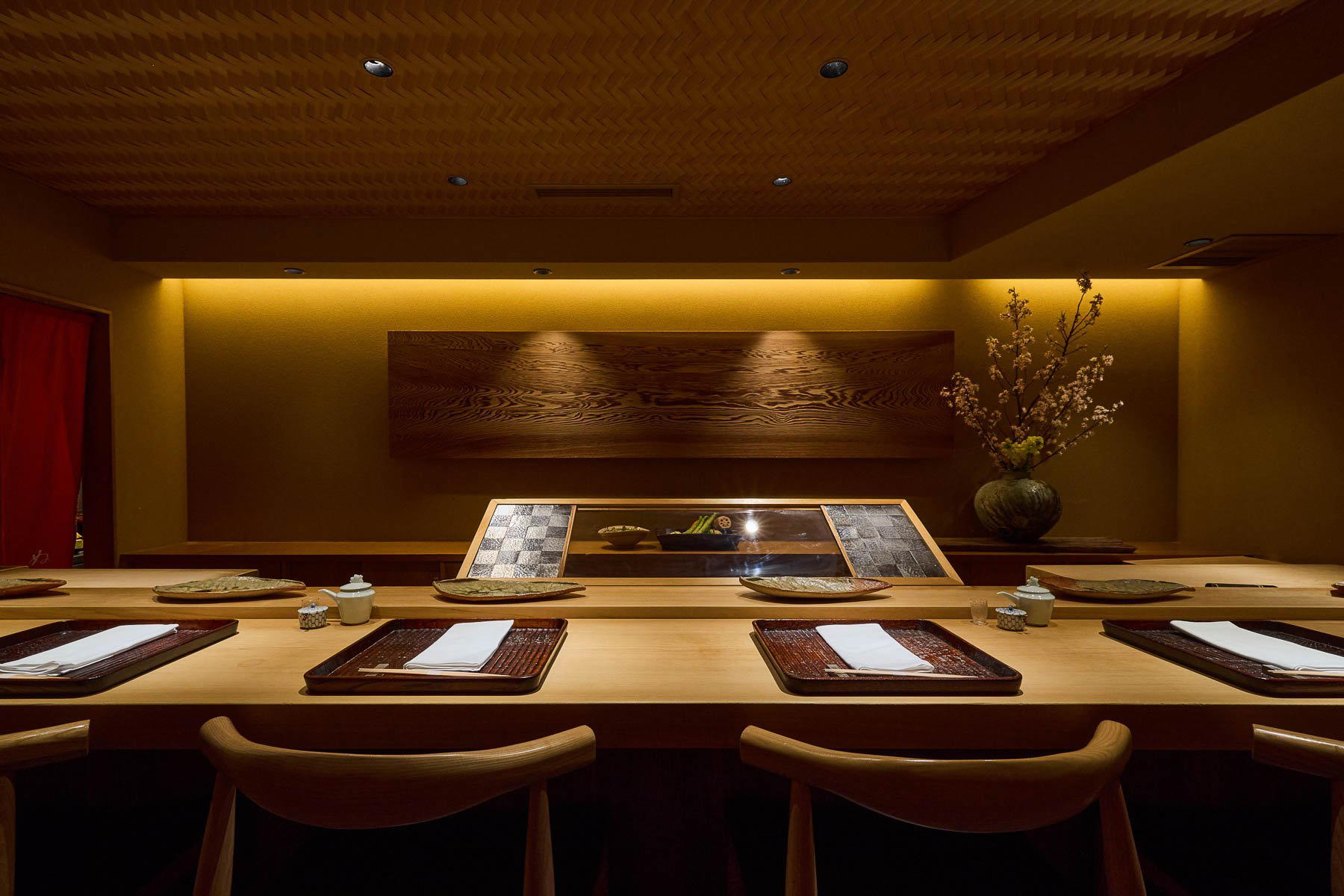
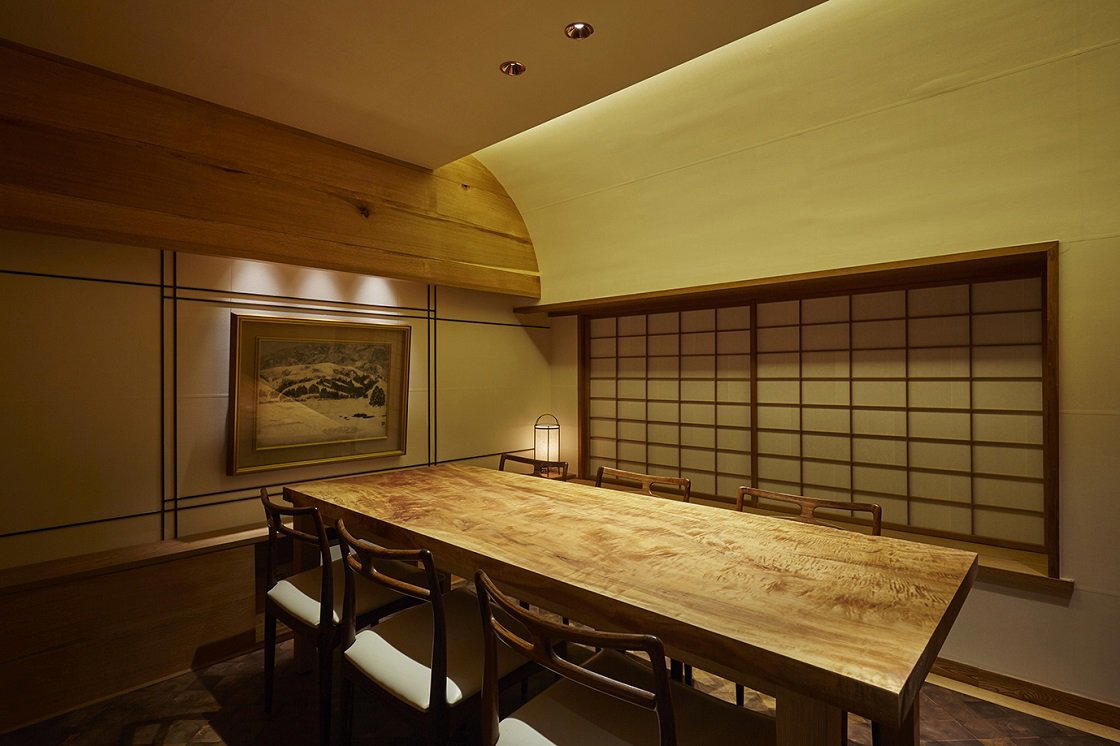
Tabelog 100 #65
Our verdict
Located in Higashinada Ward, Kobe, èèè 本店 sits in a residential pocket of the city that rewards deliberate diners over passing trade. The address alone signals a certain kind of intention: this is not a restaurant that competes for foot traffic. What draws visitors is precisely the kind of focused, unhurried dining that Kobe's quieter eastern wards have historically supported.

Pearl is the En Primeur Club membership app, where members save venues, book tables and use the concierge.
Higashinada Ward and the Quiet End of Kobe Dining
Kobe has always maintained two distinct dining identities. The first is the cosmopolitan corridor running through Kitano and the harbour-facing districts, where Western-inflected cuisine arrived through nineteenth-century port trade and never fully left. The second is the residential east, anchored by wards like Higashinada, where the dining culture is quieter, less tourist-facing, and more dependent on the loyalty of local regulars who know exactly where they are going. èèè 本店, addressed at 5 Chome-7-15 Uozaki Kitamachi, belongs firmly to that second tradition.
Uozaki sits between the coastal industrial flatlands and the lower slopes of the Rokko mountain range, a neighbourhood defined more by its residents than by any particular scene. Arriving here is a deliberate act. There is no ambient foot traffic to stumble through, no cluster of competing restaurants to browse between. The street-level approach communicates something before you have even entered: this is a restaurant that expects its guests to have made a decision, not a discovery.
For context on how this fits within Kobe's dining range, our full Kobe restaurants guide maps the city's key dining districts and price tiers.
Menu Architecture as Editorial Statement
In Japanese restaurant culture, the structure of a menu is rarely accidental. At the category level, what a kitchen chooses to serve, and in what sequence, signals its relationship to culinary tradition, seasonal supply chains, and the expectations it has of its guests. Kobe's premium dining tier includes kaiseki-format restaurants that move through seasonal progression course by course, beef specialists anchored to the city's Wagyu identity, and sushi counters operating on omakase logic where the chef's judgment replaces a printed list entirely.
Where èèè 本店 sits within that framework is leading understood through context rather than assumption. The Higashinada address, residential and non-commercial in character, suggests a restaurant built around repeat custom rather than destination tourism. Restaurants in this mode tend to favour depth over breadth in their menus: fewer choices, more craft per dish, and a kitchen vocabulary that rewards guests who return across seasons rather than those seeking a single comprehensive experience.
This model has strong precedent in the Kansai region. Kaiseki traditions in Kyoto, most visibly at places like Gion Sasaki in Kyoto, have long operated on the principle that menu restraint is a form of confidence. Similarly, the tightest counters in Osaka, including HAJIME in Osaka, make deliberate structural choices about what they offer and what they withhold. Kobe's own version of this tendency appears in restaurants across its eastern wards, where the absence of variety signals precision rather than limitation.
Placing èèè 本店 within Kobe's competitive environment requires acknowledging that the city operates at several price points and across distinct cuisine categories. At the top of the price register, Aragawa represents the beef-specialist tradition that made Kobe internationally recognisable, with pricing that reflects both the quality of its Wagyu sourcing and its decades-long position in the market. Across the Spanish register, Ca Sento demonstrates that Kobe's cosmopolitan port history continues to support European cuisine in a serious form.
The more intimate tier of Kobe dining, to which the Higashinada address of èèè 本店 most likely connects it, includes restaurants like Fushin and Ash Restaurant, which operate with smaller footprints and audiences built through word of mouth rather than guidebook placement. fuxing extends this quieter tier further, suggesting that Kobe's most interesting dining is increasingly distributed across residential neighbourhoods rather than concentrated in the city's commercial core.
For visitors coming from the wider Kansai circuit, comparable neighbourhood-anchored formats appear in cities across the region. akordu in Nara and Abon in Ashiya, the latter only a short distance along the coast from Kobe, both illustrate how premium dining in this part of Japan functions at a remove from tourist infrastructure.
The Regional Context Beyond Kansai
Japan's premium dining scene is notable for distributing serious restaurants well beyond the major metropolitan centres. The Michelin Guide's Japan editions cover cities from Hokkaido to Kyushu, and the restaurants that appear in smaller cities and outer districts consistently demonstrate that format discipline and ingredient quality are not reserved for Tokyo or Osaka. This distribution matters for understanding why a restaurant in Higashinada Ward warrants the same quality of attention as one in Ginza.
Across Japan, restaurants operating in residential or semi-industrial urban contexts tend to share certain characteristics: lower seating capacities, stronger reliance on advance reservation systems, and menus that do not change to accommodate casual walk-in preferences. The sushi counter model, visible in places like Harutaka in Tokyo, makes this logic explicit. So does the kaiseki format in Kyoto, and the regional dining traditions that sustain serious restaurants in cities like Fukuoka, where Goh operates within a recognisably similar framework of neighbourhood loyalty and guest expectation.
Across Japan's more dispersed dining geography, this pattern holds from affetto akita in Akita and Ajidocoro in Yubari District to Aji Arai in Oita and Akakichi in Imabari: premium cooking in regional Japan rewards the traveller who plans in advance rather than the one who arrives hoping for a table.
Planning a Visit
The Higashinada Ward location places èèè 本店 east of central Kobe, accessible via the Hanshin Uozaki station or the JR Sumiyoshi line, depending on approach from Osaka or central Kobe. The residential character of the neighbourhood means the area does not function as a dining district with supporting bars or pre-dinner venues in the immediate vicinity; planning the evening around the meal itself, rather than around a broader neighbourhood programme, is the practical approach here.
For internationally comparable reference points on what serious omakase or course-format dining in Japan can involve at the upper end, Le Bernardin in New York City and Lazy Bear in San Francisco both illustrate how advance planning and format commitment translate to dining value in premium course-menu contexts outside Japan.
Frequently asked questions
What's èèè æ¬åº's location?
èèè æ¬åº is located at 5 Chome-7-15 Uozaki Kitamachi, Higashinada Ward, Kobe, Hyogo 658-0082, Japan, Kobe.
What's the signature dish at èèè 本店?
Specific menu details for èèè 本店 are not published in a way that singles out one dish above others. The kitchen's approach, as understood from its positioning in Kobe's Higashinada Ward, reflects the structured menu philosophy common to serious Japanese restaurants in the Kansai region, where sequence and category carry as much meaning as individual plates. check the venue's official channels via its Uozaki Kitamachi address for current menu information.
How far ahead should I plan for èèè æ¬åº?
Reservations are recommended for èèè æ¬åº in Kobe. Confirm current policy via the venue's official channels.
What's the defining dish or idea at èèè æ¬åº?
èèè æ¬åº is best approached by focusing on the core concept and signature offerings.
Do they accommodate allergies at èèè æ¬åº?
Dietary accommodations can vary. Flag restrictions in advance via the venue's official channels.
Recognition, Side-by-Side
Comparable venues nearby, for context on price, style, and recognition.
| Venue | Cuisine | Price | Awards | Notes |
|---|---|---|---|---|
| 老虎菜 本店This venue (the venue you are viewing) | japanese | Not listed | Tabelog 100 #65 | Not listed |
| Grill Suematsu | Classic Yoshoku (Japanese‑style Western) Grill | $20–30 | Tabelog 100 #16 | Chūō |
| Okada Shokuhin Kabushiki Gaisha | Japanese BBQ / Yakiniku | Not listed | Tabelog 100 #5 | Chūō |
| 植月 | Japanese Kaiseki | Not listed | Not listed | Hyōgo |
| Yakiniku Horumon Bar Bovin | Yakiniku & Horumon Bar | $30–50 | Tabelog 100 #85 | Chūō |
| 鶏一途 | Traditional Japanese Kaiseki | $50–100 | Tabelog 100 #18 | Higashinada |
Recognition history
Dated appearances from independent guides and award organizations, with the underlying list record or original source where available.
Tabelog 100 #65 · No. 65
Tabelog · Tabelog 100 - Chinese cuisine - WEST - 2026
Continue exploring