Our verdict
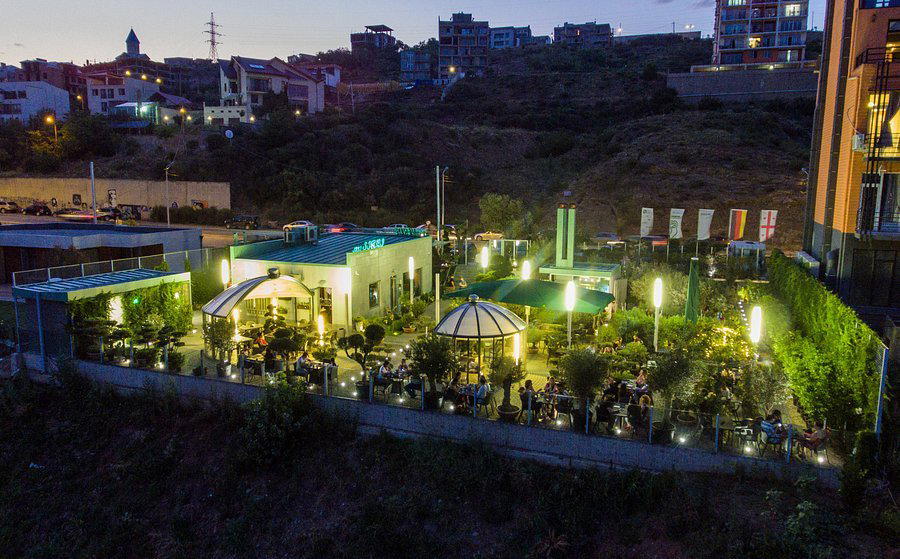
Cafe Verde sits on Tbilisi's Tsereteli Avenue in a city where sustainability-minded dining is beginning to reshape the conversation around Georgian cuisine. Pair a visit with our broader Tbilisi restaurant guide for context.

Pearl is the En Primeur Club membership app, where members save venues, book tables and use the concierge.
Where Tbilisi's Sustainability Conversation Is Happening
Georgian cuisine has long practised what contemporary restaurants now brand as sustainable: nose-to-tail cooking, fermentation as preservation, vegetable-forward mezze traditions, and seasonal wild-herb foraging built into the culinary calendar. What is newer is the self-consciousness around those practices, the deliberate framing of ethical sourcing and waste reduction as a dining proposition rather than simply as habit. In Tbilisi, that framing is emerging across a range of addresses, from the archive-recipe approach at Barbarestan to the wine-led sourcing logic at Azarphesha. Cafe Verde, on Tsereteli Avenue in the western residential belt of the city, belongs to this emerging category of places where environmental consciousness shapes the offer, even if the venue operates with less fanfare than its counterparts closer to the Old Town.
Tsereteli Avenue is not the address most visitors associate with Tbilisi dining. The neighbourhood lacks the photogenic courtyard architecture of Vera or the bar density of Fabrika. What it offers instead is a more workaday Tbilisi, local foot traffic, lower rents, and the kind of unforced atmosphere that tends to disappear from city-centre addresses as soon as international recognition arrives. Cafe Verde's position here is itself a kind of signal: this is not a venue calibrated for the tourist circuit.
The Sustainability Frame in Georgian Dining
Understanding where Cafe Verde fits requires understanding how sustainability registers across Georgian food culture more broadly. The country's wine tradition, built around amber-wine qvevri fermentation, minimal intervention, and ancient varieties like Rkatsiteli and Saperavi, has been one of the most widely discussed natural-wine stories globally over the past decade. That story originates outside Tbilisi, in the Kakheti wine region where producers like Pheasant's Tears Winery in Signagi and Schuchman Wines Chateau have built serious reputations on low-intervention production. The influence has filtered into Tbilisi's dining scene: restaurants that take sourcing seriously tend to look toward those regional producers for their wine programs, which in turn pulls the kitchen toward food that can hold that kind of company.
Ethical sourcing in Georgia operates through direct producer relationships more than through formal certification. The country's agricultural smallholder structure means that a restaurant committed to traceability often works directly with farmers in Kakheti, Adjara, or Racha, regions where Doli in Telavi and Sazandari in Batumi have each demonstrated that regional sourcing can anchor a coherent dining identity. Waste reduction follows naturally from this model: when ingredients are sourced carefully and at cost, the kitchen has every incentive to use them fully.
The Venue on Tsereteli
Cafe Verde's address, Tsereteli 18, places it in a part of the city that functions more as a lived-in residential district than a dining destination. That geography shapes the experience before anything on the plate does. The approach is quieter than the Old Town's saturated dining strips, and the clientele skews local. For visitors, that means a room without the self-consciousness that often settles over places that know they are being reviewed.
In Tbilisi's current dining moment, that restraint is not necessarily a deficit. Some of the city's most discussed addresses, ATI and Alubali among them, built their reputations through word of mouth and editorial attention before formal award consideration became relevant. Cafe Verde operates in a similar register, though with even less public data available to assess.
For comparison, Café Littera and Craft Wine Restaurant represent the more credentialed end of Tbilisi's sustainability-adjacent dining offer, both carry higher profiles and more documented menus. Cafe Verde's position is less defined, which makes it a more uncertain recommendation but also a more interesting one for visitors willing to take that uncertainty as part of the point.
How Tbilisi Compares to Other Cities on This Story
The sustainability framing in dining is not unique to Tbilisi, but Georgia's specific circumstances give it a different texture than the equivalent story in, say, New York or San Francisco. At Le Bernardin in New York City or Lazy Bear in San Francisco, sustainability operates as a premium positioning signal inside mature, highly competitive markets. At Atomix in New York City, it intersects with heritage cuisine in ways that draw critical attention and formal recognition. In Tbilisi, the conditions are different: the sourcing relationships exist because they always have, the wine tradition predates the natural-wine movement by several millennia, and the restaurants engaging most seriously with these questions are often doing so without the institutional scaffolding that would make those commitments legible to international award bodies.
Venues like Akura San signal that the city is also developing appetite for non-Georgian culinary formats, while Sisters in Kutaisi and Chiko in Aspindza suggest that the interesting sourcing and cooking conversations in Georgia extend well beyond the capital. Gazaphkhuli in Chiatura adds another data point in the regional picture. For anyone building a Georgian itinerary around food, the capital is a starting point, not the whole map.
For planning beyond Tbilisi itself, the full Tbilisi restaurants guide provides broader context on where the city's dining is concentrated, what peer sets are forming, and how to sequence visits across neighbourhoods and price tiers. Crowne Plaza Borjomi offers an anchor point for those extending into the spa-town circuit southwest of the capital.
Practical access to Cafe Verde is direct from most central Tbilisi locations: Tsereteli Avenue is served by the city's metro and bus network, and the address is reachable from Rustaveli or Didube without significant transit time. Given the absence of published booking information, arriving in person or via local directory contact is the most reliable approach. Timing expectations should match the neighbourhood: this is a local-facing address, and peak hours will reflect Tbilisi's later dining culture rather than tourist-adjusted service windows.
Frequently asked questions
Where exactly is Cafe Verde?
Cafe Verde is located at áááá£á¯á áááá¨á£ááááá¡ 18, Tbilisi 0186, Georgia, Tbilisi.
How does Cafe Verde fit into Tbilisi's wider food scene compared to restaurants in the city centre?
Cafe Verde's location on Tsereteli 18 places it in a lived-in residential district, outside the concentrated dining clusters of Rustaveli or the Old Town. In Tbilisi, where the sustainability conversation in dining draws on centuries-old Georgian practices, fermentation, nose-to-tail cooking, preserved vegetables, a venue operating at neighbourhood scale often reflects those traditions more organically than counterparts built around tourist footfall. That geographic positioning is part of what distinguishes its framing within the city's food culture.
What do people recommend at Cafe Verde?
Given its positioning within Tbilisi's sustainability-framed dining scene, the menu likely draws on Georgian fermentation traditions and seasonal produce. Visiting the venue directly or checking current local listings will give you the clearest picture of what's on offer.
What's the signature at Cafe Verde?
The venue's identity, as reflected in its name and editorial framing, centres on sustainability within Georgian culinary traditions, a context where fermentation, preserved vegetables, and seasonal sourcing function as structural elements rather than trends. That broader frame is likely where the kitchen's focus sits.
Just the Basics
A quick peer reference to anchor this venue in its category.
| Venue | Cuisine | Price | Awards | Notes |
|---|---|---|---|---|
| Cafe VerdeThis venue (the venue you are viewing) | European Grill | $20–30 | Not listed | Not listed |
| Café Littera | Modern Georgian Fusion | $30–50 | La Liste Top Restaurants | Georgian Fusion |
| Alubali | Authentic Megrelian Georgian | Not listed | Star Wine List | Not listed |
| Azarphesha | Modern Georgian with Fusion Influences | Not listed | Star Wine List | Not listed |
| Barbarestan | 19th-Century Georgian Homestyle | $30–50 | La Liste Top Restaurants · Star Wine List | Not listed |
| Craft Wine Restaurant | Modern Georgian with Natural Wine Focus | $30–50 | Star Wine List | Not listed |
Continue exploring
More in Tbilisi
Restaurants in Tbilisi
All restaurants in Tbilisi →
Bars in Tbilisi
All bars in Tbilisi →



Details
- Cozy
- Scenic
- Romantic
- Intimate
- Date Night
- Casual Hangout
- Live Music
- Terrace
- Panoramic View
- Craft Cocktails
- Skyline
- A La Carte
- Vegetarian Friendly
- Vegan Options
Current opening hours
- Monday
- 12 PM–12 AM
- Tuesday
- 12 PM–12 AM
- Wednesday
- 12 PM–12 AM
- Thursday
- 12 PM–12 AM
- Friday
- 12 PM–12 AM
- Saturday
- 12 PM–12 AM
- Sunday
- 12 PM–12 AM
Hours can change for holidays and private events. Hours as of .
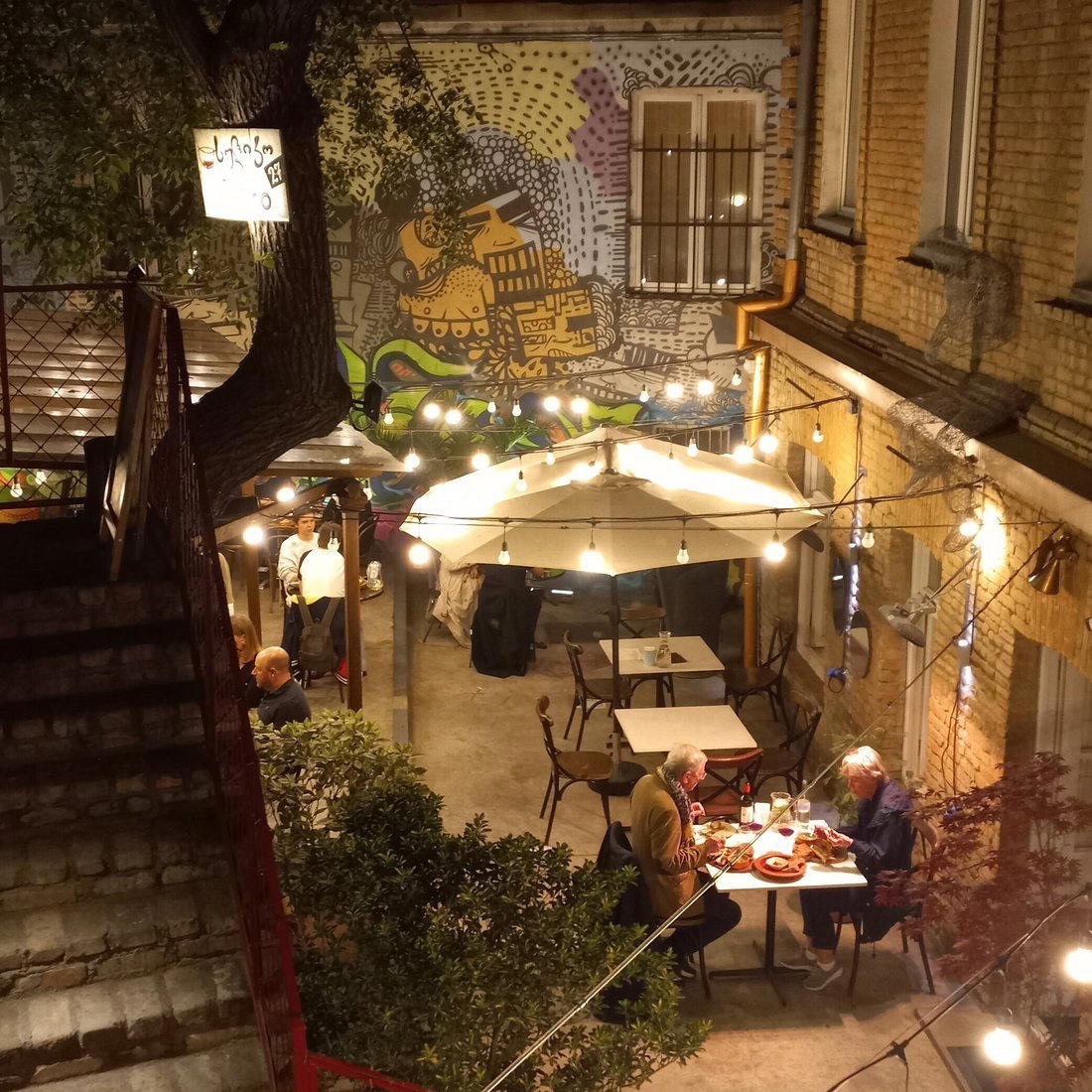
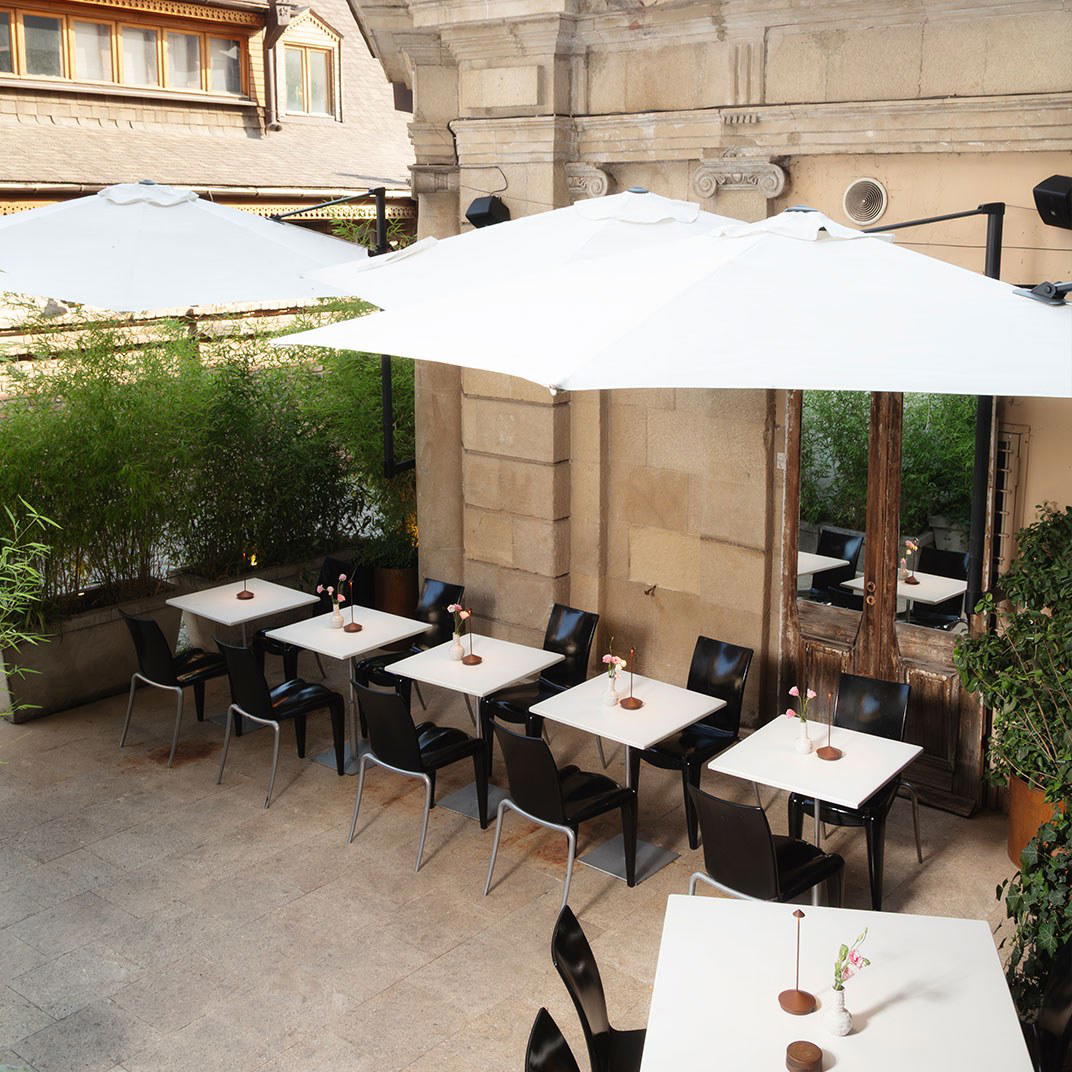
Relaxing atmosphere filled with green plants, trees, and flowers, enhanced by live piano and violin music, especially enchanting at night with city lights.