

World's 50 Best #75 · Falstaff Winery - Listed
Set within a restored royal palace in the Mukhrani valley, Château Mukhrani sits at the intersection of Georgia's 8,000-year winemaking history and modern cellar craft. For anyone tracing the origins of viticulture, the valley's terroir and this estate's scale make it a serious starting point.

Pearl is the En Primeur Club membership app, where members save venues, book tables and use the concierge.
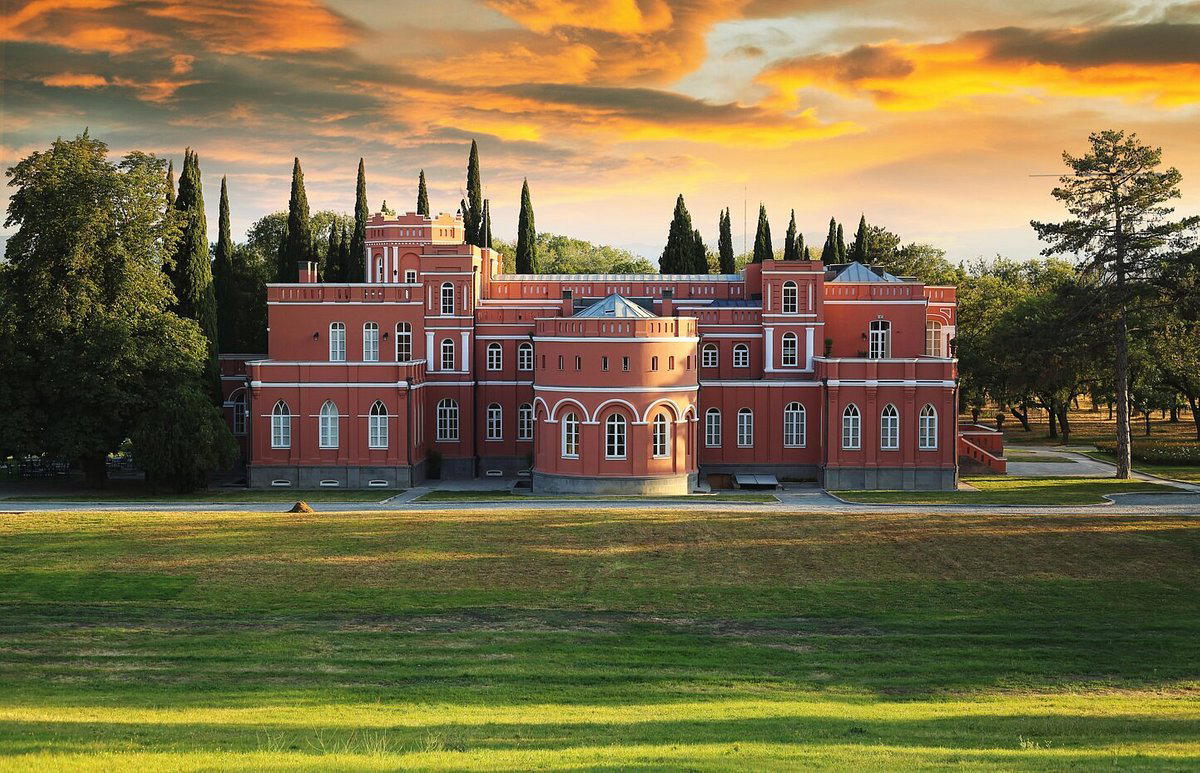
Where the Caucasus Teaches You What Terroir Actually Means
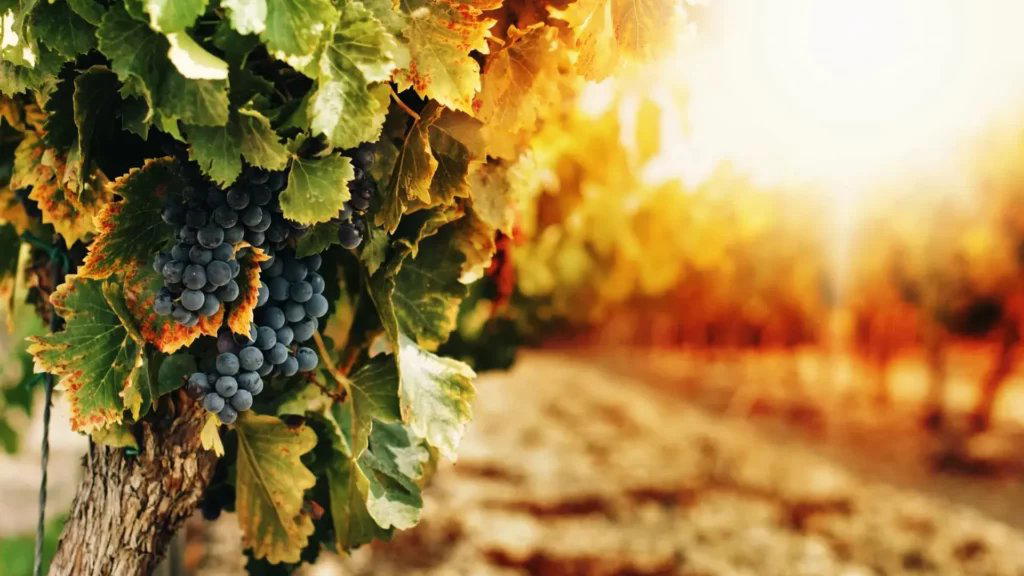
There is a particular quality to the light in the Mukhrani valley, a low-latitude sharpness filtered through the Caucasus foothills that gives the vineyards here a different character from anything you would encounter in Burgundy, Napa, or the Douro. The valley floor, roughly 500 metres above sea level, collects cold air from the surrounding ridgelines at night while the days run long and warm through the growing season. That thermal range is not incidental. It is the primary reason the indigenous varieties planted here accumulate both sugar and acidity with unusual balance, producing wines that read as structured rather than merely ripe.
Approaching the estate, the palace building comes into view before the vineyards do. That sequencing matters because Château Mukhrani is, in the regional context, an argument about continuity: the site has been associated with winemaking for centuries, and the current operation works within a historical and agricultural framework that few European estates can genuinely claim. The Caucasus valleys are home to the earliest documented evidence of winemaking anywhere in the world, with archaeological findings pointing to viticulture around 6,000 BC. Georgia is not simply an old wine country; it is arguably the original wine country, and the Mukhrani valley sits inside that story rather than adjacent to it.
The Terroir Case: Soil, Elevation, and the Caucasus Climate
The Kartli wine region, where Mukhrani sits, is geologically distinct from the better-known Kakheti zone further east. The soils here carry a higher limestone component and a different alluvial structure from the Mukhrani river plain, which produces wines with a different texture from the clay-heavy Alazani valley profiles associated with most Georgian exports. Where Kakheti tends toward heavier, more tannic expressions in amber wines made from skin-contact Rkatsiteli or Kisi, the Mukhrani valley's soil composition and cooler elevation encourage fresher, more aromatic profiles in both white and red varieties.
The Mtsvane and Goruli Mtsvane grapes grown in this valley express this difference directly. Both are indigenous white varieties that respond acutely to soil conditions, and at Mukhrani's elevation they tend to retain more of their natural aromatic character than they would at lower, warmer sites. Georgian viticulture places significant emphasis on the concept that a grape variety expresses its full identity only in the region it evolved within, and Mukhrani's indigenous plantings represent a direct test of that argument. For visitors comparing Georgia's wine regions, this distinction between Kartli and Kakheti terroir is the most useful analytical frame.
The Estate in Its Competitive Context
In a country where winemaking has historically been fragmented into small-production family operations, an estate of this size and formal recognition occupies a distinct position. It functions as a reference point for what Georgian wine looks like when produced at volume without abandoning quality markers, and it draws comparisons to larger heritage estates in other Old World wine regions.
Internationally, the comparison set is instructive. Estates like Achaia Clauss in Patras or All Saints Estate in Rutherglen occupy similar positions in their respective regions: heritage properties with significant historical weight, operating at a scale that makes them accessible to visitors while maintaining recognisable quality signals. The difference at Mukhrani is the depth of the underlying history. No estate in Rutherglen or the Peloponnese sits within a country that can document viticulture as far back as Georgia does.
Within Georgia specifically, the contrast worth noting is between Mukhrani's Kartli positioning and the Kakheti-focused estates that dominate the country's export narrative. Château Buera in Telavi operates within the Kakheti framework, where the qvevri tradition and amber wine production define the regional identity. Mukhrani's approach, more European in its cellar infrastructure while still working with indigenous varieties, represents a different argument about what Georgian wine can communicate to an international audience.
The Palace Setting and What It Signals
The Mukhranbatoni Palace building that houses the estate's operations is not a decorative backdrop. In Georgian wine culture, the connection between aristocratic estates and serious viticulture runs deep, and the palace setting here functions as a direct claim to that lineage. The physical environment places the visitor inside a specific historical narrative: winemaking as a practice inseparable from the land's cultural and political history, not simply its agricultural one.
For context, the experience at an estate like this differs considerably from what you would encounter at a purpose-built tasting room in, say, St. Helena or Rutherford. Napa's visitor infrastructure is optimised for throughput and hospitality theatre. Mukhrani's setting asks a different question of the visitor: how does a wine tradition survive, adapt, and justify itself across millennia? The palace walls provide the architectural version of that answer.
Planning a Visit: Logistics and Timing
Château Mukhrani sits in the Mukhrani valley near the town of Natakhtari, roughly 30 kilometres northwest of Tbilisi on the road toward Gori. The proximity to Mtskheta, Georgia's ancient ecclesiastical capital, makes a combined itinerary practical: most visitors approach Mukhrani as part of a day trip from Tbilisi, with Mtskheta's Svetitskhoveli Cathedral as a natural stop on the same route. For broader context on eating and drinking in the area, our full Mtskheta guide covers the region's options in detail.
The optimal visiting window runs from late spring through early autumn. September brings harvest activity to the Kartli vineyards, which adds an observable layer of context to any tasting. Summer visits offer the full contrast of the valley's thermal cycle: warm afternoons giving way to noticeably cooler evenings, the same temperature swing that defines the wines in the glass. Winter access is possible but the estate's agricultural character is less readable when the vines are dormant.
For comparison purposes, visitors who have explored other heritage wine estates with strong historical narratives, whether Albert Boxler in Alsace, Aldo Conterno in Monforte d'Alba, or Adelsheim Vineyard in Oregon, will find Georgia's winemaking context deepens the comparison set considerably. The technical vocabulary of terroir expression is the same across all these locations; what differs at Mukhrani is the timescale the conversation operates within.
What the 2025 Recognition Tells You
For travellers building itineraries around established wine credentials, this rating provides a concrete anchor. It also positions Château Mukhrani within a tier of Georgian estates that have moved beyond the initial wave of international curiosity about qvevri wine and natural wine associations, into a more durably recognisable quality framework.
Wineries in other regions operating at similar prestige tiers, including Adelaida Vineyards in Paso Robles, Alexander Valley Vineyards, or Andrew Murray Vineyards in Los Olivos, share a common characteristic: they are properties where the winemaking argument is legible to a visitor without specialist knowledge, because the land itself does the explaining. Mukhrani's Caucasus setting makes that principle as literal as it gets in the wine world.
Recognition history
Dated appearances from independent guides and award organizations, with the underlying list record or original source where available.
World's 50 Best Vineyards #75
World's 50 Best
Falstaff Winery - Listed
Falstaff
Full recognition history (3 entries)
World's 50 Best Vineyards #47
World's 50 Best
Continue exploring
More in Mtskheta
Wineries in Mtskheta
All wineries in Mtskheta →

Bars in Mtskheta
Browse all →



Details
- Historic
- Elegant
- Scenic
- Rustic
- Wine Education
- Special Occasion
- Vineyard Tour
- Historic Building
- Estate Grounds
- Organic
- Vineyard
- Garden
- Saperavi
- Goruli Mtsvane
- Rkatsiteli
- Shavkapito
- Tavkveri
- Chardonnay
- Sauvignon Blanc
- Still Red
- Still White
- Dessert
- Skin Contact
- Classic Tasting
- Qvevri Wines
- English
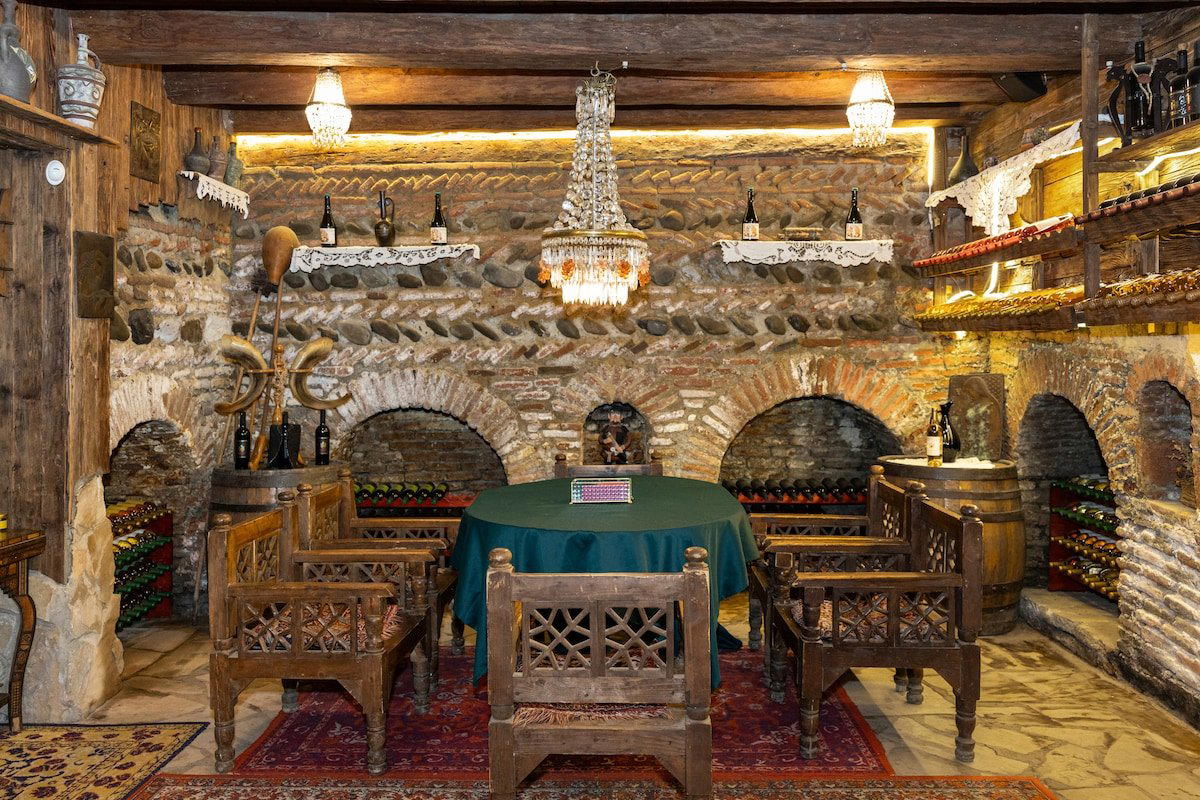
Elegant and regal atmosphere in a restored 19th-century chateau with picturesque vineyards and lush gardens.