Gazaphkhuli sits in Chiatura, a Georgian mining town whose Soviet-era cable cars and canyon terrain make it one of the country's most atmospheric places to eat. With so little published about the restaurant itself, the draw is as much about where you are as what arrives at the table, a Georgian dining room shaped by the raw, extractive landscape that surrounds it. Arrive with low expectations for polish and high ones for place.
Pearl is the En Primeur Club membership app — saves, bookings, and concierge access live there. Same editors, same standards.
- Address
- Chiatura
- Directions
- Get directions
 Saves & bookings on Pearl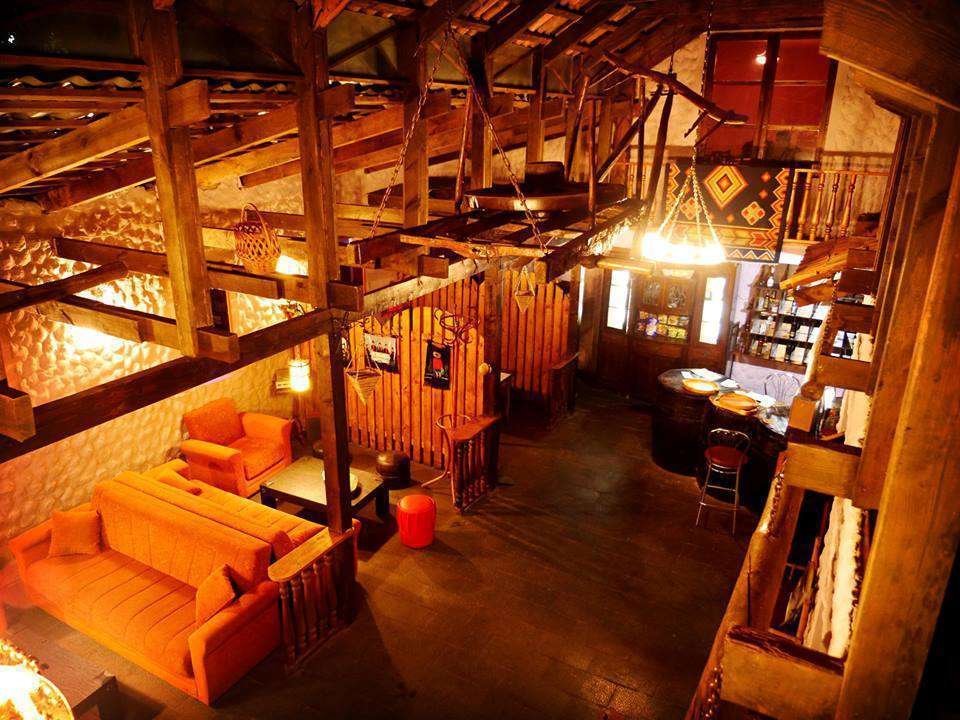
Eating in the Canyon: Chiatura's Dining Character
Gazaphkhuli is a restaurant in Chiatura serving Traditional Georgian food. The manganese-mining town in the Imereti region sits inside a deep gorge cut by the Kvirila River, its Soviet-era cable cars still threading between cliff-face residential blocks and the plateau above. The town's rough-edged setting gives the meal a distinct local character. Food in towns like Chiatura tends to be rooted in what the surrounding region produces rather than what a menu consultant has decided looks good on Instagram.
Western Georgia, the historical Colchis, has always had a distinct culinary identity from the eastern Kartli and Kakheti regions. Imereti, the province in which Chiatura sits, is known for its own cheese (Imeretian cheese, lower salt and fat than Sulguni), its walnut-heavy sauces, and a preference for lighter, more herb-forward dishes than the richer, meat-centred cooking of the east. That regional specificity matters when assessing any restaurant in this part of the country: the supply chain is local by default, not by design, because the logistics of importing ingredients to a remote gorge town make proximity a practical necessity.
What Gazaphkhuli Represents in This Setting
Gazaphkhuli operates inside a Georgian dining tradition where the distance between the source and the plate is short almost by geographic inevitability. Chiatura's isolation from Georgia's main arterial roads means that what a kitchen here puts on the table is largely shaped by what the Imereti region grows, raises, and produces. Walnuts, herbs like tarragon and coriander, local dairy, and river fish have defined Imeretian cooking for generations, not as a trend, but as the default condition of eating in this part of the country.
Georgia's broader restaurant culture has been in accelerated transition since the early 2010s. Venues like Pheasant's Tears Winery in Signagi pushed natural wine and ingredient-led cooking into international visibility. Doli in Telavi and Sisters in Kutaisi have mapped regional Georgian cooking onto a format that international visitors recognise as serious dining. Chiatura sits outside that circuit. Gazaphkhuli serves a town with its own long-running food traditions and a distinctly local pantry.
The Sourcing Context That Shapes the Table
In Imereti, the agricultural base has remained relatively stable even as Georgia's urban centres have modernised rapidly. The region's cooler, wetter climate compared to Kakheti supports a different crop profile: hazelnuts, plums, herbs, and the kind of acidic, tannic grapes that go into Imeretian amber wines produced by extended skin contact. Any kitchen operating in this zone draws from that supply. The walnut is probably especially diagnostic ingredient among the region, ground into sauces, pressed for oil, stuffed into vegetables, and it appears across Imeretian cooking in ways that have no direct parallel in the eastern Georgian tradition.
This ingredient context helps frame what Gazaphkhuli offers. Georgian restaurants in towns of this scale and character tend to anchor their offering in dishes with strong regional identity: Imeretian khachapuri (flatter, milder, and less rich than the Adjarian egg-topped version served in Batumi), badrijani nigvzit (fried aubergine rolled around walnut paste), and slow-cooked meat preparations that reflect a kitchen working with what arrives from local farms. The comparison point internationally would be a rural trattoria in Abruzzo, where the menu reflects what the surrounding area produces in a given season. That kind of cooking rarely generates the critical attention that destination restaurants in Castel di Sangro or New York attract, but it carries a different kind of authority.
Planning Your Visit: What to Expect Practically
Chiatura is about two and a half hours from Tbilisi by road. The town is accessible by marshrutka (shared minibus) from Tbilisi's Didube bus station, with services running regularly through the day. Gazaphkhuli is walk-in friendly. The town itself warrants time beyond the meal, especially for its cable car system and Soviet-era infrastructure. Most visitors treat Chiatura as a day trip from Kutaisi, which is roughly 50 kilometres to the west and has a functioning airport with connections to several European cities. For dining context in that direction, Sisters in Kutaisi offers a useful counterpoint, a more polished, internationally legible version of Imeretian cooking that shows what the same regional pantry looks like when presented for a travelled audience.
Georgia's regional hospitality tradition generally skews informal, and Chiatura in particular sits at the more casual end of that spectrum. Dress is casual, and the value proposition is strong on a per-dish basis. For a sense of the broader range of Georgian dining quality and format, the contrast between a place like Gazaphkhuli and a Tbilisi venue such as Chops By The River is instructive: the same country, two entirely different registers of hospitality and audience expectation.
Side-by-Side Snapshot
Comparable venues nearby, for context on price, style, and recognition.
| Venue | Cuisine | Price | Notes |
|---|---|---|---|
| GazaphkhuliThis venue — the venue you are viewing | Traditional Georgian | $$ | Not listed |
| Zala | Modern Georgian with French influences | $$ | Tbilisi |
| Gabriadze Cafe | Modern Georgian | $$ | Tbilisi |
| Chiko (ჩიკო) | Traditional Georgian and Meskhetian | $ | Aspindza |
| Palaty | Traditional Georgian | $$ | city centre |
| ATI | Modern Georgian Rooftop | $$$ | Tbilisi |
Continue exploring
More in Chiatura
Restaurants in Chiatura
Browse all →
Wineries in Chiatura
Browse all →
At a Glance
- Cozy
- Rustic
- Casual Hangout
- Family
- Extensive Wine List
Hospitable atmosphere with rich choice of traditional Georgian dishes.