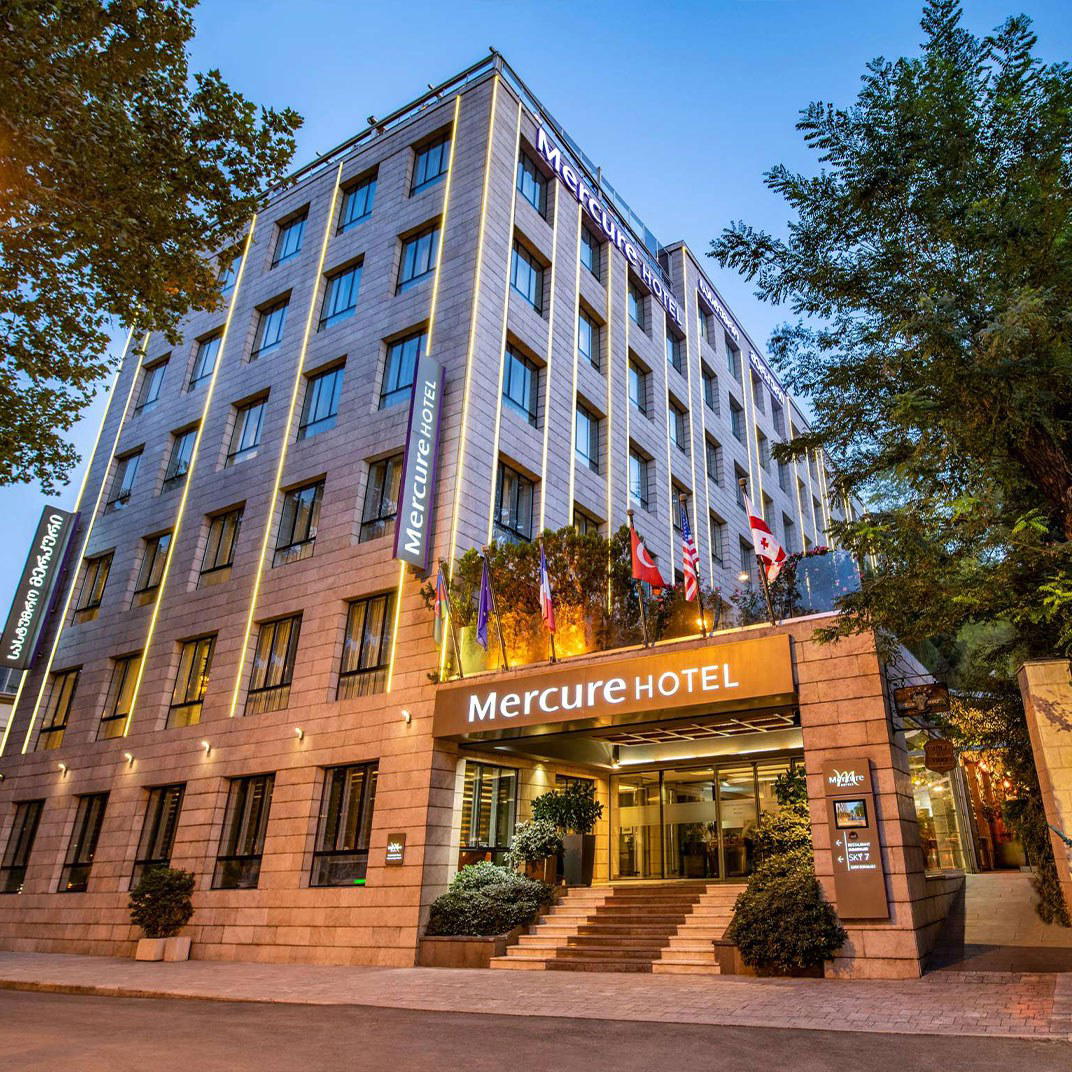
ATI sits on Telavi Street in the heart of Tbilisi's dining scene, drawing a loyal crowd who return not for novelty but for consistency. The address places it within reach of the city's broader restaurant corridor, where Georgian tradition and contemporary cooking have been in productive tension for years. For regulars, the pull is specific rather than general.
Pearl is the En Primeur Club membership app — saves, bookings, and concierge access live there. Same editors, same standards.
- Address
- 20 Telavi St, Tbilisi 0103, Georgia
- Phone
- +995322772020
- Website
- marriott.com
- Directions
- Get directions
 Saves & bookings on Pearl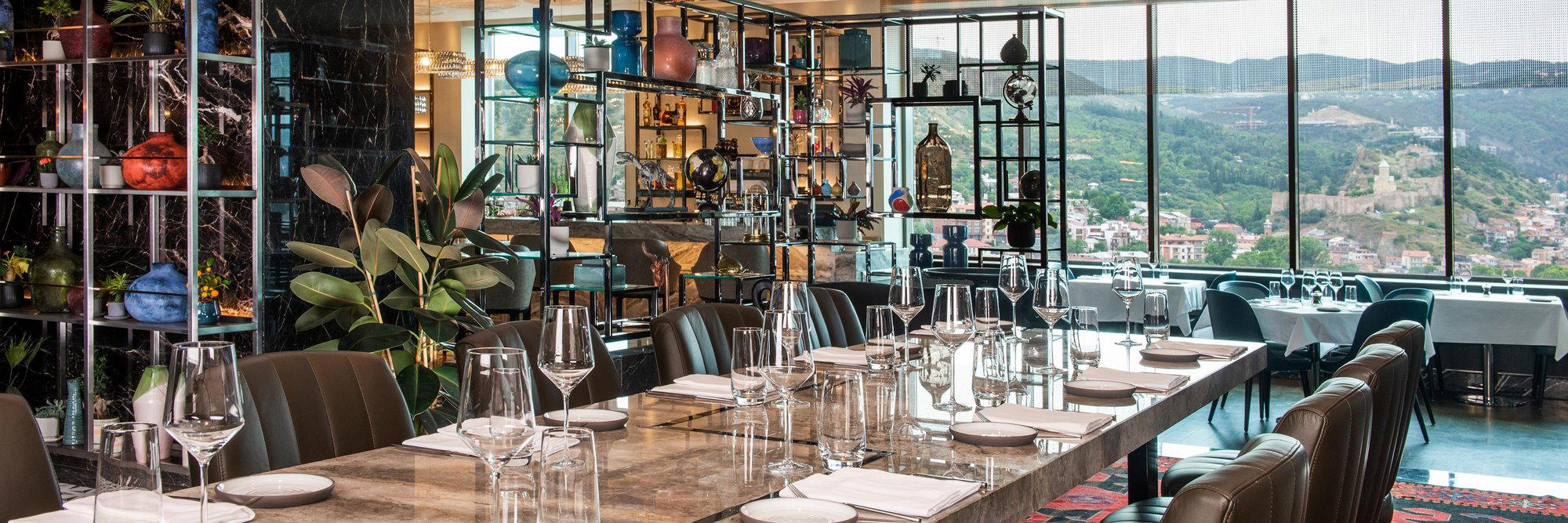
What Keeps People Coming Back to Telavi Street
ATI is a modern Georgian rooftop restaurant in Tbilisi, Georgia, with a casual-smart dress code and reservations recommended. No sign that glows too brightly, no queue managed by a clipboard. The address at 20 Telavi Street, in the 0103 postal district of the old city, sits within a neighbourhood corridor that has become one of the more consistent concentrations of serious dining in the Georgian capital. ATI operates in that context: a place whose reputation travels mostly through the people who have already found it, and who return with enough regularity to suggest that something specific is being done right.
That pattern of loyal return is not accidental. Across Tbilisi's dining scene, the restaurants that build genuine repeat clientele tend to share certain qualities: a defined point of view on Georgian cooking, a room that rewards familiarity, and a kitchen that does not drift. The city's broader restaurant corridor has split over the past decade between venues chasing international attention and venues that have decided their audience is local, or at least local-minded. ATI's position on Telavi Street places it in the latter category, which in Tbilisi carries its own form of credibility.
The Scene ATI Belongs To
Tbilisi's dining identity has shifted considerably since the early 2010s, when the city's reputation outside Georgia rested almost entirely on churchkhela vendors and wine-country tourism. The capital now sustains a range of formats: tasting-menu restaurants with Georgian Fusion ambitions (Café Littera being the cited reference point), wine-forward rooms built around the qvevri tradition, and neighbourhood spots where the cooking is more direct. Barbarestan, which draws from a 19th-century Georgian cookbook as its source text, represents one end of that spectrum. Alubali and Azarphesha occupy adjacent territory in the city's evolving mid-to-upper dining tier.
ATI sits inside this scene without being defined by any single position within it. What is clear from the address and its placement in the Tbilisi dining conversation is that it draws the kind of crowd that treats a restaurant as a habit rather than an event. In cities where dining culture has matured, that distinction matters. A restaurant that survives on event-dining alone tends to be volatile; one that survives on regulars has solved a harder problem.
For those building an itinerary across Georgia's food geography, the wider context is worth noting. The Kakheti wine region, an hour and a half east of Tbilisi, anchors much of the country's natural wine identity, with producers like Pheasant's Tears Winery in Signagi and Schuchman Wines Chateau drawing serious visitors. Doli in Telavi is another Kakheti address worth knowing. Beyond the wine country, Sazandari in Batumi and Sisters in Kutaisi represent the dining scenes of Georgia's other major cities. Elsewhere, Gazaphkhuli in Chiatura, Chiko in Aspindza, and Crowne Plaza Borjomi round out the picture of a country whose hospitality infrastructure has developed well beyond its capital.
The Unwritten Menu: What Regulars Know
In any restaurant with a settled regular clientele, there is a version of the menu that does not appear on paper. It is the set of dishes that people reorder without looking, the table that the host knows to keep, the timing that experienced guests have learned to work with. At ATI's Telavi Street address, the restaurant's position in a dense urban neighbourhood means that logistics are direct: the old city is walkable from most central accommodation, and the street itself is accessible without significant navigation effort.
Regulars at Tbilisi's more established rooms have learned to arrive with a plan. The city's dining culture, particularly at the addresses that have developed genuine followings, does not always reward improvisation. Reservations are recommended, and Tuesday through Saturday evenings are the main service window.
The Georgian tradition of supra, the long feast-format meal presided over by a tamada, has shaped how locals relate to restaurants: the expectation is duration, generosity of portion, and wine as a structural element rather than an add-on. Restaurants that understand this format, rather than approximating it for tourist consumption, tend to be the ones that hold repeat clientele. ATI's address in the 0103 zone, which covers a section of the city with both residential and visitor traffic, places it in a position to serve both audiences without being captured entirely by either.
Positioning Against the Tbilisi comparable set
To understand where ATI sits, it helps to map it against the diversity of formats now operating in Tbilisi. At the more architecturally ambitious and internationally recognised end, you have rooms like Akura San, which represents the city's growing appetite for non-Georgian formats in a Georgian context. At the more convivial, beer-and-food end, Beer Square occupies a different tier entirely. The middle ground, where cooking quality and atmosphere are in productive balance, is where repeat-visit restaurants tend to live.
Internationally, the model of a restaurant sustained by loyal regulars rather than event-dining or awards cycles is well understood. Le Bernardin in New York City has held its position for decades on exactly that basis. Lazy Bear in San Francisco and Atomix in New York City represent a newer generation of the same principle: a defined format, a consistent execution, and a guest base that returns because the experience is reliable rather than because it is novel. Emeril's in New Orleans has operated for decades on the same logic of community embeddedness. ATI, operating in Tbilisi's smaller but increasingly serious dining market, is playing a version of that long game.
Planning a Visit
ATI is located at 20 Telavi Street, Tbilisi 0103. The address is in the older central part of the city, reachable on foot from most of the main hotel corridors. Hours are Tue through Sat, 6 PM to 1 AM, with Monday and Sunday closed. For visitors building a multi-day Tbilisi itinerary, the Telavi Street neighbourhood warrants more than a single dinner: the concentration of dining options in the surrounding streets makes it worth an afternoon of orientation before committing to an evening booking.
Category Peers
Comparable venues nearby, for context on price, style, and recognition.
| Venue | Cuisine | Price | Notes |
|---|---|---|---|
| ATIThis venue — the venue you are viewing | Modern Georgian Rooftop | $$$ | Not listed |
| Chops By The River - Restaurant & Grill | Georgian, European & Caucasian Grill | $$$ | Tbilisi |
| Schuchmann | Modern Georgian Molecular Gastronomy | $$$ | Tbilisi |
| Sirajkhana | Georgian-Persian Fusion | $$ | Tbilisi |
| Kakhelebi | Traditional Georgian | $$ | Tbilisi |
| BIOLI HALL | Georgian Wellness | $$$ | Gardabani |
Continue exploring
More in Tbilisi
Restaurants in Tbilisi
Browse all →

Bars in Tbilisi
Browse all →
Hotels in Tbilisi
Browse all →
At a Glance
- Trendy
- Elegant
- Lively
- Sophisticated
- Date Night
- Special Occasion
- Celebration
- Brunch
- Rooftop
- Live Music
- Open Kitchen
- Terrace
- Panoramic View
- Craft Cocktails
- Extensive Wine List
- Local Sourcing
- Skyline
- Street Scene
Current opening hours
- Monday
- Closed
- Tuesday
- 6 PM–1 AM
- Wednesday
- 6 PM–1 AM
- Thursday
- 6 PM–1 AM
- Friday
- 6 PM–1 AM
- Saturday
- 6 PM–1 AM
- Sunday
- Closed
Hours can change for holidays and private events. Last verified .
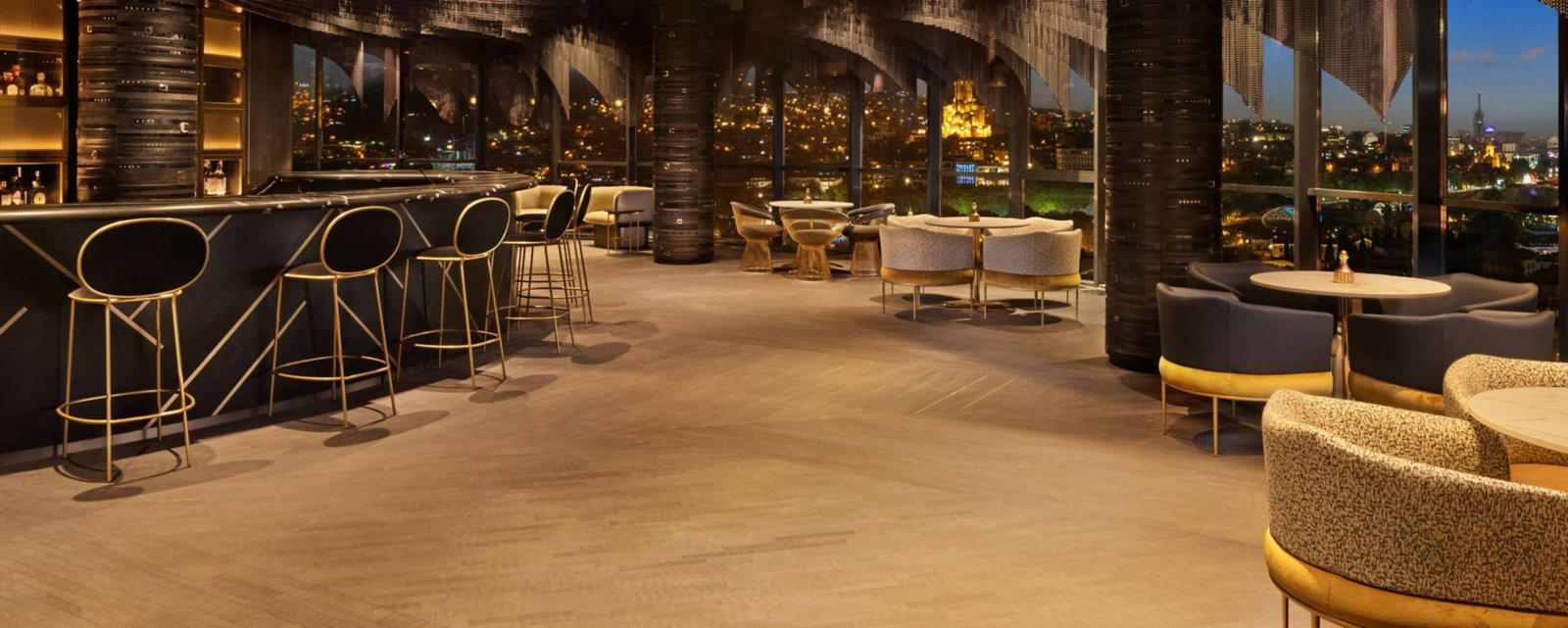
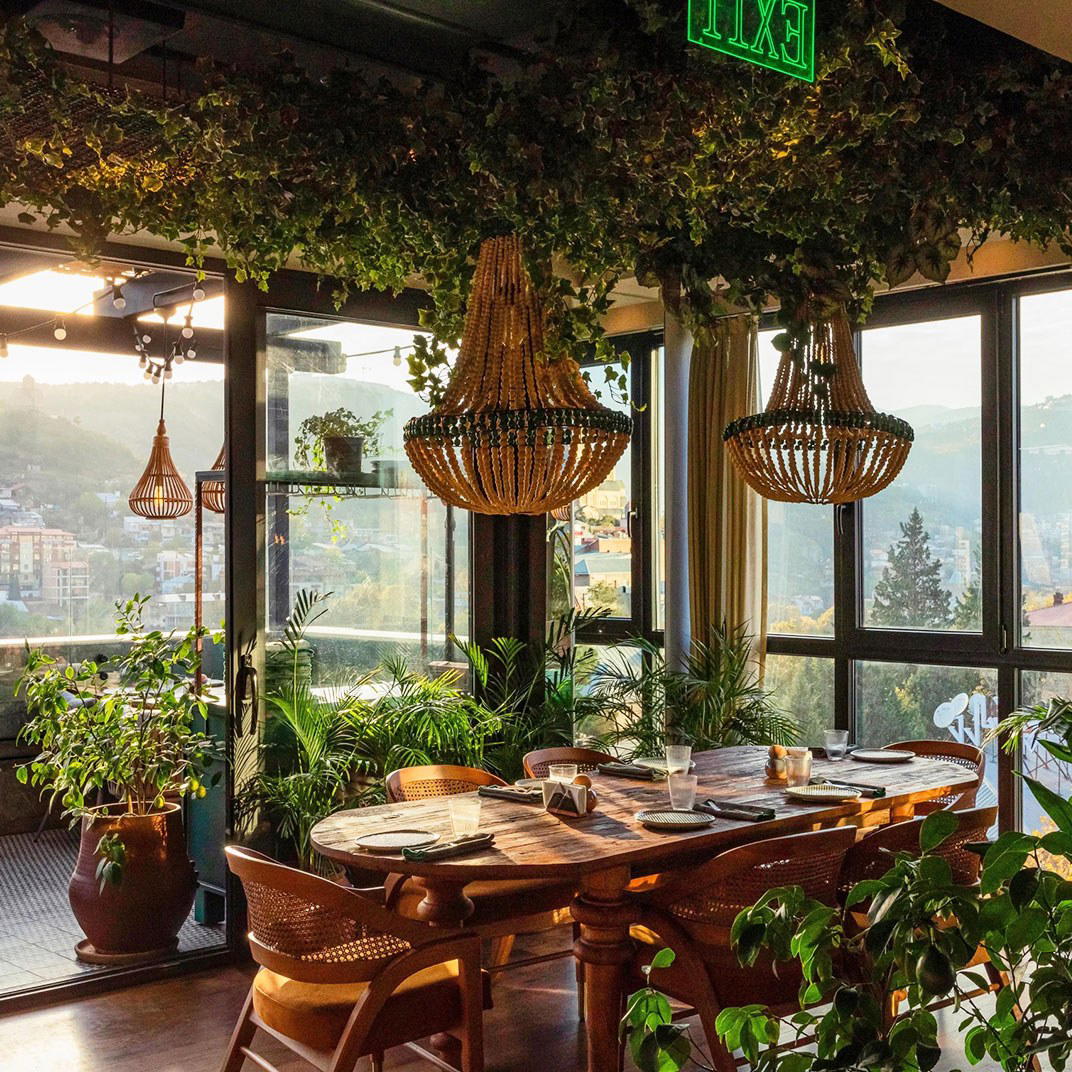
Performative atmosphere with stylish lighting, live music, fire pits, and elegant interiors enhanced by Georgian historic artifacts.