
Poliphonia occupies a brick-vaulted sous-terrain on Chonkadze Street, sitting far enough from Tbilisi's tourist circuits to retain the unhurried rhythm that defines the city's best neighbourhood restaurants. The atmospheric interior rewards visitors who seek out Georgian dining on local terms rather than in tourist-facing venues.
Pearl is the En Primeur Club membership app — saves, bookings, and concierge access live there. Same editors, same standards.
- Address
- ჭონქაძის 29/29 Chonkadze str, Tbilisi, Georgia
- Phone
- +995 577 78 62 68
- Website
- nakadi.cc
- Directions
- Get directions
 Saves & bookings on Pearl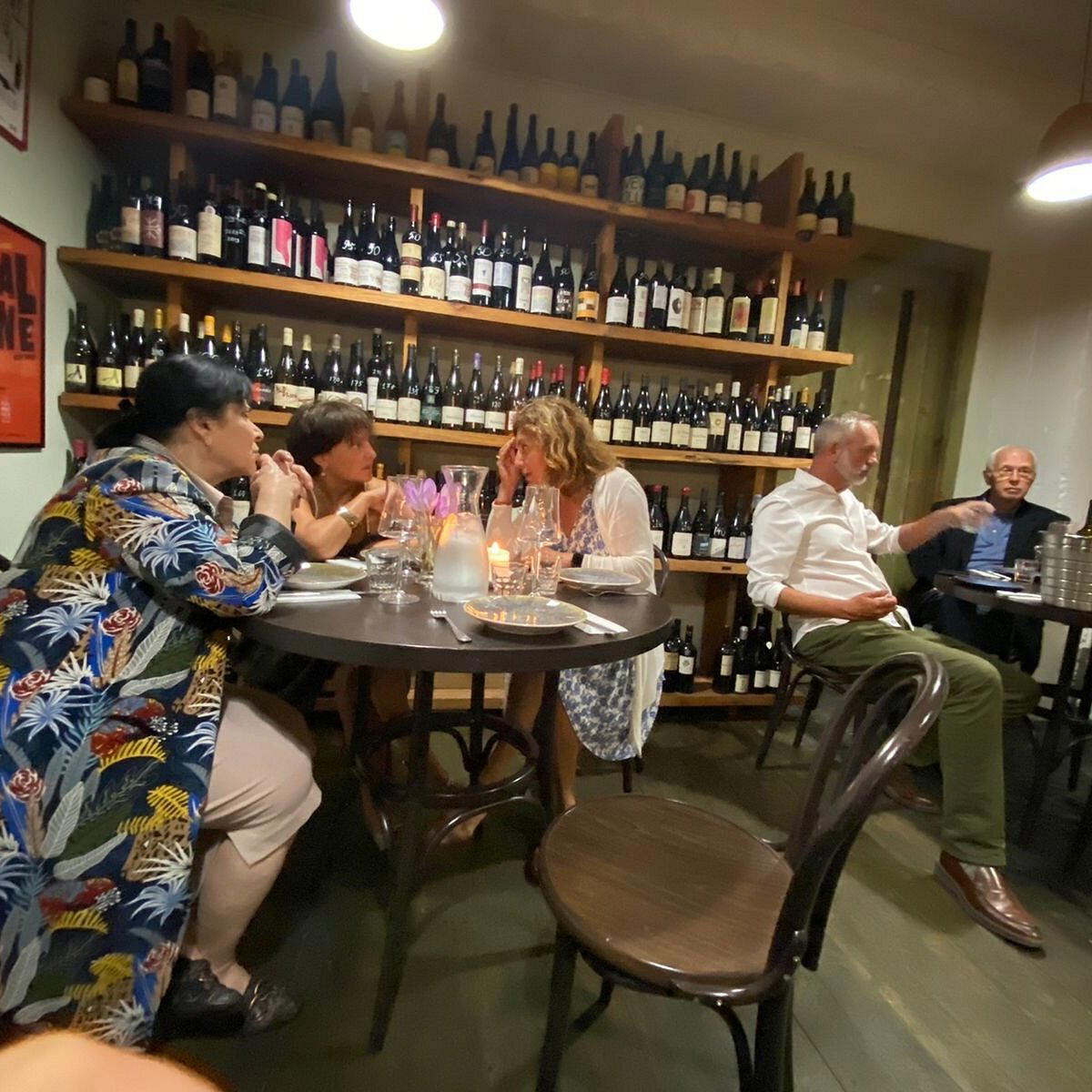
Stone Vaults and a Slower Tbilisi
Tbilisi has a particular talent for the underground. Centuries of layered settlement have left the city with cellars, passages, and carved-out spaces that function, now, as some of its most characterful places to eat and drink. The brick-vaulted sous-terrain has become a recognisable format in the Georgian capital: low ceilings that trap candlelight, walls that hold a coolness even in the summer heat, and an acoustic quality that makes conversation feel contained and private. Poliphonia, on Chonkadze Street, belongs to this tradition.
The address places the restaurant a degree off the main tourist corridors, which has a practical consequence: the room does not fill with the kind of rapid table-turnover crowds that pack Rustaveli or the Old Town's more visible spots. That distance from the centre is part of what defines the experience. You arrive because you looked for it, not because you stumbled past it.
What the Space Does
The architectural logic of a brick vault is direct in physical terms but significant in atmospheric ones. The arched ceiling creates an enclosure that most above-ground dining rooms cannot replicate. Sound behaves differently: voices carry but do not echo sharply, and the ambient noise settles at a register that allows a table to hold its own conversation without effort. Lighting in these spaces almost always works by proximity — wall-mounted sources rather than overhead wash — and that quality of light, falling on old brick, produces a warmth that is difficult to manufacture in a modern fit-out.
Poliphonia's interior has been described as welcoming rather than austere. In the context of Tbilisi's underground dining spaces, which can sometimes tip toward the theatrical or the deliberately rough-hewn, a welcoming register is a considered choice. It signals a room that wants you to stay, to order a second carafe, to let the evening extend. The space does that work without announcing itself.
Where Poliphonia Sits in Tbilisi's Dining Tier
Tbilisi's restaurant scene has split over the past decade into broadly three operating tiers: tourist-facing venues near Narikala and the Old Town, which serve reliable Georgian classics to high-volume foot traffic; mid-tier neighbourhood restaurants that serve a mixed local and visiting crowd; and a smaller grouping of places that operate on local rhythms and attract visitors primarily through word of mouth or editorial coverage rather than location. Poliphonia sits in that third category.
The distinction matters for what you can expect at the table. Venues in the third tier are less likely to translate the menu into six languages or to rush courses. They are more likely to reflect the Georgian habit of treating a meal as a sustained social event, where the pace of the evening is set by the table rather than the kitchen's throughput. Tbilisi's bar and restaurant culture has long centred on this kind of extended gathering, and a sous-terrain room reinforces it: you are not on a pavement visible to passing trade, so there is no ambient pressure to vacate.
For reference on the broader Tbilisi drinking and dining circuit, venues like 8000 vintages, Kancellaria, Saamuri, and Sulico each represent different corners of the city's scene. Poliphonia occupies its own corner: food-led, architecturally grounded, and positioned away from the most-trafficked streets. Our full Tbilisi restaurants guide maps these distinctions across the city.
The Off-Track Advantage
There is a consistent pattern across European cities with strong food cultures: the most durable neighbourhood restaurants are rarely on the main tourist axes. They are on the second or third street behind the headline address, in buildings that have no particular prestige except their physical character. Chonkadze Street fits that pattern. It is not a destination in itself, but it is the kind of address that rewards the effort of seeking it out.
The benefit of this positioning is that Poliphonia draws an audience that has made a deliberate choice. That self-selection tends to produce a different room atmosphere than a restaurant filling on foot traffic. Tables are more likely to be occupied by people who are eating at their own pace, which in turn shapes the energy of the room: less transactional, more settled.
Internationally, the format of a low-capacity, architecturally distinct restaurant operating slightly away from peak tourist concentration has parallels in cities with comparably deep bar and dining cultures. Bars like Kumiko in Chicago and Jewel of the South in New Orleans operate on similar principles: the space itself carries authority, and the address is not the obvious one. The same logic applies in venues like Bar Leather Apron in Honolulu, Julep in Houston, Superbueno in New York City, The Parlour in Frankfurt on the Main, and Dilber Gentlemen's Club in Batumi, each of which trades on atmosphere and deliberate positioning rather than visibility.
Planning Your Visit
Chonkadze Street is in the Vera or near-Vera district, walkable from the centre but requiring intent rather than a chance encounter. Because Poliphonia draws from a more targeted audience rather than walk-in volume, weekend evenings are the most likely point of pressure on availability. Arriving earlier in the evening or visiting on a weekday gives the leading access to the room at its most relaxed. The sous-terrain format means that the space has a fixed capacity, and a full room in a vaulted space feels considerably more intimate than a full room in a conventional above-ground restaurant, something to factor into your timing preference.
No website or booking phone number is currently listed in public sources, which suggests that reservations, where possible, may be made in person or through local hotel concierge networks. For a venue of this character, that approach is consistent with how a number of Tbilisi's neighbourhood restaurants operate: they rely on a known local audience and on visitors who have done enough research to find them in the first place.
How Poliphonia Tbilisi compares with similar nearby venues.
| Venue | Awards |
|---|---|
| Poliphonia | Star Wine List (2026) |
Recognition history
Dated appearances from independent guides and award organizations, with the underlying list record or original source where available.
Star Wine List
Star Wine List
Continue exploring
More in Tbilisi
Bars in Tbilisi
Browse all →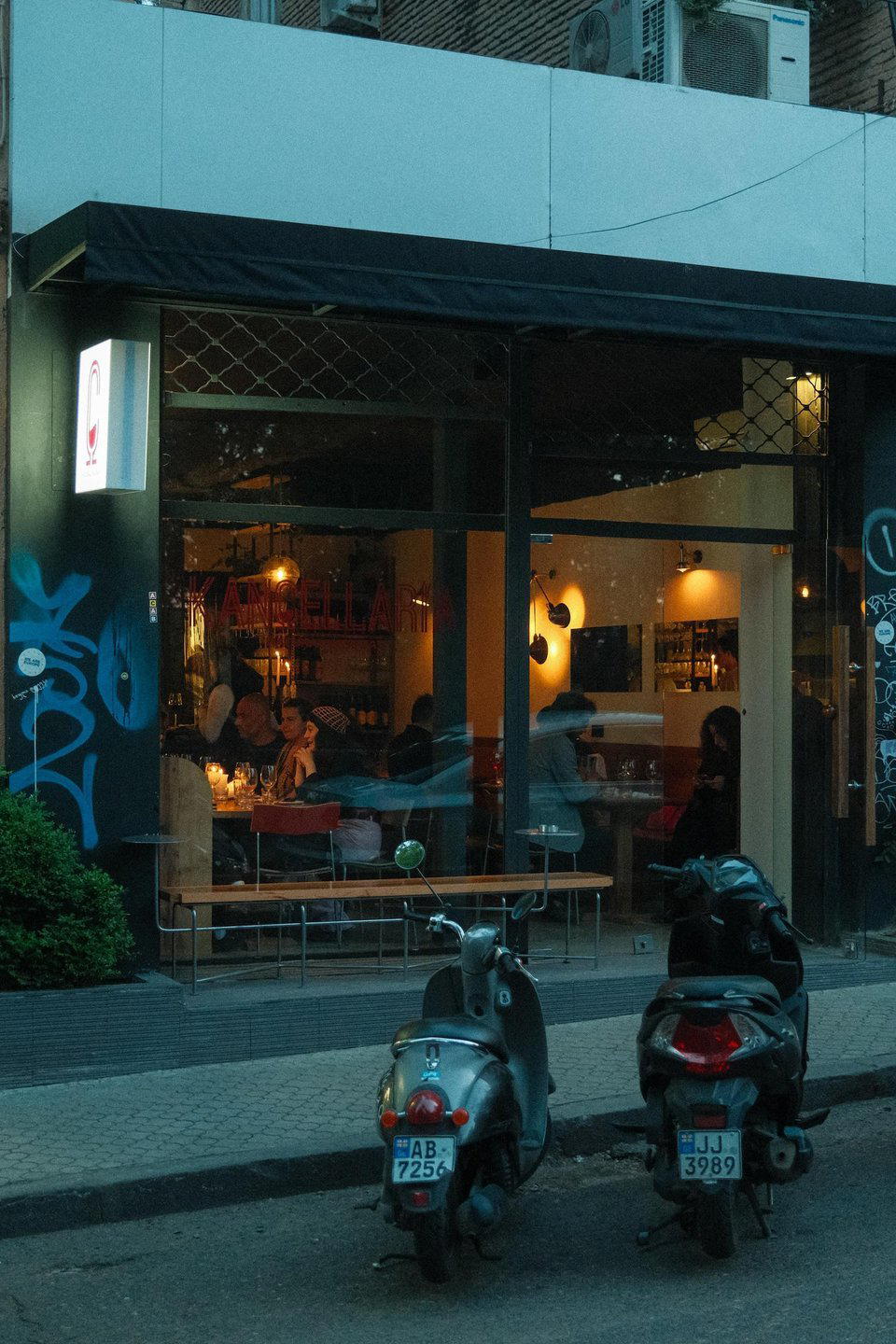
Restaurants in Tbilisi
Browse all →
Hotels in Tbilisi
Browse all →


At a Glance
- Cozy
- Trendy
- Intimate
- Date Night
- Casual Hangout
- Standalone
- Seated Bar
- Natural Wine
Current opening hours
- Monday
- 5 PM–12 AM
- Tuesday
- 5 PM–12 AM
- Wednesday
- 5 PM–12 AM
- Thursday
- 5 PM–12 AM
- Friday
- 5 PM–12 AM
- Saturday
- 5 PM–12 AM
- Sunday
- 5 PM–12 AM
Hours can change for holidays and private events. Last verified .
Unpretentious brick-vaulted cellar with a casual, cozy Brooklyn-urban vibe.
Know Before You Go
- Getting there
- ჭონქაძის 29/29 Chonkadze str, Tbilisi, Georgia