Google: 4.2 · 3,472 reviews
Cafe Stamba occupies a converted Soviet printing house on Merab Kostava Street, its raw industrial architecture now hosting a sprawling all-day venue that anchors Tbilisi's creative district. The space shifts between a calm daytime coffee culture and a more animated evening scene, making it one of the few addresses in the city where the hour you arrive genuinely changes the experience you get.
 Discover on Pearl
Pearl is the En Primeur Club membership app — saves, bookings, and concierge access live there. Same editors, same standards.
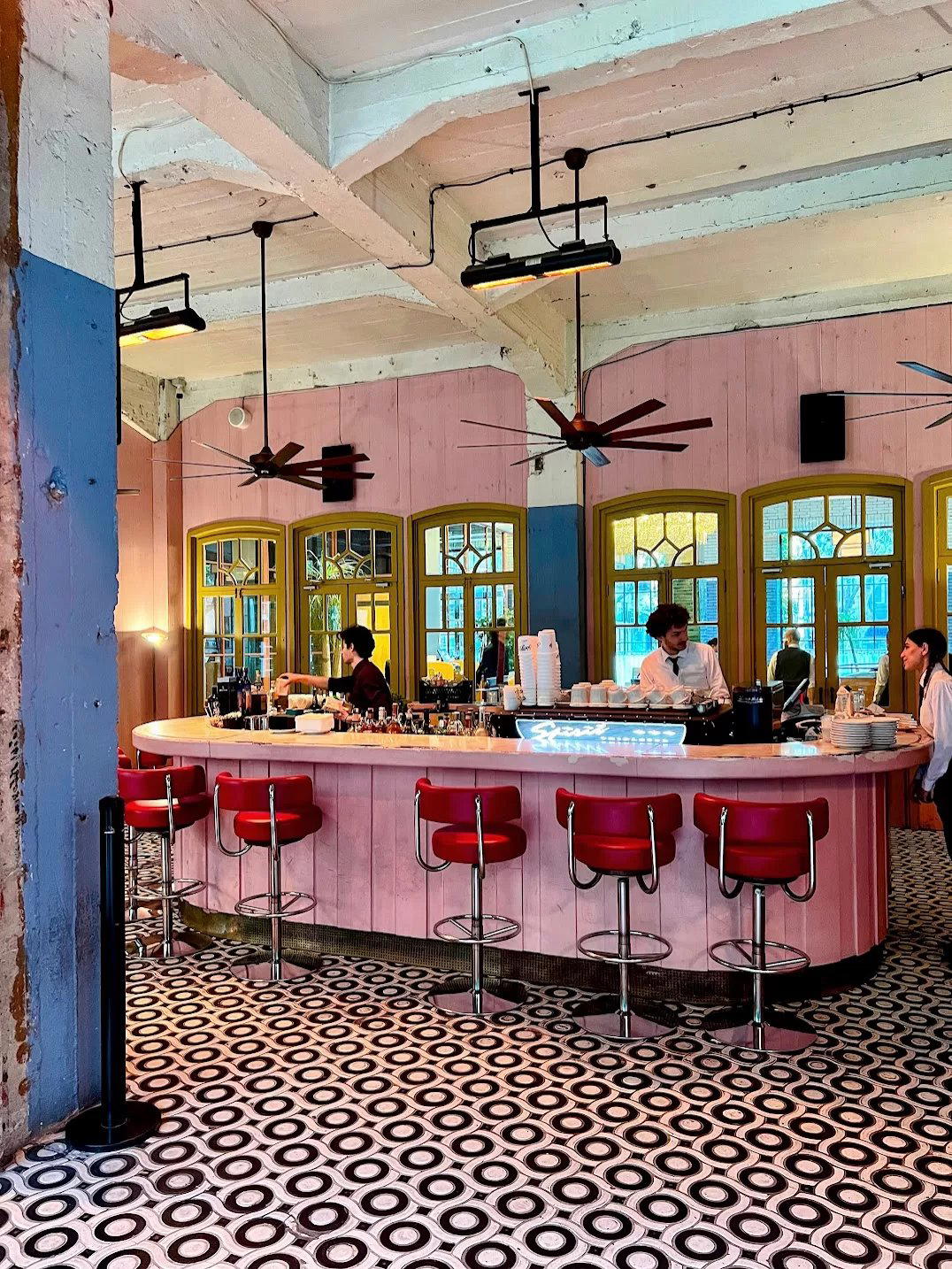
A Soviet Press Hall Repurposed for Tbilisi's New Creative Class
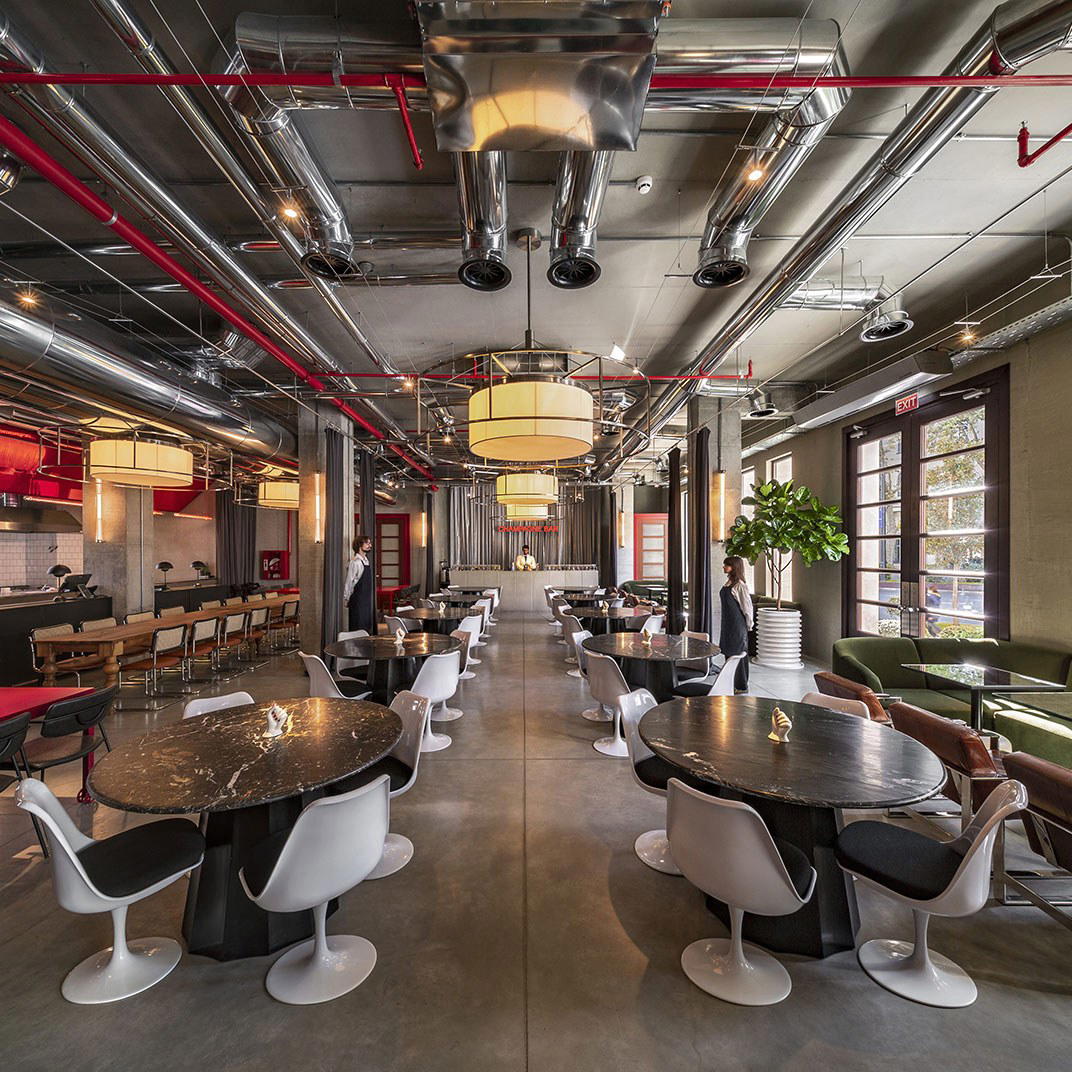
Tbilisi's dining scene has reorganised itself around a handful of converted industrial properties over the past decade, and Cafe Stamba at 14 Merab Kostava Street is among the most architecturally ambitious of them. The building was a Soviet-era printing house, and the conversion has retained the structural bones: high ceilings, exposed concrete, and a volumetric scale that no purpose-built restaurant could replicate. In a city where atmospheric spaces range from carved cave dwellings in the Old Town to Belle Époque townhouses in Vera, this mid-century industrial shell occupies its own register entirely.
That architectural context matters because it conditions every hour of the day differently. Light enters the upper floors in a way that transforms the space from a morning refuge into something more theatrical by evening. Stamba is not simply a restaurant with a nice interior; it is an address where the time of your visit is as meaningful as the food on the table.
How the Hours Shape the Experience
Tbilisi's all-day venues tend to split into two categories: those that do breakfast and lunch well and coast through dinner, and those built primarily around a dinner service that tolerates daytime visitors. Stamba sits in neither camp cleanly, which is part of what makes it worth attention.
Daytime here operates at a different register than the evening. The crowd skews toward architects, writers, and the international creative contingent that has increasingly made Vera and the surrounding streets its base. Coffee service anchors the morning and midday hours, and the ambient volume stays low enough for sustained conversation. It is one of the few large-format venues in central Tbilisi where a working lunch does not feel like a compromise. The pace is unhurried in a way that larger hospitality groups elsewhere in the city struggle to maintain.
By evening, the same physical space reconfigures socially. The bar programme becomes the central axis, the room fills, and the tone shifts from editorial calm to something livelier. Visitors who arrive expecting the daytime mood after 8pm will find a different place, and that is not a criticism. The dual identity is deliberate, and it reflects a broader trend in how Tbilisi's premium hospitality tier has matured: single-purpose venues are giving way to addresses that earn their keep across multiple dayparts.
For the most considered experience, the late-afternoon window between the lunch crowd thinning and the evening energy building deserves specific mention. The space is at its most readable then, and the bar team is less stretched.
Where Stamba Sits in Tbilisi's Dining Picture
Tbilisi's restaurant scene has stratified meaningfully in recent years. At one end, a cluster of heritage-focused addresses works closely with Georgian culinary tradition: Barbarestan draws from a 19th-century cookbook, while Azarphesha and Alubali each approach the local canon from distinct regional and conceptual angles. At the other end, venues like ATI and Akura San bring international formats into conversation with local hospitality culture.
Stamba occupies a different position within that picture. It is less a statement about Georgian cuisine specifically and more a statement about Tbilisi as a contemporary city with an emerging design culture and an appetite for international reference points. Its peer set is closer to the design-led all-day venues you would find in a European creative capital than to the tradition-anchored Georgian table. That is neither a virtue nor a flaw; it is a positioning that tells you whether Stamba belongs in your itinerary and at what point in a longer stay.
For first-time visitors who arrive with three or four days in the city, Stamba works leading as a daytime anchor rather than a primary dinner reservation. The heritage-focused addresses listed above will give you more to say about Georgian food specifically. But Stamba tells you something equally important about where Tbilisi is going, and that is a valid reason to spend time there.
Georgia's food culture extends well beyond the capital. Pheasant's Tears Winery in Signagi remains the reference point for amber wine alongside serious Georgian cooking in the Kakheti region, and Doli in Telavi and Schuchman Wines Chateau extend the wine-country dining argument further. On the coast, Sazandari in Batumi and Sisters in Kutaisi reflect how Georgia's secondary cities have developed their own dining identities. Closer to the capital's orbit, Gazaphkhuli in Chiatura and Chiko in Aspindza represent the more exploratory end of Georgian hospitality travel, while Crowne Plaza Borjomi offers a resort-anchored base for spa-country visits. Our full Tbilisi restaurants guide maps the city across cuisine type and neighbourhood.
The Kostava Street address places Stamba in easy walking distance of Rustaveli Avenue and the Vera neighbourhood, both of which carry a high density of galleries, independent bookshops, and design-oriented retail. The physical location reinforces the cultural positioning of the venue, and arriving on foot from Rustaveli gives you a useful read on the creative district before you sit down.
Planning Your Visit
Because specific pricing, hours, and booking policies are not published through a central reservations channel, contacting the venue directly before a visit is advisable, particularly for evening tables during peak travel months. Tbilisi sees concentrated visitor traffic between May and September, and the better-known addresses in the Vera and Rustaveli corridor fill earlier in the day during those months than casual visitors typically anticipate. Arriving for a late lunch on a weekday offers the most control over the experience and the most settled version of the space.
For context on how Stamba's positioning compares to internationally recognised all-day venues with a similar design-forward profile, addresses like Lazy Bear in San Francisco or the more formally structured Atomix in New York City represent different points on the spectrum of venue-as-statement-object. Stamba operates with considerably less ceremony than either, which is appropriate for a city where hospitality culture has historically been grounded in genuine welcome rather than orchestrated occasion. The comparison to venues like Le Bernardin in New York City or Emeril's in New Orleans is useful mainly as a reminder of how differently Tbilisi's premium tier prices itself: the cost-per-experience ratio in Georgian hospitality remains one of the strongest arguments for the destination among well-travelled visitors.
Cuisine-First Comparison
A fast peer set for context, pulled from similar venues in our database.
| Venue | Cuisine | Awards | Notes |
|---|---|---|---|
| Cafe Stamba | This venue | ||
| Café Littera | Georgian Fusion | Georgian Fusion | |
| Alubali | |||
| Azarphesha | |||
| Barbarestan | |||
| Craft Wine Restaurant |
Continue exploring
More in Tbilisi
Restaurants in Tbilisi
Browse all →
Bars in Tbilisi
Browse all →
Hotels in Tbilisi
Browse all →
Wineries in Tbilisi
Browse all →
At a Glance
- Modern
- Industrial
- Whimsical
- Trendy
- Elegant
- Brunch
- Casual Hangout
- Date Night
- Group Dining
- Design Destination
- Hotel Restaurant
- Open Kitchen
- Terrace
- Historic Building
- Craft Cocktails
- Natural Wine
- Extensive Wine List
- Farm To Table
- Local Sourcing
- Organic
Bright, open industrial-chic space with 60s retro flair blended with contemporary design, featuring iridescent tilework, sage green and baby pink color palette, grandiose chandelier, and bookshelves creating a playful yet sophisticated atmosphere.