
A brick-lined cellar bar on Galaktion Tabidze Street, Vino Underground operates as a collective owned by Georgian artisan winemakers — making it less a wine bar and more a direct channel to the country's natural wine movement. Alongside peers like 8000 Vintages and Poliphonia, it sits at the centre of Tbilisi's low-intervention wine scene, where the pour reflects the producer rather than a buyer's list.
Pearl is the En Primeur Club membership app — saves, bookings, and concierge access live there. Same editors, same standards.
- Address
- MRR2+9GQ, 15 Galaktion Tabidze St, Tbilisi, Georgia
- Phone
- +995 599 08 09 84
- Website
- facebook.com
- Directions
- Get directions
 Saves & bookings on Pearl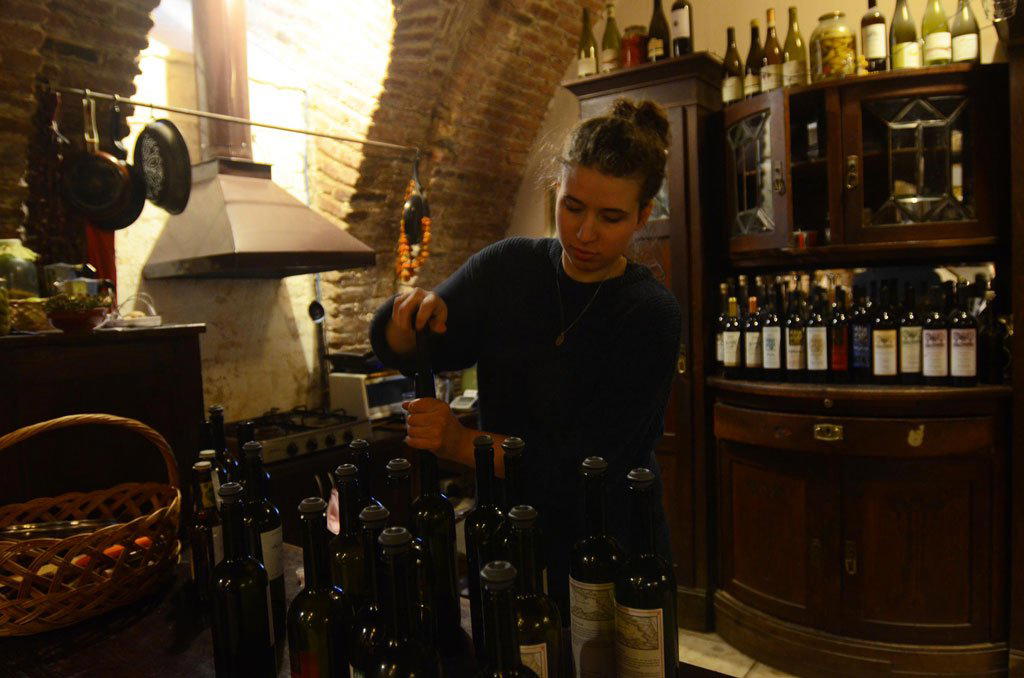
Where the Winemaker Pours the Wine
Descend below street level on Galaktion Tabidze Street and the city's noise drops away. The walls are brick, the ceiling is low, and the light is warm without being theatrical. Vino Underground occupies the kind of space that Tbilisi does well: subterranean, unhurried, built for conversation over a second glass. What sets it apart from the broader cluster of wine bars in this neighbourhood is not the room itself but who owns it. The bar is run as a collective by a group of Georgia's artisan winemakers, which means the people who made what is in your glass are, in many cases, the people who poured it or decided it should be on the list.
That structure is worth pausing on. In most wine bar formats globally, the sommelier or buyer acts as interpreter between producer and drinker. Here the chain is compressed. The collective ownership model means the bar functions as both retail expression and ideological statement: natural winemaking in Georgia is not a trend imported from Paris or Copenhagen, it is a continuation of a tradition that predates most of the world's wine regions by millennia. The qvevri — the clay vessel used in Georgian skin-contact fermentation — has been in continuous use for over eight thousand years. Vino Underground sits at the contemporary end of that lineage.
Tbilisi's Natural Wine Circuit and Where This Bar Fits
Tbilisi now has a recognisable wine bar circuit, concentrated in the older neighbourhoods around the old town and the Rustaveli corridor. 8000 Vintages leans into the historical framing, with a name that references the age of Georgian viticulture directly. Poliphonia draws from a more curated, design-conscious register. Kancellaria and Saamuri each occupy their own corner of the scene.
That positioning aligns it less with wine bar hospitality as a concept and more with the kind of producer-driven formats that have emerged in wine regions like the Jura or the Rhône, where natural wine collectives operate tasting rooms that double as cultural anchors. The difference in Tbilisi is that the city itself is not a wine region in the agricultural sense, the vineyards are in Kakheti, Kartli, and Racha, hours to the east and west. The bar therefore functions as an urban embassy for those regions, translating field-level decisions into something accessible to the traveller who has landed in the capital without time to drive into the countryside.
The Person Behind the Pour
The editorial angle that EA-BR-04 asks for, the craft behind the bar, operates differently at Vino Underground than at a conventional cocktail counter. There is no head bartender with a published philosophy or a competition résumé. The authority behind what is served comes from the collective: winemakers whose credentials exist in the vineyard and the cellar rather than behind a bar. That is a deliberate inversion of the usual hospitality hierarchy.
What it produces in practice is a floor staff that is, by structural necessity, more deeply embedded in the production side than a standard wine bar employee. When a winemaker-owner is present, the conversation about a given bottle can move from soil type to fermentation vessel to the specific harvest conditions of a recent vintage. For the drinker, this creates an information density that is hard to replicate in bars where staff knowledge depends on tasting notes supplied by a distributor. For context: Georgia produces over five hundred registered grape varieties, the majority of them grown nowhere else. Navigating that range without a knowledgeable guide, or a producer in the room, is genuinely difficult.
Internationally, bars built around deep producer relationships and low-intervention wine programs have grown into a recognisable format: Kumiko in Chicago approaches hospitality through rigorous ingredient sourcing; Jewel of the South in New Orleans anchors its program in verifiable craft lineage. In both cases, the person behind the bar carries institutional knowledge that shapes every interaction. Vino Underground achieves a version of that through collective ownership rather than individual expertise, which is a structurally Georgian solution to the same problem.
What to Expect, and When to Go
The bar draws a mixed crowd: international wine travellers who have made it a specific destination, local producers passing through Tbilisi, and younger Georgians engaging with their own winemaking heritage in a contemporary format. The space is small, which means it fills early on weekend evenings. Arriving before 8pm on a Friday or Saturday is the practical move if you want a seat rather than a standing corner.
Tbilisi's wine bar culture tends to run later than Western European equivalents, and Vino Underground follows that rhythm. Midweek evenings are quieter and often better for extended conversation with whoever is pouring. The address, 15 Galaktion Tabidze Street, places it within walking distance of the old town's main cluster of restaurants and bars, making it a natural stop on a longer evening rather than a standalone destination, though it rewards being treated as one.
For visitors planning a wider Tbilisi evening, the bar sits comfortably in a circuit that includes Poliphonia and 8000 Vintages, each offering a different register of the same natural wine conversation. Those making longer trips into Georgia should note that the bar's collective network extends into the wine regions themselves; asking about producer visits is not an unusual request at the counter. For context on how Tbilisi's food and drink scene fits together, see our full Tbilisi restaurants guide.
Internationally, the producer-ownership model at Vino Underground has loose parallels with bars that stake their identity on verifiable sourcing relationships rather than volume or range. Bar Leather Apron in Honolulu, Julep in Houston, Superbueno in New York City, and The Parlour in Frankfurt each represent formats where the craft behind the bar is legible in the program rather than just the décor. Vino Underground operates from a different tradition, but the same underlying principle: what is in the glass should be traceable to a specific decision made by a specific person with a specific argument for making it that way. Dilber Gentlemen's Club in Batumi occupies a different register entirely, but rounds out the Georgian bar picture for travellers moving between cities.
How Vino Underground Tbilisi compares with similar nearby venues.
| Venue | Awards |
|---|---|
| Vino Underground | Star Wine List (2026) |
Recognition history
Dated appearances from independent guides and award organizations, with the underlying list record or original source where available.
Star Wine List
Star Wine List
Continue exploring
More in Tbilisi
Bars in Tbilisi
Browse all →
Restaurants in Tbilisi
Browse all →
Hotels in Tbilisi
Browse all →


At a Glance
- Cozy
- Intimate
- Rustic
- Date Night
- Casual Hangout
- Historic Building
- Seated Bar
- Natural Wine
Current opening hours
- Monday
- 8–11 PM
- Tuesday
- 4–11 PM
- Wednesday
- 4–11 PM
- Thursday
- 4–11 PM
- Friday
- 4–11 PM
- Saturday
- 4–11 PM
- Sunday
- 4–11 PM
Hours can change for holidays and private events. Last verified .
Cozy brick-lined underground cellar with vaulted ceilings, varying from intimate and relaxed to lively on busy nights.
Know Before You Go
- Getting there
- MRR2+9GQ, 15 Galaktion Tabidze St, Tbilisi, Georgia