チョコ occupies a quietly considered address in Bunkyo's Suido district, a neighbourhood more associated with publishing houses and temple grounds than destination dining. The restaurant's position in Tokyo's broader conversation around locally sourced ingredients and imported technique places it in a category that rewards advance planning and curiosity about where Japanese produce meets global culinary method.
Pearl is the En Primeur Club membership app — saves, bookings, and concierge access live there. Same editors, same standards.
- Address
- 2 Chome-19-14 Suido, Bunkyo City, Tokyo 112-0005, Japan
- Phone
- +81368016921
- Website
- txoko.jp
- Directions
- Get directions
 Saves & bookings on Pearl
Suido, Bunkyo: Dining Away from the Spotlight
Tokyo's most-discussed restaurant addresses cluster predictably around Ginza, Minami-Aoyama, and Nishi-Azabu. Bunkyo City's Suido district sits at a remove from that circuit: a neighbourhood of quiet residential blocks, the Kanda River running nearby, and a postcode that rarely appears in foreign dining guides. That distance from the capital's established fine-dining corridors is precisely what makes restaurants in this pocket worth attention.
チョコ is located at 2 Chome-19-14 Suido, Bunkyo City, Tokyo 112-0005, Japan. It is a modern Italian fine dining restaurant where a smart casual dress code and essential reservations set the tone. That dynamic shapes both the atmosphere and the implicit contract between kitchen and guest.
The Intersection of Indigenous Product and Imported Method
Across Japan's serious dining tier, especially generative tension among the past two decades has not been between tradition and modernity, but between what the Japanese archipelago produces and what foreign training systems teach. At Harutaka, the discipline is applied to Edomae sushi lineage. At L'Effervescence, French technique becomes the frame through which Japanese seasonal produce is examined. At RyuGin, kaiseki's seasonal logic absorbs elements of contemporary kitchen science. Each represents a different resolution of the same underlying question: what happens when rigorous non-Japanese methodology meets ingredients that are already among the more carefully cultivated in the world?
チョコ's name itself, the Japanese rendering of the word for chocolate, signals a kitchen engaged with global flavour reference points rather than one narrowly defined by a single national tradition. That positioning places it within a category of Tokyo restaurants that treat local ingredients as raw material for technically informed interpretation rather than as objects to be served with minimal intervention. This is a different register from the kaiseki houses that structure dishes around seasonal produce as a philosophical system, and it differs equally from the European import model, where French or Italian frameworks are transplanted wholesale. The space between those two poles is where some of the more interesting cooking in contemporary Tokyo happens.
HAJIME in Osaka, where French culinary rigour meets Kansai produce, and at Gion Sasaki in Kyoto, where kaiseki's seasonal grammar is rewritten with considerable technical freedom. Further afield, akordu in Nara imports Basque framework into the Yamato basin, and Goh in Fukuoka draws on Kyushu's seafood tradition through a contemporary creative lens. The pattern is consistent: Japan's regional produce richness keeps generating new resolutions of this particular creative problem.
Tokyo's Neighbourhood Restaurant Tier
These kitchens typically seat fewer than thirty covers, operate without extensive PR apparatus, and sustain themselves through proximity to residential communities and the loyalty of local repeat visitors. They price below the ¥¥¥¥ bracket occupied by rooms like Sézanne or Crony, and they offer something those rooms cannot: a meal that feels integrated into the neighbourhood's daily life rather than extracted from it for visiting purposes.
Bunkyo's dining scene reflects this structural reality. The ward contains some of the city's oldest residential fabric, and restaurants here have historically competed on consistency and value rather than on trophy credentials.
this address in Hokkaido's capital, and in more remote locations like Nanao on the Noto Peninsula or Takashima in Shiga Prefecture, demonstrate how far this model extends beyond the major cities.
Placing チョコ in Its comparable set
チョコ is a modern Italian fine dining restaurant in Suido, Bunkyo City.
If that reading is accurate, the relevant comparable set is not Harutaka's omakase world or RyuGin's kaiseki register, but rather the smaller category of Tokyo rooms that position Japanese produce within European-derived frameworks, a category that internationally includes rooms like Le Bernardin in New York, where a single technique defines the entire creative output, or Atomix, where Korean ingredients are processed through global fine-dining grammar. The methodology differs; the underlying project is comparable. Closer to home, Bistro Ange in Toyohashi and Birdland in Sakai represent further iterations of this Japan-meets-Western-technique model operating outside the major city premium zones.
Planning Your Visit
Suido is accessible from Edogawabashi Station on the Tokyo Metro Yurakucho Line, placing it within direct reach of central Tokyo. The neighbourhood has limited late-night dining infrastructure, so チョコ fits most naturally into a dinner itinerary that does not require post-meal restaurant-hopping. For those building a broader Tokyo itinerary, the EP Club's full Tokyo restaurants guide maps the city's dining scene by neighbourhood and price tier. this Nishikawa Machi address in Yamagata Prefecture, for a sense of how serious neighbourhood-tier cooking operates in Japan's rural contexts.
| Venue | District | Price Tier | Cuisine Category |
|---|---|---|---|
| チョコ | Suido, Bunkyo | Not confirmed | Not confirmed |
| Harutaka | Ginza | ¥¥¥¥ | Sushi |
| L'Effervescence | Nishi-Azabu | ¥¥¥¥ | French |
| Crony | Tokyo | ¥¥¥¥ | Innovative, French |
| Sézanne | Tokyo | ¥¥¥¥ | French |
Cuisine and Awards Snapshot
Comparable venues nearby, for context on price, style, and recognition.
| Venue | Cuisine | Price | Notes |
|---|---|---|---|
| チョコThis venue — the venue you are viewing | Modern Italian Fine Dining | $$$$ | Not listed |
| 神楽坂 ヴェーリ | Modern Italian Fine Dining | $$$$ | Shinjuku |
| Etruschi | Innovative Italian | $$$$ | Minato |
| Fileja | Pasta Omakase | $$$$ | Chiyoda |
| Il Teatro | Authentic Italian Fine Dining | $$$$ | Bunkyō |
| タヴェルナ・グスタヴィーノ | Traditional Italian Trattoria | $$$ | Chūō |









At a Glance
- Trendy
- Modern
- Intimate
- Sophisticated
- Date Night
- Special Occasion
- Sake Program
Current opening hours
- Monday
- 5:30–9 PM
- Tuesday
- 5:30–9 PM
- Wednesday
- 5:30–9 PM
- Thursday
- 5:30–9 PM
- Friday
- 5:30–9 PM
- Saturday
- 5:30–9 PM
- Sunday
- 5:30–9 PM
Hours can change for holidays and private events. Last verified .
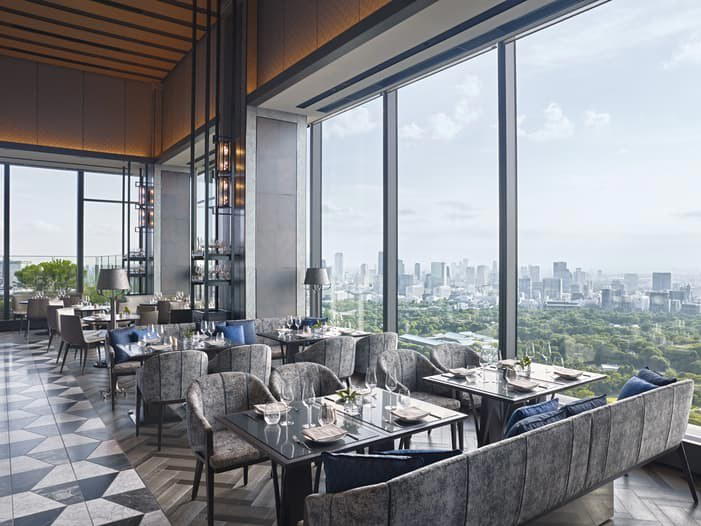
Intimate setting with reserved seats displaying ingredient names, creating an elegant and focused dining atmosphere.