
Tabelog 100 #13
Our verdict
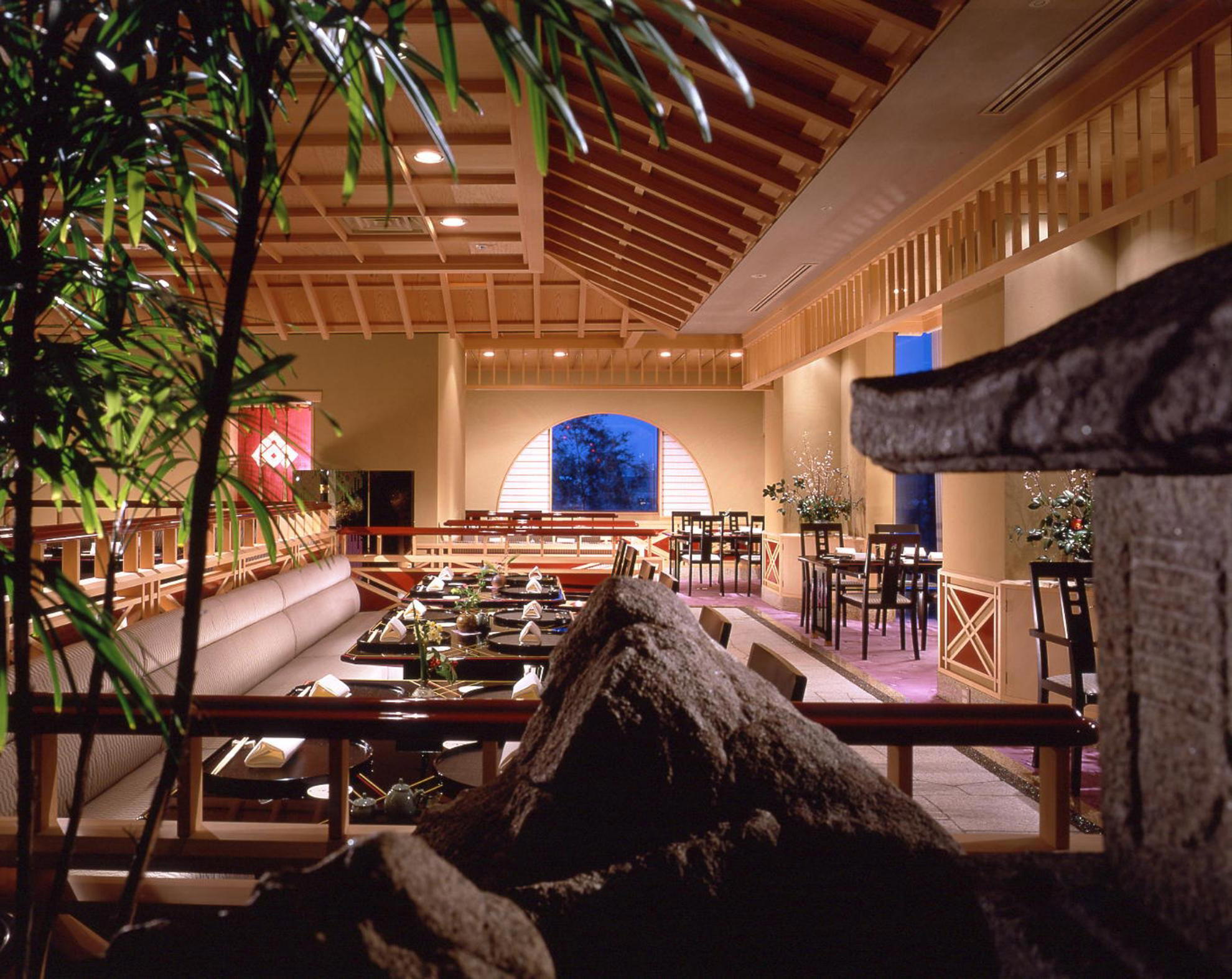
Il Teatro occupies the third floor of the Hotel Chinzanso Tokyo in Bunkyo, a district where Italian fine dining has found a particular foothold among Tokyo's formal dining circuit. The room sits above one of the city's most preserved garden estates, lending the address a weight that few urban restaurant settings can match. Its position within a landmark hotel places it in conversation with Tokyo's top-tier Western tasting-menu formats.

Pearl is the En Primeur Club membership app, where members save venues, book tables and use the concierge.
The menu
What to order
- Octopus Genovese
- Pappardella Ripiena
- Beet and Scampi Risotto
- Rockfish Acqua Pazza
A Room Above the Garden
Bunkyo's Chinzanso estate has functioned as one of Tokyo's most formal hospitality addresses for well over a century, and the third-floor dining room at Il Teatro inherits that register directly. The approach, through a garden property that predates most of the city's contemporary dining scene, establishes a pace before a single course arrives. In Tokyo's fine dining circuit, where atmosphere is often engineered through minimalism or compression, a setting shaped by genuine historical depth operates differently. This is not a room that announces itself through design novelty. It announces itself through accumulated context.
That context matters when positioning Il Teatro within the broader map of Tokyo's formal Western dining. The city's top-tier Italian and French tasting-menu formats now occupy a competitive tier defined less by cuisine category and more by price point, service cadence, and the weight of the surrounding institution. On that axis, a room embedded in a landmark hotel estate reads as a distinct category from the chef-driven independent counters that have come to define much of the city's fine dining conversation over the past decade. Both are serious. They are serious in different ways.
How the Meal Is Built to Move
The editorial angle that matters most at a formal hotel dining room is not the menu itself, menus at this tier rotate with the season, but the structural logic of how a multi-course progression is designed to unfold. In Italian fine dining at this level, the architecture of a meal tends to follow a more deliberate arc than its French counterpart: antipasti establish restraint, primi introduce complexity through pasta or risotto, secondi carry the protein weight, and the dolci sequence resolves without the extended cheese interlude common in French formats. The pacing between courses, and the degree to which each stage sets up the next, is where execution separates a formally competent hotel restaurant from one operating with genuine tonal control.
At properties within the Hotel Chinzanso Tokyo tier, that structural control is typically expressed through brigade-level service choreography: courses cleared and reset with precision, wine poured to accompany rather than interrupt, and the room's noise level managed so that conversation remains the primary event. These are not details that appear on a menu, but they constitute the majority of what a guest remembers. Tokyo's most referenced tasting-format venues, including RyuGin (Kaiseki) and L'Effervescence, have built lasting reputations on exactly this kind of invisible architecture.
Where Il Teatro Sits in the Tokyo Fine Dining Conversation
Tokyo's formal dining tier now divides along a few clear fault lines. At the top end of the sushi format, counters like Harutaka operate on intimacy and scarcity: eight to ten seats, omakase-only, bookings running months ahead. French tasting menus have their own internal hierarchy, from the technique-forward programs at Sézanne to the more experimental propositions at Crony. Italian fine dining in Tokyo occupies a smaller slice of that upper tier, the cuisine category has fewer Michelin-starred entries than either French or Japanese formats, but it attracts a specific dining profile: guests for whom the familiarity of Italian structure provides a framework that feels less demanding than kaiseki's cultural specificity or the compressed tension of a leading omakase counter.
Hotel-anchored formats like Il Teatro sit in a sub-tier within that Italian category. They carry the credibility of an established institution, consistent brigade training, and a wine program typically resourced at a level independent restaurants rarely match. The trade-off, in some assessments, is the degree to which hotel dining rooms prioritize consistency over the kind of decisive culinary point of view that defines the most discussed independent venues. Whether that trade-off reads as a drawback depends almost entirely on what the guest is looking for. For a business dinner requiring a reliable formal environment, the institutional register is an asset. For a guest seeking the forward edge of what Tokyo's dining scene is producing, the independent chef-driven formats tend to carry more current momentum. Both assessments are accurate simultaneously.
For comparative context beyond Tokyo, the hotel fine dining format at this tier has analogues across Japan's major dining cities. HAJIME in Osaka and Gion Sasaki in Kyoto represent the upper tier of their respective cities, as do akordu in Nara and Goh in Fukuoka. Outside Japan, the hotel fine dining register at this level finds international parallels in programs like Le Bernardin in New York City and Atomix, both of which demonstrate how institution-backed formats can sustain creative relevance alongside consistent execution.
Planning a Visit
Il Teatro is located on the third floor of the Hotel Chinzanso Tokyo, at 2 Chome-10-8 Sekiguchi in Bunkyo City, a quieter district than Shinjuku or Roppongi, but accessible from central Tokyo by taxi or the Edogawabashi subway station on the Yurakucho Line. The hotel's garden estate is the relevant landmark for navigation. Reservations at hotel dining rooms at this tier in Tokyo are typically secured through the hotel's concierge or direct reservation line, and advance booking is advisable for weekend evenings. Dress code expectations at formal hotel dining rooms in this bracket lean toward smart formal, jackets are standard at comparable addresses. Contact and booking details are best confirmed directly through the Hotel Chinzanso Tokyo. For a broader orientation to Tokyo's dining tier, see our full Tokyo restaurants guide.
For guests with specific dietary requirements, communication ahead of arrival is the standard approach at this level of hotel dining: most formal hotel kitchens at the Chinzanso tier maintain the flexibility to accommodate common allergen restrictions when notified in advance, but specific confirmation should come from the venue directly. The same applies to wine pairing preferences and any service adjustments.
Frequently asked questions
Where is Il Teatro located?
Il Teatro is located at ããã«æ¤¿å±±èæ±äº¬, 3F, 2 Chome-10-8 Sekiguchi, Bunkyo City, Tokyo 112-8680, Japan, Tokyo.
Is Il Teatro at Hotel Chinzanso suitable for a business dinner in Tokyo?
The third-floor dining room within the Chinzanso estate in Bunkyo City has the physical and operational character that suits formal business entertaining: a quieter district than Shinjuku or Ginza, a century-old estate property as backdrop, and a structured course format that controls pace and removes menu negotiation from the table. For Tokyo clients accustomed to Ginza restaurant meetings, the garden estate setting offers a deliberate change of register.
What should I order at Il Teatro?
At this tier of Tokyo hotel dining, the menu rotates seasonally, so the specific dishes in the room on any given evening will differ from what a previous guest describes. The format at Hotel Chinzanso's third-floor dining room is structured around multi-course progression rather than à la carte selection, which means the kitchen largely dictates the direction. Check directly with the hotel for the current menu cycle before visiting.
Can I walk in to Il Teatro?
Walk-ins at a formal dining room within a property of Hotel Chinzanso Tokyo's standing are not a reliable strategy. Formal hotel dining rooms in Bunkyo operating at this tier typically require advance reservations, and the dining room's position within a destination estate hotel means tables are held for guests with prior arrangements. check the venue's official channels to confirm availability and booking lead times.
What's the standout thing about Il Teatro?
The physical setting carries real weight here. Hotel Chinzanso Tokyo sits on an estate in Bunkyo City with over a century of formal hospitality history, and the third-floor dining room looks out over one of Tokyo's more considered garden environments. That context separates Il Teatro from central-district hotel restaurants in Shinjuku or Roppongi, where the setting is vertical rather than pastoral.
Do they accommodate allergies at Il Teatro?
Formal multi-course dining rooms operating within major Tokyo hotel properties routinely handle dietary requirements when notified in advance. At Hotel Chinzanso, the appropriate channel is to communicate restrictions at the time of reservation rather than on arrival, since course-based kitchens build the meal structure ahead of service. Specific allergen protocols should be confirmed directly with the hotel.
A Credentials Check
Comparable venues nearby, for context on price, style, and recognition.
| Venue | Cuisine | Price | Awards | Notes |
|---|---|---|---|---|
| Il TeatroThis venue (the venue you are viewing) | Authentic Italian Fine Dining | $150–200 | Tabelog 100 #13 | Not listed |
| Etruschi | Innovative Italian | $100–150 | Gambero Rosso 2 Forchette | Minato |
| アルマーニ / リストランテ | Modern Italian with Japanese Influences | $200–300 | Michelin Plate · La Liste Top Restaurants | Chūō |
| リストランテ ヤギ | Modern Italian Fine Dining | Not listed | Not listed | Shibuya |
| リストランテ イ・ルンガ | Northern Italian Fine Dining | $150–200 | Not listed | Setagaya |
| Aman | Modern Italian with Japanese Influences | $150–200 | Michelin Plate | Chiyoda |
Recognition history
Dated appearances from independent guides and award organizations, with the underlying list record or original source where available.
Tabelog 100 #13 · No. 13
Tabelog · Tabelog 100 - Italian - TOKYO - 2025
Full recognition history (2 entries)
Tabelog 100 #8 · No. 8
Tabelog · Tabelog 100 - Cafe - EAST - 2025
Continue exploring
More in Tokyo
Restaurants in Tokyo
All restaurants in Tokyo →


Bars in Tokyo
All bars in Tokyo →





Details
- Elegant
- Romantic
- Sophisticated
- Classic
- Date Night
- Business Dinner
- Celebration
- Special Occasion
- Private Event
- Private Dining
- Garden
- Hotel Restaurant
- Panoramic View
- Historic Building
- Extensive Wine List
- Sommelier Led
- Local Sourcing
- Garden
- Tasting Menu
- A La Carte
- Prix Fixe
- Wine
Current opening hours
- Monday
- 6:30–10:30 AM, 12–2:30 PM, 5:30–10 PM
- Tuesday
- 6:30–10:30 AM, 12–2:30 PM, 5:30–10 PM
- Wednesday
- 6:30–10:30 AM, 12–2:30 PM, 5:30–10 PM
- Thursday
- 6:30–10:30 AM, 12–2:30 PM, 5:30–10 PM
- Friday
- 6:30–10:30 AM, 12–2:30 PM, 5:30–10 PM
- Saturday
- 6:30–10:30 AM, 12–2:30 PM, 5:30–10 PM
- Sunday
- 6:30–10:30 AM, 12–2:30 PM, 5:30–10 PM
Hours can change for holidays and private events. Hours as of .
Sophisticated and refined with sparkling Venetian glass chandeliers, soft lighting, and panoramic views of a lush forested garden creating an atmosphere of classic Italian elegance.