Tucked into the basement of a Ginza side-street building, タヴェルナ・グスタヴィーノ occupies a stretch of central Tokyo where Italian cooking has quietly held ground alongside the district's French and kaiseki flagships. The address places it within walking distance of Ginza's densest concentration of serious dining rooms, making it a useful anchor for visitors building a multi-night itinerary around the neighbourhood.
Pearl is the En Primeur Club membership app — saves, bookings, and concierge access live there. Same editors, same standards.
- Address
- Japan, 〒104-0061 Tokyo, Chuo City, Ginza, 1 Chome−5−7 ANNEX 2 FUKUJIN BLDG. B1F
- Phone
- +81362287608
- Website
- gustavino.jp
- Directions
- Get directions
 Saves & bookings on Pearl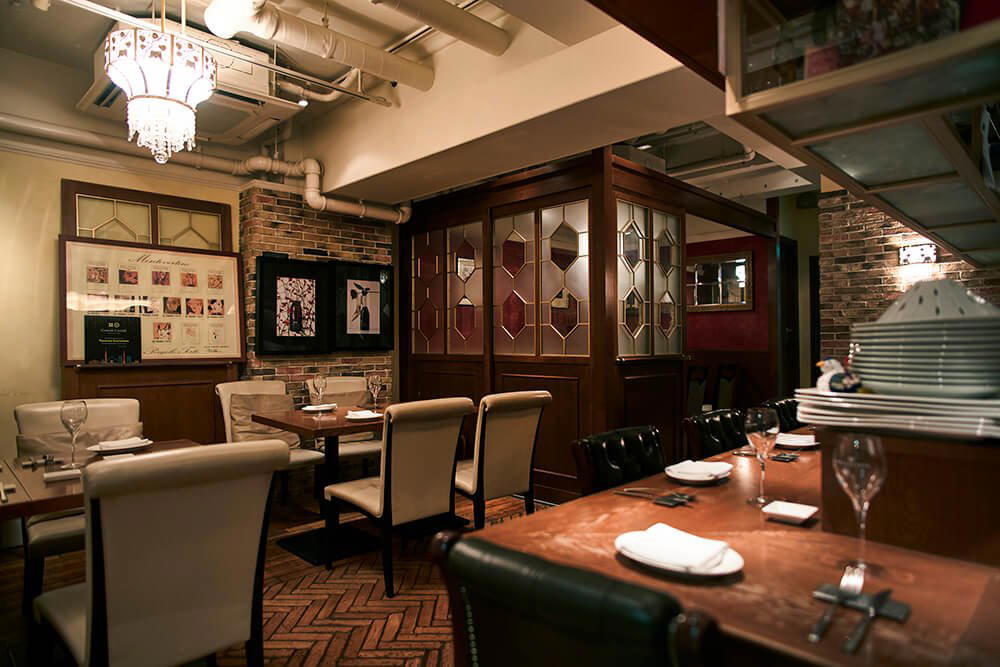
Ginza's Basement Tier: Where Italian Holds Its Own
Ginza has spent the better part of three decades sorting itself into recognisable dining tiers. The upper floors of Chuo City's premium blocks belong to the kaiseki houses and the French rooms that now trade under Michelin recognition: RyuGin, Sézanne, and their peers set the ceiling. Below that, literally and figuratively, a smaller category of European restaurants has persisted through Tokyo's dining cycles without needing the same level of institutional recognition to hold a loyal clientele. タヴェルナ・グスタヴィーノ occupies that register: a basement-floor Italian address on Ginza 1-chome, far enough from the district's main boulevard to avoid the tourist-adjacent foot traffic that now defines Ginza's shopfront strip, close enough to benefit from the area's density of business diners and after-work regulars.
The address itself is the first piece of context. 1 Chome-5-7 ANNEX 2 FUKUJIN BLDG. B1F places the restaurant at the Kyobashi-adjacent fringe of Ginza, where the grid tightens and the buildings age slightly. This corner of Chuo City has historically housed the kind of Italian and French rooms that serve expense-account lunches and quieter dinners without the ceremony of a tasting menu counter. It is a different proposition from the destination-dining cluster closer to Ginza Station, and for many regulars, that is precisely the point.
The Italian Tradition in Tokyo's Premium Neighbourhoods
Italian cooking in Tokyo sits in an unusual position relative to the city's broader fine-dining ecosystem. French technique arrived in Japan through direct culinary exchange and has been absorbed into the kaiseki and innovation-led traditions visible at places like L'Effervescence and Crony. Italian, by contrast, has largely remained distinct: trattoria and taverna formats that draw on regional Italian conventions without heavy hybridisation. The taverna designation, as opposed to ristorante, signals something deliberately casual in register, a commitment to the convivial rather than the ceremonial, even when the ingredients and sourcing are taken seriously.
In Ginza specifically, that positioning creates an interesting competitive dynamic. The neighbourhood's premium sushi counters, including Harutaka, operate at price points (¥¥¥¥) that require advance planning and deliberate booking strategy. Italian rooms in the same postcode tend to occupy a more accessible bracket, which is both an advantage for spontaneous decisions and a challenge for building the kind of reputation that sustains a dining room over years. タヴェルナ・グスタヴィーノ has chosen to operate in this middle ground, with a name that leans into the Italian-language naming convention common among Tokyo's long-standing cucina italiana addresses.
What the Neighbourhood Means for the Experience
Arriving at a basement restaurant in Ginza carries a particular atmospheric logic. Street-level Ginza is defined by glass frontages, brand flagship stores, and the kind of visual noise that comes with one of Tokyo's most commercially saturated districts. Descending below that surface changes the register immediately. Basement dining rooms in this part of the city tend toward lower ceilings, warmer light, and a physical separation from the street that makes them feel more contained and intentional than their above-ground neighbours.
For a taverna format, this is genuinely complementary. The convivial Italian dining model works better in enclosed, acoustic spaces than in the open, airy rooms that Tokyo's newer restaurants favour. It also positions the restaurant as a neighbourhood venue in the older sense: a place where regulars return not for novelty but for consistency. This is a meaningful distinction in a city where new openings attract immediate attention and existing restaurants must hold their ground without the benefit of launch coverage.
Ginza's 1-chome address also puts the restaurant within a reasonable walk of Kyobashi Station (Tokyo Metro Ginza Line) and a short distance from Ginza Station itself, which is served by three metro lines. For visitors building multi-night itineraries, this corner of central Tokyo offers adjacency to a wider set of dining options without requiring significant transit between meals. Japan's broader dining geography rewards this kind of itinerary planning: HAJIME in Osaka, Gion Sasaki in Kyoto, and akordu in Nara all represent distinct regional traditions that pair well with a Tokyo base. Closer to home, Goh in Fukuoka is a useful anchor if the itinerary extends south.
Placing タヴェルナ・グスタヴィーノ Against Its comparable set
Comparison across the Ginza dining room category is complicated by the breadth of formats operating at different price points and for different purposes. The table below sketches the rough logistical positioning of this restaurant relative to comparison venues that share the central Tokyo geography, with this restaurant listed at ¥¥¥ and around $95 per person.
| Venue | Category | Price Tier | Format | Location |
|---|---|---|---|---|
| The restaurant | Traditional Italian Trattoria | ¥¥¥ | Basement dining room | Ginza 1-chome, B1F |
| Harutaka | Sushi | ¥¥¥¥ | Counter omakase | Ginza |
| L'Effervescence | French | ¥¥¥¥ | Tasting menu | Nishi-Azabu |
| RyuGin | Kaiseki | ¥¥¥¥ | Kaiseki counter | Roppongi |
| Crony | Innovative French | ¥¥¥¥ | Tasting menu | Minami-Aoyama |
The comparison underscores the restaurant's positioning at some distance from the city's most formal, reservation-intensive dining tier. For visitors whose Tokyo itinerary already includes one or two ¥¥¥¥ counters, a taverna-format Italian room offers a different kind of evening: less procedural, more oriented toward the table as a social unit rather than a dining experience as a curated sequence. See our full Tokyo restaurants guide for a broader view of how these tiers map across the city's neighbourhoods.
For context on how Japan's regional dining scene compares, the EP Club guide also covers venues across the country's less-documented prefectures: 一本木 茅乃川製 in Nanao, 夕佳亭山乃 in Sapporo, 湖隣庵 in Takashima, 庄羽屋 in Nishikawa Machi, Birdland in Sakai, and Bistro Ange in Toyohashi. For international reference points in the Italian-adjacent European fine-dining category, Le Bernardin in New York City and Atomix in New York City represent the upper tier of comparable urban dining room formats.
In Context: Similar Options
Comparable venues nearby, for context on price, style, and recognition.
| Venue | Cuisine | Price | Notes |
|---|---|---|---|
| タヴェルナ・グスタヴィーノThis venue — the venue you are viewing | Traditional Italian Trattoria | $$$ | Not listed |
| Daikanyama ASO Celeste Nihonbashi ten | Modern Italian fine dining | $$$ | Chūō |
| TORNAVENTO | Piedmontese Italian with wine-focused chef’s courses | $$$ | Minato |
| Angelo | Casual Italian Pasta | $$$ | Shinagawa |
| Alporto | Italian Kaiseki | $$$ | Minato |
| Melograno | Seasonal Italian with Japanese ingredients | $$$ | Shibuya |








At a Glance
- Elegant
- Cozy
- Intimate
- Rustic
- Date Night
- Business Dinner
- Celebration
- Special Occasion
- Open Kitchen
- Extensive Wine List
- Sommelier Led
Current opening hours
- Monday
- 11:30 AM–2 PM, 6–8 PM
- Tuesday
- 11:30 AM–2 PM, 6–8 PM
- Wednesday
- 11:30 AM–2 PM, 6–8 PM
- Thursday
- 11:30 AM–2 PM, 6–8 PM
- Friday
- 11:30 AM–2 PM, 6–8 PM
- Saturday
- 12–2 PM, 6–8 PM
- Sunday
- Closed
Hours can change for holidays and private events. Last verified .
Warm and charming with brick and wood accents, low-counter seating for a relaxed dining experience, reminiscent of an Italian street corner.