
Tabelog Bronze #295
Our verdict
むら上 occupies the second floor of Sakura Terrace in Kumamoto's Sakuramachi district, placing it within the city's concentrated belt of serious dining. With virtually no public profile to guide expectations, it operates in the register of counter restaurants that rely on word-of-mouth and repeat clientele rather than digital visibility. For the curious visitor, that opacity is itself useful information.

Pearl is the En Primeur Club membership app — saves, bookings, and concierge access live there. Same editors, same standards.
- Address
- Japan, 〒860-0805 Kumamoto, Chuo Ward, Sakuramachi, 5−17 SAKURA TERRACE 2F
- Phone
- +81962885210
- Hours
- Daily 12–2:30 PM, 7–9:30 PM
- Website
- tabelog.com
- Directions
- Get directions
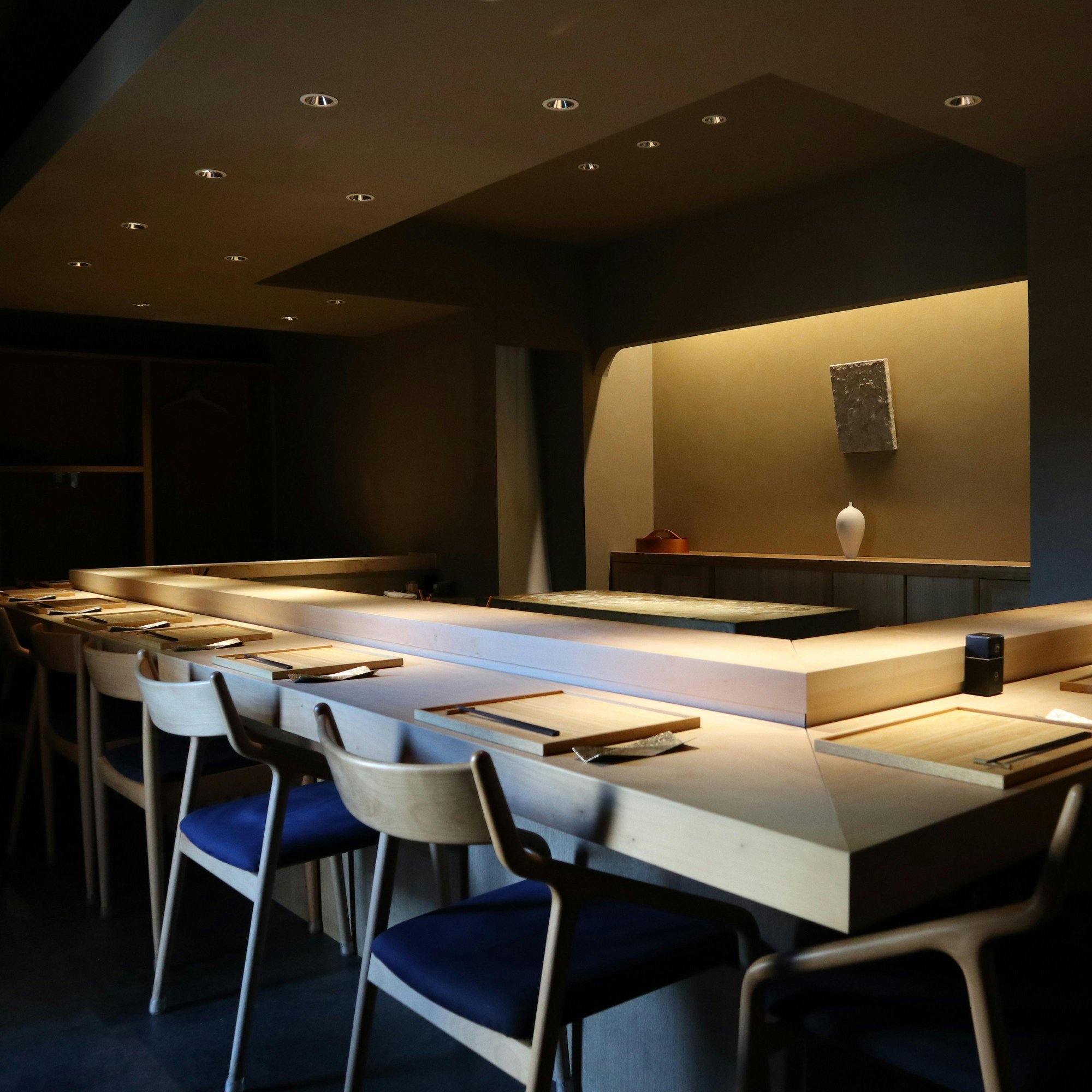
Second Floor, No Signage: How Kumamoto's Quieter Restaurants Work
There is a particular category of Japanese restaurant that communicates almost nothing to the outside world. No menu posted at the door, no photographs on a booking platform, no price range telegraphed by the façade. むら上, on the second floor of Sakura Terrace in Kumamoto's Sakuramachi district, belongs to that category. The building sits within one of the city's more compact commercial zones, a few minutes on foot from Kumamoto Castle and the broader Shimotori arcade area, where foot traffic is high but the restaurants worth seeking are often one flight of stairs away from the street.
That vertical remove is not accidental in Japanese dining culture. Counter restaurants and omakase formats frequently occupy upper floors or basement levels, partly for acoustic reasons and partly because the clientele is expected to arrive with intent rather than impulse. If you are walking into むら上, you already know you are going there. That filtering mechanism shapes the room before anyone is seated.
The Ritual of the Meal at This Latitude
Kumamoto sits in Kyushu's interior, which gives its serious restaurants access to a specific larder: Aso beef from the highland plateau, freshwater fish from the Shirakawa River system, and agricultural produce from the surrounding volcanic plains. The prefecture's food culture has long been oriented around these materials, and the dining ritual at smaller counter restaurants in the city tends to reflect that rootedness. Courses arrive at a pace that is deliberate without feeling slow, and the expectation is that the guest is present for the full sequence rather than editing it.
This is the context in which むら上 operates. Its address in Sakuramachi places it among a cluster of restaurants that collectively represent Kumamoto's more considered dining tier, a set that includes Mimuro, Sanroku, and Murakami (Sushi), the last of which operates in the JPY 20,000–29,999 range that signals a formal omakase commitment. Whether むら上 prices against that bracket or occupies a different tier cannot be confirmed from available data, but its building and location suggest it is not positioning itself as casual dining.
Across Japan, the counter restaurant format enforces a particular etiquette regardless of cuisine type. The chef works in direct sightline of every guest. Conversation is possible but not assumed. The sequence of dishes is set, and the timing of each arrival is the chef's decision. Guests who have eaten at Harutaka in Tokyo or Gion Sasaki in Kyoto will recognise the grammar immediately. The specific dialect varies by cuisine and region, but the underlying structure is the same: the meal has a shape, and the diner's role is to receive it with attention.
Kumamoto in the Wider Kyushu Dining Conversation
Fukuoka receives the majority of international attention for Kyushu dining, partly because of its ramen culture and partly because venues like Goh in Fukuoka have attracted sustained critical recognition. Kumamoto occupies a quieter position in that conversation, but it is not a city without serious tables. The restaurant density around Shimotori and Sakuramachi is high relative to the city's size, and the sourcing story available to Kumamoto chefs, centred on Aso's agricultural output, is genuinely differentiated from what coastal Kyushu cities can claim.
In that context, a restaurant operating with low public profile in a building with no obvious street presence is not a sign of marginality. It is more likely a sign that the clientele is already established. Restaurants in this mode, found across Japan from 小本 魚川鮨 in Nanao to 夕月山乃 in Sapporo, rely on a reservation list that refreshes through personal introduction rather than open booking platforms. Arrival without a reservation is unlikely to be productive. Arrival with one, made through a hotel concierge or local contact, is the standard pathway.
Placing むら上 Among Kumamoto Peers
The restaurants that cluster around むら上 geographically and conceptually include Katsuretsu Tei and BARON, which represent different points on the city's dining spectrum. Kumamoto's steakhouse and tonkatsu traditions are well-established alongside its Japanese cuisine counters, and the city's mid-to-upper price tier accommodates multiple formats without obvious hierarchy between them. What differentiates restaurants in this bracket is less cuisine type than format discipline: how tightly the experience is controlled, how much interaction the chef permits, and how clearly the sourcing is communicated.
For visitors building a Kumamoto itinerary, the full Kumamoto restaurants guide maps the broader field. Elsewhere in Japan's less-visited prefectures, analogous counter formats at properties like 湖畔荘園 in Takashima and 庄羽屋 in Nishikawa Machi follow the same logic: small, seasonal, structured, and most accessible to guests who arrive knowing what they are walking into.
The comparison set also extends internationally for guests calibrating their expectations. Counter dining at Atomix in New York City or the precision of Le Bernardin in New York City shares the structural seriousness of Japanese counter formats, even when the cuisine and cultural register differ considerably. And within Japan's kaiseki tradition, HAJIME in Osaka and akordu in Nara represent the formal upper end of the same continuum that smaller Kumamoto counters sit within at a different scale.
Planning Around Opacity
A Kumamoto hotel concierge with local connections is the most reliable first point of contact. The location inside Sakura Terrace in Sakuramachi is specific enough to navigate to, and the building is known to local restaurant-goers, which makes on-the-ground inquiry a viable alternative to digital research. Walk-in access is not a reasonable expectation for a restaurant operating in this register. The meal, if you reach it, will proceed on its own terms and at its own pace, which is the point. Birdland in Sakai operates under similarly self-contained conditions and attracts guests who understand that the absence of a booking hotline is not a barrier but a filter.
Frequently asked questions
Where is むら上 in Kumamoto?
むら上 is located at Japan, 〒860-0805 Kumamoto, Chuo Ward, Sakuramachi, 5−17 SAKURA TERRACE 2F, Kumamoto.
Is むら上 suitable for first-time visitors to Kumamoto?
むら上 sits on the second floor of Sakura Terrace in Chuo Ward with no website, no phone listing, and no menu posted publicly — a format that rewards visitors already familiar with how reservation-only counter restaurants in Japan operate. First-time visitors to Kumamoto who are new to this style of dining would benefit from arranging access through a hotel concierge or local contact before arriving in the city. The restaurant's structure assumes a guest who already understands the conventions.
What should I order at むら上?
Counter restaurants at this address format in Kumamoto's Chuo Ward typically follow a chef-led sequence built around regional produce, which in this part of Kyushu means access to Aso highland beef and freshwater ingredients from the interior. Arriving with no fixed expectations is, in practical terms, the correct posture.
Do they take walk-ins at むら上?
Restaurants operating at this level of opacity in Japan's mid-sized cities almost universally require an introduction or advance reservation made through local channels. Arriving without a booking risks finding a locked door with no obvious way to enquire.
What's the signature at むら上?
The restaurant's format signals, its Kumamoto address, and the regional larder available to chefs in Kyushu's interior suggest the meal is structured around seasonal produce rather than a fixed showpiece dish. The absence of a public menu is itself a reliable indicator that the kitchen sets the direction each sitting.
Cuisine-First Comparison
Comparable venues nearby, for context on price, style, and recognition.
| Venue | Cuisine | Price | Awards | Notes |
|---|---|---|---|---|
| むら上This venue — the venue you are viewing | High-end Sushi Omakase | $150–200 | Tabelog Bronze #295 | Not listed |
| Katsuretsu Tei | Traditional Kumamoto Tonkatsu Restaurant | $20–30 | Tabelog 100 #71 | Chuo-ku |
| Sushi Nakamura | Traditional Japanese Sushi | $100–150 | Tabelog Bronze #307 | Chuo-Ku |
| Yakiniku Sudou Kumamoto honten | Full-attended Japanese Yakiniku with Kyushu Black Wagyu | Not listed | Not listed | Kamitori / Torichosuji |
| Hyogo Dori | Yakitori & Chicken Dishes | $50–100 | Tabelog 100 #57 | Chuo Ward |
| Yoshoku no Mise Hashimoto | Japanese-style Western Cuisine (Yoshoku) | $30–50 | Tabelog 100 #55 | Kamitori-cho, Chuo Ward |
Recognition history
Dated appearances from independent guides and award organizations, with the underlying list record or original source where available.
Tabelog Bronze #295
Tabelog
Full recognition history (2 entries)
Tabelog 100 #75 · No. 75
Tabelog · Tabelog 100 - Sushi - WEST - 2025
Details
- Elegant
- Intimate
- Sophisticated
- Date Night
- Special Occasion
- Chefs Counter
- Sake Program
- Omakase
- Counter Dining
- Sake
Current opening hours
- Monday
- 12–2:30 PM, 7–9:30 PM
- Tuesday
- 12–2:30 PM, 7–9:30 PM
- Wednesday
- 12–2:30 PM, 7–9:30 PM
- Thursday
- 12–2:30 PM, 7–9:30 PM
- Friday
- 12–2:30 PM, 7–9:30 PM
- Saturday
- 12–2:30 PM, 7–9:30 PM
- Sunday
- 12–2:30 PM, 7–9:30 PM
Hours can change for holidays and private events. Last verified .
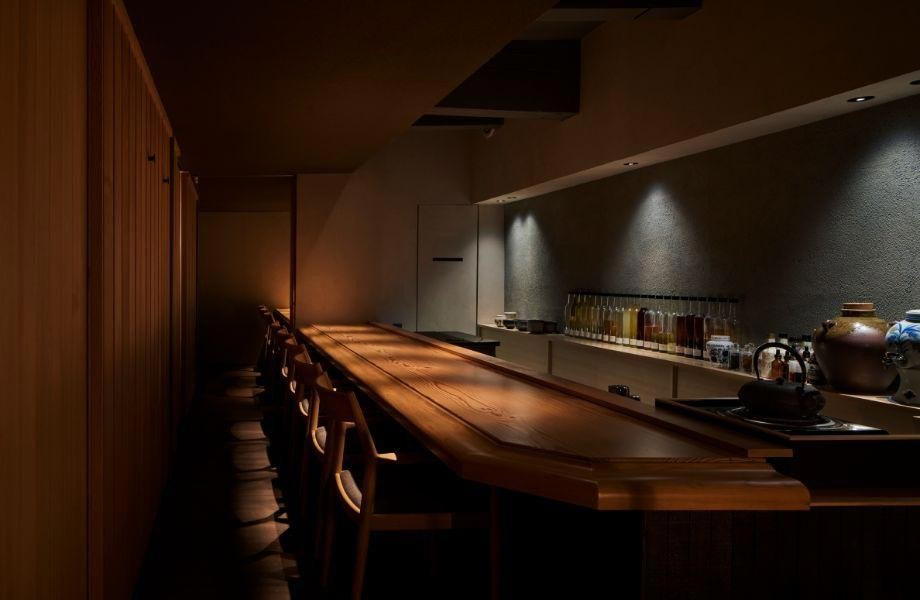
Intimate counter seating with focused sushi preparation atmosphere.