
Tabelog 100 #57
Our verdict
Hyogo Dori is a Kumamoto yakitori address with Tabelog 100 - Yakitori - WEST recognition in 2023, 2024, and 2025, placing it in a serious regional conversation rather than the casual skewer-bar tier. The draw is a compact 20-seat format built around counter cooking, chicken-focused grilling, and drinks that run through sake, shochu, and wine.

Pearl is the En Primeur Club membership app, where members save venues, book tables and use the concierge.
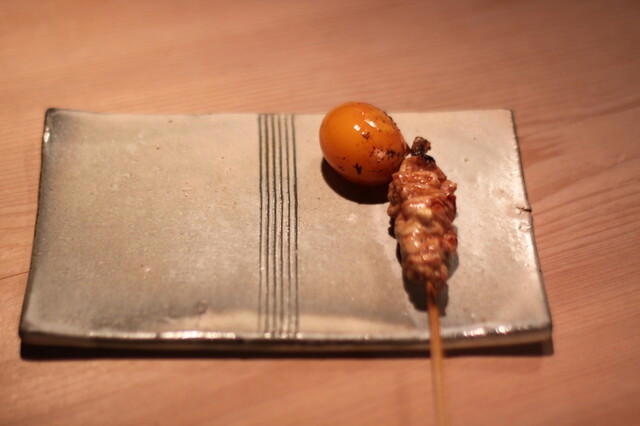
The menu
What to order
- Yakitori omakase course
- Grilled Higo Akadori skewers
- Grilled Kuro Satsuma chicken skewers
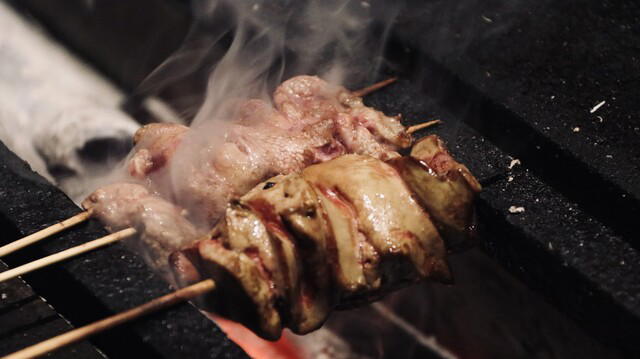
The first signal is focus. Kumamoto’s serious yakitori rooms rarely need to announce themselves through scale; they work through heat, repetition, seasoning, and the discipline of a specialized kitchen. Hyogo Dori sits in that grammar: a restaurant where the point is not spectacle but the close reading of chicken, fire, and timing. That arrangement turns yakitori from a drinking snack into a sequence of decisions, with each skewer depending on the relationship between preparation, cooking, and the guest’s pace.
In Kyushu, chicken has a different weight than it does in Tokyo’s polished omakase economy. The region’s food culture has long made room for local appetite, shochu, and grilled cooking, so a Kumamoto yakitori restaurant enters a tradition that is both everyday and technically demanding. The category is easy to underestimate: skewers look direct, but the craft depends on cutting, seasoning, heat control, and pacing. Hyogo Dori’s place in Kumamoto is best understood through that regional conversation rather than as a generic grilled-chicken format.
Yakitori in Kumamoto is regional cooking, not a Tokyo import
Yakitori’s national vocabulary is familiar, but Kumamoto changes the context. The city’s dining culture is compact, local, and less theatrically luxury-coded than the counters clustered in Japan’s larger restaurant markets. That gives a serious yakitori room a different job: it has to satisfy regular-night appetite while proving that chicken can carry a full evening. The Tabelog Hyakumeiten recognition for 2025 is useful here because it places the restaurant within a broader yakitori field rather than merely within Kumamoto’s local rankings.
The price tier also tells the reader how to read the experience. Listed at JPY 6,000 - JPY 7,999 for dinner, this is not the lowest-cost end of skewers, and it is not trying to be read only as a formal special-occasion meal. It sits in the middle territory where focused cooking, drinks, and repeatability matter. Compared with everyday Kumamoto dining, it asks for more attention; compared with more formal-occasion restaurants, it stays grounded in a cuisine built around fire and chicken.
The drinks side can matter in this kind of room because yakitori is never just one flavor. Chicken fat, tare, salt, smoke, and different cuts all create different pairing problems, and the better modern yakitori restaurants no longer treat the meal as a single-note sequence. Hyogo Dori belongs to that more focused reading of the form, where the appeal is not only grilled chicken but the way pacing, seasoning, and the drink in hand make the evening feel complete.
A focused yakitori format with practical flexibility
Room configuration shapes the meal even when the exact seating plan is not the main story. The more instructive setting for anyone who cares about yakitori as craft is the one that lets the diner follow the sequence and understand the gap between cooking and eating. A more intimate meal changes the tone without turning the restaurant into a banquet experience. That flexibility is useful in Kumamoto, where high-quality restaurants often work for date nights, small groups, and post-work meals rather than single-purpose occasions.
There is also a practical cultural point: yakitori rewards diners who accept pace. Unlike a table full of shared izakaya plates, skewers arrive in a sequence that depends on grill timing. The meal works better when treated as a progression, not as a race through categories. That is why the rhythm of service carries more value in this genre than it might in a broader Japanese restaurant. The format teaches the cuisine as it feeds the room.
Recognition can flatten restaurants into badges, but the useful reading here is narrower. Tabelog’s Hyakumeiten lists tend to identify specialists that have earned sustained local and regional attention. A 3.70 Tabelog score and 2025 Hyakumeiten recognition point to a restaurant that has registered beyond casual local notice. In a city where visitors may arrive with ramen, horse meat, or sightseeing in mind, this is the kind of restaurant that widens the Kumamoto map beyond the obvious categories.
How to place it in a Kumamoto food itinerary
For travelers building a Kumamoto dining plan, the smarter comparison is not between cuisines but between uses of an evening. Other Kumamoto dining rooms can show different sides of the city’s serious restaurant range, while Hyogo Dori keeps the focus on yakitori and chicken dishes. BARON, IL CASINO, STEAK HOUSE Baron, Sri Lanka Kumamoto, and Yoshoku no Mise Hashimoto sit in the wider city file for readers mapping different moods rather than chasing a single cuisine.
The broader Japan context also helps frame the decision. Some meals are built around beef, seafood, cafe culture, curry, or bar-led drinking, while others depend on the immediacy of a grill and the quiet discipline of repetition. Hyogo Dori belongs to the latter camp. It underlines the same planning point: the better itinerary is built by format, not just by cuisine label, and a focused yakitori evening can be as defining as a more formal restaurant reservation.
For more city planning, use Our full Kumamoto restaurants guide alongside Our full Kumamoto hotels guide, Our full Kumamoto bars guide, Our full Kumamoto wineries guide, and Our full Kumamoto experiences guide. Hyogo Dori is strongest when treated as a focused yakitori evening: Kumamoto setting, chicken-centered cooking, and enough structure to keep the meal from becoming repetitive.
Frequently asked questions
Is Hyogo Dori okay with children?
Check directly with the restaurant before booking, especially for family meals or visits with younger diners. Hyogo Dori is a focused yakitori restaurant in Kumamoto, so timing and seating style may matter.
What is the atmosphere like at Hyogo Dori?
Hyogo Dori is a focused yakitori restaurant in Kumamoto rather than a sprawling izakaya. Its added credential is Tabelog Hyakumeiten recognition in 2025, with a listed Tabelog score of 3.70.
What should I budget for a meal at Hyogo Dori?
Pricing at Hyogo Dori is listed as JPY 6,000 - JPY 7,999 for dinner.
What is Hyogo Dori known for?
Hyogo Dori is known for yakitori and chicken dishes in Kumamoto.
Cost and Credentials
Comparable venues by cuisine and price in the same metro.
| Venue | Cuisine | Price | Awards | Notes |
|---|---|---|---|---|
| Hyogo DoriThis venue (the venue you are viewing) | Yakitori & Chicken Dishes | $50–100 | Tabelog 100 #57 | Not listed |
| Sushi Nakamura | Traditional Japanese Sushi | $100–150 | Tabelog Bronze #307 | Chuo-Ku, Traditional Japanese Sushi |
| Katsuretsu Tei | Traditional Kumamoto Tonkatsu Restaurant | $20–30 | Tabelog 100 #71 | Chuo-ku, Tonkatsu (Pork Cutlet) |
| Katsuretsu Tei (勝烈亭 新市街本店) | Japanese Tonkatsu | $10–20 | Not listed | Shinshigai, Chuo-ku, Traditional Tonkatsu (Pork Cutlet) |
| Kumamoto Ramen Kokutei Honten | Kumamoto Ramen | $10–20 | Tabelog 100 #22 | Nihongi, Kumamoto Ramen |
| .know | Creative Japanese Fine Dining | $50–100 | Tabelog 100 #47 | Gionbashi, Creative Japanese Fine Dining |
Recognition history
Dated appearances from independent guides and award organizations, with the underlying list record or original source where available.
Tabelog 100 #57 · No. 57
Tabelog · Tabelog 100 - Yakitori - WEST - 2025
Continue exploring
More in Kumamoto
Restaurants in Kumamoto
All restaurants in Kumamoto →
Bars in Kumamoto
All bars in Kumamoto →
Details
- Cozy
- Intimate
- Rustic
- Date Night
- Casual Hangout
- After Work
- Solo
- Special Occasion
- Chefs Counter
- Open Kitchen
- Standalone
- Design Destination
- Beer Program
- Sake Program
- Local Sourcing
- Tasting Menu
- A La Carte
- Counter Dining
- Set Menu
- Beer
- Sake
- Shochu
Current opening hours
- Monday
- 5:30–11 PM
- Tuesday
- 5:30–11 PM
- Wednesday
- 5:30–11 PM
- Thursday
- 5:30–11 PM
- Friday
- 5:30–11 PM
- Saturday
- 5:30–11 PM
- Sunday
- 5–10 PM
Hours can change for holidays and private events. Hours as of .
A small, calm space reached by passing through a noren at the back of a building and along a stone-paved path, centered around a 14-seat U-shaped counter where guests watch the grill master work; it feels intimate, warm, and quietly lively rather than noisy.