
Tabelog 100 #47
Our verdict
Approaching a serious creative counter in Kumamoto differs from Ginza or Kyoto. The city signals luxury at a lower frequency: a small Chuo Ward address, a short hop from Gionbashi, and a dining culture shaped by Kyushu agriculture and seafood routes as much as national fine-dining fashion. In that context.know gives Kumamoto a seat in Japan’s contemporary creative-cuisine conversation without pretending the city is Tokyo in miniature. Japan’s creative and innovative category sits between kaiseki discipline, French technique, regional sourcing, and the freer tasting-menu language of younger restaurants resisting labels. The category can be vague when handled lazily. In Kumamoto, it is clearer because the food culture has strong raw-material identity: horse meat traditions, Amakusa seafood, Akaushi beef, volcanic-soil vegetables, citrus, and the broader Kyushu pantry. Restaurants in this register are judged less by theatrical novelty than by translating local supply into a coherent sequence. Kumamoto produce gives the creative format its reason to exist The useful way to read.know is through sourcing, not spectacle. Kumamoto sits between mountain agriculture and the Amakusa island chain, with access to ingredients needing no imported prestige. That matters in creative cuisine, where restaurants can drift into technique for its own sake. Here, dinner at this level should make the prefecture feel specific, not interchangeable with another Japanese city running a tasting counter. The 2025 Tabelog 100 selection for Innovative / Creative cuisine gives the restaurant a concrete trust signal, and the award is more interesting for its geography. Tabelog’s Hyakumeiten lists expose depth beyond obvious metropolitan circuits, and Kumamoto’s inclusion shows regional cities are no longer peripheral to contemporary Japanese dining. The listing’s 3.83 score places.know in a serious national conversation for a city where destination dining is more selective and less saturated than in Fukuoka, Osaka, or Tokyo. Price tier resets expectations. Within Kumamoto, casual benchmarks such as Kairakuen or Kumamoto Ramen Kokutei Honten sit in a different dining economy, while Mexico Restaurant Toru Tacos is a midrange night out. The more relevant city comparison is Murakami, a sushi address in the same JPY 20,000–29,999 bracket. The distinction is category: sushi at that price sells precision within a known grammar; creative cuisine must justify the spend through progression, sourcing intelligence, and point of view. For travelers building a Kumamoto food itinerary, that contrast helps. Poultry specialists such as Amakusa Daiou Senmon Ten Tosaka, Italian-inflected rooms such as antica locanda MIYAMOTO, and broader contemporary addresses such as BARON map a city where local ingredients move through several formats. Add China Sichuan Togen and cocina uchida, and the pattern is clear: Kumamoto dining is not one regional specialty, but chefs borrowing structure from elsewhere while keeping Kyushu products in view. A quieter counterpoint to Japan's major-city tasting-menu race Creative dining in Japan is often evaluated through scarcity: tiny counters, opaque booking channels, chef lineage, and pressure to secure seats before a trip is planned. Kumamoto shifts the equation. Fewer international diners chase the same tables, but serious restaurants still meet larger-market expectations. Discipline matters more than glamour. A meal in this category must feel edited, paced, and regionally anchored, because the audience is paying for judgment rather than abundance. .know’s non-smoking policy and private-use availability suggest a controlled dining environment, not a loud, high-turnover room. Private rooms are not part of the format, keeping emphasis on the main dining experience rather than compartmentalized entertaining. Payment is modern by Japanese regional standards: credit cards and electronic money are accepted, while QR code payments are not. Together, these details suggest a room built for planned dinners rather than casual drop-ins. The absence of a heavily public chef narrative is not a weakness. In this segment, personal mythology can distract. The stronger question is what the kitchen does with Kumamoto’s supply lines and how clearly it expresses place. Creative cuisine succeeds when diners can read the region through sequence and restraint; it fails when the meal could have happened anywhere with a combi oven and global pantry. The award recognition indicates.know is being evaluated in the former conversation, not merely as a local curiosity. Travelers comparing Kumamoto with larger Japanese dining cities should think in opportunity cost. Tokyo offers density and breadth; Kyoto, ceremonial gravity; Fukuoka, urban Kyushu energy with a stronger nightlife tail. Kumamoto offers a narrower field, but that narrowness helps when a kitchen works closely with local products. Dinner here is less about ticking off a famous national address than seeing how a regional city expresses contemporary Japanese cooking on its own terms. How to place it within a Kumamoto trip A meal at this level suits an itinerary giving Kumamoto more than a transit day. The city rewards travelers who split attention between restaurants, bars, hotels, and regional excursions rather than treating the castle district as the whole story. For broader planning, use Our full Kumamoto restaurants guide alongside Our full Kumamoto hotels guide, Our full Kumamoto bars guide, Our full Kumamoto wineries guide, and Our full Kumamoto experiences guide. The editorial verdict is simple:.know is for travelers who want Kumamoto’s ingredient identity interpreted through a contemporary, higher-spend format, not a quick regional specialty meal. It belongs on a short list when the trip already includes casual ramen, local izakaya cooking, and at least one ingredient-led dinner. In that mix, the restaurant’s role is not to represent all of Kumamoto, but to show how the city participates in Japan’s creative-cuisine tier with a quieter, regionally grounded voice. Readers extending a Japan dining route can use other city pages as contrast rather than direct comparison: -Grilled beef Sukiyaki- KAMAKURA TANUKIAN 鎌倉 たぬき庵 in Kamakura. 鮪と炭火焼き うお炭 秋葉原店 in Tokyo.cafe in Osaka, (Shoku) Vietnam in Kawasaki, [Curry Senmon Ten] Maruyama Kyoju. in Sapporo, [ki:] in Kyoto, Jōdo Saké Bar in Los Angeles, and Onigiri Time in Pasadena. The point is not to flatten them into one ranking, but to understand how format, price, and place change a meal’s meaning.

Pearl is the En Primeur Club membership app — saves, bookings, and concierge access live there. Same editors, same standards.
- Address
- Japan, 〒860-0037 Kumamoto, Chuo Ward, Nishiamidajimachi, 6−6 商工クラブ 1F
- Phone
- +81 96-201-2041
- Hours
- Mon–Sat 6–10 PMSun Closed
- Website
- showkoclub.jp
- Directions
- Get directions
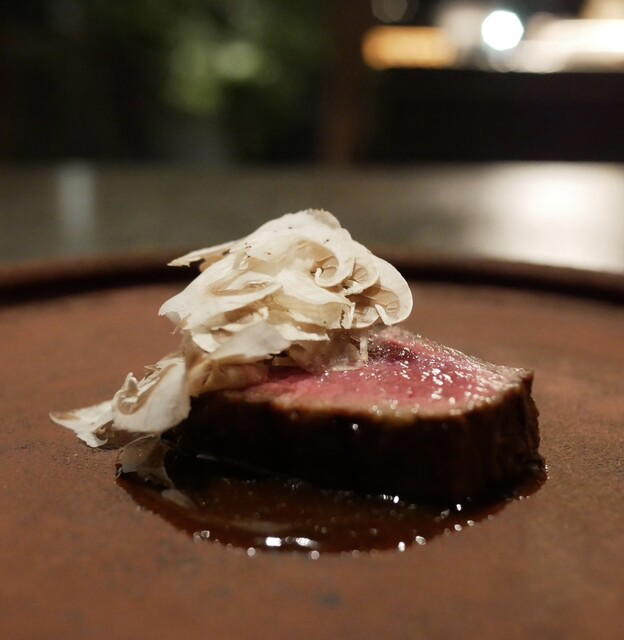
Approaching a serious creative counter in Kumamoto differs from Ginza or Kyoto. The city signals luxury at a lower frequency: a small Chuo Ward address, a short hop from Gionbashi, and a dining culture shaped by Kyushu agriculture and seafood routes as much as national fine-dining fashion. In that context.know gives Kumamoto a seat in Japan’s contemporary creative-cuisine conversation without pretending the city is Tokyo in miniature.
Japan’s creative and innovative category sits between kaiseki discipline, French technique, regional sourcing, and the freer tasting-menu language of younger restaurants resisting labels. The category can be vague when handled lazily. In Kumamoto, it is clearer because the food culture has strong raw-material identity: horse meat traditions, Amakusa seafood, Akaushi beef, volcanic-soil vegetables, citrus, and the broader Kyushu pantry. Restaurants in this register are judged less by theatrical novelty than by translating local supply into a coherent sequence.
Kumamoto produce gives the creative format its reason to exist
The useful way to read.know is through sourcing, not spectacle. Kumamoto sits between mountain agriculture and the Amakusa island chain, with access to ingredients needing no imported prestige. That matters in creative cuisine, where restaurants can drift into technique for its own sake. Here, dinner at this level should make the prefecture feel specific, not interchangeable with another Japanese city running a tasting counter.
The 2025 Tabelog 100 selection for Innovative / Creative cuisine gives the restaurant a concrete trust signal, and the award is more interesting for its geography. Tabelog’s Hyakumeiten lists expose depth beyond obvious metropolitan circuits, and Kumamoto’s inclusion shows regional cities are no longer peripheral to contemporary Japanese dining. The listing’s 3.83 score places.know in a serious national conversation for a city where destination dining is more selective and less saturated than in Fukuoka, Osaka, or Tokyo.
Price tier resets expectations. Within Kumamoto, casual benchmarks such as Kairakuen or Kumamoto Ramen Kokutei Honten sit in a different dining economy, while Mexico Restaurant Toru Tacos is a midrange night out. The more relevant city comparison is Murakami, a sushi address in the same JPY 20,000–29,999 bracket. The distinction is category: sushi at that price sells precision within a known grammar; creative cuisine must justify the spend through progression, sourcing intelligence, and point of view.
For travelers building a Kumamoto food itinerary, that contrast helps. Poultry specialists such as Amakusa Daiou Senmon Ten Tosaka, Italian-inflected rooms such as antica locanda MIYAMOTO, and broader contemporary addresses such as BARON map a city where local ingredients move through several formats. Add China Sichuan Togen and cocina uchida, and the pattern is clear: Kumamoto dining is not one regional specialty, but chefs borrowing structure from elsewhere while keeping Kyushu products in view.
A quieter counterpoint to Japan's major-city tasting-menu race
Creative dining in Japan is often evaluated through scarcity: tiny counters, opaque booking channels, chef lineage, and pressure to secure seats before a trip is planned. Kumamoto shifts the equation. Fewer international diners chase the same tables, but serious restaurants still meet larger-market expectations. Discipline matters more than glamour. A meal in this category must feel edited, paced, and regionally anchored, because the audience is paying for judgment rather than abundance.
.know’s non-smoking policy and private-use availability suggest a controlled dining environment, not a loud, high-turnover room. Private rooms are not part of the format, keeping emphasis on the main dining experience rather than compartmentalized entertaining. Payment is modern by Japanese regional standards: credit cards and electronic money are accepted, while QR code payments are not. Together, these details suggest a room built for planned dinners rather than casual drop-ins.
The absence of a heavily public chef narrative is not a weakness. In this segment, personal mythology can distract. The stronger question is what the kitchen does with Kumamoto’s supply lines and how clearly it expresses place. Creative cuisine succeeds when diners can read the region through sequence and restraint; it fails when the meal could have happened anywhere with a combi oven and global pantry. The award recognition indicates.know is being evaluated in the former conversation, not merely as a local curiosity.
Travelers comparing Kumamoto with larger Japanese dining cities should think in opportunity cost. Tokyo offers density and breadth; Kyoto, ceremonial gravity; Fukuoka, urban Kyushu energy with a stronger nightlife tail. Kumamoto offers a narrower field, but that narrowness helps when a kitchen works closely with local products. Dinner here is less about ticking off a famous national address than seeing how a regional city expresses contemporary Japanese cooking on its own terms.
How to place it within a Kumamoto trip
A meal at this level suits an itinerary giving Kumamoto more than a transit day. The city rewards travelers who split attention between restaurants, bars, hotels, and regional excursions rather than treating the castle district as the whole story. For broader planning, use Our full Kumamoto restaurants guide alongside Our full Kumamoto hotels guide, Our full Kumamoto bars guide, Our full Kumamoto wineries guide, and Our full Kumamoto experiences guide.
The editorial verdict is simple:.know is for travelers who want Kumamoto’s ingredient identity interpreted through a contemporary, higher-spend format, not a quick regional specialty meal. It belongs on a short list when the trip already includes casual ramen, local izakaya cooking, and at least one ingredient-led dinner. In that mix, the restaurant’s role is not to represent all of Kumamoto, but to show how the city participates in Japan’s creative-cuisine tier with a quieter, regionally grounded voice.
Readers extending a Japan dining route can use other city pages as contrast rather than direct comparison: -Grilled beef Sukiyaki- KAMAKURA TANUKIAN 鎌倉 たぬき庵 in Kamakura. 鮪と炭火焼き うお炭 秋葉原店 in Tokyo.cafe in Osaka, (Shoku) Vietnam in Kawasaki, [Curry Senmon Ten] Maruyama Kyoju. in Sapporo, [ki:] in Kyoto, Jōdo Saké Bar in Los Angeles, and Onigiri Time in Pasadena. The point is not to flatten them into one ranking, but to understand how format, price, and place change a meal’s meaning.
Frequently asked questions
Is.know okay with children?
Those details are not published. For a visit with children, reservations and the restaurant's evening-only schedule, Mon-Sat 6–10 PM, make advance planning sensible. Check the venue's official channels for the latest details.
Is.know better for a quiet night or a lively one?
.know is the better fit for a quiet night: it runs dinner only, from Mon-Sat 6–10 PM, and its 2025 Tabelog 100 selection points to a focused dining room rather than a late-night scene. The address in Chuo Ward near Gionbashi also suggests a restaurant built for a deliberate meal, not a bar-hop stop.
What's the price range at.know?
Pricing at.know is listed as JPY 20,000 - JPY 29,999 View spending breakdown.
What days is.know closed?
Hours at.know: Mon: 6–10 PM; Tue: 6–10 PM; Wed: 6–10 PM; Thu: 6–10 PM; Fri: 6–10 PM; Sat: 6–10 PM; Sun: Closed.
What's the address for.know?
.know is located in Kumamoto.
Comparable Spots, Quickly
Comparable venues by cuisine and price in the same metro.
| Venue | Cuisine | Price | Awards | Notes |
|---|---|---|---|---|
| .knowThis venue — the venue you are viewing | Creative Japanese Fine Dining | $50–100 | Tabelog 100 #47 | Not listed |
| Sushi Nakamura | Traditional Japanese Sushi | $100–150 | Tabelog Bronze #307 | Chuo-Ku |
| Katsuretsu Tei Minami kumamoto ten | Kumamoto tonkatsu specialist | $20–30 | Tabelog 100 #34 | Chuo Ward |
| Sekka Sanbo | Handmade Soba & Sake | $20–30 | Tabelog 100 #56 | Chuo Ward, Kamidori / Kaminoura-dori area |
| Yoshoku no Mise Hashimoto | Japanese-style Western Cuisine (Yoshoku) | $30–50 | Tabelog 100 #55 | Kamitori-cho, Chuo Ward |
| Hi no Kuni Bunryu Souhonten | Kumamoto Tonkotsu Ramen | $10–20 | Tabelog 100 #92 | Higashi Ward |
Recognition history
Dated appearances from independent guides and award organizations, with the underlying list record or original source where available.
Tabelog 100 #47 · No. 47
Tabelog · Tabelog 100 - Innovative / Creative cuisine - 2025
Details
- Modern
- Intimate
- Elegant
- Minimalist
- Date Night
- Special Occasion
- Business Dinner
- Chefs Counter
- Open Kitchen
- Sake Program
- Local Sourcing
- Counter Dining
- Tasting Menu
- Sake
Current opening hours
- Monday
- 6–10 PM
- Tuesday
- 6–10 PM
- Wednesday
- 6–10 PM
- Thursday
- 6–10 PM
- Friday
- 6–10 PM
- Saturday
- 6–10 PM
- Sunday
- Closed
Hours can change for holidays and private events. Last verified .
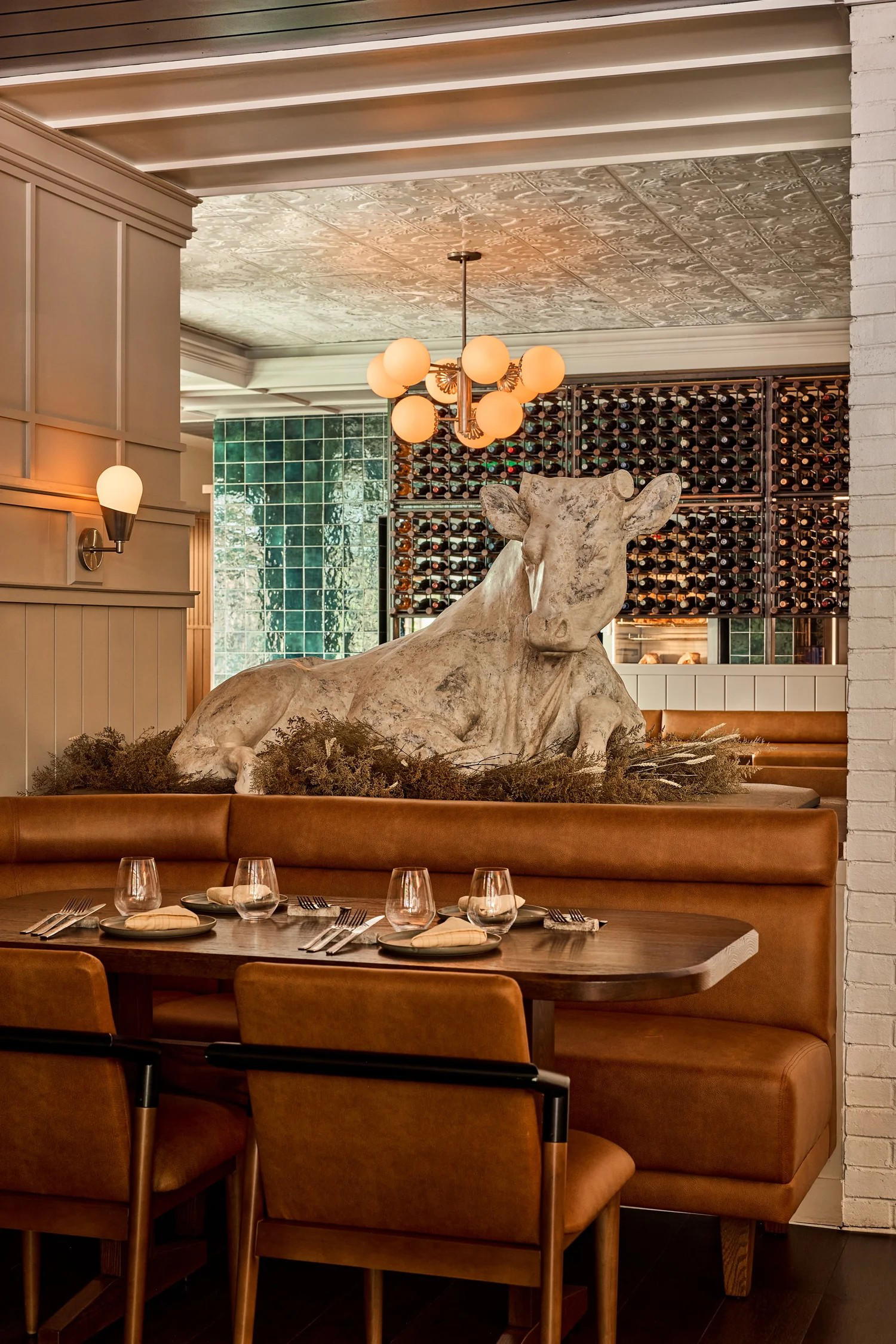
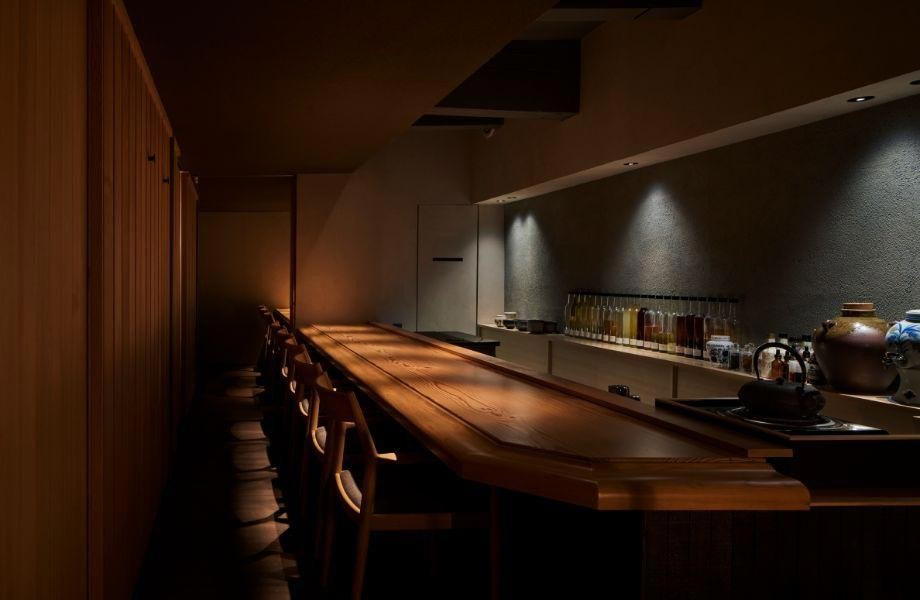
Modern, minimalist atmosphere with soft lighting and a refined counter-style setup that emphasizes the chef's craft and seasonal ingredients.