Our verdict
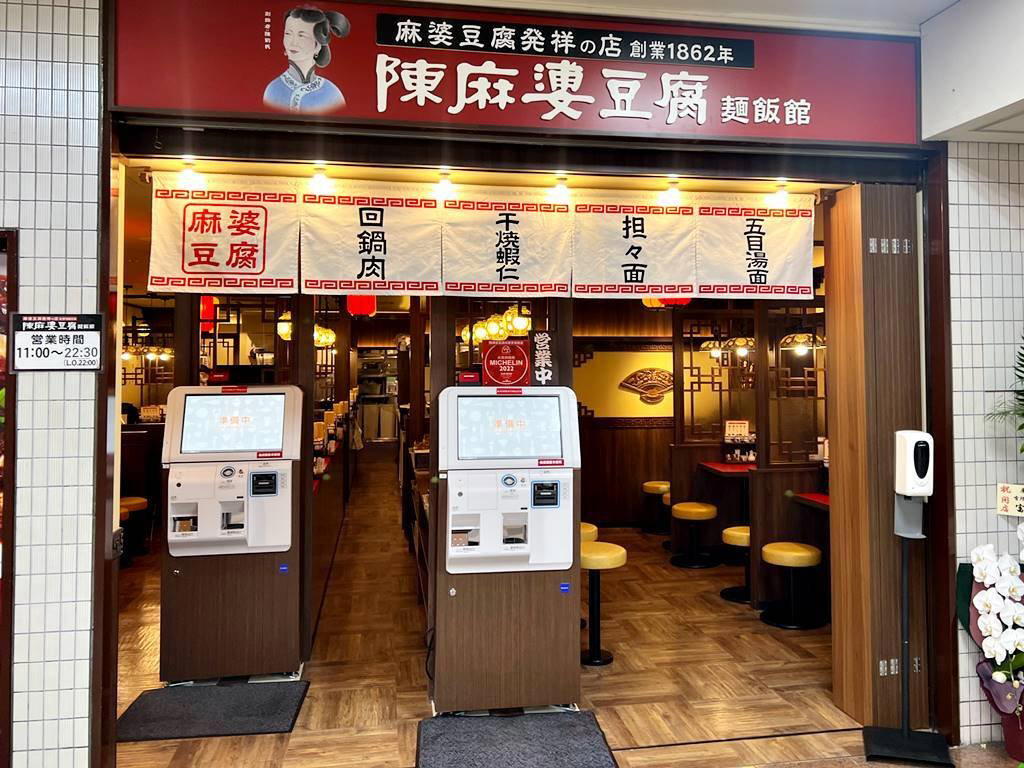
陳麻婆豆腐 麺飯館 occupies the basement level of Keio Mall in Nishi-Shinjuku, serving the Sichuan classic that gives the restaurant its name alongside noodle and rice dishes. It sits in the affordable, walk-in tier of Tokyo's Chinese dining scene, a practical choice for a no-ceremony meal in one of the city's busiest transit corridors.

Pearl is the En Primeur Club membership app, where members save venues, book tables and use the concierge.
The menu
What to order
- Mapo Tofu
- Dan Dan Noodles
Sichuan in the Subway Corridor: What Mapo Tofu Looks Like at Street Level in Tokyo
Tokyo's Chinese dining scene runs a wide register. At one end sit multi-course Cantonese rooms and refined Sichuan tasting menus priced against kaiseki; at the other, a dense network of noodle counters, lunch-set operators, and basement mall restaurants that serve the same dishes without the ceremony. 陳麻婆豆腐 麺飯館 belongs to the latter category, operating from the B1 floor of Keio Mall in Nishi-Shinjuku, a subterranean retail and dining corridor that connects directly to Shinjuku Station's west exit labyrinth. The setting is transit-adjacent by design: this is food for commuters, office workers, and anyone who wants a bowl of something hot without a reservation or a cover charge.
Mapo tofu itself has a long documentary history in Japan. The dish arrived from Chengdu via the postwar Chinese restaurant trade and became one of the most replicated Sichuan exports in the country, adapted across a spectrum from the aggressively numbing original to sweeter, milder Japanese-market versions. The restaurant's name foregrounds that dish specifically, which is a signal about where it positions itself: this is not a broad pan-Asian menu trying to cover all bases, but a focused operation built around a recognisable Sichuan anchor.
The Occasion Question: When Does This Restaurant Make Sense?
The editorial angle here matters. In a city where milestone dining tends to migrate toward omakase counters like Harutaka, kaiseki rooms like RyuGin, or French kitchens like L'Effervescence and Sézanne, a basement noodle-and-rice counter in a shopping mall is not competing for anniversary dinners or expense-account lunches. What it offers instead is a different kind of occasion utility: the pre-concert meal that needs to be fast, the post-commute dinner that needs to be filling, the solo lunch that rewards no-effort decision-making.
That framing is not a diminishment. Tokyo's leading casual meals often happen in exactly these conditions, underground, fluorescent-lit, with laminated menus and plastic trays, and the city's food culture treats that tier with the same seriousness it applies to the counter above. The question for a visitor is whether this is the right occasion type, not whether the restaurant clears some arbitrary quality threshold.
For comparison: the ¥¥¥¥ restaurants in Tokyo's fine-dining tier, places like Crony or L'Effervescence, require advance booking windows of weeks to months, dress consideration, and a time commitment of two hours or more. 陳麻婆豆腐 麺飯館 operates in a different grammar entirely: walk in, order from a menu that runs across mapo tofu, noodle dishes, and rice sets, eat, leave. The friction is minimal by design.
Nishi-Shinjuku and the Keio Mall Context
Shinjuku is Tokyo's most commercially dense ward, and its west side, Nishi-Shinjuku, houses the city's tallest cluster of corporate towers alongside one of Japan's busiest station complexes. The underground Keio Mall corridor functions as a parallel street, running beneath the surface and connecting multiple exits to a string of shops and restaurants. Dining here is practical rather than destination-driven: the audience is largely people already in the building rather than people who travelled to be there.
That changes the calculus for a visitor. You are not going out of your way to reach 陳麻婆豆腐 麺飯館; you are passing through Shinjuku anyway, because nearly every itinerary through central Tokyo does, and the restaurant is available when hunger and proximity align. That is a legitimate reason to eat somewhere, and it describes how most of Tokyo's basement-mall restaurants actually function.
Japan's broader dining scene beyond Tokyo rewards different kinds of planning. HAJIME in Osaka and Gion Sasaki in Kyoto represent the advance-booking, occasion-led tier in their respective cities. akordu in Nara and Goh in Fukuoka serve different regional registers. Regional spots like 一本木 石川制 in Nanao, 夕凪山乃 in Sapporo, 湖畔荘庵 in Takashima, and 庭羽屋 in Nishikawa Machi illustrate how Japan's food culture distributes across prefectures and formats rather than concentrating only in major city centres. Further afield, Birdland in Sakai and Bistro Ange in Toyohashi add to that picture.
For the full spectrum of Tokyo dining options across price tiers and cuisine types, our Tokyo restaurants guide covers the city by neighbourhood and category.
Planning a Visit: What to Know Before You Go
The restaurant's address, 西新宿1, Keio Mall B1F, places it directly within the underground mall accessible from Shinjuku Station's west exit, making it reachable without surfacing to street level from most of the station's major exit points. No booking infrastructure is publicly listed, which is consistent with a walk-in casual format.
For travellers who plan further ahead, especially those building itineraries around food as a primary objective, the contrast with international fine-dining references is instructive. Le Bernardin in New York and Atomix in New York represent the kind of advance-planning, high-commitment dining that occupies the opposite end of the occasion spectrum. 陳麻婆豆腐 麺飯館 does not ask that of you.
Frequently asked questions
Where is 陳麻婆豆腐 麺飯館 located?
陳麻婆豆腐 麺飯館 is located at 西新宿1 (京王モール B1F), 新宿区, 東京都, 160-0023, Tokyo.
Is 陳麻婆豆腐 麺飯館 suitable for a quick solo lunch near Shinjuku Station?
The Keio Mall B1F location at 西新宿1 puts it directly on the underground path from Shinjuku Station's west exit, requiring no surface-level navigation. A noodle-and-tofu format built around a single defining dish makes it well-suited to solo dining at pace, without the deliberation that broader menus demand. It functions as a functional, focused stop in one of Tokyo's busiest transit hubs rather than a destination dinner.
What should I order at 陳麻婆豆腐 麺飯館?
The restaurant's name is the clearest ordering guide available: mapo tofu and noodles are the kitchen's stated focus. In Sichuan tradition, mapo tofu arrives numbing and oily from doubanjiang and Sichuan peppercorn, typically served alongside rice or noodles. Start with those two before considering anything else on the menu.
Can I walk in to 陳麻婆豆腐 麺飯館?
The restaurant is located in Keio Mall B1F beneath Shinjuku Station's west exit, a corridor that handles heavy commuter and lunch traffic on weekdays. Walk-in availability varies by hour, and midday slots on weekdays tend to fill quickly given the captive office-worker crowd in Nishi-Shinjuku.
What makes 陳麻婆豆腐 麺飯館 worth seeking out?
Tokyo's Chinese dining scene ranges from refined Sichuan tasting menus to everyday street-level cooking, and 陳麻婆豆腐 麺飯館 occupies the latter category deliberately. The Keio Mall B1F address, accessible directly from Shinjuku Station's west exit without stepping outside, makes it one of the more convenient single-dish Sichuan stops in the city's most commercially dense ward. For mapo tofu specifically, few locations in Nishi-Shinjuku are this easy to reach at pace.
Can 陳麻婆豆腐 麺飯館 adjust for dietary needs?
Sichuan mapo tofu in its traditional form contains ground pork and is cooked with doubanjiang, a fermented chilli-bean paste that is rarely fish-free. Communication in basic Japanese or with a translation app is advisable given the location.
Price Lens
| Venue | Cuisine | Price | Awards | Notes |
|---|---|---|---|---|
| 陳麻婆豆腐 麺飯館This venue (the venue you are viewing) | Authentic Sichuan Mapo Tofu and Noodles | $10–20 | Not listed | Not listed |
| Harutaka | Edo-Style Omakase Sushi | $200–300 | 3 Michelin Stars · World's 50 Best #76 | Sushi |
| L'Effervescence | Modern French with Japanese Influences | $200–300 | 3 Michelin Stars · World's 50 Best #69 | French |
| RyuGin | Modern Kaiseki | $500+ | 3 Michelin Stars · World's 50 Best #41 | Kaiseki, Japanese |
| Crony | Modern French with Japanese Influences | $150–200 | 2 Michelin Stars · World's 50 Best #34 | Innovative, French |
| Florilège | Modern French-Japanese Plant-Based Fine Dining | $50–100 | 2 Michelin Stars · World's 50 Best #31 | French |
Continue exploring
More in Tokyo
Restaurants in Tokyo
All restaurants in Tokyo →



Bars in Tokyo
All bars in Tokyo →



Details
- Lively
- Casual
- Casual Hangout
- After Work
- Standalone
- Sake Program
- A La Carte
Casual bustling atmosphere in a shopping mall food court with focus on hearty, spicy Chinese comfort food.