Our verdict
Located on the second floor of a quiet building in Shinjuku's Haramachi district, ケトハレ sits at an address that rewards those willing to look past the neighbourhood's more obvious dining corridors. The venue represents a strand of Tokyo dining where imported culinary methods meet Japanese sourcing discipline, placing it in a category increasingly relevant to the city's serious restaurant conversation.

Pearl is the En Primeur Club membership app, where members save venues, book tables and use the concierge.
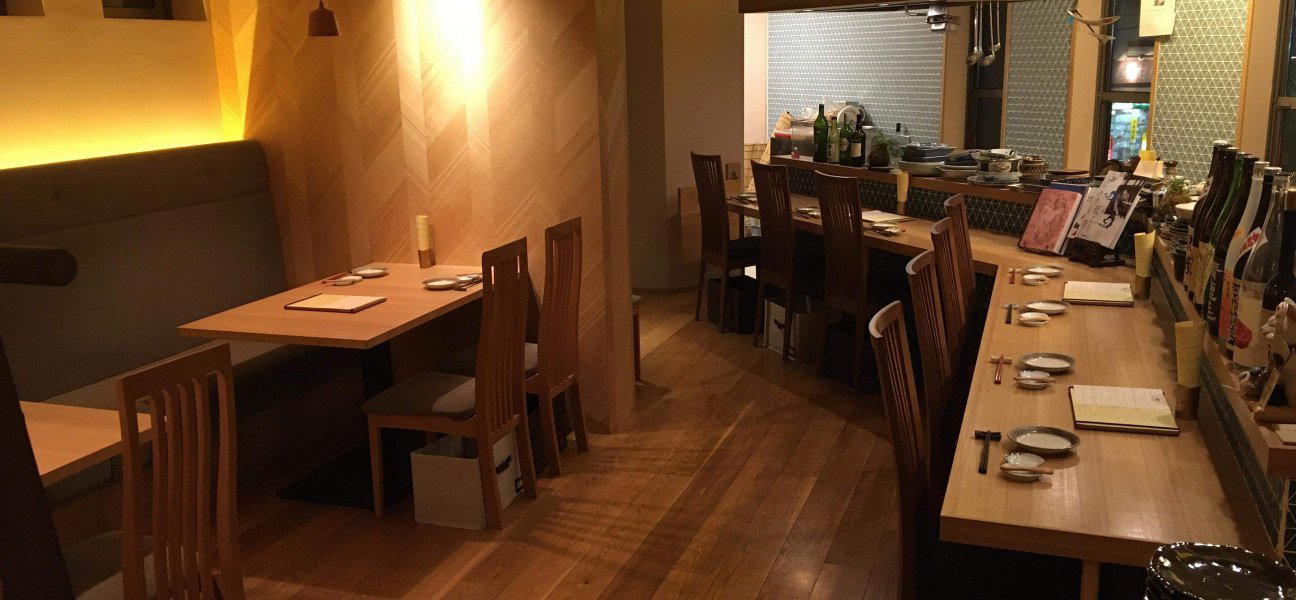
The menu
What to order
- 天城シャモでフォアグラを包んだテリーヌ
- フランス産ホワイトアスパラガス ふきのとうのソース
Shinjuku Beyond the Obvious: What Haramachi Tells You About Tokyo Dining
Shinjuku's dining reputation runs on its most visible axes: the izakaya alleys of Omoide Yokocho, the department store restaurant floors of Isetan and Takashimaya, and the cluster of high-end counters that have gravitated toward the ward's quieter residential pockets over the past decade. Haramachi sits in that quieter register. The neighbourhood, positioned between Ushigome-Haramachi Station and the broader Shinjuku grid, draws a local crowd rather than a tourist circuit, which tends to concentrate the kind of restaurant that earns its reputation through repeat visits rather than viral positioning.
This dynamic matters because it shapes expectations before you arrive. Tokyo dining at its most interesting often operates in this mode: a second-floor address, a building that offers no visual spectacle from the street, a dining room whose character reveals itself slowly. ケトハレ, at 3 Chome-37 Haramachi in Aland Building 2F, follows that pattern precisely.
The Technique Import Question: Where Tokyo's Restaurant Scene Has Arrived
The broader story of Japanese fine dining in the twenty-first century is partly a story about technique transfer. For decades, the dominant narrative ran in one direction: French and European chefs arriving in Japan, absorbing local product discipline and precision, then carrying those lessons home. That current has since reversed, and Japan's most interesting dining tier now includes kitchens where Japanese-trained or Japan-based chefs apply European technical frameworks to ingredients sourced through the same obsessive regional networks that supply kaiseki counters and sushi bars.
The results rarely look like either tradition in isolation. A preparation rooted in classical French method applied to a carefully sourced Japanese vegetable or aged domestic protein produces something that sits outside easy categorisation. This is the editorial territory that venues in Haramachi and comparable residential Shinjuku pockets increasingly occupy, distinct from the ¥¥¥¥-tier French houses like L'Effervescence or Sézanne in their formality, and distinct from the kaiseki tradition exemplified by RyuGin in their structural logic, but drawing from both.
Venues like Crony have demonstrated that this middle register can sustain serious critical attention in Tokyo. The city has enough depth in its restaurant economy to support multiple tiers of this cross-referencing approach, from destination-level dining rooms with international reservation lists to neighbourhood-scale operations where the same sensibility operates at a different pitch.
Reading the Address: What a Second-Floor Haramachi Room Signals
In Tokyo's restaurant geography, a second-floor address in a non-commercial building is a specific kind of signal. It implies a decision to minimise overhead in favour of what happens at the table. The most cost-efficient real estate for a restaurant in central Tokyo is not street-level in a high-traffic zone; those rents eat into the kitchen budget. Moving upstairs, or into a building without retail foot traffic, is typically a choice that redirects resources toward ingredients and technique rather than location premium.
Haramachi's 3 Chome position reflects this logic. The address is accessible by train, the Toei Shinjuku Line serving Ushigome-Haramachi a short walk away, but the area does not generate the kind of ambient pedestrian flow that feeds casual discovery. Finding ケトハレ requires intentionality, which in Tokyo's competitive dining market is itself a form of curation. The restaurant is not designed to be stumbled upon.
This is a pattern visible across Japan's most interesting mid-register dining. Akordu in Nara operates on a similar premise: a location that demands commitment from the diner, paired with a kitchen focused on the intersection of local product and imported technique. Goh in Fukuoka and HAJIME in Osaka each occupy analogous positions in their respective cities, though at different points on the formality and price spectrum.
The Competitive Set: Tokyo's Neighbourhood-Scale Technique Kitchens
Positioning ケトハレ within Tokyo's restaurant hierarchy requires some precision. The city's top tier, anchored by counters like Harutaka in sushi and the kaiseki houses with multi-year waiting lists, operates at a different scale of ambition and price. Below that, a dense middle tier of technically serious but less ceremonial kitchens has expanded considerably over the past five years, partly driven by chefs returning from European stages and partly by the maturation of Japan's regional sourcing networks into something restaurateurs outside the kaiseki world can access.
The global technique-meets-local-ingredient model has proven durable in other markets too. Le Bernardin in New York built its reputation on French classical method applied to product-first sourcing. Atomix, also in New York, applies Korean sourcing logic through a fine-dining technical frame. Japan's version of this dynamic has its own character, shaped by the depth of its regional ingredient culture, from the seafood networks of Nanao on the Noto Peninsula to the dairy and produce traditions accessible from Sapporo.
Within Tokyo specifically, the neighbourhood-scale kitchen that works in this register is not competing against its ward's destination restaurants so much as against a peer group of similar operations across the city's quieter residential zones. Bistro Ange in Toyohashi and Birdland in Sakai represent the same phenomenon at the regional city level, where the imported-technique framework operates without the pressure of capital-city competition. For a complete picture of how Tokyo's restaurant scene is structured across price points and traditions, see our full Tokyo restaurants guide.
Other Japan comparisons worth considering: Gion Sasaki in Kyoto shows how a deeply ingredient-driven kitchen can operate at the intersection of tradition and technique, while Takashima's restaurant scene illustrates what happens when local product access drives the entire menu logic. Nishikawa Machi adds another regional data point to how Japan's non-Tokyo dining has matured.
Know Before You Go
- Address: 3 Chome-37 Haramachi, Shinjuku City, Tokyo (Aland Building 2F)
- Getting There: Ushigome-Haramachi Station (Toei Shinjuku Line) is the most practical approach; the walk from Shinjuku Station is longer and less direct
- Booking:
Should I book ケトハレ in advance?
A second-floor Shinjuku address with a neighbourhood rather than tourist-district character suggests this is not a walk-in operation. Tokyo's serious restaurant tier, even below the Michelin-starred and 50 Best tier anchored by venues like L'Effervescence and RyuGin, typically requires advance planning. Booking ahead is the lower-risk approach; confirming hours and format at the same time is advisable given limited publicly available operational data.
What makes ケトハレ worth seeking out?
The venue sits at an address and in a neighbourhood that filters for intention: it is not designed for casual discovery. In Tokyo's restaurant economy, that choice tends to signal a kitchen confident in its repeat-visitor base rather than dependent on passing traffic. The broader category it occupies, technique-serious cooking in a residential Shinjuku location, is a productive one in the current Tokyo dining moment, where the most interesting work is often happening outside the obvious high-traffic zones.
Is ケトハレ suitable for solo diners visiting Tokyo's Shinjuku ward?
Second-floor restaurant formats in Tokyo's residential neighbourhoods frequently accommodate solo diners more comfortably than large group-oriented venues, particularly when the kitchen operates around a counter or small-table format. Shinjuku's Haramachi area, unlike the more crowded entertainment corridors of the ward, runs at a pace that suits a single diner looking to eat seriously without the social pressure of a destination dining room. Confirming seat configuration directly with the venue before visiting is advisable, as specific layout details are not publicly verified.
Frequently asked questions
What part of town is ケトハレ in?
ケトハレ is located at Japan, 〒162-0053 Tokyo, Shinjuku City, Haramachi, 3 Chome−37 アイランドビル 2階, Tokyo.
Is ケトハレ a good option for a quiet dinner away from Shinjuku's main dining crowds?
The Haramachi address, 3 Chome in Shinjuku City, sits at a clear distance from the izakaya alleys and department store restaurant floors that define Shinjuku's most trafficked eating zones. A second-floor room in a non-commercial building reinforces that separation further. For Tokyo visitors who want Shinjuku proximity without the volume, this geographic positioning is precisely the point.
What should I order at ケトハレ?
Verified menu details for ケトハレ are not available in confirmed form, so the most reliable approach is to check the venue's official channels before visiting. The second-floor Haramachi address and the broader context of Tokyo's neighbourhood kitchens suggest a focused menu rather than an expansive one. Arriving with flexibility rather than fixed expectations is the practical posture here.
Should I book ケトハレ in advance?
A second-floor address in Shinjuku's Haramachi district, away from the tourist-facing restaurant corridors, points clearly toward a reservation-first operation. Tokyo's serious neighbourhood kitchens at this kind of address rarely hold tables for walk-ins. Booking ahead is the standard expectation across this category of venue in the city.
What makes ケトハレ worth seeking out?
The venue's position in Haramachi, on the second floor of a residential-scale building in Shinjuku City, filters out casual traffic by design. In Tokyo's restaurant economy, that kind of address typically corresponds to a kitchen that has built its audience through word of mouth rather than location. The deliberate remove from Shinjuku's commercial dining drag is itself an editorial statement about who the restaurant is cooking for.
Accolades, Compared
Comparable venues nearby, for context on price, style, and recognition.
| Venue | Cuisine | Price | Awards | Notes |
|---|---|---|---|---|
| ケトハレThis venue (the venue you are viewing) | French-Japanese Izakaya | $50–100 | Not listed | Not listed |
| Spice Kurashi | Creative spice-driven Asian & Indian curry bar | $30–50 | Tabelog 100 #4 | Meguro |
| Tiger Peak | Sino-Japanese Tasting Menu | $50–100 | Black Pearl 2 Diamond | Minato |
| Tama | Ryukyu Chinese Fusion | $30–50 | Not listed | Shibuya |
| No Code | Mexican French Fusion Omakase | Not listed | Michelin Plate · Tabelog 100 #80 | Minato |
| パヴォーネ・インディアーノ | Italian-Indian Fusion | $20–30 | Not listed | Shibuya |