Volkshotel

Volkshotel occupies a converted newspaper building on Wibautstraat in Amsterdam's eastern corridor, positioning itself as a culturally-driven property in a neighbourhood that trades more in creative studios and live venues than canal-side heritage. The hotel draws a crowd that treats the rooftop sauna and bar as itinerary anchors rather than afterthoughts, and the room design reflects the same industrial-to-creative conversion logic as the building itself.
Pearl is the En Primeur Club membership app — saves, bookings, and concierge access live there. Same editors, same standards.
- Address
- Wibautstraat 150, 1091 GR Amsterdam, Netherlands
- Phone
- +31 20 261 2100
- Website
- volkshotel.nl
- Directions
- Get directions
 Saves & bookings on Pearl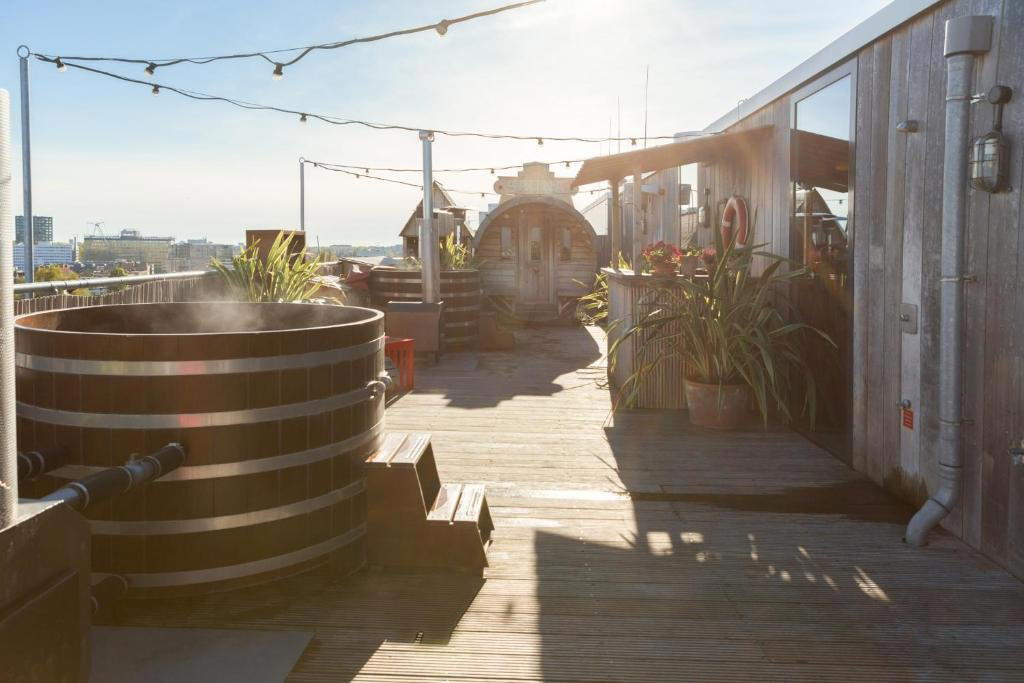
Where the Building Comes Before the Brand
Amsterdam's hotel market has long clustered around two poles: canal-belt heritage properties with restored merchant interiors, and international-flag hotels pitched at business and leisure travellers who want predictability over character. The eastern corridor along Wibautstraat represents a third current, one that has been building quietly for years, where former industrial and civic buildings have been converted into creative venues, co-working spaces, and event halls. Volkshotel sits inside that current. The building was once home to the editorial offices of de Volkskrant, one of the Netherlands' major daily newspapers, and the architectural bones of that former life, raw ceiling heights, wide corridors, a functional rather than decorative structure, remain the primary design language of the hotel as it operates today.
That backstory matters less as biography and more as context. In cities where adaptive reuse has become the dominant mode of hospitality development, the quality of the conversion often determines whether a property feels genuinely rooted or merely themed. At Volkshotel, the newspaper provenance is referenced without being over-explained: the interiors carry the weight of the original building's purpose without turning it into a museum piece. For travellers who have spent time at comparable conversion properties, the Conscious Hotel Amsterdam City (The Tire Station) is a reasonable Amsterdam peer in the conversion-led segment, the Volkshotel reads as the more programmatically ambitious version, with a social infrastructure built around the rooftop and communal spaces as much as the guest rooms.
The Room as the Building's Continuation
Accommodations at Volkshotel extend the industrial-creative logic downward from the public spaces. The rooms are not designed to insulate guests from the building's character; they are designed as smaller expressions of it. Exposed surfaces, considered lighting, and a layout that prioritises functional clarity over decorative layering are the signatures here. This places Volkshotel in a specific tier of Amsterdam accommodation: properties where the room is a continuation of an editorial point of view rather than a neutral container.
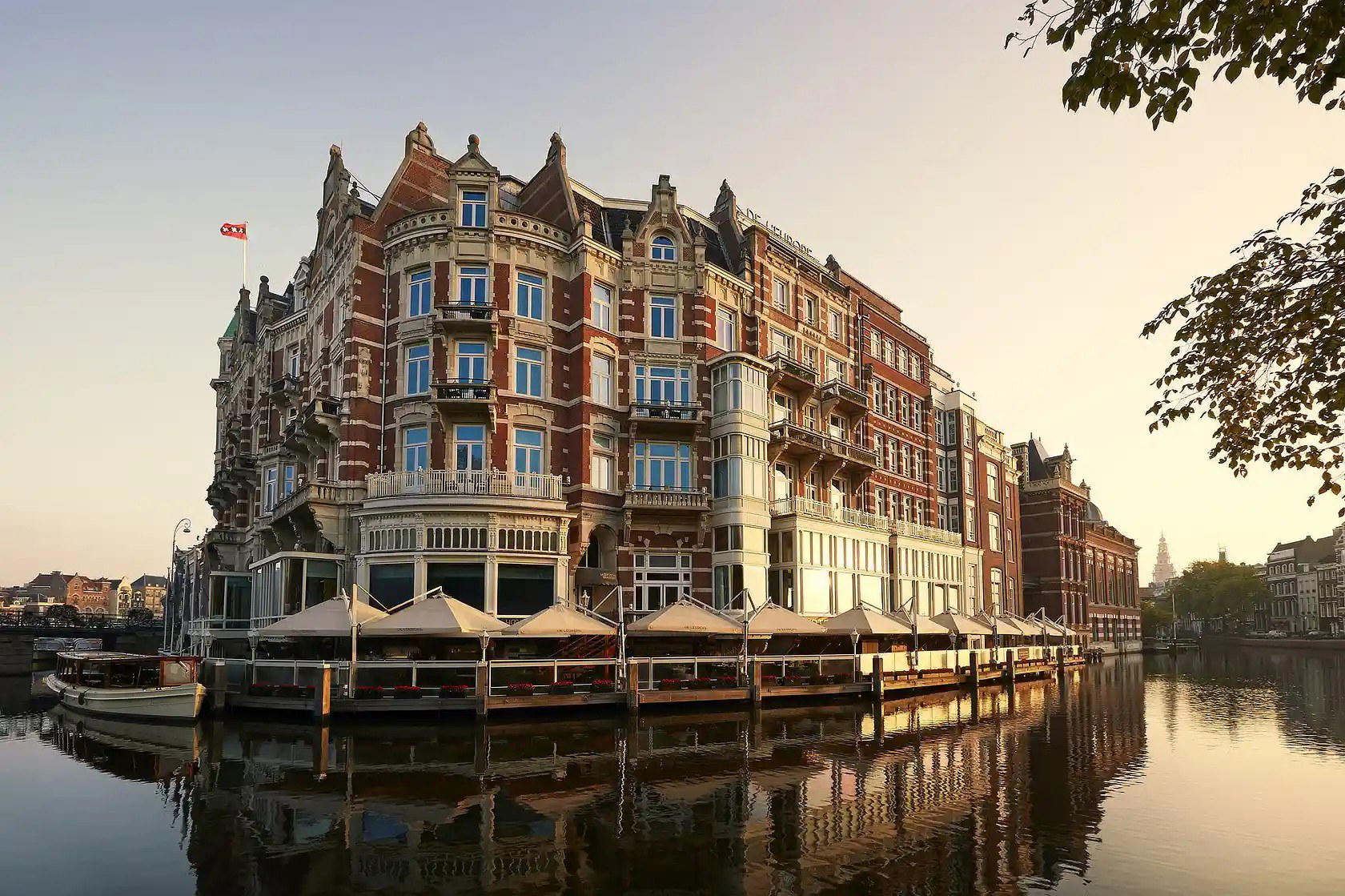
Compared to the canal-belt alternatives, the Canal House, the Breitner House, or the Décor Canal House, all of which work within a preserved domestic register, Volkshotel operates at a different frequency. The overnight experience here is less about period detail and more about the texture of a building that was built to house hundreds of people doing purposeful work. That is either an appeal or a misalignment, depending on what a guest is looking for. Travellers who want the gilt-and-marble register should look instead at De L'Europe Amsterdam or the Conservatorium, both of which pitch at a different peer group entirely.
The rooftop is where the overnight logic becomes clearest. The sauna and outdoor bath on the upper floors are not amenity add-ons in the resort sense; they are the social core of the property, drawing hotel guests and non-residents alike into the same space. Few Amsterdam hotels structure their vertical real estate this way. Most reserve rooftop access as a quiet perk for guests; Volkshotel treats it as a venue in its own right, which changes the character of the stay in ways that are not immediately obvious at check-in.
Location and the Wibautstraat Corridor
Wibautstraat is not a heritage address. It does not carry the residential cachet of the Jordaan or the museum-district proximity of the Museumplein hotels. What it offers instead is a different version of Amsterdam: faster-moving, younger in demographic profile, and closer to the city's live music and creative-industry infrastructure. The neighbourhood has been in transition for at least a decade, with the municipality investing in the corridor as part of a broader effort to shift Amsterdam's cultural centre of gravity eastward.
For guests arriving by public transport, the location is direct: the hotel is accessible by tram and metro, with connections to Centraal Station and the broader city. For guests arriving from Schiphol Airport, the route is direct and does not require passing through the city centre. Travellers who need airport-adjacent accommodation might also consider citizenM Schiphol Airport as an alternative for early departures. Those exploring the wider Netherlands from Amsterdam have reasonable rail access to destinations including Zwolle and Zaandam, both within an hour of the city.
Where Volkshotel Sits in Amsterdam's Hotel Range
Amsterdam's hotel range now runs from budget micro-format properties to full-service five-star addresses. Volkshotel occupies a band below the luxury tier but above the price-sensitive hostel segment, competing with design-conscious mid-range properties that prioritise atmosphere and programming over room size or service depth. The Andaz Amsterdam Prinsengracht occupies a similar design-attentive register but operates under an international hotel group structure and carries a higher price point; Volkshotel's positioning is more independent and more deliberately local in its programming logic.
For travellers building a Netherlands itinerary that extends beyond Amsterdam, properties worth considering include Central Park Voorburg near The Hague, Château Neercanne in Maastricht, and Château St. Gerlach in Valkenburg aan de Geul for a shift into countryside estate formats. Those extending into other European cities will find the design-hotel register well-represented at Aman Venice and, at the upper end of the New York market, at Aman New York or The Fifth Avenue Hotel.
Additional Amsterdam properties worth comparing include De Pijp Boutique Hotel for those who prefer a residential neighbourhood base, and De Plesman Hotel The Hague for travellers who may split time between cities.
Planning Your Stay
Volkshotel is located at Wibautstraat 150 in Amsterdam's eastern district, within reach of the city by tram and metro. The building's social infrastructure, particularly the rooftop facilities, functions on a mixed-access model that means the public spaces can be livelier than at conventional hotels, especially on weekends. Guests who want the quieter version of the property should consider mid-week arrivals. The hotel's address outside the canal ring also means lower ambient noise from tourist traffic compared to Jordaan or Leidseplein-adjacent properties. For travellers who want rural or coastal alternatives nearby, Grand Hotel Huis ter Duin in Noordwijk aan Zee and Landgoed Hotel Het Roode Koper in Leuvenum represent the countryside and coast options within reasonable driving distance.
Price and Recognition
Comparable venues nearby, for context on price, style, and recognition.
| Venue | Price | Awards | Notes |
|---|---|---|---|
| VolkshotelThis venue — the venue you are viewing | $$ | 3-Star | Not listed |
| De Pijp Boutique Hotel | $$$ | 3-Star | Van der Helstpleinbuurt, Boutique hotel in lively urban district with park views and gaming amenities. |
| Conscious Hotel Amsterdam City (The Tire Station) | $$ | 4-Star | Vondelparkbuurt West, Eco-sexy sustainable design in a repurposed historic tire station. |
| Stout&Co. | $$$ | 3-Star | Kadijken, Historic brewery converted into designer bed and breakfast with mini-apartments. |
| Hotel Arena Amsterdam | $$$ | 4-Star | Oosterpark, Monumental boutique hotel in park setting |
| Hotel Roemer | $$$ | 4-Star | Vondelparkbuurt Oost, Historic townhouse boutique with modern interiors |
Recognition history
Dated appearances from independent guides and award organizations, with the underlying list record or original source where available.
Michelin Selected
Michelin
Continue exploring
More in Amsterdam
Hotels in Amsterdam
Browse all →
Bars in Amsterdam
Browse all →
Restaurants in Amsterdam
Browse all →
Wineries in Amsterdam
Browse all →
At a Glance
- Trendy
- Modern
- Lively
- Industrial
- Weekend Escape
- Rooftop Pool
- Design Destination
- Panoramic View
- Wi Fi
- Sauna
- Fitness Center
- Restaurant
- Bar
- EV Charging
- Skyline
- Wi Fi
- Sauna
- Fitness Center
- Restaurant
- Bar
- EV Charging
Industrial chic with magnified newspaper prints, concrete, steel, and lively artistic elements creating an energetic, creative atmosphere.