

Michelin Selected · Design Hotels Member
TRUNK(HOTEL) sits in Shibuya's Jingumae neighbourhood, positioning itself as one of Tokyo's more design-conscious, socially engaged boutique properties. Its address on the edge of Harajuku places it within walking distance of Omotesando's commercial strip, and its stated commitment to local community and environmental responsibility distinguishes it from the city's larger luxury chains.

Pearl is the En Primeur Club membership app — saves, bookings, and concierge access live there. Same editors, same standards.
- Address
- 5 Chome-31 Jingumae, Shibuya, Tokyo 150-0001, Japan
- Phone
- +81 3 5766 3210
- Website
- catstreet.trunk-hotel.com
- Directions
- Get directions
Harajuku's Boutique Format and What It Signals
Tokyo's premium hotel market divides along a clear fault line. On one side sit the large-footprint international flagships: properties like Bvlgari Hotel Tokyo, Aman Tokyo, and Four Seasons Hotel Tokyo at Otemachi, each occupying tower floors in Marunouchi or Minato, oriented toward a global business and luxury-leisure traveller. On the other side, a smaller set of properties has emerged in the city's creative neighbourhoods, trading room count and ballroom square footage for design specificity, neighbourhood embeddedness, and programmatic identity. TRUNK(HOTEL), at 5 Chome-31 Jingumae in Shibuya, belongs to this second category.
Its Jingumae address places it at the northern edge of Omotesando, a few minutes on foot from the zelkova-lined boulevard where international fashion houses have spent decades building their most architecturally considered flagships. The neighbourhood context matters: Harajuku and Jingumae have long functioned as Tokyo's incubator for subcultural identity, streetwear, and independent retail. A hotel that pitches itself as design-led and community-oriented finds a more coherent backdrop here than it would in the glass-and-concrete density of Shinjuku or the corporate efficiency of Otemachi.
Sustainability as Structural Commitment, Not Marketing Layer
Across Tokyo's boutique hotel tier, sustainability claims have become common. The more meaningful distinction is between properties that treat environmental responsibility as a branding addition and those that build it into operational structure. TRUNK(HOTEL)'s positioning falls into the latter framing. The property presents itself around a concept it calls "social-izing" — a model that prioritises local procurement, community engagement, and reduced environmental impact as integrated operational principles rather than supplementary programmes.
This approach has parallels in other Japanese markets. Properties like ENOWA Yufu in Yufu and Zaborin in Kutchan have developed sustainability frameworks rooted in regional material sourcing and low-footprint design, though those operate in rural or onsen-resort contexts where the relationship with natural environment is more direct. TRUNK(HOTEL) attempts a comparable commitment in an urban, high-density neighbourhood — a more logistically complex undertaking, and one that requires supply-chain decisions to replace what landscape context provides naturally in rural properties.
In practical terms, this has implications for food and beverage: sourcing from Japanese producers, reducing food waste through kitchen design, and building menus around seasonal availability rather than year-round imports. For travellers whose accommodation decisions factor in environmental accountability, this operational stance is a substantive differentiator from larger chains, where sustainability commitments are often applied unevenly across a global portfolio.
Where TRUNK(HOTEL) Sits in the Tokyo Hotel Conversation
Palace Hotel Tokyo, Andaz Tokyo, JANU Tokyo, and The Capitol Hotel Tokyu occupy a different competitive register, one built on room inventory, F&B; scale, and the kind of spa and meeting infrastructure that drives corporate and high-end leisure business. TRUNK(HOTEL) competes instead on identity and neighbourhood specificity, the criteria that matter most to travellers who are already comfortable with Tokyo's major areas and want a base that reflects the city's more independent design culture.
The Bellustar Tokyo, A Pan Pacific Hotel in Shinjuku offers a point of comparison in the design-forward category, though its verticality and Kabukicho address give it a different character entirely. TRUNK(HOTEL)'s low-rise, street-level integration with Jingumae is the more grounded option for travellers who want proximity to Omotesando retail, Meiji Jingu's forested grounds, and the concentrated independent food scene running through the backstreets between Harajuku and Shibuya.
Practical Orientation for Prospective Guests
The Jingumae address is served most directly by Meiji-Jingumae Station on the Tokyo Metro Chiyoda and Fukutoshin lines, and by Harajuku Station on the JR Yamanote Line. Both are within a short walk, making central Tokyo, Shinjuku, and Shibuya all accessible in under fifteen minutes by train. Guests planning to use the property as a base for day trips should note the ease of reaching Gora Kadan in Hakone via the Romancecar from Shinjuku, or connecting westward toward the Fuji Five Lakes area, where Fufu Kawaguchiko offers an onsen-resort counterpoint to the urban stay.
For travellers extending into the Kansai region, HOTEL THE MITSUI KYOTO represents the kind of design-serious, historically grounded property that shares some philosophical alignment with TRUNK(HOTEL)'s approach, though at a markedly different scale and price register. Further afield, Amanemu in Mie, Asaba in Izu, and Benesse House in Naoshima each anchor distinct travel itineraries for guests willing to move beyond Tokyo during a longer Japan visit.
Those travelling through western Japan can also consider Sekitei in Hatsukaichi-shi or Nishimuraya Honkan in Kinosaki-cho for ryokan-style stays. For Okinawa and the southern islands, Halekulani Okinawa and Jusandi in Ishigaki cover the premium end of that geography. A complete reference for Tokyo dining and hotel context is available through our full Tokyo restaurants guide.
For international comparisons within the boutique, design-led category, The Fifth Avenue Hotel in New York City and Aman New York represent two different versions of the urban luxury-boutique format, while Aman Venice shows how location specificity and heritage integration can define a property's identity more powerfully than room count or brand recognition.
Budget and Context
| Venue | Price | Awards |
|---|---|---|
| TRUNK(HOTEL)This venue — the venue you are viewing | Not listed | Michelin Selected · Design Hotels Member |
| Bvlgari Hotel Tokyo | Not listed | 3 Michelin Keys · World's 50 Best #24 |
| Aman Tokyo | Not listed | 2 Michelin Keys · World's 50 Best #11 |
| Four Seasons Hotel Tokyo at Otemachi | Not listed | 3 Michelin Keys · La Liste Top Hotels |
| Palace Hotel Tokyo | Not listed | 3 Michelin Keys · World's 50 Best #73 |
| Andaz Tokyo | $300–500 | 1 Michelin Key |
Recognition history
Dated appearances from independent guides and award organizations, with the underlying list record or original source where available.
Michelin Selected
Michelin
Design Hotels Member
Design Hotels















Details
- Modern
- Minimalist
- Quiet
- Sophisticated
- Trendy
- Romantic Getaway
- Weekend Escape
- Rooftop Pool
- Panoramic View
- Pool
- Wi Fi
- Concierge
- Elevator
- Garden
- Skyline
- Elevator
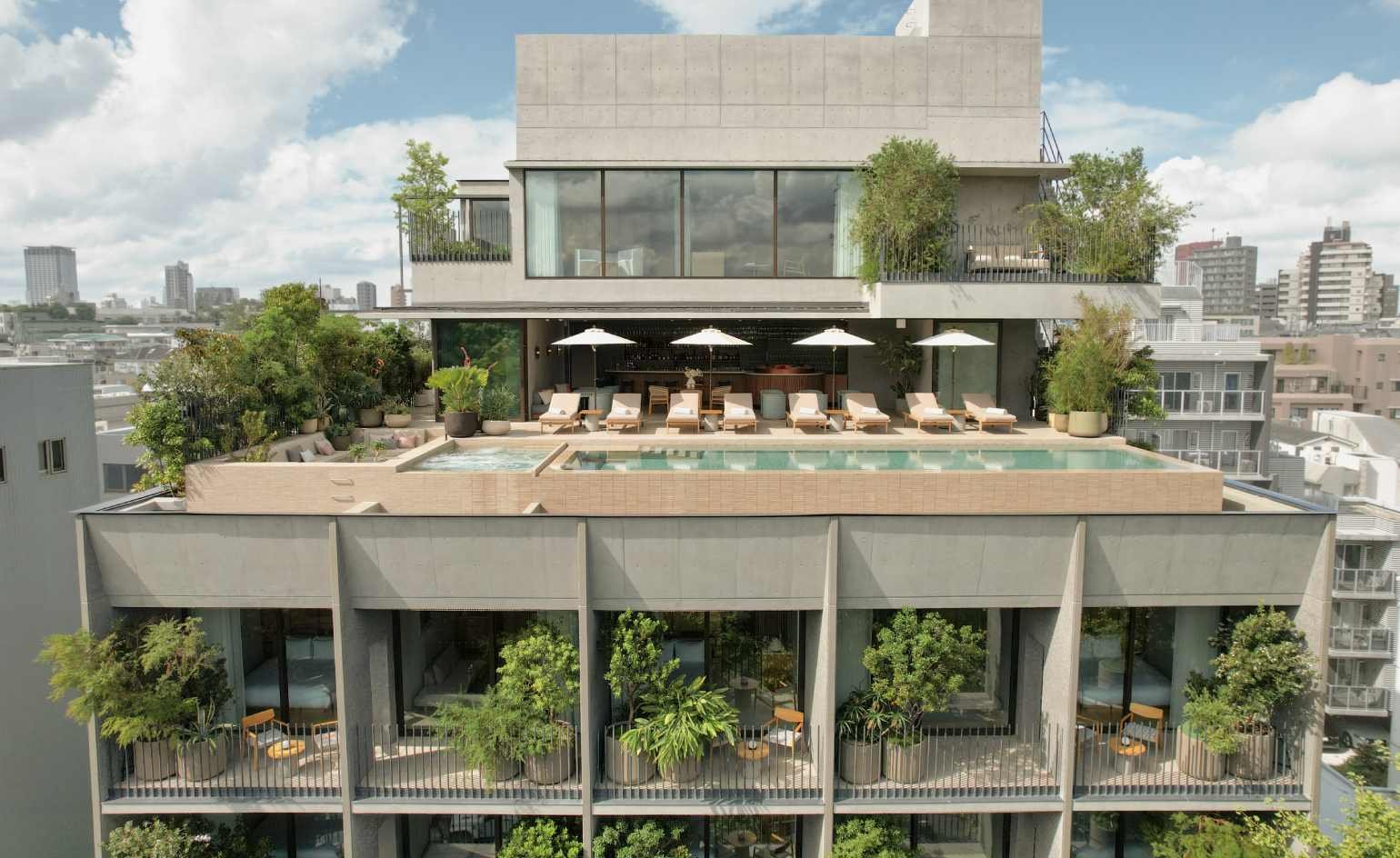
Simple, quiet aesthetic with open layouts, exposed concrete walls, and a peaceful retreat amid Tokyo's vibrancy.