The Craftsmen

1 Michelin Key
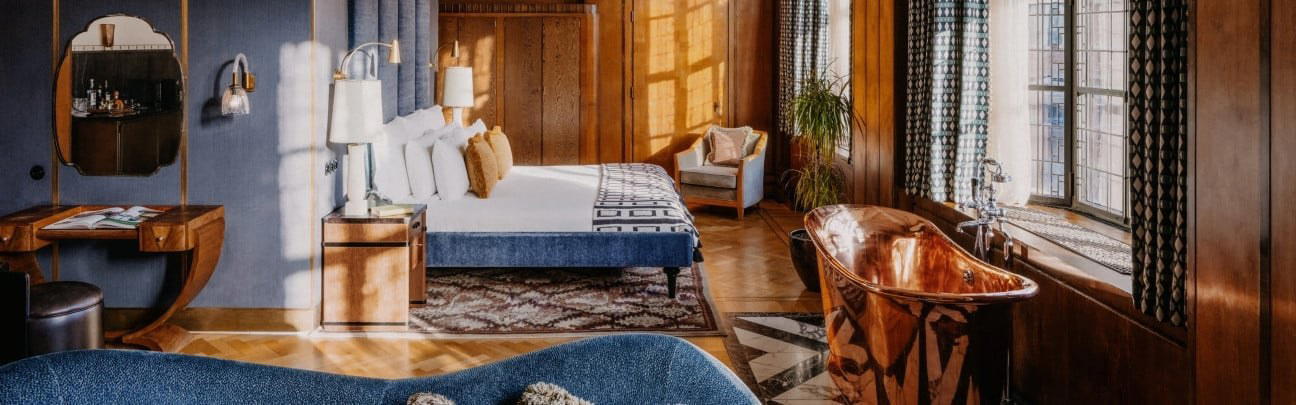
Occupying a 17th-century Singel townhouse that once housed the long-running Hotel Brouwer, The Craftsmen compresses 14 rooms and three centuries of Dutch trade heritage into one of Amsterdam's more inventive canal-side addresses. Each room is themed around a historic guild, with upcycled antiques and bespoke objects, vintage tools as light fixtures, penny-farthings in bathrooms, at a rate from $297 per night.

Pearl is the En Primeur Club membership app, where members save venues, book tables and use the concierge.
Where a Canal Address Becomes a Design Argument
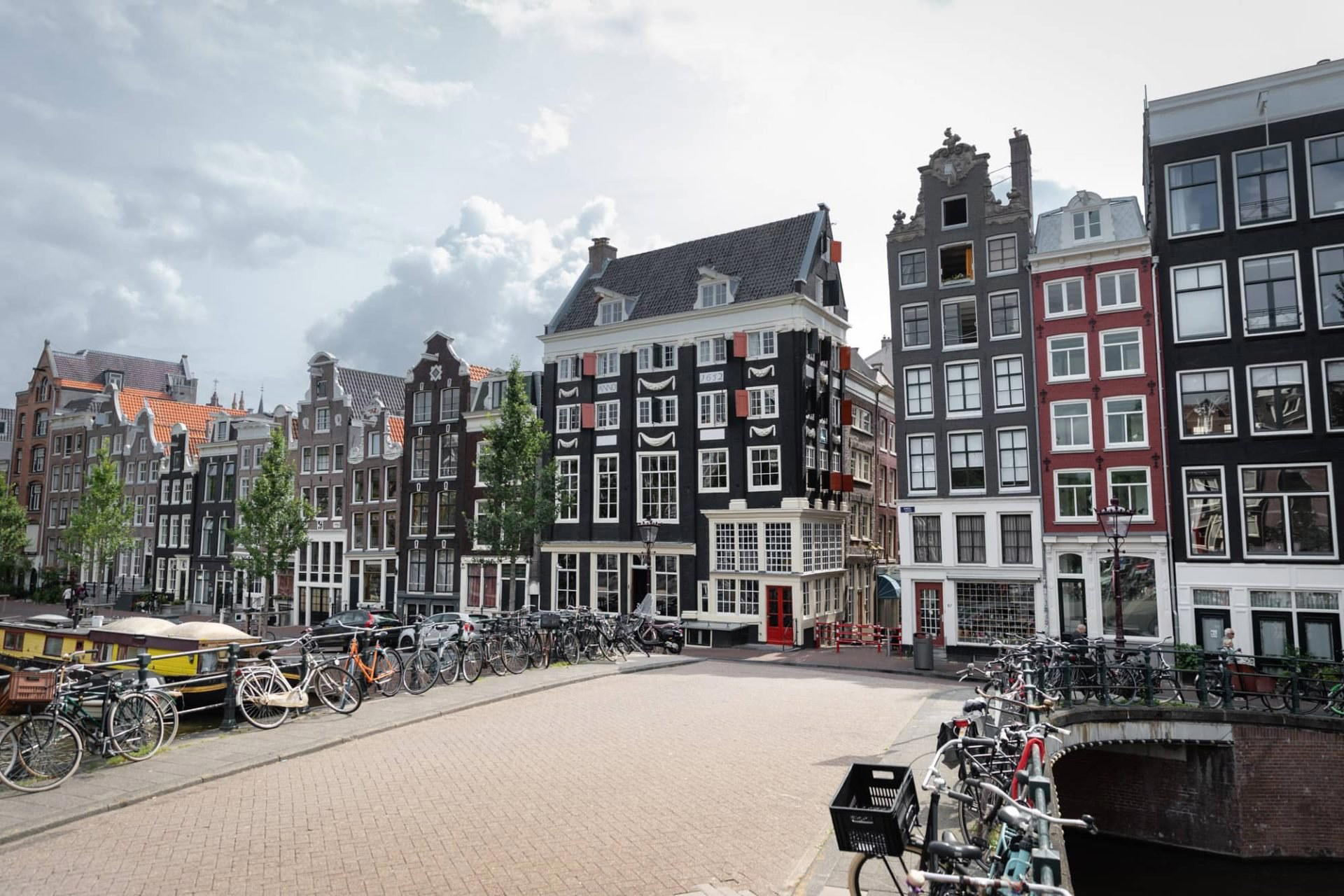
Amsterdam's boutique hotel tier has split clearly in recent years. On one side sit the large international flags, the Andaz Amsterdam Prinsengracht and the Conservatorium, each offering polished service and broad amenity sets at scale. On the other sit properties that trade scale for specificity: fewer rooms, stronger design language, and an identity rooted in place rather than brand. The Craftsmen, at Singel 83, occupies that second tier, and does so with more conceptual commitment than most of its neighbours.
The Singel is the innermost of Amsterdam's concentric canal rings, and this stretch of it carries the particular atmosphere of a working historic city rather than a tourist corridor. Approaching from the water side, the narrow 17th-century townhouse facade offers no grand gesture, no livery, no canopy. The building's credentials are architectural: a stepped gable, brick that has been absorbing canal light for three hundred years, and a position on one of the city's original waterways that no amount of money can replicate in a newer development.
The Design Argument in Detail
What the property does with its 14 rooms is more interesting than its address alone would suggest. Amsterdam's guild culture, cartographers, shoemakers, coopers, sailmakers, built the city's 17th-century commercial dominance, and The Craftsmen uses that as its organisational logic. Each room takes a historic trade as its subject, then interprets it through objects rather than graphics: upcycled antiques, bespoke furniture, and found materials given new function.
The results skew toward the inventive end of boutique hotel design. Vintage tools become light fixtures. A penny-farthing bicycle appears in a bathroom. An airplane door functions as a wardrobe. These are not decorative gestures applied to a standard room shell; they are the room's structure. For the segment of the Amsterdam boutique market that runs on mood boards and sourced objects, think Canal House or Breitner House, The Craftsmen pushes the design density further than most.
At 14 rooms, the property sits at the low end of viable boutique scale in Amsterdam. That number is significant: it keeps the operation feeling more like a private residence than a hotel, with the attentional economics that implies. The long-running Hotel Brouwer operated from this address before The Craftsmen, and that institutional memory of hospitality in the building is part of what the current property has inherited, a sense that the address has always been in the business of looking after travellers, without ever needing to announce it loudly.
How It Sits in the Amsterdam Boutique Tier
Pricing from $297 per night places The Craftsmen above entry-level canal-house stays and within reach of the lower end of the design-led boutique bracket. For context, that bracket in Amsterdam runs from properties like De Pijp Boutique Hotel and Décor Canal House at the accessible end, up through De L'Europe Amsterdam at the leading. The Craftsmen's rate reflects the premium of a genuinely historic address, a coherent design identity, and a room count low enough to make the experience feel deliberate rather than managed.
The comparison that matters most is not to the large flags, the Conscious Hotel Amsterdam City (The Tire Station) or others in the sustainability-forward tier, but to other small-footprint properties where the design investment is the primary offer. The concept is not applied as a surface layer; it is structural.
The Practical Shape of a Stay
A 14-room property on the Singel operates on a different logic from a larger hotel. Availability moves quickly, particularly in Amsterdam's peak travel windows: spring tulip season (late March through early May) and the summer months draw significant demand across the city's canal ring. Booking ahead by several weeks is advisable for weekend stays; the shoulder months of November through February offer more flexibility and a different quality of light on the canal.
The address at Singel 83 places guests within walking distance of the Jordaan, the Nine Streets shopping district, and the major museum corridor running from the Rijksmuseum through the Van Gogh Museum. Tram connections on nearby Nieuwezijds Voorburgwal and Spui link quickly to Amsterdam Centraal, roughly ten to fifteen minutes on foot. For travellers arriving from Schiphol Airport, the city centre is approximately 20 minutes by direct train to Centraal. Those travelling from elsewhere in the Netherlands might note the broader range of Dutch accommodation covered by EP Club, from Inntel Hotels Amsterdam Zaandam just north of the city to Château Neercanne in Maastricht and Château St. Gerlach in Valkenburg aan de Geul in the south.
For the dining side of any Amsterdam stay, our full Amsterdam restaurants guide covers the city's range from neighbourhood-level specificity. Those extending a Netherlands trip might also consider De Librije in Zwolle or Posthoorn in Monnickendam for a contrast in scale and setting. Further afield, EP Club covers properties from Grand Hotel Huis ter Duin in Noordwijk aan Zee to De Plesman Hotel The Hague and Central Park Voorburg for those moving through the Randstad. Internationally, the design-led boutique ethos represented here finds different expressions at Aman Venice and The Fifth Avenue Hotel in New York City, both of which share a commitment to historically grounded interiors at low room counts.
Reputation Context
Comparable venues nearby, for context on price, style, and recognition.
| Venue | Cuisine | Price | Awards | Notes |
|---|---|---|---|---|
| The CraftsmenThis venue (the venue you are viewing) | 17th-century canal house renovated with distinctive craftsman-themed rooms | $200–300 | 1 Michelin Key | Not listed |
| Pulitzer Amsterdam | Restored 17th-18th century canal houses with modern comforts | $300–500 | 1 Michelin Key · Virtuoso Luxury Hotel Partner | Felix Meritisbuurt |
| Waldorf Astoria Amsterdam | Historic luxury canal house hotel with modern ornate interiors | Not listed | Michelin Selected · La Liste Top Hotels | Amstelveldbuurt |
| The Dylan Amsterdam | Historic boutique hotel blending 17th-century architecture with contemporary luxury in Amsterdam's canal belt. | $300–500 | 1 Michelin Key · Virtuoso Luxury Hotel Partner | Felix Meritisbuurt |
| Breitner House | Restored 19th-century artist residence with ornate suites | $500–750 | La Liste Top Hotels | Oosterparkbuurt Zuidoost |
| InterContinental Amstel Amsterdam | Luxury heritage hotel blending 19th-century European architecture with contemporary five-star amenities and service standards. | $300–500 | Virtuoso Luxury Hotel Partner · Forbes Recommended | Sarphatistrook |
Recognition history
Dated appearances from independent guides and award organizations, with the underlying list record or original source where available.
Michelin 1 Key
Michelin
Full recognition history (2 entries)
Michelin 1 Key
Michelin
Continue exploring
More in Amsterdam
Hotels in Amsterdam
All hotels in Amsterdam →
Bars in Amsterdam
All bars in Amsterdam →
Restaurants in Amsterdam
All restaurants in Amsterdam →
Wineries in Amsterdam
All wineries in Amsterdam →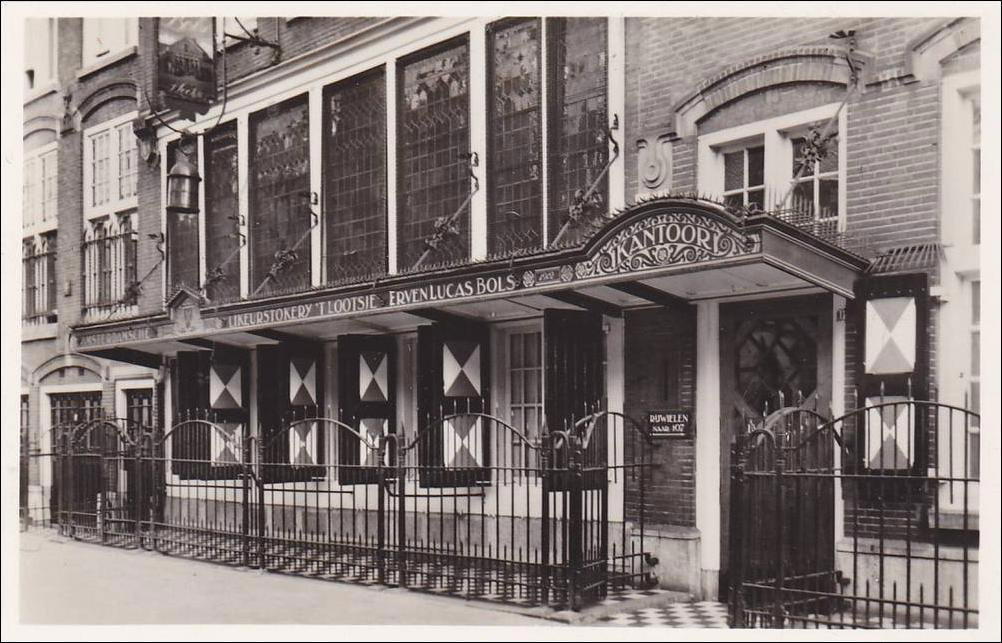
Details
- Cozy
- Elegant
- Intimate
- Modern
- Sophisticated
- Romantic Getaway
- Weekend Escape
- Anniversary
- Historic Building
- Terrace
- Panoramic View
- Wi Fi
- Concierge
- Street Scene
- Waterfront
- Elevator
Cozy and charming with artistic, quirky decor, immaculate rooms, and a warm, inviting atmosphere enhanced by canal views and personalized service.