
Kumamoto Ramen Kokutei Honten belongs to the city’s older ramen grammar: quick pacing, compact seating, and a bowl-first ritual rather than chef’s-table theatre. Its Tabelog Ramen WEST “Tabelog 100” selections in 2023, 2024, and 2025 place it in a serious regional ramen conversation while keeping the experience grounded in everyday Kumamoto dining.
Pearl is the En Primeur Club membership app — saves, bookings, and concierge access live there. Same editors, same standards.
- Address
- 2 Chome-1-23 Nihongi, Nishi Ward, Kumamoto, 860-0051, Japan
- Phone
- +81 96-352-1648
- Website
- kokutei.co.jp
 Saves & bookings on Pearl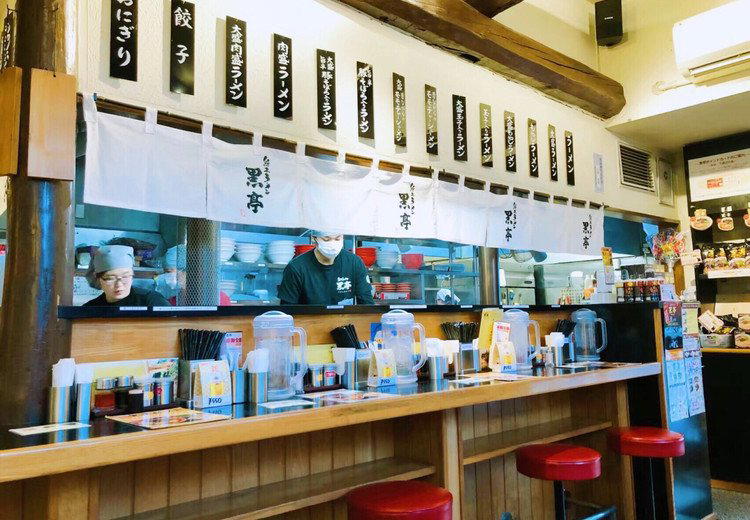
At a classic ramen room in Kumamoto, the ritual is clear before the bowl arrives: brisk pace, narrow choices, and solo diners, families, and small groups moving without ceremony. Kumamoto Ramen Kokutei Honten fits that tradition. The point is not lingering over a long menu or chef’s thesis; it is reading a local ramen style through repetition, speed, and a room built for turnover rather than spectacle.
Kumamoto ramen as a civic habit, not a tasting-menu event
Kumamoto’s ramen identity sits apart from the ramen capitals on international itineraries. The city’s version belongs to Kyushu’s pork-broth culture, but with its own local register: direct, everyday, and not luxury performance. For travellers expecting every serious Japanese meal to announce itself with ceremony, that matters. In Kumamoto, seriousness can look like a short queue, a counter seat, and a bowl served fast.
The ritual is democratic by design. A 31-seat room, split between counter and table seating, puts single diners and families into the same tempo. Counter seats give the clearest read on ramen-shop cadence: order, eat while the noodles hold texture, clear the seat. Tables soften the room for groups and children, but etiquette remains: ramen rewards attention in the first minutes; conversation can wait until the bowl is nearly finished.
The venue’s recognition explains why this address carries weight beyond nostalgia. Selection for Tabelog Ramen WEST “Tabelog 100” in 2023, 2024, and 2025 signals sustained standing among western Japan ramen shops, not a one-season spike. A Tabelog score of 3.68 adds context: not a luxury metric, but meaningful in Japan’s restaurant-review culture for a casual specialist category where diners are severe and repeat visits shape reputation.
Within Kumamoto, the comparison is instructive. A high-budget contemporary table such as .know asks a different question of the city, about modern tasting formats and premium spend. Casual local specialists such as Amakusa Daiou Senmon Ten Tosaka and broader dining rooms such as China Sichuan Togen show Kumamoto’s eating culture moving between regional ingredients, everyday value, and imported cuisines. Kokutei belongs to the ramen lane, where authority comes from consistency and local memory rather than luxury signals.
The Honten question: why the main shop matters in ramen culture
In Japanese food culture, “honten” carries practical force. It does not automatically mean refinement, but it implies origin, continuity, or centrality within a shop’s own history. Here, that matters: the business was founded in 1957 in Nihongi, moved within Kumamoto in 1971, and shifted to its current location in 2006. Those dates are not decorative biography; they show a local ramen name surviving urban change while staying tied to neighbourhood dining habit.
The Honten format clarifies expectations. This is a ramen house, not a chef-driven counter where personality becomes the meal’s subject. Read it through category customs: quick service, hot bowls, counter discipline, cash readiness, and minimal friction. In a city of castles, tram stops, and regional day trips, ramen offers a compressed meal with a strong sense of place.
Reservations are not part of the format, normal for ramen at this level. That shapes decisions more than it inconveniences them: go when the rhythm suits a casual meal, accept any line, and do not treat the experience like a fixed-course reservation. The house also lists take-out and delivery, showing an audience beyond travelling ramen hunters: local diners folding the shop into ordinary schedules.
Payment culture reminds visitors that Japan’s casual specialists often lag luxury restaurants in card acceptance. Cash remains the safer assumption at older ramen shops. The room is non-smoking, private rooms are absent, and parking exists, but the essential choice is simpler: counter for speed, table for a group, bowl first, conversation second.
How to place it on a Kumamoto eating itinerary
For a serious Kumamoto food day, this is the low-ceremony anchor, not the grand finale. Pairing ramen with higher-spend restaurants gives a clearer view of the city than chasing one dining register. antica locanda MIYAMOTO and BARON point toward different modes, while the broader city index in Our full Kumamoto restaurants guide helps separate ramen, casual regional cooking, and destination restaurants by intent rather than hype.
The wider travel plan matters. Kumamoto is not only a restaurant stop; it is a base for hotels, bars, cultural routes, and nearby rural travel. Use Our full Kumamoto hotels guide, Our full Kumamoto bars guide, Our full Kumamoto wineries guide, and Our full Kumamoto experiences guide to place ramen inside a broader schedule rather than treating it as an isolated detour.
Against other Japanese casual formats, Kokutei’s value becomes clearer. It occupies a different lane from beef-focused dining such as -Grilled beef Sukiyaki- KAMAKURA TANUKIAN 鎌倉 たぬき庵 in Kamakura, izakaya-adjacent seafood grilling like. 鮪と炭火焼き うお炭 秋葉原店 in Tokyo, curry specialization at [Curry Senmon Ten] Maruyama Kyoju. in Sapporo, and Kyoto’s quieter contemporary registers such as [ki:] in Kyoto. The ramen shop’s strength is narrower: a local bowl, fast pacing, and repeatable comfort.
That narrowness is the point. Travellers crossing Japan often overvalue rarity and undervalue ritual. The ramen counter teaches another lesson: regional food culture is often strongest when the room is casual, the format familiar, and the meal priced for repetition. For parallel casual Japanese and Japanese-adjacent references abroad, compare the function of a quick specialist meal with Jōdo Saké Bar in Los Angeles, Onigiri Time in Pasadena,.cafe in Osaka, and (Shoku) Vietnam in Kawasaki. Different cities, different foods, same editorial test: the format should explain how locals actually eat.
Cuisine-First Comparison
Nearby venues at a similar price tier for orientation.
| Venue | Cuisine | Price | Awards | Notes |
|---|---|---|---|---|
| Kumamoto Ramen Kokutei HontenThis venue — the venue you are viewing | Kumamoto Ramen | $ | , | |
| Yoshoku no Mise Hashimoto | Japanese-style Western Cuisine (Yoshoku) | $$ | , | Kamitori-cho, Chuo Ward |
| Katsuretsu Tei (勝烈亭 新市街本店) | Traditional Tonkatsu (Pork Cutlet) | $$ | , | Shinshigai, Chuo-ku |
| 花小町 | japanese | , | Kumamoto | |
| Katsuretsu Tei Minami kumamoto ten | Kumamoto tonkatsu specialist | $$ | , | Chuo Ward |
| Katsuretsu Tei Shinishigai honten | Traditional Kumamoto Tonkatsu Restaurant | $$ | , | Shinshigai, Chuo Ward |
At a Glance
- Classic
- Cozy
- Iconic
- Solo
- Family
- Casual Hangout
- Group Dining
- Standalone
- Beer Program
A no-frills, traditional ramen-shop atmosphere with a house-restaurant feel and a steady, casual dining pace.