
1 Michelin Key
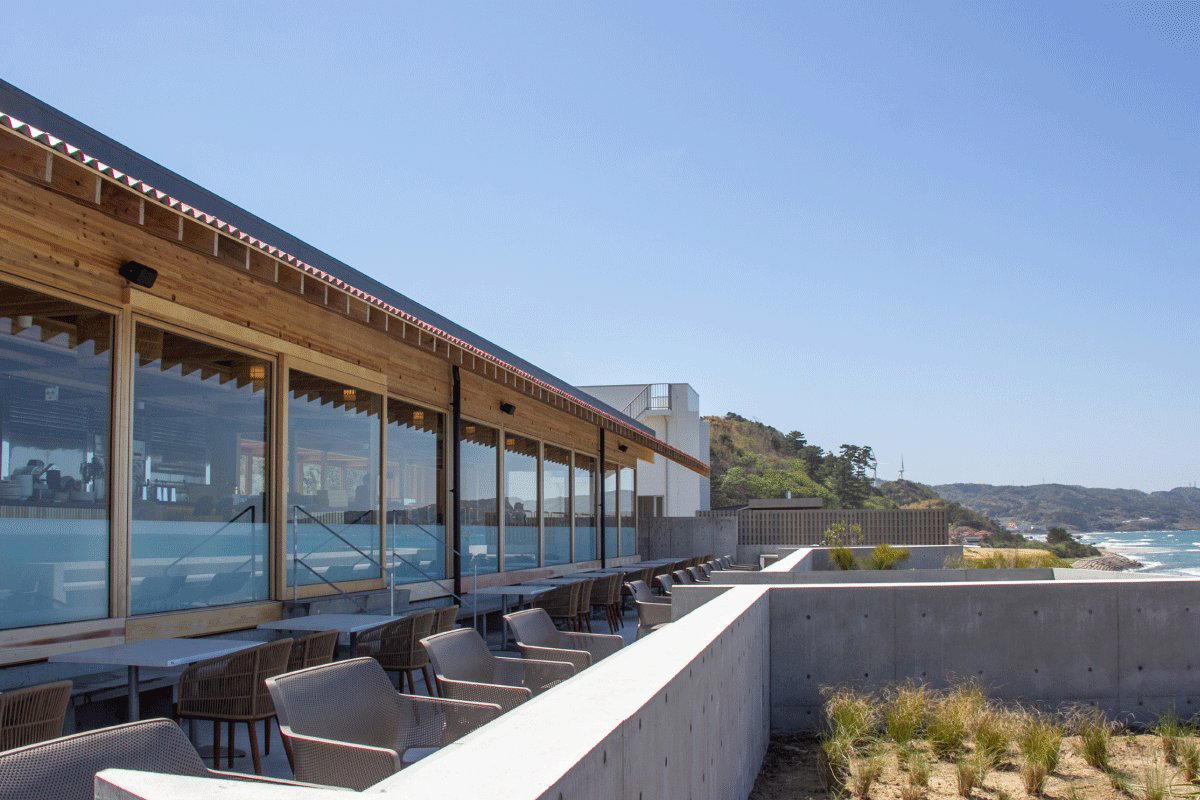
A Michelin Key recipient in 2024, the property pairs brutalist architecture with refined woodwork interiors and a terrace restaurant serving seasonal local produce. Availability is tightly limited by design.

Pearl is the En Primeur Club membership app — saves, bookings, and concierge access live there. Same editors, same standards.
- Address
- 〒699-0901 Shimane, Izumo, Takichō Kumura, 1870 1F
- Phone
- +81 853-86-3300
- Website
- hotel-the-cliff.jp
- Directions
- Get directions
Built Into the Rock: Architecture as the Experience
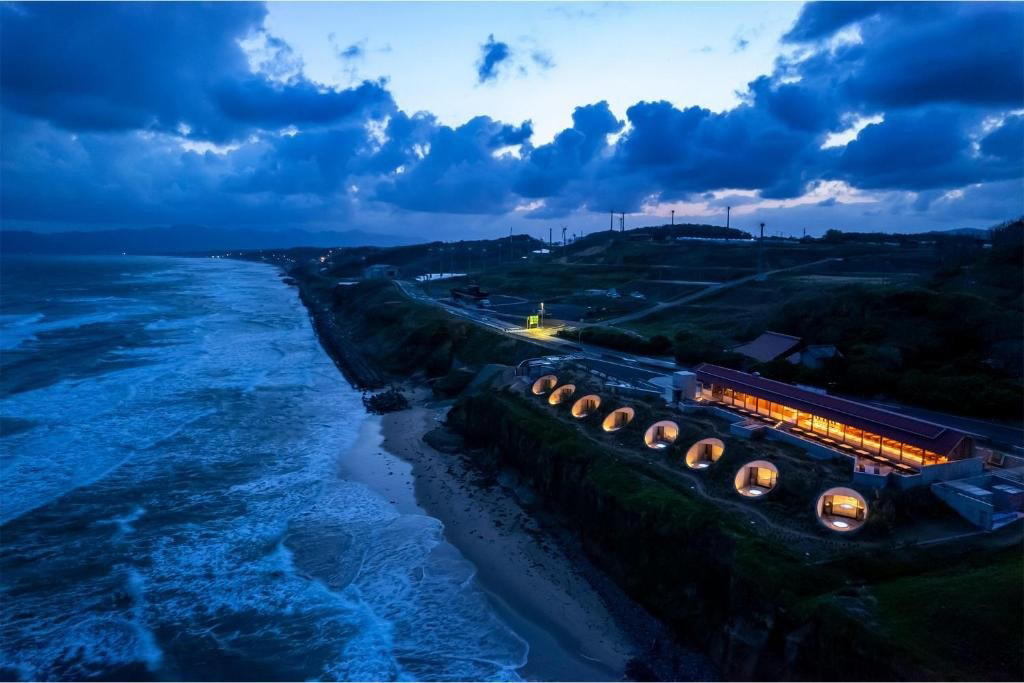
Japan's coastal ryokan tradition tends toward timber, tatami, and the studied blurring of interior and exterior through sliding screens. Izumo Hotel The Cliff takes a different position entirely. Where most small luxury properties in the San'in region soften the drama of the coastline, this nine-room hotel amplifies it through material contrast: raw, exposed concrete pressed against the living rock of the cliffside, with guest rooms that sit not above the cliff but within it. The architecture is the experience, and that distinction matters when comparing it to the broader cohort of design-led Japanese properties like Benesse House in Naoshima or Zaborin in Kutchan, where site and structure are in deliberate conversation. Here, the conversation is confrontational in the leading architectural sense — hard material, soft light, open sea.
The design language is leading understood as brutalism tempered by Japanese craft. The raw concrete that defines the room shells would read as cold in isolation, but the woodwork used throughout the interiors introduces warmth and texture at a human scale. This pairing is not decorative compromise; it is the central tension the property is built around. Guests moving between the cliffside bunker rooms and the upper terrace restaurant encounter two distinct spatial registers: enclosed and private below, open and panoramic above. Few small hotels in Japan engineer that kind of vertical contrast so deliberately.
The Rooms: Recessed, Private, Framed
The property holds nine rooms in total. Eight of those rooms are set directly into the cliff face, each with its own recessed balcony positioned to frame a specific view of the sea. The balcony design is worth noting: rather than a conventional terrace projecting outward, the recess pulls the guest back into the rock, creating an almost theatrical framing of the horizon. The effect is that the sea feels curated, presented like a fixed installation rather than an incidental backdrop.
Across Japan's small-luxury hotel tier, room count has become an indicator of positioning. Properties like Asaba in Izu and Nishimuraya Honkan in Kinosaki-cho operate at comparable or smaller scales, where the guest-to-staff ratio and the physical intimacy of the property are part of the value. At nine rooms, Izumo Hotel The Cliff sits firmly in that specialist cohort. The amenities, described as luxurious without leaning into extravagance, suggest a property that prioritises spatial and material quality over amenity accumulation — no spa tower, no multiple dining concepts, no conference facilities competing for the physical footprint. The San'in coast faces the Sea of Japan rather than the Pacific, which gives it a different atmospheric character: greyer light in winter, harder wind patterns, a quality of remoteness that the more polished resort corridors of the Pacific side do not replicate. For travellers who have moved through the standard circuits of Hakone, Fujikawaguchiko, or the Ise-Shima coast where Sekitei in Hatsukaichi-shi or Bettei Otozure in Nagato, position themselves in a similar niche of coastal retreat with serious culinary intent.
Where This Sits in Japan's Small Luxury Hotel Field
Japan's small luxury hotel market has stratified considerably over the past decade. At the upper end of the field, properties like Hotel The Mitsui Kyoto and Bvlgari Hotel Tokyo compete on heritage restoration and urban positioning. At the opposite end, design-led rural retreats like ENOWA Yufu in Oita Prefecture compete on landscape integration and thermal access. Izumo Hotel The Cliff carves its position through architecture that is neither heritage nor landscape-mimicry, but something closer to land art: a structure that makes its mark on the site rather than disappearing into it.
That positioning is relatively unusual in Japan, where the dominant aesthetic for high-end rural accommodation leans toward integration and concealment. Properties in this more confrontational architectural register tend to attract a guest profile that already has significant experience with Japan's more traditional luxury formats. Someone arriving at Izumo Hotel The Cliff having already stayed at Araya Totoan in Kaga or Beniya Kofuyuden in Awara is looking for a different register, not a variation on the same one. The concrete and the cliff deliver that.
Current availability is limited and the room count of nine means that peak-season windows close quickly. Prospective guests should treat this as a property requiring advance planning comparable to other tightly allocated rural Japan properties. See our Azumi Setoda in Onomichi or Halekulani Okinawa for those building a broader Japan coastal journey. For travellers pairing this with mountain or onsen-focused nights, Fufu Nikko and Bettei Senjuan in Minakami operate in complementary registers. Those prioritising Japan's southern island fringe might look at Jusandi in Ishigaki as a contrasting bookend.
Comparable Venues
Comparable venues nearby, for context on price, style, and recognition.
| Venue | Cuisine | Price | Awards | Notes |
|---|---|---|---|---|
| Izumo Hotel The CliffThis venue — the venue you are viewing | Cliffside luxury retreat carved into natural rock | $300–500 | 1 Michelin Key | Not listed |
| Hacienda Vison Hotel | Mid-century modern boutique manor house with artist-inspired rooms | $500–750 | 1 Michelin Key | Odaicho |
| The Hiramatsu Hotels & Resorts Atami | Traditional Sukiya-zukuri ryokan converted into a gourmet auberge | Not listed | 1 Michelin Key | Atami |
| The Ritz-Carlton, Kyoto | Contemporary ryokan-inspired urban resort blending traditional Japanese elements with modern luxury. | $500–750 | 1 Michelin Key · La Liste Top Hotels | Gion |
| moksa | Modern ryokan rebirth hotel blending tradition with contemporary wellness. | $100–200 | Michelin Selected | Yase |
| Ishigaki Hills | Modern villas blending architecture with nature for immersive island retreats | $500–750 | Michelin Selected | Miyara |
Recognition history
Dated appearances from independent guides and award organizations, with the underlying list record or original source where available.
Michelin 1 Key
Michelin
Full recognition history (3 entries)
Michelin 1 Key
Michelin
Michelin 1 Key
Michelin
Continue exploring
More in Izumo
Hotels in Izumo
Browse all →

Details
- Romantic
- Quiet
- Modern
- Minimalist
- Scenic
- Elegant
- Sophisticated
- Romantic Getaway
- Honeymoon
- Anniversary
- Weekend Escape
- Panoramic View
- Wi Fi
- Sauna
- Hot Tub
- Restaurant
- Room Service
- Concierge
- Fitness Center
- Beach Access
- Waterfront
- Wheelchair Accessible
Minimalist interiors blending brutalist concrete and woodwork create a calming, serene atmosphere with dramatic ocean vistas and wave sounds.