
1 Michelin Key
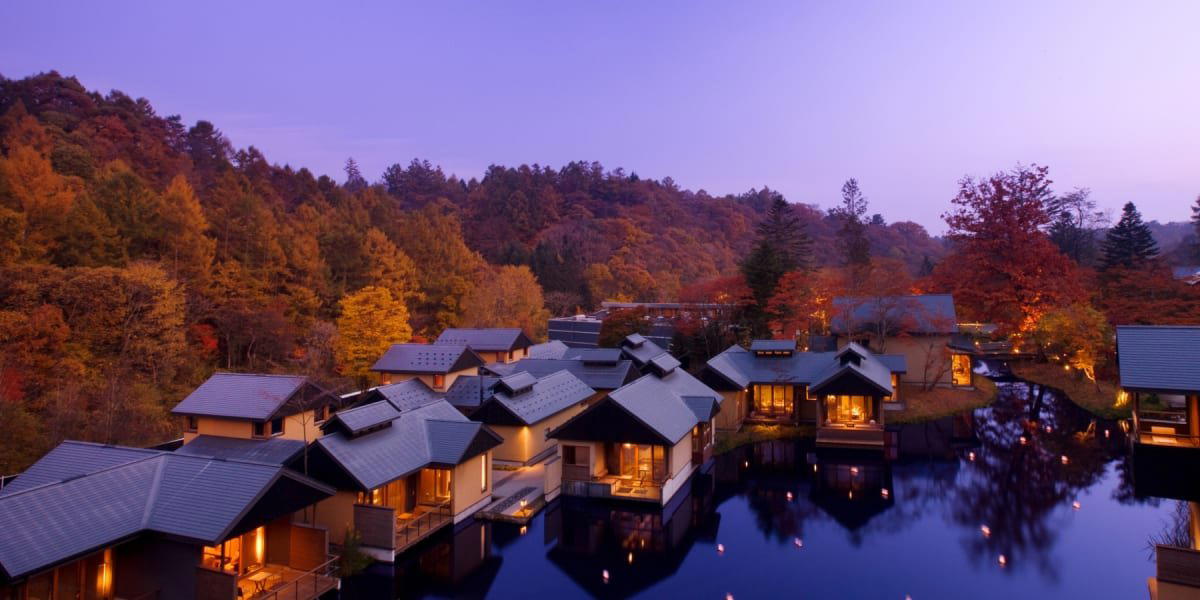
One of two Fufu properties in the Karuizawa area, Fufu Kyu-Karuizawa Restful Forest sits beside Kumoba Pond with 20 rooms built around hot spring bathing, modern wood stoves, and Shinshu-style dining.

Pearl is the En Primeur Club membership app — saves, bookings, and concierge access live there. Same editors, same standards.
- Address
- 1299-2 Karuizawa, Karuizawa-machi, Kitasaku-gun, Nagano 389-0102, Japan
- Phone
- +81570011722
- Website
- fufukyukaruizawa.jp
- Directions
- Get directions
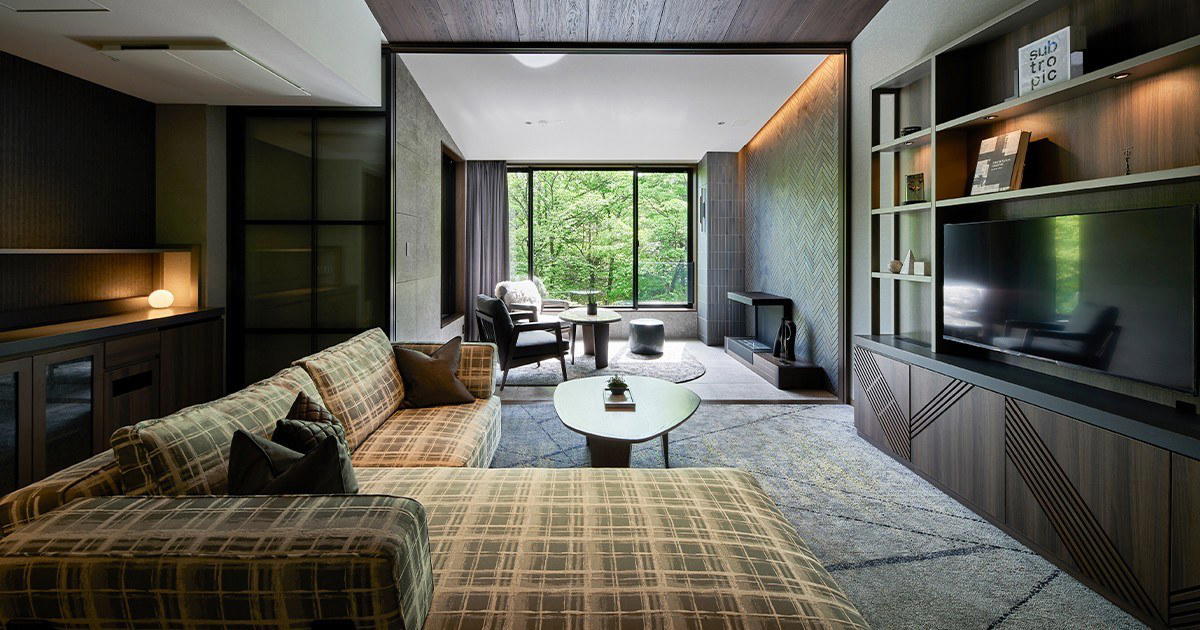
Arrival at Kumoba Pond
Karuizawa has long operated as Tokyo's release valve: close enough for a Friday evening departure from Shinjuku, distant enough in atmosphere to feel like a genuine reset. The town's history as a resort destination for foreign diplomats and later the Japanese elite has left it with a distinct character — cooler summers, denser forests, and a tolerance for a kind of slow, considered luxury that the capital rarely has room for. Within that tradition, the ryokan-influenced inn has become one of Karuizawa's most competitive hospitality categories, with properties ranging from design-forward boutiques to deeply traditional establishments. Fufu Kyu-Karuizawa Restful Forest sits in the former camp, beside Kumoba Pond on the quieter western fringe of the Karuizawa resort area.
The approach matters here. Arriving at a property built around the idea of restorative immersion in nature, the pond-side setting does real work before you even check in. Kumoba Pond is one of Karuizawa's more photographed natural landmarks, and the surrounding treeline gives the property a visual barrier from the town's retail and café activity without placing it in genuinely remote territory. For guests who want natural surroundings but not the logistical overhead of a mountain retreat, the location is well-calibrated.
What Anticipatory Service Looks Like in a Japanese Inn Context
Japan's premium inn culture has long operated on a service philosophy that Western hospitality often describes but rarely delivers: the idea that a well-trained attendant should perceive a need before it's expressed. In the traditional ryokan, this manifests through the timing of meals, the preparation of the bath, and the silent turndown of the futon. At modern ryokan-influenced properties like Fufu Kyu-Karuizawa, the same philosophy is applied through a contemporary framework: modern interiors, onsen facilities, and a restaurant program, but with the same underlying logic of removing friction before guests notice it exists.
The 20-room count is relevant here. At that scale, staff-to-guest ratios can be maintained at a level that makes personalised attention structurally possible rather than aspirational. Properties of this size in Japan's premium inn tier routinely assign a dedicated attendant or small team per room, orchestrating the sequence of bathing, meals, and rest around each guest's pace. The format rewards guests who are willing to surrender their schedule rather than import a city itinerary into a forest setting.
For comparison, the Fufu group's other Karuizawa property, Fufu Karuizawa Wind in the Sunshine, sits by the Shiraito Falls area and occupies a distinct natural microclimate. The two properties serve different guest profiles despite sharing a brand philosophy. Restful Forest's Kumoba Pond location is more accessible to the town center, which makes it marginally more practical for guests who want to combine inn-style rest with Karuizawa's café and gallery circuit.
The Room Configuration and Its Logic
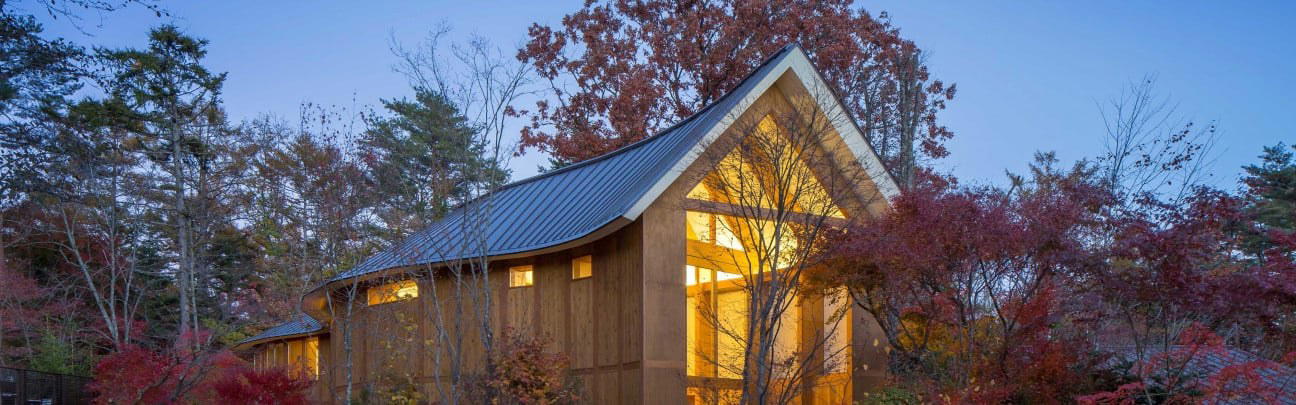
The 20 rooms are designed around thermal comfort and sensory calm rather than dramatic gesture. Underfloor heating and modern wood stoves address Karuizawa's sharp seasonal temperature swings — the town sits at roughly 1,000 metres above sea level, and even summer nights carry a chill that distinguishes the destination from lowland alternatives. The heating infrastructure isn't incidental; in a property whose entire proposition is restorative immersion, the ability to maintain warmth without visible mechanical intrusion shapes the guest experience more than any decorative choice.
The hot spring facilities extend that logic. Onsen access at this level of property typically means both shared and in-room private bath options, though guests should confirm room-specific configurations directly before booking, as these details vary by room category. The Fufu brand's approach to architecture and interiors is described as stylish and modern, a deliberate departure from the tatami-and-shoji minimalism of traditional ryokan, though the underlying service rhythm remains rooted in Japanese inn convention.
Michelin Key awarded to the property in 2024 places it in a peer group that includes some of Japan's most closely observed luxury inns. The Key designation, introduced by Michelin as a parallel track to its restaurant stars, recognises the totality of a hotel or inn experience rather than a single element. Earning it in the first year of the program's Japanese expansion signals that the property's overall execution, rooms, service cadence, food, and setting, reads as coherent at an international evaluation standard. Within Karuizawa, that credential places Fufu Kyu-Karuizawa Restful Forest alongside Hoshinoya Karuizawa and SHISHI-IWA-HOUSE Karuizawa as properties that have attracted formal external recognition, though each occupies a distinct position in terms of format and guest proposition.
Shinshu Dining as a Regional Statement
Nagano Prefecture's culinary identity, marketed under the Shinshu label, draws from a landlocked mountain geography that produces soba, freshwater fish, wild mountain vegetables, and a preserved-food tradition shaped by long winters. A restaurant program built around Shinshu-style dishes at a property of this caliber is not a concession to local color; it's a deliberate positioning against properties that import a generic kaiseki template regardless of geography. The sourcing specificity implied by the venue data, artfully prepared dishes from impeccably sourced ingredients, suggests a kitchen working with regional producers rather than centralised supply chains, which is the meaningful distinction in this category.
For guests comparing inn dining options across Japan, the regional specificity of Shinshu cuisine makes a Karuizawa stay materially different from a comparable inn in, say, Hakone or Kyoto. Properties like Gora Kadan in Hakone or HOTEL THE MITSUI KYOTO in Kyoto each carry distinct culinary geographies. Karuizawa's high-altitude pantry is its own argument, and a kitchen that commits to it offers a more coherent sense of place than one that defaults to a nationalised kaiseki idiom.
Karuizawa in the Japanese Luxury Inn Circuit
Japan's premium inn category has expanded significantly over the past decade, with new entrants from both domestic groups and international brands attempting to formalise what the traditional ryokan has always done instinctively. The Fufu group occupies a specific position in that expansion: modern in aesthetic, traditional in service philosophy, and deliberately multi-property in a way that allows guests to move between affiliated inns, from Fufu Kawaguchiko near Mount Fuji to Fufu Nikko in the Tochigi highlands, while maintaining consistent service standards.
That multi-property logic gives the brand an unusual position in a category otherwise dominated by single-site independents. For frequent visitors to Japan who want to assemble an itinerary of inn stays with predictable quality floors, the Fufu network functions differently from celebrated one-off properties like Zaborin in Hokkaido or Araya Totoan in Kaga, where the singular character of the property is inseparable from its appeal. Both approaches are legitimate; they serve different travel temperaments.
Karuizawa itself is accessible from Tokyo in roughly seventy minutes on the Hokuriku Shinkansen from Tokyo Station, with Karuizawa Station serving as the entry point. From the station, the Kumoba Pond area is reachable by taxi. The town's compact resort geography means that orientation takes little time, which matters if a stay is short. See our full Karuizawa restaurants and hotels guide for broader context on the area's dining and accommodation options.
Planning Your Stay
Room availability at Fufu Kyu-Karuizawa Restful Forest should be confirmed directly through the Fufu group's reservations channel; the property carries no walk-in capacity at a realistic level given its 20-room count and the demand patterns typical of Michelin Key-recognised inns in Japan's resort circuit. Karuizawa's peak season runs from late July through August, when Tokyo families and couples use the cooler altitude as a summer refuge. Autumn, particularly October, when the surrounding larch and birch forests turn, attracts a quieter, often more considered traveller. Spring arrivals in May encounter fresh greenery around Kumoba Pond at its most photogenic before summer crowds arrive.
For guests building a wider Japan itinerary around luxury inn experiences, the property fits naturally alongside properties including Amanemu in Mie, Asaba in Izu, Nishimuraya Honkan in Kinosaki, and ENOWA Yufu in Oita. Each represents a different regional argument for what Japanese inn hospitality can do when it commits fully to its setting. Fufu Kyu-Karuizawa Restful Forest's particular argument is forest immersion at altitude, delivered through a service format disciplined enough to earn external recognition in its first year of international evaluation.
Cuisine and Credentials
Comparable venues nearby, for context on price, style, and recognition.
| Venue | Cuisine | Price | Awards | Notes |
|---|---|---|---|---|
| Fufu Kyu-Karuizawa Restful ForestThis venue — the venue you are viewing | Small luxury forest resort | $500–750 | 1 Michelin Key | Not listed |
| Shishi-Iwa House | Architect-driven forest retreat that blends contemporary Japanese design, art, and culinary culture with close contact to nature. | $300–500 | 1 Michelin Key · Mr & Mrs Smith Seal of Approval | Karuizawa |
| Hoshinoya Karuizawa | Contemporary luxury ryokan reimagined as detached pavilions following traditional Japanese architectural principles with biophilic design philosophy. | $750–1,000 | Michelin Selected | Karuizawa |
| Fufu Karuizawa Wind in the Sunshine | Hotel | $500–750 | 1 Michelin Key | Karuizawa |
| SHISHI-IWA-HOUSE Karuizawa | architectural retreat harmonizing with nature | $300–500 | 1 Michelin Key · Mr & Mrs Smith Seal of Approval | Karuizawa |
| guntu | Floating luxury ryokan blending traditional Japanese inn with modern yacht design | $2,500+ | Michelin Selected · Tablet Hotels Top 40 New Hotels | Onomichi |
Recognition history
Dated appearances from independent guides and award organizations, with the underlying list record or original source where available.
Michelin 1 Key
Michelin
Full recognition history (3 entries)
Michelin 1 Key
Michelin
Michelin 1 Key
Michelin
Continue exploring
More in Karuizawa
Hotels in Karuizawa
Browse all →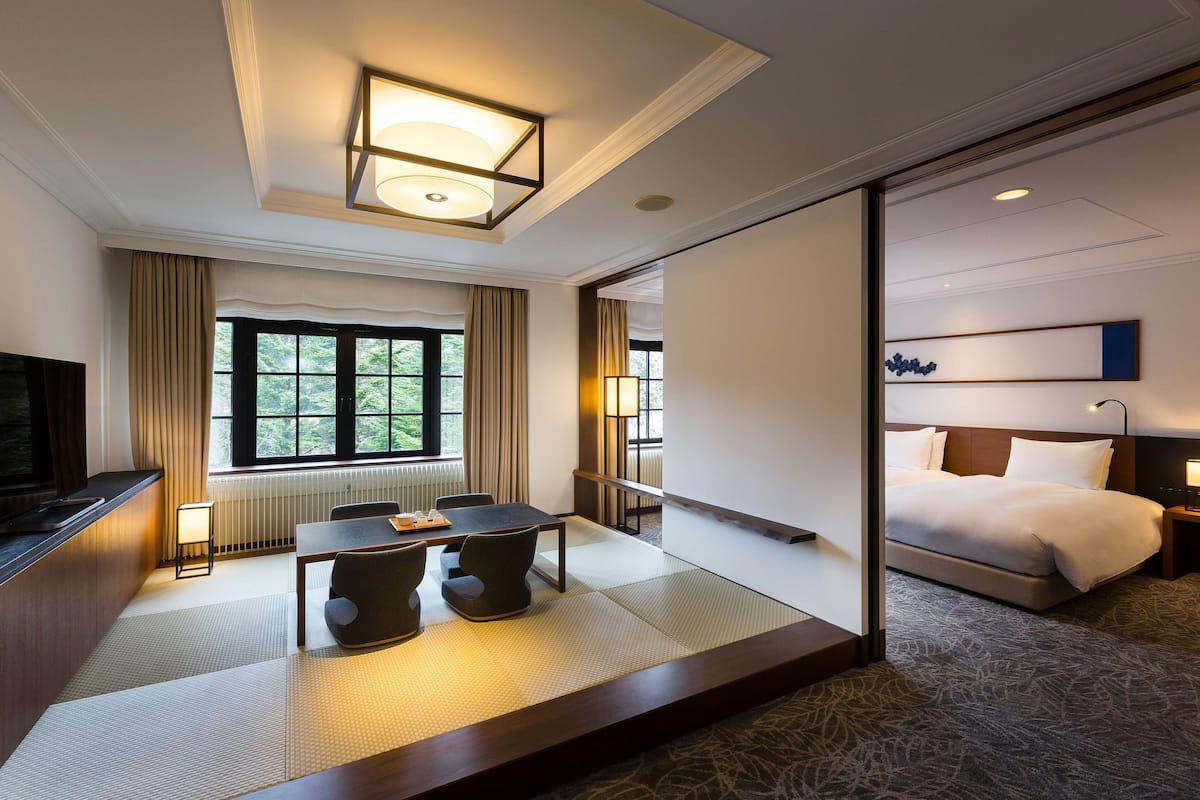
Restaurants in Karuizawa
Browse all →
Wineries in Karuizawa
Browse all →

Details
- Quiet
- Elegant
- Scenic
- Cozy
- Sophisticated
- Romantic Getaway
- Wellness Retreat
- Weekend Escape
- Panoramic View
- Wi Fi
- Restaurant
- Air Conditioning
- Garden
- Mountain
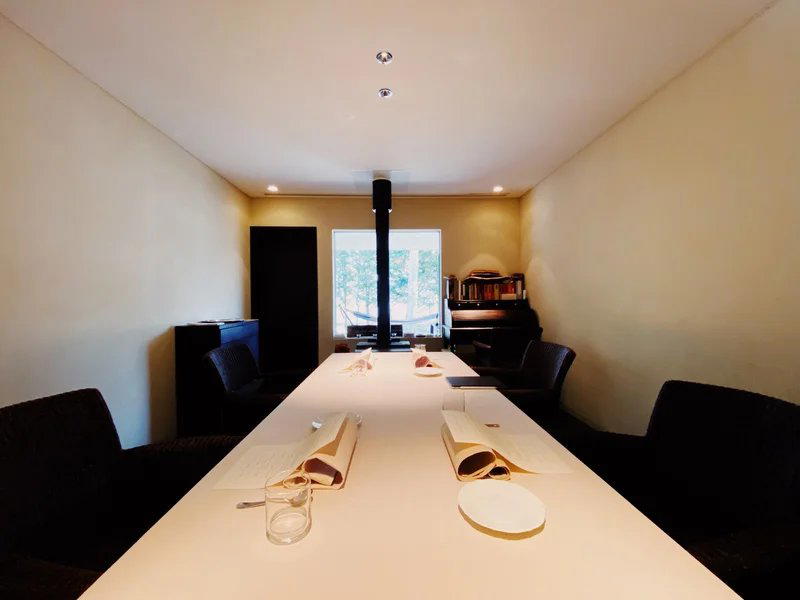
Chic and tranquil with subdued lighting from walnut interiors, flickering fireplaces, and large windows framing the forest.