
Michelin Selected
A Michelin Selected resort on Okinawa's Onna coastline, The Atta Terrace Club Towers positions itself among the island's upper tier of full-service properties, with terrace-facing accommodation and access to the reef-sheltered waters of the Kunigami coast.

Pearl is the En Primeur Club membership app — saves, bookings, and concierge access live there. Same editors, same standards.
- Address
- 1079 Afuso, Onna, Kunigami-gun, Japan
- Phone
- +81 (0)98-983-3333
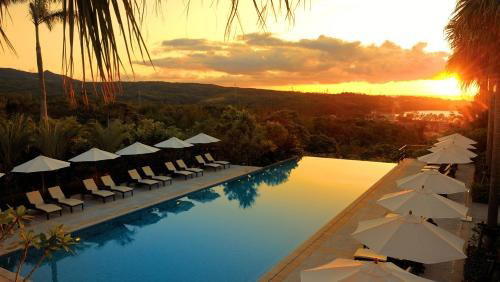
Okinawa's Resort Coast and Where Atta Terrace Sits Within It
The Onna village stretch of Kunigami-gun is the axis around which Okinawa's upper-tier resort market turns. The coastline between Onna and Seragaki has attracted a concentration of large-footprint properties whose identity is built on the same foundation: direct sea access, multi-outlet dining, and rooms designed around the water view rather than interior architecture. Within that cluster, The Atta Terrace Club Towers holds a position confirmed by its inclusion in the Michelin Hotels & Stays 2025 guide, a selection that places it alongside properties screened for consistent quality across accommodation, service, and facilities. The Michelin hotel programme does not publish star-style tiers for most of its selected properties, so inclusion itself is the credential — a signal of baseline quality rather than a rank within a hierarchy.
For comparative context on Okinawa's Michelin Selected resort tier, the nearby Hyatt Regency Seragaki Island Okinawa occupies the same coastal corridor and operates at a similar scale. The two properties together illustrate the dominant model on this part of the island: sizeable room counts, branded infrastructure, and food-and-beverage programmes substantial enough to keep guests on-site across multiple meals. See our full Onna, Kunigami-gun guide for a broader view of what the area offers across accommodation and dining categories.
The Dining Programme: Structure and Scale
On Okinawa's resort coast, the food-and-beverage offering is rarely a secondary consideration. Properties at this tier are expected to run multiple dining outlets covering different meal periods, cuisine formats, and guest moods — from casual poolside service through to a formal dinner programme that gives guests a reason to stay on-site rather than drive to Naha or Ginowan. The Atta Terrace Club Towers follows that model, with a dining structure designed to handle the full arc of a multi-night stay.
Resort dining in Okinawa has its own culinary logic. The island's food tradition is distinct from mainland Japanese cuisine: goya champuru (bitter melon stir-fry), rafute (braised pork belly with awamori), taco rice as a local hybrid, and a broader emphasis on pork and sea vegetables that reflects the island's Ryukyuan cultural history. Properties at the upper end of the market are increasingly expected to engage with that tradition rather than default entirely to international hotel menus. How well a resort integrates local ingredients and cooking methods into its dining programme is now a meaningful differentiator on the island, particularly for guests returning on second or third visits who have already covered the international-menu ground.
The terrace positioning implied in the property name points to one of the more consistent features of dining at this address: the relationship between the eating and drinking spaces and the sea view they frame. On this stretch of Okinawa coastline, the quality of the sightline from a restaurant or bar is not incidental, it is part of the product, and properties that manage it well (through orientation, screening, and timing of service around sunset) hold a structural advantage over those that don't.
Positioning Against Japan's Broader Hotel Market
Okinawa resort properties occupy a distinct niche within Japan's premium accommodation market. They compete less directly with the ryokan tradition, represented on the mainland by properties like Gora Kadan in Hakone, Asaba in Izu, or Kamenoi Besso in Yufu, and more directly with tropical resort formats that blend Western hotel infrastructure with Japanese service standards.
Within Okinawa specifically, the market splits between Naha-adjacent urban hotels, the Onna coast cluster, and the more remote Yaeyama islands where properties like Jusandi in Ishigaki operate at smaller scale with a different guest profile. The Atta Terrace addresses the middle band: accessible from Naha Airport within roughly an hour, large enough to support full resort infrastructure, and positioned on one of the island's better-regarded stretches of coastline.
For guests building a broader Japan itinerary that includes Okinawa, the property sits naturally alongside other Michelin Selected coastal and resort properties. Amanemu in Mie offers a comparable level of coastal focus with a different (more spa-and-onsen-centred) programme. Halekulani Okinawa and The Hiramatsu Hotels & Resorts Ginoza occupy the same island and offer alternative framings of what premium Okinawa hospitality looks like.
Planning a Stay: What to Know
The Atta Terrace Club Towers is located at 1079 Afuso, Onna, Kunigami-gun, on the central-west coast of Okinawa's main island, in the village area that defines the island's resort corridor. Reaching the property from Naha Airport typically involves a rental car or private transfer; public transit to this part of the island is limited, and having a car significantly expands access to Okinawa's broader attractions, including the Churaumi Aquarium and the northern Yanbaru forest region. Guests planning to explore the island beyond the resort grounds should factor transport into their booking logistics.
The Michelin selection signals a quality floor on accommodation and service without specifying price tier, so rates should be confirmed at time of booking. Okinawa's peak season runs from late spring through summer, when domestic Japanese travel demand is highest and the sea is warm enough for extended water activity. Shoulder seasons in spring and autumn offer a more measured pace, lower rates at comparable occupancy, and weather that is still reliably usable for outdoor dining and terrace use.
Guests drawn to Japan's broader selection of Michelin-recognised resort properties may also want to note Zaborin in Kutchan, Fufu Nikko, Satoyama-Jujo in Niigata, Fufu Kawaguchiko, Fufu Kyu-Karuizawa Restful Forest, Nasu Mukunone, Atami Izusan Karaku, Benesse House in Naoshima, Nishimuraya Honkan in Kinosaki-cho, and Sekitei in Hatsukaichi-shi as reference points across Japan's diverse regional resort market. For travellers considering international alternatives at a similar tier, The Fifth Avenue Hotel in New York City, Badrutt's Palace Hotel in St. Moritz, and Hôtel de Paris Monte-Carlo sit at the upper end of the same Michelin hotel programme's global reach, illustrating the breadth of the selection standard. GOTO RETREAT by Onko Chishin rounds out the southwestern Japan island picture for those interested in comparing smaller-scale alternatives.
Price Lens
Comparable venues nearby, for context on price, style, and recognition.
| Venue | Price | Awards | Notes |
|---|---|---|---|
| The Atta Terrace Club TowersThis venue — the venue you are viewing | $200–300 | Michelin Selected | Not listed |
| Hyatt Regency Seragaki Island Okinawa | $300–500 | Michelin Selected | Onna, Kunigami-gun, Contemporary luxury resort with localized design elements reflecting Okinawan aesthetics and natural surroundings. |
| Maana Kiyomizu | $300–500 | Michelin Selected | Higashiyama, Restored machiya townhouses with contemporary minimalist interiors |
| Centara Grand Hotel Osaka | Not listed | Michelin Selected | Naniwa, Modern architectural masterpiece fusing Japanese and Thai cultures |
| Hilltop Resort Fukuoka | $100–200 | Michelin Selected | Chūō, Urban ryokan-inspired resort with contemporary Japanese design. |
| Hotel Utano Kyoto Bessho | Not listed | Michelin Selected | Ukyō, Historic Japanese-Western hybrid residence from the early 20th century, meticulously renovated to blend traditional architecture with contemporary luxury. |
Recognition history
Dated appearances from independent guides and award organizations, with the underlying list record or original source where available.
Michelin Selected
Michelin
Continue exploring
More in Onna

Details
- Elegant
- Serene
- Sophisticated
- Quiet
- Scenic
- Honeymoon
- Romantic Getaway
- Wellness Retreat
- Anniversary
- Infinity Pool
- Golf Course
- Panoramic View
- Terrace
- Spa
- Pool
- Wi Fi
- Room Service
- Concierge
- Restaurant
- Golf Course
- Beach Access
- Garden
- Elevator
- Wheelchair Accessible
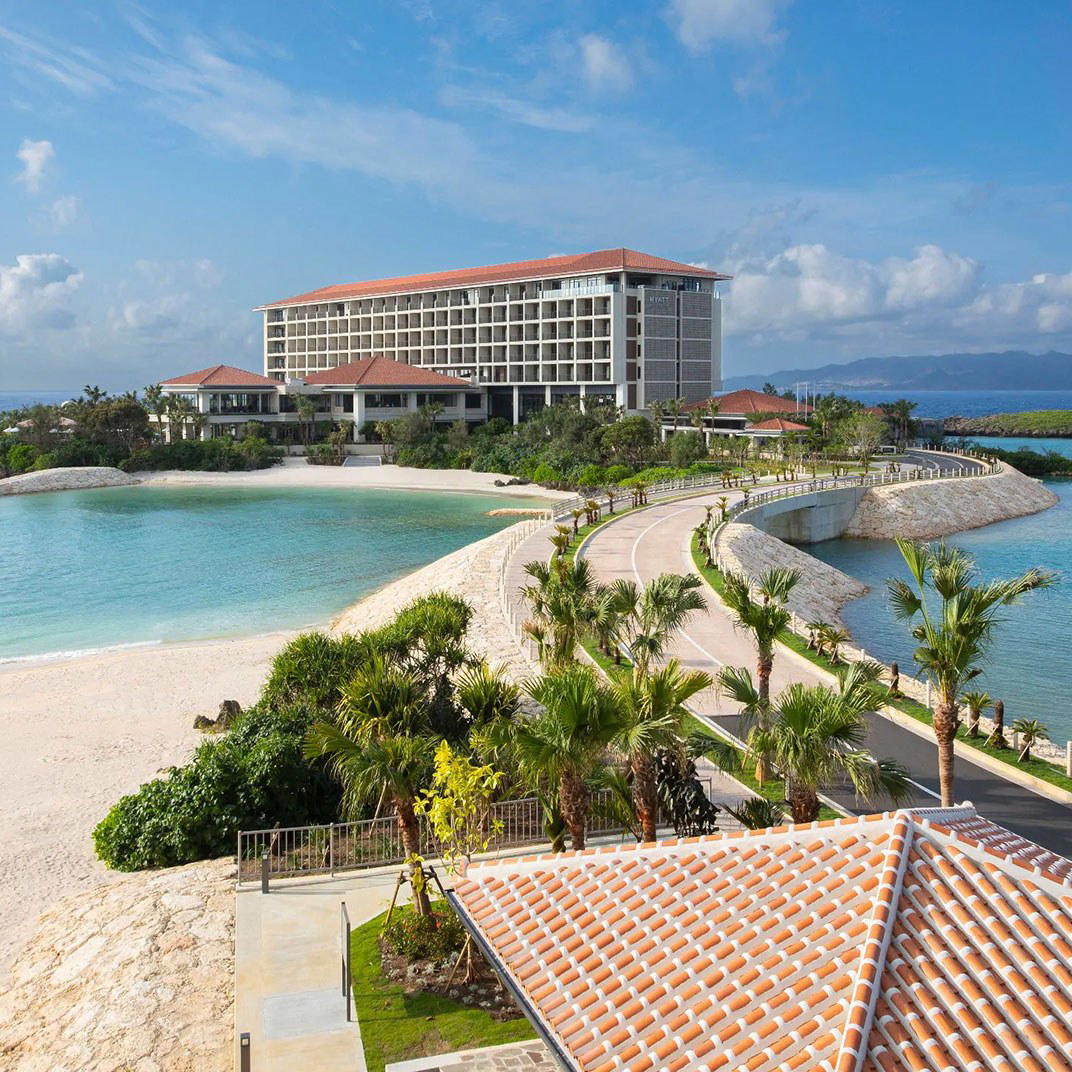
Serene and tranquil atmosphere with elegant design, polished service, and far-reaching sunrise and sunset vistas.