
Star Wine List
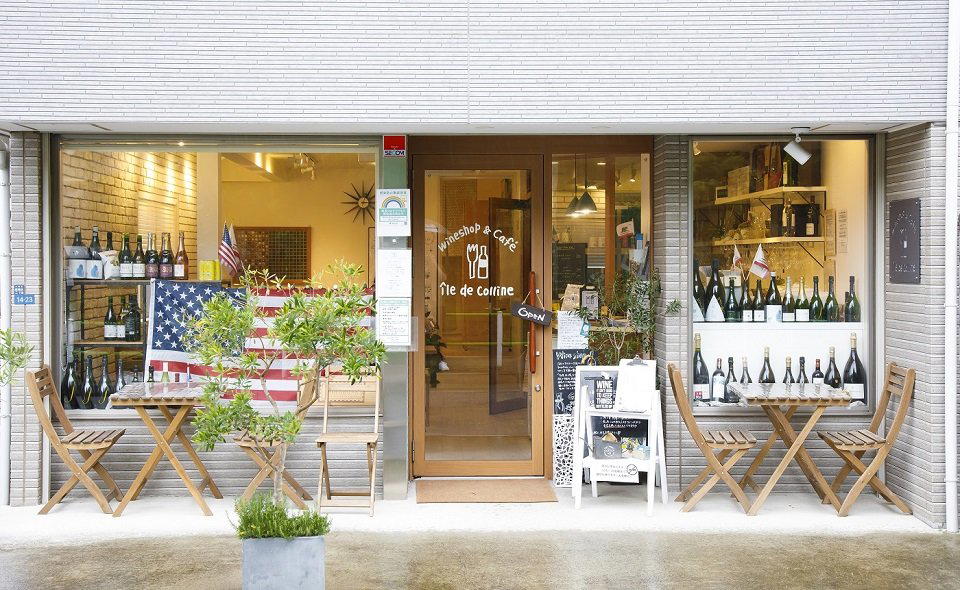
In Nishi-magome, one of Ota City's quieter residential pockets, Île de Colline occupies a spot directly opposite a family-oriented park, trading on neighbourhood calm rather than central-Tokyo footfall. Unlike the technically driven café formats clustered along Shimokitazawa or Nakameguro, this is a place built around stillness and return visits. Regulars come for the atmosphere as much as anything on the menu.

Pearl is the En Primeur Club membership app, where members save venues, book tables and use the concierge.
A Café That Works on Residential Logic
Tokyo's café culture has fractured into recognisable camps. The specialty-coffee wave produced a generation of precision-focused venues in Shimokitazawa, Nakameguro, and Koenji, where single-origin sourcing and extraction data are as much the point as the cup itself. Parallel to that sits a quieter tradition: neighbourhood cafés that operate on a different premise entirely, where the regulars are drawn from within walking distance and the appeal is continuity over novelty. Île de Colline, positioned in front of a family-oriented park in Nishi-magome, belongs firmly to the second category.
Nishi-magome sits at the southern end of the Asakusa Line in Ota City, a ward better known for its proximity to Haneda Airport than for dining destinations. That geography is not incidental to what Île de Colline is. Venues at this distance from central Tokyo are not sustained by tourist footfall or by the kind of social-media discovery cycles that drive queues at higher-profile addresses. They survive on repeat custom from people who live nearby, which tends to produce a specific and consistent atmosphere: unhurried, recognisable, low on performance.
What the Regulars Are Actually After
The regulars' relationship with a café like this is worth understanding as a pattern before getting to specifics. In Tokyo's outer residential wards, the neighbourhood café functions as something between a living room extension and a reliable punctuation mark in the day. Families with young children use the park opposite as the anchor activity and the café as the before or after. Older residents treat a window seat and a morning coffee as a standing arrangement. Working-from-home visitors arrive mid-morning and stay longer than they planned.
What keeps people returning to this kind of venue is not menu rotation or seasonal specials, though those may exist. It is the consistency of the environment: the same table available at the same hour, staff who recognise faces, a noise level that permits conversation without effort. The Île de Colline address, described in its own context as a café set in a peaceful scenery of a quiet residential area, positions it squarely within that logic. The reference to not needing to be Alice to enter suggests an accessible, welcoming register rather than the concept-heavy presentation that characterises higher-profile Tokyo café openings.
Nishi-magome as Context
The neighbourhood framing matters here. Ota City's residential areas have none of the self-conscious cool of Setagaya or the dense restaurant culture of Minato. What they have is a slower tempo and a local-first clientele. Venues that work in this environment do so by fitting into the rhythm of the area rather than trying to redirect it. A café opposite a park in this ward is not making a statement about destination dining; it is inserting itself into the daily pattern of people who already live and move through the area.
For visitors making a deliberate trip, the journey from central Tokyo takes approximately 30 to 40 minutes via the Asakusa Line to Nishi-magome Station. That travel time filters the audience naturally. The people who make the trip are either already in the area for another reason or are specifically interested in the kind of café experience that does not exist at the same density closer to Shibuya or Ginza.
How It Reads Against Tokyo's Wider Café Scene
Positioning Île de Colline against Tokyo's more publicised café addresses clarifies what it is and is not. The technically ambitious programs at venues in Nakameguro or the specialty-coffee counters in Koenji occupy a different competitive set: they are built around product differentiation and attract visitors specifically for the coffee program. Île de Colline's context signals something closer to European neighbourhood café logic, which is a coherent and valued format in Tokyo even if it generates less editorial coverage.
The contrast extends to how bookings and walk-ins work. Tokyo's higher-profile café and kissaten formats, particularly those with limited seating in sought-after areas, sometimes operate with queuing systems or require reservations. A residential-area café operating on this register is almost certainly more accessible on a walk-in basis, though confirming current operating hours and any seasonal closures directly before visiting is advisable given limited published information online.
For those building a broader picture of Tokyo's drinking and café culture, our full Tokyo restaurants guide maps the city's different formats against each other. The bar scene, which operates on a different set of rules again, includes technically precise operations like Bar Benfiddich and Bar High Five, as well as the fruit-focused program at Bar Orchard Ginza and the accessible format of Bar Libre. All of them operate on very different premises from a residential café in Ota City, which underlines how wide Tokyo's hospitality spectrum actually runs.
Beyond Tokyo, Japan's café and bar culture extends through formats that reward deliberate travel. Bar Nayuta in Osaka, Bee's Knees in Kyoto, and Lamp Bar in Nara each anchor a different city's approach to the evening drink. Further south, Yakoboku in Kumamoto and the precision-oriented anchovy butter in Osaka continue the pattern. Even outside Japan, the influence of Japanese hospitality standards reaches places like Bar Leather Apron in Honolulu. In Kyoto, the Kyoto Tower Sando complex offers a different kind of accessible, visitor-friendly format.
Planning a Visit
Île de Colline is located at 2 Chome-14-23 Nishimagome, Ota City, Tokyo 143-0026, directly in front of the local park. Nishi-magome Station on the Asakusa Line is the nearest access point. No website or phone number is currently published through major listings, which means confirming hours in advance is leading done through a local search or by passing the address to a hotel concierge who can make contact directly. The residential setting and neighbourhood format suggest the café is suited to a relaxed morning or afternoon visit rather than an evening destination.
Just the Basics
Comparable venues nearby, for context on price, style, and recognition.
| Venue | Cuisine | Price | Awards | Notes |
|---|---|---|---|---|
| Île de CollineThis venue (the venue you are viewing) | Not listed | Not listed | Star Wine List | Not listed |
| Shinjuku Golden-Gai | Not listed | $10–20 | Not listed | Shinjuku, dive_bar |
| FUGLEN ASAKUSA | Not listed | $10–20 | Not listed | Taitō, cocktail_bar |
| Ahiru Store | Not listed | $20–30 | Not listed | Shibuya, wine_bar |
| élevé | Not listed | $20–30 | Star Wine List | Minato, rooftop_bar |
| Bar TRAM | Shibuya, speakeasy | $30–50 | Tabelog 100 #22 | Not listed |
Recognition history
Dated appearances from independent guides and award organizations, with the underlying list record or original source where available.
Star Wine List
Star Wine List
Continue exploring
More in Tokyo
Bars in Tokyo
All bars in Tokyo →






Details
- Cozy
- Intimate
- Date Night
- Casual Hangout
- Seated Bar
- Conventional Wine
Current opening hours
- Monday
- Closed
- Tuesday
- Closed
- Wednesday
- 11:30 AM–4 PM
- Thursday
- 11:30 AM–4 PM, 6–9:30 PM
- Friday
- 11:30 AM–4 PM, 6–9:45 PM
- Saturday
- 11:30 AM–5 PM, 6–9:45 PM
- Sunday
- 11:30 AM–5 PM
Hours can change for holidays and private events. Hours as of .
Cozy and intimate atmosphere with just 18 seats, praised for its welcoming feel.