Fratelli Francoli operates out of Ghemme, a small Piedmontese appellation in the northern reaches of the Novara hills where Nebbiolo finds a cooler, less celebrated expression than in the Langhe..

Pearl is the En Primeur Club membership app — saves, bookings, and concierge access live there. Same editors, same standards.
- Address
- Via Romagnano, 20, 28074 Ghemme NO
- Phone
- +39 0163 844711
- Website
- francoli.it
- Directions
- Get directions
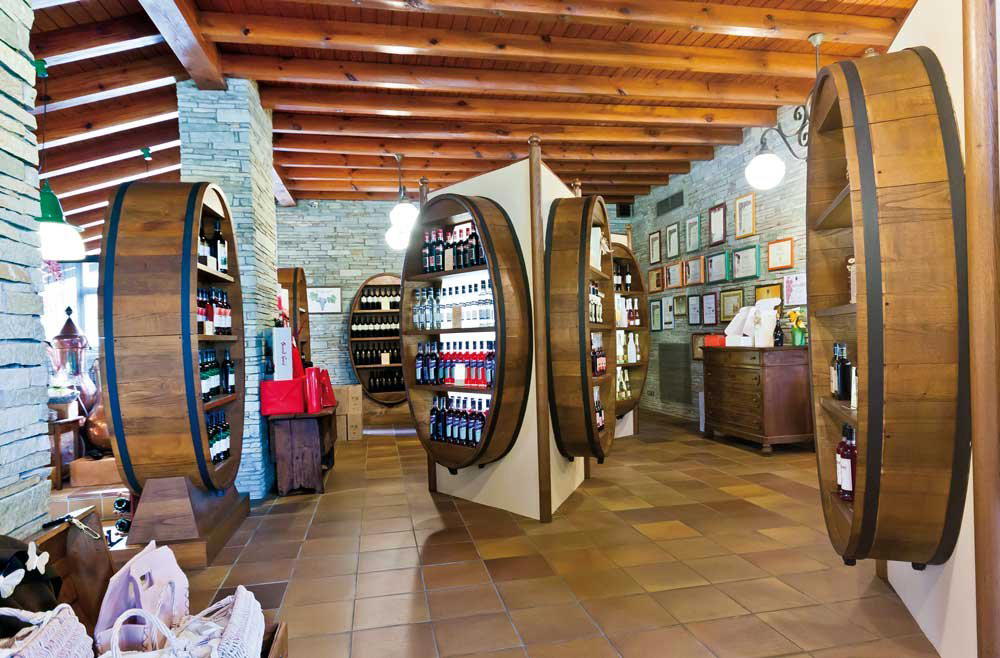
The Novara Hills and Why Ghemme Matters
Most serious Italian wine itineraries route through the Langhe, stopping at Barolo and Barbaresco before moving south or west. The Novara hills, running along the foothills east of Lake Maggiore, rarely appear on those maps. That neglect is partly geological and partly commercial: the soils here, a porous mix of ancient glacial moraines and volcanic substructure, produce Nebbiolo that reads differently from its Langhe counterpart. The tannins are finer, the aromatic profile shifts toward dried rose and tar rather than the denser fruit register of Barolo, and the wines generally require patience before they open. Ghemme, as an appellation, earned DOCG status in 1997, relatively late for a zone that has been producing wine for centuries, and even now it occupies a quieter shelf in Italian fine wine.
Fratelli Francoli sits on Via Romagnano in that town, at coordinates that place it in the agricultural fabric between Ghemme and its neighbour Romagnano Sesia. The address signals the character of the operation: this is not a destination designed around tourism infrastructure, but a producer embedded in working Piedmontese countryside. Visiting here means driving roads where tractors have right of way and the vine rows are interrupted by hedgerows rather than curated viewpoints. For those accustomed to the manicured estates of Tuscany, the contrast is instructive. Compare the approach to, say, Castello di Volpaia in Radda in Chianti, where the medieval village setting delivers immediate visual drama, or L'Enoteca Banfi in Montalcino, where the estate operates at considerable scale and with full hospitality programming. Ghemme asks more of the visitor and rewards that effort with a version of Piedmont that feels less rehearsed.
Terroir and the Grappa Tradition of the North
What distinguishes Fratelli Francoli in the broader Italian spirits conversation is its rootedness in northern Piedmontese pomace. Grappa production has always been tied to the geography of the grape harvest: the quality of the marc, its freshness at distillation, and the varietal character of the source material all translate directly into the spirit. In the Novara hills, Nebbiolo marc carries a particular aromatic weight, derived from the grape's thick skins and relatively high tannin content. The result, when distilled with care, is a grappa that differs meaningfully from those made with Moscato pomace in Asti or with the Corvina blends of the Veneto.
This connection between northern Piedmont's terrain and its distillate tradition places Francoli in a specific peer group within Italian grappa. Producers like Distilleria Romano Levi in Neive, working with Langhe pomace, and Nonino Distillery in Pavia di Udine, long credited with redefining the category through monovitigno bottlings, represent different but related expressions of how Italian geography shapes distilled spirits. Poli Distillerie in Schiavon in the Veneto offers another comparison point, where the Venetian plains and their grape varieties produce a softer, more approachable house style. Each of these producers is, in a sense, translating a particular corner of Italy's vineyard map into alcohol, and understanding Francoli means placing it within that geography first.
It is a credential that confirms what the postcode already suggests: this is serious northern Piedmontese production, not a casual regional label. For reference on how leading Italian producers carry their regional identity through international recognition, Ca' del Bosco in Erbusco offers a Franciacorta parallel, and Lungarotti in Torgiano demonstrates how Umbrian identity can sustain a premium positioning in a less-trafficked appellation.
Placing Francoli in the Italian Spirits Conversation
Italian spirits production has undergone a structural shift over the past two decades. The category once dominated by large industrial bottlers has developed a substantial artisan tier, with smaller producers using regional pomace and traditional copper pot stills to differentiate on provenance. Fratelli Francoli operates in that space, where Nebbiolo's identity as Piedmont's flagship grape translates into a spirits argument as well as a wine one. The grape matters here not as a marketing hook but as genuine raw material, because Nebbiolo marc, with its aromatic complexity and structural density, produces a grappa that carries the fingerprints of the Novara hills across the distillation process.
Within Italy's broader distillery map, the northern arc running from Piedmont through Trentino to Friuli contains the country's most technically serious grappa operations. Distilleria Marzadro in Nogaredo represents the Trentino dimension of that arc, working with alpine varieties in a cooler climate that produces lighter, more delicate spirits. Francoli's Ghemme base anchors the western end of that northern axis, with the volcanic and glacial soils of the Novara hills providing a different terroir argument than either the alpine Trentino profile or the richer Langhe expressions. For readers more familiar with wine than spirits, the analogy holds: just as Aldo Conterno in Monforte d'Alba expresses one version of Nebbiolo and Ghemme-based producers express another, the grappa drawn from those respective marcs carries the same divergence.
Outside Italy entirely, the conversation around terroir-driven spirits has expanded significantly, with producers from Scotland to California making similar claims about site and source material. Aberlour in Aberlour represents the Speyside argument for place-driven whisky, while Accendo Cellars in St. Helena and Planeta in Menfi show how premium wine producers use appellation identity as a commercial anchor. Francoli's position is comparable in structure if not in global recognition: it is a producer using a specific, historically rooted geography as its primary differentiator. The difference is that Ghemme remains off the main tourist circuit, which keeps both the ambience and the entry price more grounded than destinations with higher international profiles. Campari in Milan offers a point of contrast from the other direction: Italian spirits with maximum urban visibility and global distribution. Francoli operates at the opposite end of that spectrum.
Planning a Visit to Ghemme
Ghemme sits approximately 80 kilometres north-northeast of Turin and around 50 kilometres west of Milan, making it reachable from either city without requiring an overnight stay, though the Novara hills warrant more time than a quick detour allows. The nearest rail hub is Romagnano Sesia, which connects via Novara to the main Milan-Turin line. A car provides significantly more flexibility once in the zone, as the production sites and vineyards sit outside the town centre. No website or phone number is currently listed in EP Club's database, so initial contact may require approaching through local wine and spirits trade channels or via regional tourism offices for Novara province. Those building a wider Piedmont itinerary can cross-reference our full Ghemme restaurants guide for additional context on eating and drinking in the area.
At-a-Glance Comparison
Comparable venues nearby, for context on price, style, and recognition.
| Venue | Cuisine | Awards | Notes |
|---|---|---|---|
| Fratelli FrancoliThis venue — the venue you are viewing | Nebbiolo, Vespolina | Not listed | Not listed |
| Distilleria Bocchino | Moscato, Nebbiolo | Not listed | Canelli |
| Aldo Conterno | Nebbiolo, Barbera | Falstaff Winery - 5 Stars | Bussia Soprana |
| Ramazzotti | Winery | Not listed | Milan |
| Campari | Winery | Not listed | Duomo |
| Mazzetti d'Altavilla | Barbera, Nebbiolo | Not listed | Altavilla Monferrato |
Continue exploring
More in Ghemme
Wineries in Ghemme
Browse all →

Bars in Ghemme
Browse all →
Restaurants in Ghemme
Browse all →
Details
- Rustic
- Scenic
- Classic
- Wine Education
- Solo Exploration
- Vineyard Tour
- Estate Grounds
- Vineyard
- Mountain
- Nebbiolo
- Vespolina
- Erbaluce
- Still Red