Acquerello



1 Michelin Star · La Liste Top Restaurants
Our verdict
A Michelin-starred address in the Lombardy hinterland, Acquerello operates from a restored courtyard in Fagnano Olona, where Chef Silvio Salmoiraghi produces a tasting menu that balances delicate Italian technique with Eastern influence. Ranked in both the La Liste Top Restaurants (2025, 80pts) and Opinionated About Dining's European and global lists, it occupies a distinct tier among northern Italy's creative fine-dining circuit.

Pearl is the En Primeur Club membership app — saves, bookings, and concierge access live there. Same editors, same standards.
- Address
- Via dei Patrioti, 5, 21054 Fagnano Olona VA, Italy
- Phone
- +39 0331 611394
- Hours
- Mon ClosedTue 7:45–9:30 PMWed–Sat 12:30–2 PM, 7:45–9:30 PMSun 12:30–2 PM
- Website
- ristoranteacquerello.com
- Directions
- Get directions
- Booking
- Book on TheFork
The menu
What to order
- Pasta with caviar
- Carpione di mare
- Sturgeon sashimi
A Courtyard in the Lombard Hinterland
The instinct in Italian fine dining has long been to seek the spectacle city: Milan for its Michelin density, Florence for its heritage rooms, Modena for the gravitational pull of Osteria Francescana. But Lombardy's creative cooking has never been exclusively urban. The region's industrial belt northwest of Milan, running through the Varese province, has quietly produced restaurants that draw on the same northern Italian pantry — river fish, alpine dairy, foraged herbs — while operating well outside the circuit of destination-city noise. Acquerello, in the small town of Fagnano Olona, is the clearest argument for that quieter tradition.
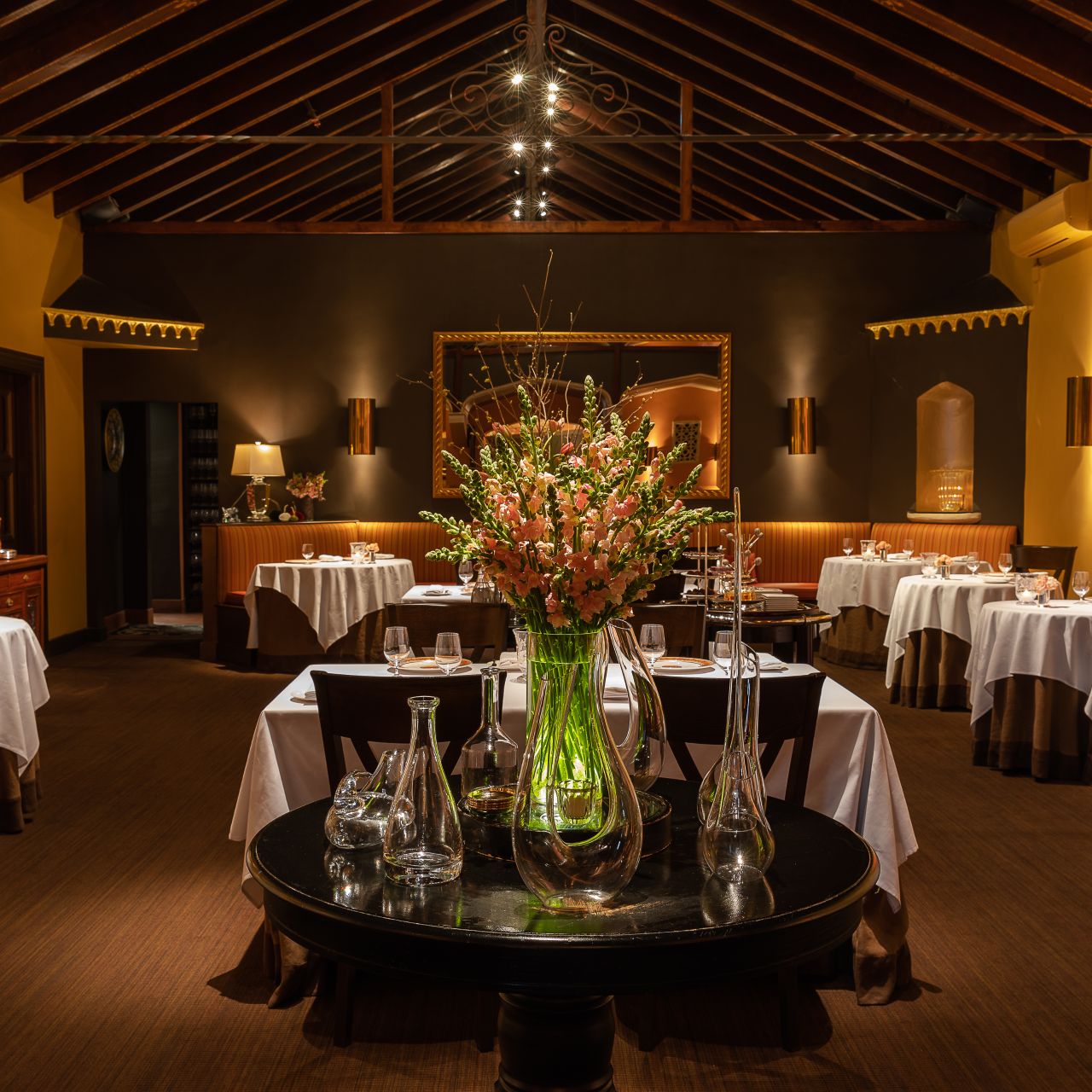
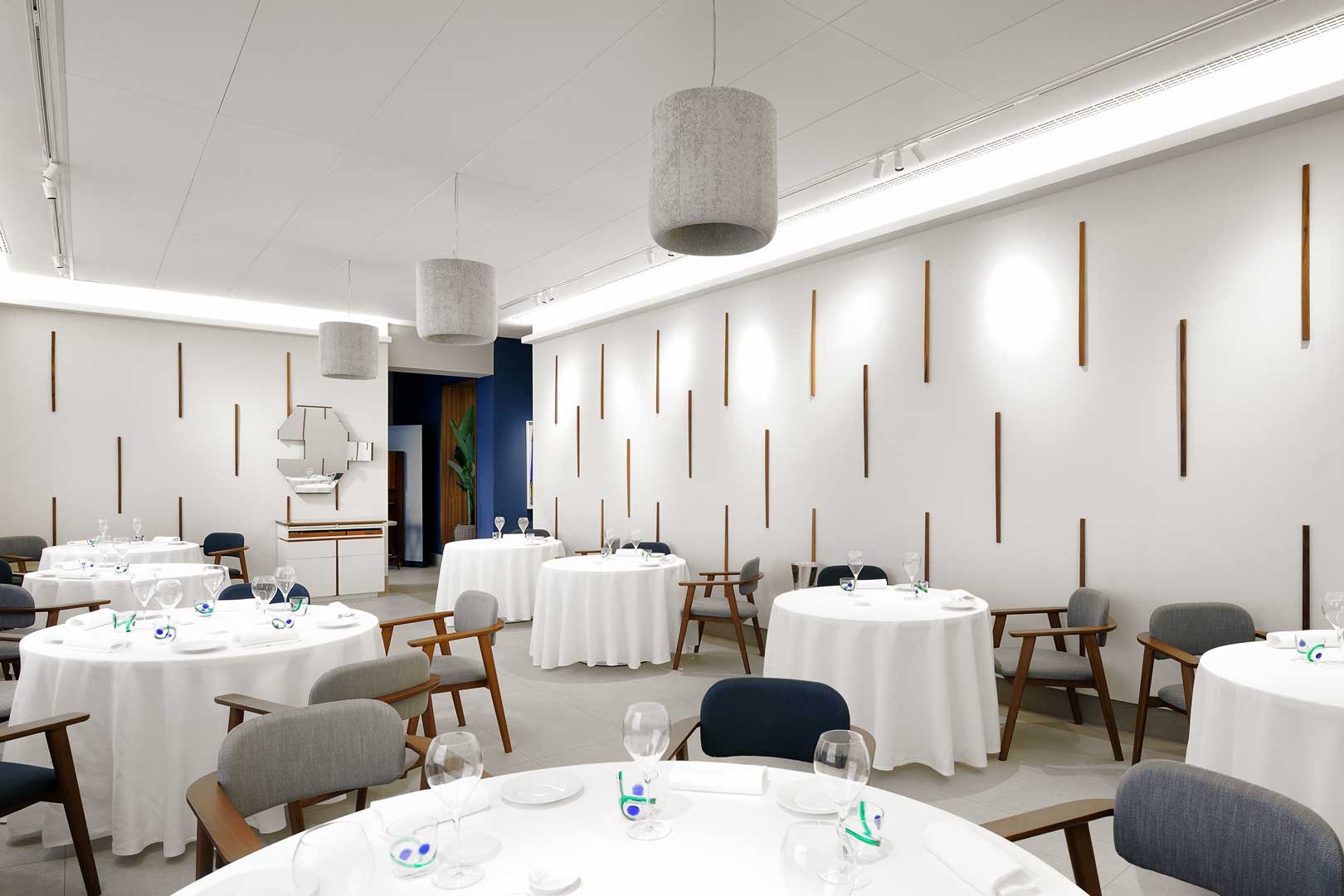
The setting matters here in a way that goes beyond aesthetics. Housed in an old Lombard courtyard of the kind that once organised rural and mercantile life across the region, the restaurant places itself inside a physical language that is specific to this part of northern Italy: covered archways, enclosed interior space, stone and render rather than glass and steel. It is a format that the region's wealthier towns replicated for centuries, and eating inside one reframes the creative cooking that follows, not as an import from some other culinary tradition, but as something that has grown out of a particular Lombard soil.
Where Acquerello Sits in the Northern Italian Fine-Dining Map
Northern Italy's leading creative tier is densely populated at the three-Michelin-star level. Enrico Bartolini in Milan, Le Calandre in Rubano, and Atelier Moessmer Norbert Niederkofler in Brunico each hold three stars and represent very different interpretations of what contemporary Italian cooking can mean. Below that tier, the one-star creative category in the north is considerably larger, and the signals that separate its stronger entries from the merely competent are found less in technique than in consistency of editorial vision and peer recognition across multiple systems.
Acquerello holds one Michelin star (2024) and appears in the Opinionated About Dining rankings of European restaurants at position 161 (2024) and in the global list at 160 (2024). It earned an OAD Highly Recommended citation for leading new European restaurants in 2023 and carries an 80-point score in the La Liste Leading Restaurants list for 2025. Across five distinct recognition systems, the consistency of placement is itself a form of evidence: this is not a restaurant that has performed well in one context and been overlooked in others. For Lombardy's sub-metropolitan creative tier, that cross-system standing is relatively uncommon.
The closest immediate peer in Fagnano Olona is Menzaghi, another modern cuisine address in the same town. That two serious creative restaurants have established themselves in a town of this scale reflects something about Varese province's appetite for considered cooking, even at some distance from Milan's restaurant media apparatus.
The Cooking: Flavour Over Spectacle
The Michelin inspectors' note on Acquerello is worth reading carefully: it describes a kitchen that focuses on flavour rather than colour, a statement with more weight than it might first appear. A significant portion of northern Italy's creative fine dining has moved toward plate architecture that prioritises visual drama, often at the expense of what registers on the palate. The counter-position, flavour as primary, places Acquerello closer in temperament to the older Lombardy tradition of letting ingredients carry the work.
Chef Silvio Salmoiraghi is described by those same inspectors as a chef who prefers being in the kitchen away from the spotlight. In the current moment, where the chef-as-public-figure has become a standard feature of restaurant marketing, that orientation toward the work rather than the persona is itself a signal about how the cooking is organised. The kitchen is not in service of a narrative; it is in service of what ends up on the plate.
The tasting menu draws on a combination of delicate flavours and original combinations, with what the inspectors characterise as a hint of Eastern influence. For a restaurant rooted so explicitly in Lombard setting and produce, that Eastern register is an interesting counterweight: it suggests a kitchen that takes its northern Italian foundation seriously while remaining curious about technique and flavour logic from outside the tradition. Contrasts in cooking methods and temperatures are noted as a structural feature of the menu, a technical approach that requires precision to execute without reducing each course to a demonstration of contrast for its own sake.
The à la carte is available, but the Michelin inspectors' recommendation points toward the tasting menu as the format that leading expresses the kitchen's current thinking. That balance of delicate flavours and original combinations is more legible across a sequence of courses than in individual plates taken out of context. For other reference points on what the Italian tasting menu format can achieve, Dal Pescatore in Runate and Piazza Duomo in Alba represent different poles of the same tradition.
The Wine List: A Distinct Editorial Position
Wine lists at this level across northern Italy tend to follow one of two formats: the encyclopaedic cellar, with hundreds of Barolo and Brunello back-vintages accumulated over decades (the Enoteca Pinchiorri model in its most extreme form), or the tightly curated selection built around a specific region or philosophy. Acquerello's list reflects the owner's own tastes, which means a slight emphasis on sparkling wines from the other side of the Alps, meaning French and German sparkling, notably Champagne and possibly Crémant, sitting alongside a broader selection that gives guests options across the price and style spectrum.
That sparkling emphasis is not common in Lombardy fine dining, where Franciacorta from the region's own DOCG would be the expected house position. Choosing to weight across the Alps instead is a statement of preference over patriotism. It is also a practical reflection of quality: Champagne's depth of vintage variation and house-to-house stylistic difference gives a sommelier considerable material to work with. For anyone whose interest extends to the full range of Italian wine, restaurants like Uliassi in Senigallia or Reale in Castel di Sangro offer contrasting regional wine approaches at the same price tier.
Planning a Visit
Fagnano Olona sits in the Varese province, northwest of Milan. The town is accessible from Milan by car, the A8 autostrada runs through the province, and the practical reality of visiting means that most guests will combine a visit to Acquerello with other exploration of Varese province rather than treating it as a standalone urban destination. Those with a longer stay in the area will find further context in our full Fagnano Olona restaurants guide, alongside resources covering hotels, bars, wineries, and experiences in the area.
The restaurant is closed Mondays. Tuesday service runs evenings only (7:45 PM to 9:30 PM). Wednesday through Saturday, lunch begins at 12:30 PM and runs to 2:00 PM, with evening service from 7:45 PM to 9:30 PM. Sunday is lunch only. The price bracket is €€€€, consistent with the restaurant's positioning in the creative fine-dining tier. Reservations are advisable well in advance, particularly for weekend lunch and evening slots. For reference, Villa Crespi in Orta San Giulio and Torre del Saracino in Vico Equense represent other regional creative addresses worth considering alongside Acquerello for travellers building a northern or southern Italian fine-dining itinerary.
Similarly, those exploring the Campania end of the Italian creative spectrum might note Quattro Passi in Marina del Cantone as an alternative frame of reference for coastal Italian creativity at the same price tier.
Frequently asked questions
Where is Acquerello in Fagnano Olona?
Acquerello is located at Via dei Patrioti, 5, 21054 Fagnano Olona VA, Italy, Fagnano Olona.
What price level is Acquerello?
Pricing at Acquerello is listed as €€€€.
Is Acquerello award-winning?
Acquerello has received recognition including: The word “modern” sums up the cuisine here, although more than one word is needed to do justice to this restaurant. Housed in an old courtyard typical of Lombardy, Acquerello focuses on flavour rather than colour, with dishes created by a c….
What dish is Acquerello famous for?
Acquerello does not carry a single signature dish in the public record. Michelin inspectors describe the kitchen as organised around a tasting menu built on delicate flavours, original combinations, and a hint of Eastern influence, with deliberate contrasts in cooking methods and temperatures. The emphasis is on flavour over visual effect, which is itself the house position rather than any one plate.
Comparison Snapshot
| Venue | Cuisine | Price | Awards | Notes |
|---|---|---|---|---|
| AcquerelloThis venue — the venue you are viewing | Modern Italian Fine Dining | $100–150 | 1 Michelin Star · La Liste Top Restaurants | Not listed |
| Atelier Moessmer Norbert Niederkofler | Italian, Creative | Not listed | Michelin 3 Star | Not listed |
| Dal Pescatore | Italian, Italian Contemporary | Not listed | Michelin 3 Star | Not listed |
| Enoteca Pinchiorri | Contemporary Italian Fine Dining | $200–300 | 3 Michelin Stars · World's 50 Best #32 | Italian - French, Italian Contemporary |
| Enrico Bartolini | Creative | Not listed | Michelin 3 Star | Not listed |
| Osteria Francescana | Avant-Garde Italian Contemporary | $300–500 | 3 Michelin Stars · World's 50 Best #1 | Progressive Italian, Creative |
Recognition history
Dated appearances from independent guides and award organizations, with the underlying list record or original source where available.
Michelin 1 Star
Michelin
La Liste Top Restaurants
La Liste
Opinionated About Dining Top Restaurants in Europe Highly Recommended
Opinionated About Dining
Full recognition history (7 entries)
Michelin 1 Star
Michelin
Michelin 1 Star
Michelin
Opinionated About Dining Top Restaurants in Europe Ranked #161
Opinionated About Dining
Opinionated About Dining Top New Restaurants in Europe Highly Recommended
Opinionated About Dining
Continue exploring
More in Fagnano Olona
Restaurants in Fagnano Olona
Browse all →
Bars in Fagnano Olona
Browse all →
Hotels in Fagnano Olona
Browse all →

Details
- Elegant
- Intimate
- Cozy
- Sophisticated
- Date Night
- Special Occasion
- Private Dining
- Extensive Wine List
- Tasting Menu
- A La Carte
- Vegetarian Friendly
Current opening hours
- Monday
- Closed
- Tuesday
- 7:45–9:30 PM
- Wednesday
- 12:30–2 PM, 7:45–9:30 PM
- Thursday
- 12:30–2 PM, 7:45–9:30 PM
- Friday
- 12:30–2 PM, 7:45–9:30 PM
- Saturday
- 12:30–2 PM, 7:45–9:30 PM
- Sunday
- 12:30–2 PM
Hours can change for holidays and private events. Last verified .
Intimate and cozy atmosphere in a small renovated courtyard with frescoed walls, few tables, and a sense of well-being and suspension in time.