




Ristorante Materia Cernobbio holds a Michelin star and a La Liste score of 82 points (2026), placing chef Davide Caranchini among Italy's more closely watched progressive voices. The kitchen bridges Italian structure with Asian spicing, heavy on vegetables, aromatic herbs, and deliberately bitter or acidic finishes. Ranked 101st in Opinionated About Dining's European list for 2025, it operates Wednesday through Sunday for both lunch and dinner.
Pearl is the En Primeur Club membership app — saves, bookings, and concierge access live there. Same editors, same standards.
- Address
- Via Trieste, 1/B, 22012 Cernobbio CO, Italy
- Phone
- +39 031 207 5548
- Website
- ristorantemateria.it
- Directions
- Get directions
 Saves & bookings on Pearl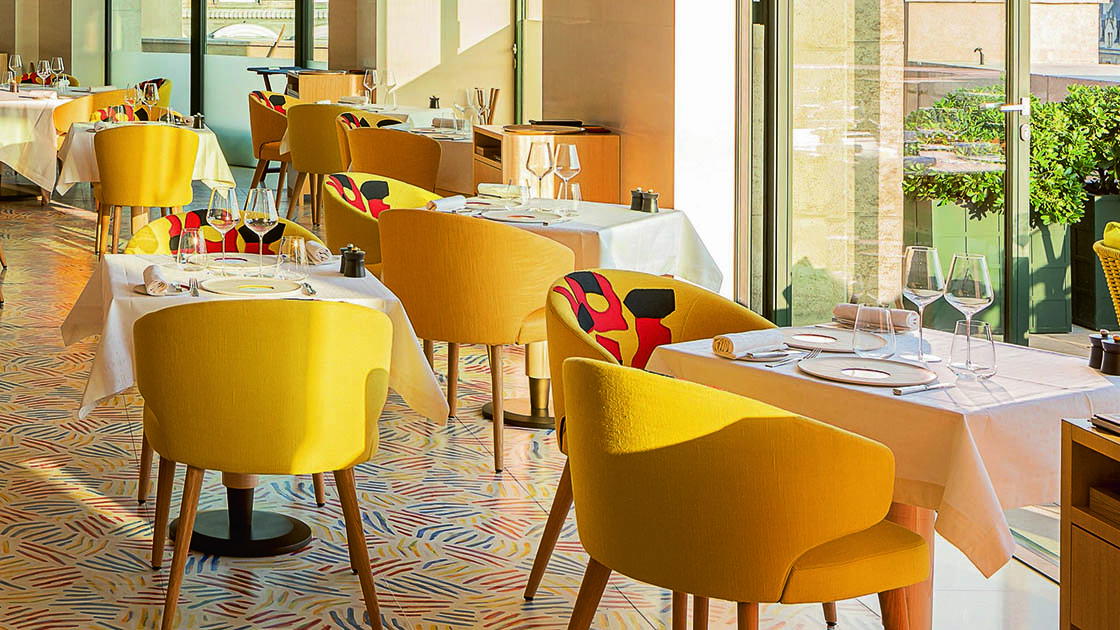
Materia Cernobbio
Via Trieste runs quietly through the lower streets of Cernobbio, a town that most visitors treat as the preamble to Villa d'Este rather than a dining destination in its own right. Materia sits on that street and has shifted that assumption. The building is unassuming from the outside, as much of the serious cooking in Northern Italy's smaller lake towns tends to be, and the interior reflects a similar restraint: nothing here signals spectacle before the food arrives.
Where Materia Sits in the Northern Italian Progressive Scene
Italy's progressive restaurant tier has long been anchored further south and east, in Modena with Osteria Francescana, in Milan with Enrico Bartolini, or in the Veneto with Le Calandre in Rubano. What those kitchens share is a commitment to Italian product fidelity alongside technical ambition. Materia belongs to the same broad movement but pursues a different compositional logic: one where Italian structure meets Asian spicing and the herbal register is pushed toward bitterness and acidity rather than the sweeter, richer notes that dominate much of the lake region's cooking.
That positioning is not simply a stylistic choice. It reflects a shift happening across a generation of Italian chefs who trained partly or extensively outside the peninsula. The result at Materia is food that reads as Italian in its relationship to vegetables and seasonal product but feels less tethered to regional recipe tradition than, say, Dal Pescatore in Runate or Enoteca Pinchiorri in Florence, both of which draw far more directly on established culinary lineages. Materia operates at a €€€ price point, notably a tier below many of its most decorated Italian peers, which places it in an interesting competitive position: serious creative cooking at an access point that does not require the full €€€€ commitment of the national heavyweights.
The Kitchen's Approach: Vegetables, Spice, and Structural Acidity
Materia is not primarily a pasta restaurant in the way that much of the Po Valley or Emilia-Romagna tradition defines the form. Materia is not primarily a pasta restaurant in the way that much of the Po Valley or Emilia-Romagna tradition defines the form. The kitchen's emphasis falls on vegetables, aromatic herbs, and spices, with pasta appearing as part of a broader menu architecture rather than as its organizing principle. That is itself an editorial statement in the context of Italian fine dining, where handmade pasta has historically served as one legible signal of regional identity and technical seriousness.
What Materia offers instead is a different kind of technical declaration: concentrated flavours built from layered spicing, dishes where bitterness and acidity are not incidental but deliberate, and a vegetable program that has been recognized formally through a dedicated plant-based menu called Green Power. Opinionated About Dining, which ranked Materia 101st in Europe for 2025 (up from 140th in 2024 and having placed it among the leading new European restaurants in 2023), has noted that the plant menu would benefit from stronger regional grounding. That is a fair observation: one compelling case for a pure plant offering in a Lake Como setting would draw more explicitly on the specific foraging and agricultural traditions of the Lombardy pre-Alps. Whether the kitchen moves in that direction is a question the next few years will answer.
La Liste, which aggregates critical opinion from guides and publications across multiple countries, scored Materia at 84.5 points for 2025 and 82 points for 2026, a modest recalibration but one that keeps the restaurant firmly inside the recognized upper tier of Italian creative cooking. The same source notes the kitchen's fusion of Italian and Asian influences, with the pickled whitefish served with roe and bitter local salad leaves cited as a dish that crystallizes the approach: local product, preservation technique, and a bitter vegetable element that most kitchens in the region would avoid.
Chef Davide Caranchini and the Cernobbio Context
Davide Caranchini is the name attached to the kitchen here, and the relevant credential is not biographical but positional: a Michelin star places Materia inside the smallest, most scrutinized cohort of Italian restaurants. In Cernobbio specifically, that credential matters because the town's dining reputation has historically been shaped by institutional luxury rather than independent creative cooking. La Veranda at Villa d'Este and Casa Perrotta represent different points on the local spectrum, with La Veranda anchored in the grand hotel tradition and Casa Perrotta offering a more contemporary Italian register. Materia sits apart from both, closer in spirit to what the broader Italian progressive scene is attempting than to anything defined by the lake's luxury hospitality infrastructure.
Comparing Materia to Other Progressive Italian Kitchens
The progressive Italian category encompasses a wide range of approaches. At the more radical end, kitchens like Atelier Moessmer Norbert Niederkofler in Brunico have built entire philosophies around Alpine product exclusivity, refusing to work outside a tightly defined geographic radius. Others, like Piazza Duomo in Alba or Uliassi in Senigallia, maintain strong regional product identities while pursuing technical innovation. Materia occupies a different position: it is geographically rooted in the lake region but philosophically more cosmopolitan, drawing on Asian technique and flavour logic in ways that particularly terroir-committed Italian kitchens deliberately avoid.
That makes it more comparable, in spirit if not in geography, to kitchens like La Madia in Licata or Madonnina del Pescatore in Marzocca, both of which operate outside the major Italian dining cities and have built reputations on creative programs that do not rely on the gravitational pull of regional tradition for their authority. At the €€€ tier, Materia occupies an interesting gap: serious enough in its critical standing to sit alongside €€€€ peers in conversation, accessible enough in price to draw a wider audience than most starred Italian restaurants of its ambition level. Internationally comparable creative Italian cooking at this price point, in a lake setting with this concentration of critical recognition, is not a common proposition. For reference, comparable destinations like Quattro Passi in Marina del Cantone operate at a higher price tier for broadly similar creative Italian ambitions.
Planning a Visit to Materia Cernobbio
Materia is closed Monday and Tuesday. Wednesday through Sunday, it serves lunch from 12 to 2 PM and dinner from 7 to 10 PM. The lunchtime offer includes a lighter menu alongside the full à la carte, which makes midday visits a practical option for those combining a meal with broader lake activity rather than building an evening around the restaurant. The address is Via Trieste 1/B, 22012 Cernobbio.
That kind of alignment between critical and popular reception is not guaranteed at this level of ambition, where challenging flavour profiles and unconventional combinations can produce polarized responses. That it has not done so at scale here is itself a signal worth noting.
Cuisine and Recognition
Comparable venues nearby, for context on price, style, and recognition.
| Venue | Cuisine | Price | Awards | Notes |
|---|---|---|---|---|
| MateriaThis venue — the venue you are viewing | Contemporary Nordic-Lombard Fine Dining | $$$ | Michelin 1 Star | Not listed |
| La Veranda - Villa d’Este | Traditional Italian Fine Dining | $$$$ | Michelin Plate | Cernobbio |
| Casa Perrotta Restaurant | Modern Italian Fine Dining | $$$ | Michelin Plate | Cernobbio |
| Del Cambio | Modern Piedmontese Fine Dining | $$$$ | Michelin 1 Star | Piazza Carignano |
| Procaccini | Modern Italian Fine Dining | $$$$ | Michelin 1 Star | Sarpi |
| Acquerello | Modern Italian Fine Dining | $$$$ | Michelin 1 Star | Fagnano Olona |
Recognition history
Dated appearances from independent guides and award organizations, with the underlying list record or original source where available.
La Liste Top Restaurants
La Liste
Michelin 1 Star
Michelin
Opinionated About Dining Top Restaurants in Europe Ranked #108
Opinionated About Dining
La Liste Top Restaurants
La Liste
Michelin 1 Star
Michelin
Opinionated About Dining Top Restaurants in Europe Ranked #101
Opinionated About Dining
The Best Chef One Knife
The Best Chef
We're Smart World 2 Radishes
We're Smart World
Michelin 1 Star
Michelin
Opinionated About Dining Top Restaurants in Europe Ranked #140
Opinionated About Dining
Opinionated About Dining Top New Restaurants in Europe Ranked #58
Opinionated About Dining
Continue exploring
More in Cernobbio
Restaurants in Cernobbio
Browse all →
Bars in Cernobbio
Browse all →
Hotels in Cernobbio
Browse all →

At a Glance
- Elegant
- Modern
- Intimate
- Sophisticated
- Date Night
- Special Occasion
- Celebration
- Open Kitchen
- Standalone
- Design Destination
- Sommelier Led
- Natural Wine
- Local Sourcing
- Farm To Table
- Biodynamic
Current opening hours
- Monday
- Closed
- Tuesday
- Closed
- Wednesday
- 12–2 PM, 7–10 PM
- Thursday
- 12–2 PM, 7–10 PM
- Friday
- 12–2 PM, 7–10 PM
- Saturday
- 12–2 PM, 7–10 PM
- Sunday
- 12–2 PM, 7–10 PM
Hours can change for holidays and private events. Last verified .
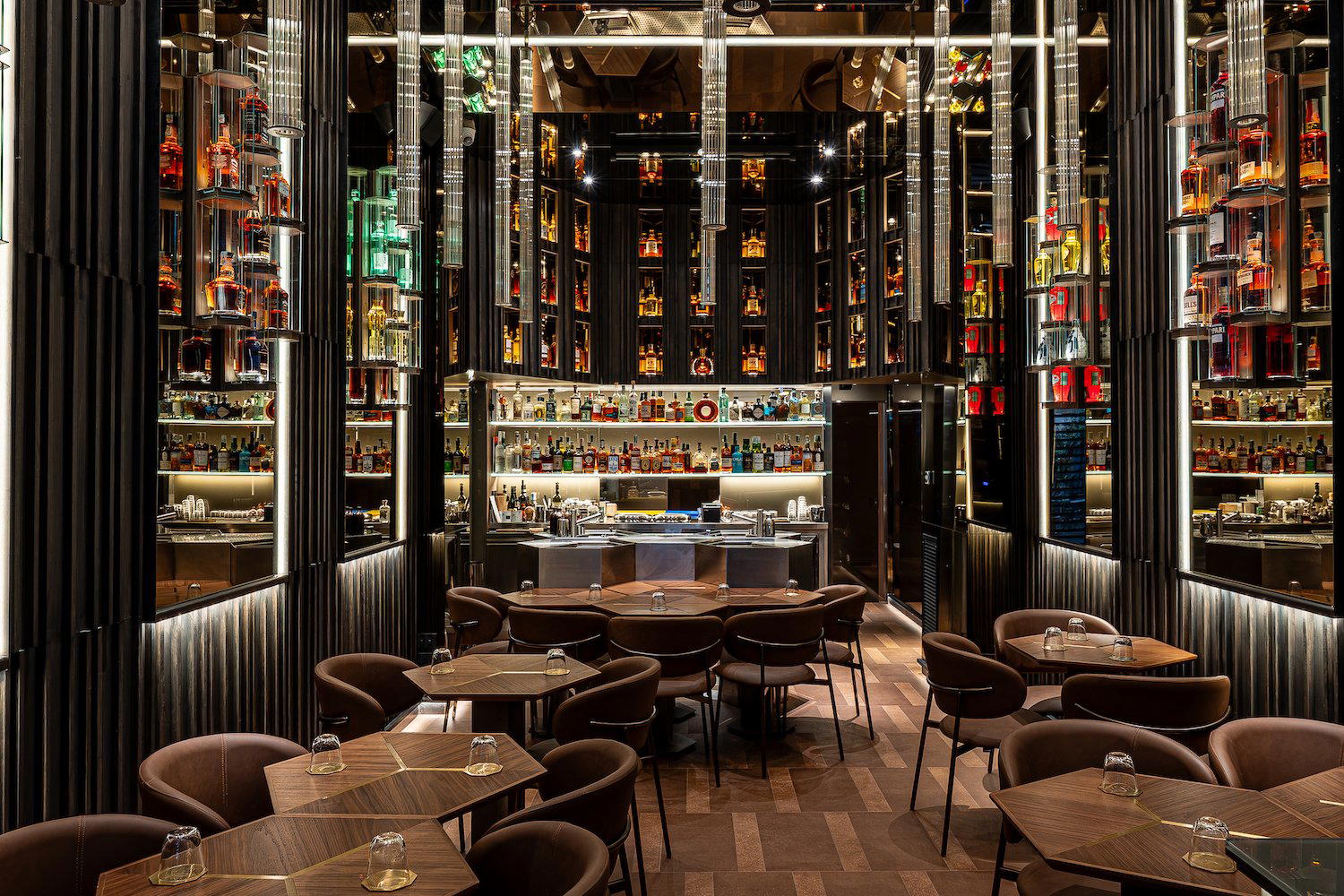
Minimalist and contemporary with dark brown walls and wooden furniture; intimate two-room layout with refined, upscale atmosphere that some find austere but others appreciate for its focus on the culinary experience.